



TL;DR:
- A Rolling Stones shirt features official band branding, such as the iconic tongue-and-lips logo, connecting wearers to rock history and rebellion. Authentic vintage shirts show specific construction, tags, and natural wear, while reproductions lack these details. Collectors prioritize provenance, with genuine pieces reflecting a deeper cultural significance beyond mere apparel.
A Rolling Stones shirt is a garment, typically a t-shirt, bearing the official branding of the iconic British rock band The Rolling Stones, most recognisably their tongue-and-lips logo designed in 1970 by John Pasche. These shirts are among the most recognised pieces of Rolling Stones merchandise in the world, distinct from apparel associated with Rolling Stone magazine. The cultural weight behind a Rolling Stones shirt goes far beyond fabric and ink. It carries decades of rock history, rebellion, and subcultural identity that collectors and fans continue to prize today.
What is a Rolling Stones shirt and why does it matter?
A Rolling Stones shirt is defined by its use of official band imagery, most commonly the Hot Lips logo, tour artwork, or typography tied to specific concert tours. Retail listings classify these garments as official Rolling Stones merchandise, separating them from generic rock-themed apparel or anything connected to the magazine of the same name. The distinction matters enormously to collectors, because provenance and official licensing directly affect a shirt’s cultural and monetary value.
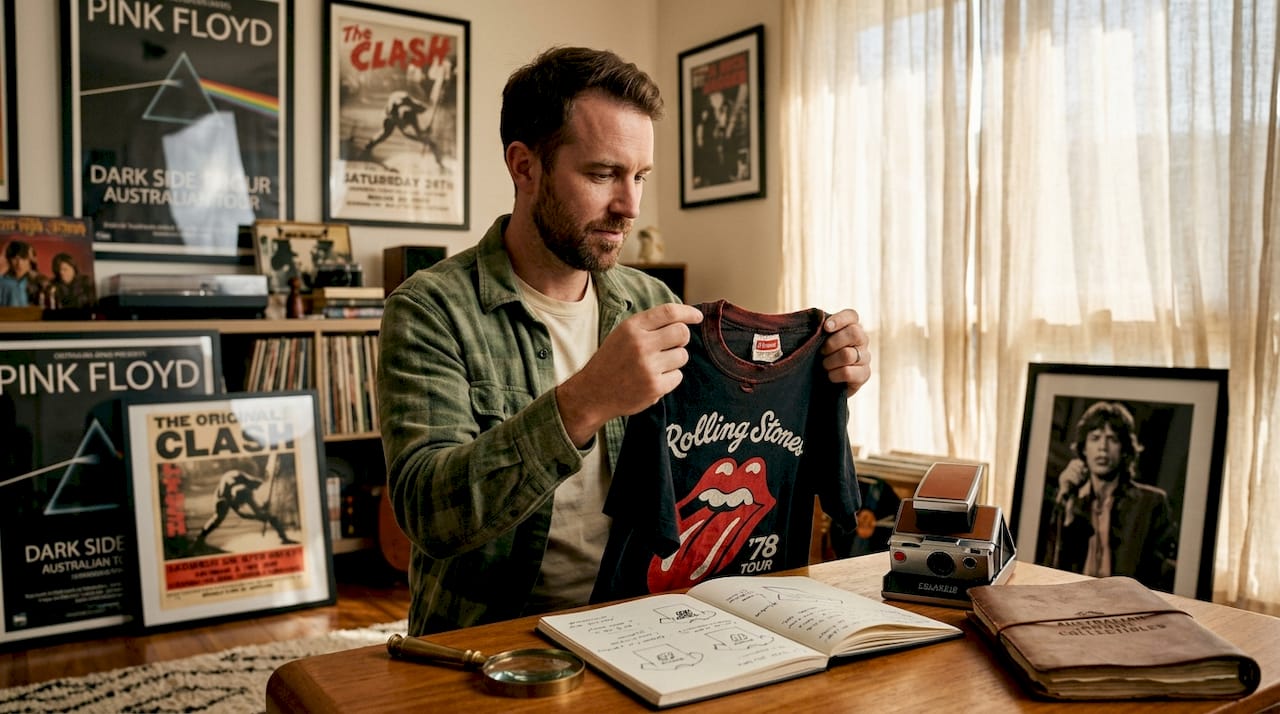
The band’s visual identity is inseparable from their shirts. The tongue-and-lips emblem has appeared on everything from coasters to aircraft, making it instantly recognisable across generations and cultures. For collectors and music enthusiasts, owning a shirt bearing that logo is a direct connection to one of the longest-running and most influential rock acts in history. That connection is what separates a Rolling Stones shirt from ordinary band merchandise.
What is the history behind the Rolling Stones tongue-and-lips logo?
The tongue-and-lips logo, often called the Hot Lips logo, was commissioned in 1970 when John Pasche, then a student at the Royal College of Art, was hired by The Rolling Stones to design a visual identity for their upcoming tour. Mick Jagger briefed Pasche directly, and the resulting image became one of the most reproduced logos in music history. The design process drew from multiple sources, and its symbolism runs deeper than most fans realise.
“The design was to represent the band’s anti-establishment stance and Mick’s mouth, which was so much a part of his image.” — John Pasche, on the logo’s intent.
Pasche drew inspiration from the Hindu goddess Kali, whose extended tongue is a symbol of power and defiance. The tongue sticking out is a visual act of protest and rebellion, perfectly aligned with the band’s anti-authority persona throughout the 1970s. Mick Jagger’s own physicality, particularly his prominent lips and theatrical stage presence, also fed directly into the design.
The logo’s commercial and cultural trajectory is remarkable:
- Pasche was originally paid just £50 for the initial design work in 1970.
- He later sold the copyright for £26,000 in 1984.
- The original artwork was acquired by the Victoria and Albert Museum in London in 2008, cementing its status as a genuine cultural artefact.
- The logo is frequently voted the greatest band logo ever created.
The logo’s genius lies in its universality. It requires no text, no band name, and no context to communicate rebellion and rock energy. That quality is precisely why it translates so powerfully onto a shirt, making Rolling Stones logo shirts some of the most enduring pieces of rock merchandise ever produced.
How have Rolling Stones shirts evolved in style and cultural significance?
The history of Rolling Stones shirts mirrors the broader evolution of band merchandise from functional tour souvenirs to genuine cultural symbols. Understanding that evolution helps collectors and fans make smarter decisions about what they buy and wear.
-
Original tour-era shirts (1970s and 1980s). The earliest Rolling Stones shirts were produced as tour merchandise, sold at venues during specific concert runs. These shirts featured tour date typography, city listings on the back, and the Hot Lips logo or tour-specific artwork on the front. The fabric was typically single-stitch construction with a soft, thin feel that aged beautifully over decades. These are the shirts serious collectors pursue most aggressively.
-
Post-tour licensed merchandise (1990s onwards). As the band’s commercial reach expanded, licensed merchandise moved into mainstream retail. Shirts became more polished, with heavier fabric weights and cleaner print registration. The cultural cachet remained, but the raw, worn-in character of original tour tees was absent from these newer releases.
-
Vintage-inspired reproductions (2000s to present). Modern Rolling Stones shirts frequently use sun-fading and distressed styling to evoke the look of original tour merchandise. Fabric blends like 60% cotton and 40% polyester are used to achieve a specific drape and texture. These shirts are officially licensed and well-made, but they are reproductions, not originals.
-
Fast-fashion band tees. Major high-street retailers began selling Rolling Stones shirts to consumers with no particular connection to the band’s music. Fast-fashion distribution complicated authenticity perceptions significantly, because a shirt worn by someone who cannot name a single album carries a very different cultural weight to one worn by a lifelong fan or collector.
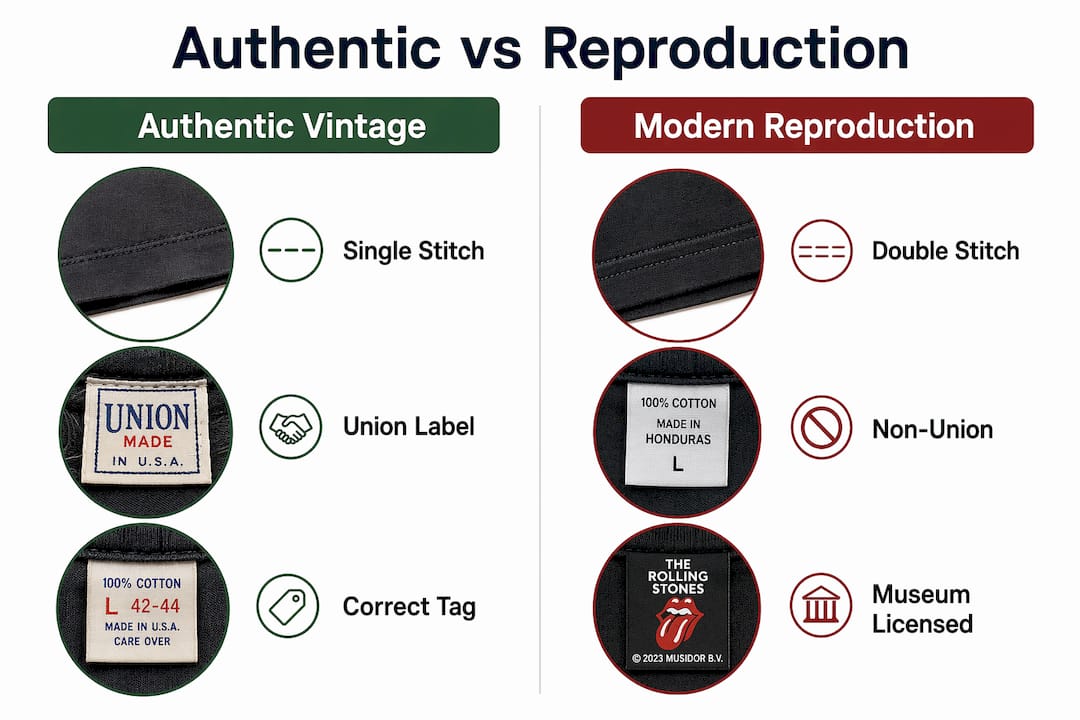
Pro Tip: When assessing a vintage-inspired modern shirt, check the tag for fabric composition and country of manufacture. Authentic vintage shirts from the 1970s and early 1980s were almost exclusively made in the USA or UK, with single-stitch construction and union labels.
Band tees became cultural symbols by connecting fans to subcultures and signalling identity, and Rolling Stones shirts sit at the apex of that tradition. The shirt you wear communicates not just musical taste but a whole set of values around rebellion, authenticity, and cultural literacy.
How do collectors distinguish authentic vintage shirts from reproductions?
Identifying a genuine vintage Rolling Stones shirt requires examining several specific physical characteristics. Collectors who skip this process regularly overpay for reproductions or, worse, purchase counterfeits. The collector’s guide to vintage band tees covers this in depth, but the core authentication framework comes down to four elements.
| Feature | Authentic vintage shirt | Modern reproduction |
|---|---|---|
| Construction | Single-stitch seams, thin soft fabric | Double-stitch seams, heavier fabric weight |
| Tag style | Union label, country of origin (USA/UK), no size on tag | Modern brand tags, size printed on tag, care symbols |
| Print method | Screen-printed with visible ink cracking and wear | DTG or modern screen print, even colour saturation |
| Era references | Specific tour dates, city lists, year-specific artwork | Generic logo use, no tour specifics, or clearly labelled as reproduction |
The Hot Lips logo itself has been reproduced so extensively that logo presence alone proves nothing. Authentic vintage shirts are identified by the combination of logo version, garment construction, tag style, and print wear. A shirt with a perfectly crisp print and a modern care label is a reproduction regardless of how aged the fabric looks.
Museum-store licensed merchandise occupies a separate tier entirely. The Rock and Roll Hall of Fame Museum Store sells Rolling Stones graphic tees at around $97, reflecting official licensing and quality standards. These are not vintage, but serious collectors recognise them as legitimate premium merchandise with guaranteed provenance. That matters when building a collection with documented authenticity.
Pro Tip: Check the vintage shirt authentication guide before purchasing any shirt described as “vintage” or “original.” The difference between a genuine 1978 tour tee and a 2005 reproduction can be thousands of dollars.
Common counterfeit indicators include inconsistent logo proportions, incorrect font choices on tour text, and fabric that feels artificially distressed rather than naturally aged. Genuine wear patterns develop unevenly, with fading concentrated at collar edges, underarms, and fold lines. Artificial distressing tends to be uniform and symmetrical, which is a clear tell.
How should you style and care for Rolling Stones shirts?
Styling and caring for a Rolling Stones shirt depends entirely on whether you are wearing it as a fashion piece or preserving it as a collectible. Both approaches are valid, but they require different handling.
For wearing and styling:
- Pair a vintage or vintage-inspired Rolling Stones shirt with high-waisted denim and Chelsea boots for a 1970s-influenced look that references the band’s actual era.
- Layer under an open flannel shirt or denim jacket to add depth without obscuring the logo, which is the centrepiece of any Rolling Stones clothing style.
- Avoid tucking original vintage shirts into trousers. The additional stress on the fabric accelerates deterioration at the hem and side seams.
- For a contemporary streetwear approach, band merch influencing streetwear has made oversized Rolling Stones tees a legitimate fashion statement when paired with tailored trousers or wide-leg jeans.
For preservation and care:
- Wash vintage shirts inside out in cold water on a gentle cycle. Hot water degrades screen-printed ink and shrinks aged cotton fibres.
- Air dry flat rather than using a tumble dryer. Heat is the primary cause of print cracking and fabric distortion in vintage garments.
- Store folded rather than on hangers. Hanging places continuous stress on shoulder seams, which are often the weakest point on single-stitch vintage construction.
- For high-value collector pieces, consider archival storage in acid-free tissue paper inside a sealed container kept away from direct light.
The Rolling Stones shirt’s place in popular culture is well documented. Keith Richards, Mick Jagger, and the band’s broader visual identity have influenced fashion from the 1970s through to the present. Wearing one of these shirts connects you to that lineage in a way that very few other garments can.
Key takeaways
A Rolling Stones shirt is defined by its official band branding, and its value to collectors depends entirely on the authenticity, era, and provenance of the specific garment.
| Point | Details |
|---|---|
| Logo origin | The Hot Lips logo was designed by John Pasche in 1970, inspired by Kali and Mick Jagger’s persona. |
| Authentication markers | Genuine vintage shirts show single-stitch construction, union labels, and naturally uneven print wear. |
| Collector tiers | Original tour tees, licensed museum-store merch, and vintage-inspired reproductions each occupy distinct value tiers. |
| Cultural significance | Rolling Stones shirts are cultural artefacts connecting wearers to rebellion, rock history, and subcultural identity. |
| Care and preservation | Cold wash, air dry flat, and archival storage protect both print integrity and fabric longevity. |
Why Rolling Stones shirts are worth taking seriously as collectibles
I have been sourcing and handling vintage band shirts for years, and Rolling Stones shirts consistently generate more confusion than almost any other category. The volume of reproductions in the market is staggering, and the price gap between a genuine 1978 tour tee and a well-made modern reproduction can be several hundred dollars or more. Most buyers do not know what they are looking at.
What strikes me most about the Hot Lips logo is how it manages to be simultaneously rebellious and fashionable. That combination is genuinely rare in graphic design. Most punk and metal logos lean so hard into aggression that they limit their own wearability. The tongue-and-lips image works on a vintage tee at a record fair and on a runway-inspired outfit in equal measure. That versatility is why it has outlasted every trend since 1970.
The cultural context around these shirts also affects their value in ways that pure authentication cannot capture. A shirt with documented provenance from a specific 1972 or 1981 tour carries a story that a technically identical reproduction simply cannot replicate. Collectors who understand this buy differently. They are not just buying a shirt. They are buying a piece of documented rock history, and that distinction is what separates serious collecting from casual shopping.
If you are new to this space, start by learning the physical markers before spending serious money. The examples of vintage band tees available from reputable sources give you a strong reference point for what genuine aged garments look and feel like.
— David
Find authentic vintage band shirts at Com

Com specialises in genuine vintage heavy metal and rock band shirts, including ex-tour stock and deadstock from major tours. If you are serious about building a collection with real provenance rather than reproductions, the vintage band shirt collection at Com is worth your time. Every shirt is sourced with authenticity in mind, and the range covers the kind of original tour merchandise that serious collectors actually want. Browse the full selection and find pieces with the history and character that modern reproductions simply cannot replicate.
FAQ
What does a Rolling Stones shirt typically feature?
A Rolling Stones shirt typically features the Hot Lips tongue-and-lips logo designed by John Pasche in 1970, tour-specific artwork, or band typography. Official merchandise uses licensed band imagery across a range of garment styles.
How can I tell if a Rolling Stones shirt is genuinely vintage?
Genuine vintage Rolling Stones shirts show single-stitch seam construction, union labels, country-of-origin tags without modern care symbols, and naturally uneven print wear. Era-specific cues like tour date text and city listings on the back are strong indicators of original tour merchandise.
What is the Rolling Stones tongue-and-lips logo based on?
The logo was inspired by the Hindu goddess Kali and Mick Jagger’s physical presence, designed to represent the band’s anti-authority stance. John Pasche created it in 1970 while studying at the Royal College of Art.
Are modern Rolling Stones shirts worth buying for collectors?
Modern licensed reproductions and museum-store merchandise like the Rock and Roll Hall of Fame tee offer guaranteed licensing and quality, but they do not carry the provenance value of original tour shirts. Collectors treat them as a separate, lower tier from genuine vintage pieces.
What is the difference between a Rolling Stones shirt and a Rolling Stone magazine shirt?
A Rolling Stones shirt features branding from the British rock band The Rolling Stones. A Rolling Stone magazine shirt would reference the American music publication. The two are entirely unrelated, and the band’s merchandise is far more widely produced and collected.
Recommended
- Why Tour Dates on Shirts Matter for Metal Fans – Vintage Metal Store
- Festival vs tour shirts: key differences for collectors – Vintage Metal Store
- Collecting tour shirts: their cultural value and impact – Vintage Metal Store
- 7 Steps to the Ultimate Heavy Metal Shirts Buying Checklist – Vintage Metal Store


