



Ever stared at two vintage metal shirts and wondered why one feels rarer than the other? Many collectors face this puzzle when distinguishing festival shirts from tour shirts. Both types flood the vintage market, yet their origins, designs, and values differ dramatically. Understanding these distinctions transforms how you collect, authenticate, and appreciate your heavy metal merchandise. This guide reveals the critical differences between festival and tour shirts, helping you make informed decisions whether you’re hunting for that perfect Metallica tour tee or evaluating a festival shirt’s worth.
Table of Contents
- Key takeaways
- Origins and purpose of festival and tour shirts
- Design differences: artwork, logos, and event details
- Rarity and collector value of vintage festival vs tour shirts
- How to collect and authenticate festival and tour shirts
- Explore vintage metal shirts and exclusive tour tees
- FAQ
Key Takeaways
| Point | Details |
|---|---|
| Origins and purpose | Festival shirts celebrate multi band events and festival branding while tour shirts commemorate single band performances. |
| Design cues by type | Back prints on tour shirts list dates and venues, whereas festival shirts focus on festival identity and artwork. |
| Scarcity and value | Tour shirts are typically scarcer and can command higher value due to limited runs. |
| Authenticity verification tips | To verify authenticity check the shirt origin production size and fabric quality against known patterns. |
Origins and purpose of festival and tour shirts
Festival shirts originated as memorabilia celebrating multi-band, multi-day events to promote the entire festival. These shirts emerged in the 1970s and 1980s alongside the rise of massive outdoor metal festivals like Monsters of Rock and Donington. Promoters created them as walking advertisements, featuring bold artwork representing the festival’s theme or location alongside logos of every performing band. The goal was simple: create a wearable souvenir that captured the entire weekend’s energy in one garment.
Tour shirts serve as souvenirs for attending specific concerts, showing dates and venues for a single band’s live performances. Bands sold these directly at their shows, turning merchandise tables into crucial revenue streams. Unlike festival shirts, tour designs focused exclusively on the headlining act, with back prints listing every city and date on the tour schedule. This created an intimate connection between fans and their concert memories, as each shirt documented exactly where and when they witnessed their favourite band live.
Both shirt types started as marketing tools and fan mementos during metal’s golden era. Festival organisers needed promotional materials that attendees would wear proudly, spreading awareness for future events. Bands recognised that tour shirts provided income while building brand loyalty. The shirts became cultural artefacts, documenting metal’s live scene history through fabric and ink.
Pro tip: Understanding a shirt’s origin helps verify authenticity and estimate production size. Festival shirts from major events like Download or Wacken typically had runs of 5,000 to 20,000 units. Tour shirts from club tours might number only 500 to 2,000 pieces, making them inherently scarcer.
Design differences: artwork, logos, and event details
Tour shirts usually feature a single band’s logo prominently along with detailed tour dates across the back. The front design centres on the band’s artwork, album imagery, or mascot, creating instant visual recognition. Flip the shirt over and you’ll find a chronological list of cities, venues, and dates, often spanning months of touring. This back print serves as both documentation and badge of honour, proving you witnessed specific shows on that particular tour run.
Festival shirts commonly showcase a variety of band logos and festival branding without specific concert dates. The design philosophy differs entirely. Festival organisers prioritise the event’s identity, using custom artwork that captures the festival’s spirit or location. Band names appear clustered together, sometimes arranged by performance order or simply scattered across the design. You’ll rarely see individual concert dates because festivals occur over just a few days in one location.
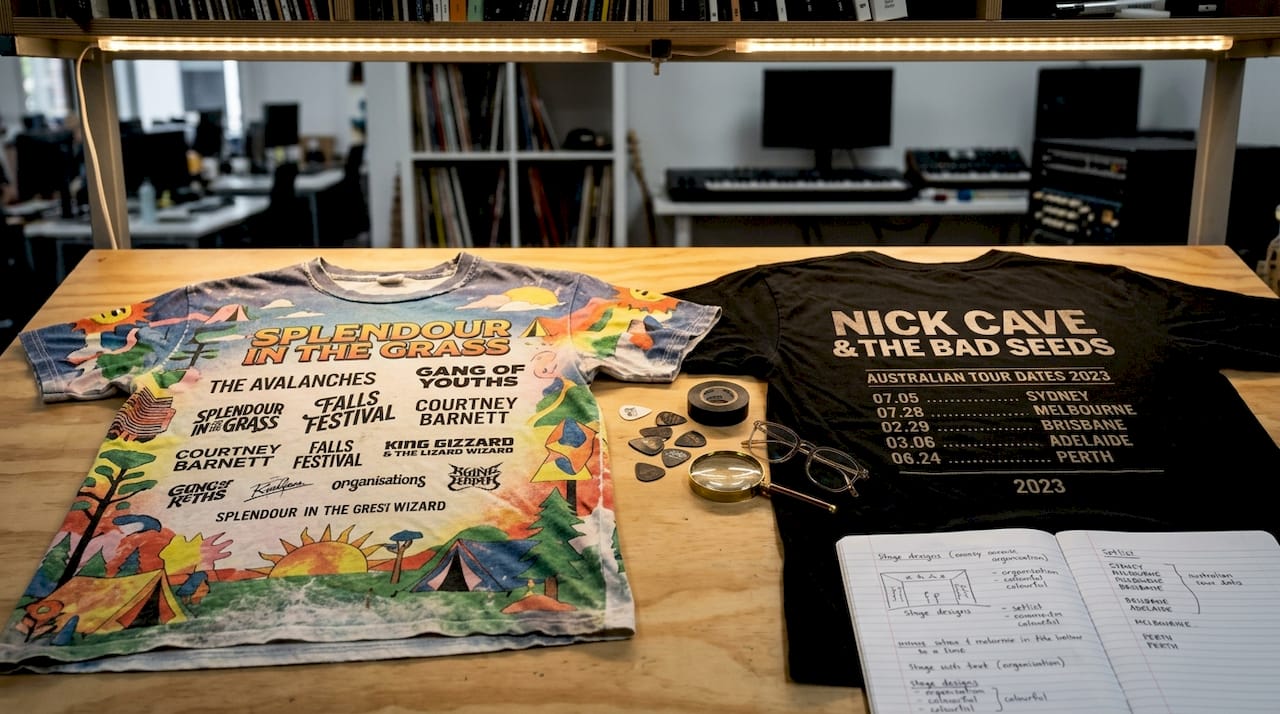
Fabric choices also diverge between the two types. Tour shirts from the 1980s and 1990s often used softer cotton blends, as bands ordered larger quantities for extended tours. Festival shirts might feature heavier, cheaper fabrics since organisers focused on volume sales rather than premium quality. Print methods varied too, with tour shirts frequently employing screen printing techniques that created thicker, more durable designs.
Collectors can visually differentiate shirts by examining several key features:
- Check the back print first. Tour shirts list specific dates and venues; festival shirts show general event information
- Look for multiple band logos clustered together, indicating a festival shirt
- Examine the front design. Single band focus suggests tour merchandise
- Note the print quality. Tour shirts often have more detailed, higher-quality artwork
- Inspect tags for tour-specific branding versus festival merchandiser marks
| Feature | Festival shirt | Tour shirt |
|---|---|---|
| Front design | Festival logo, event artwork | Band logo, album art |
| Back print | Multiple bands, event dates | Tour schedule, city list |
| Text focus | Event name, year | Band name, tour title |
| Logo count | 5-20 bands | Single band |
| Date specificity | Weekend dates only | Full tour schedule |
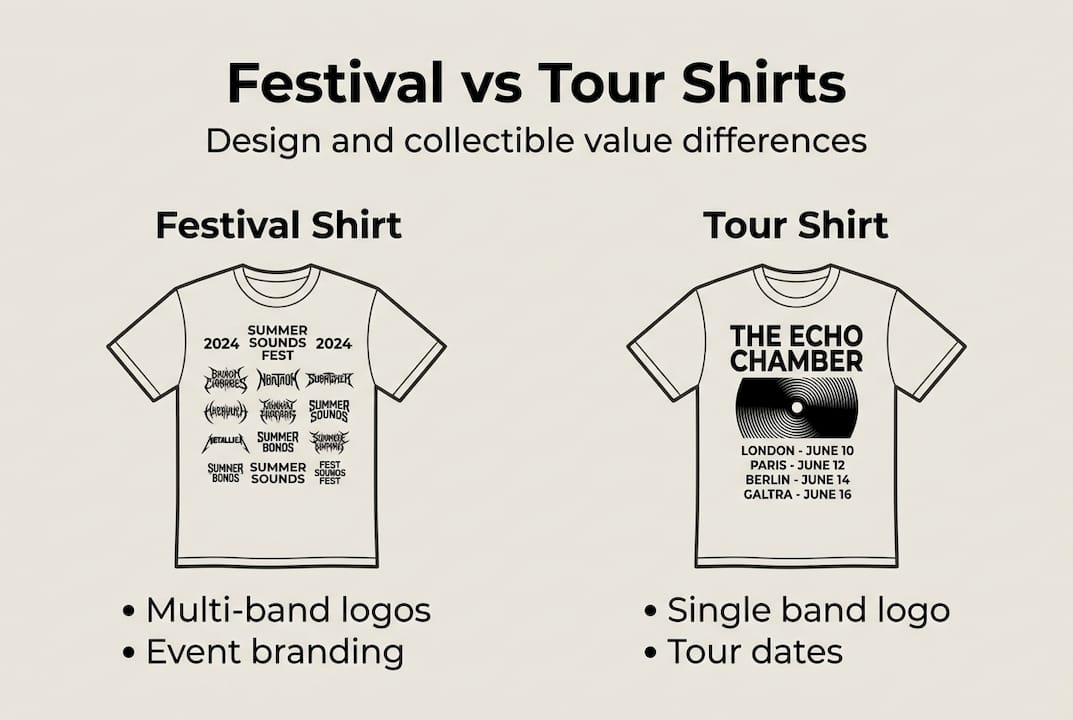
Pro tip: Tour shirts from smaller venue tours contain more detailed venue names, sometimes including club names rather than just cities. Festival shirts never specify venues because the festival itself is the location.
Rarity and collector value of vintage festival vs tour shirts
Tour shirts have higher collector value due to limited production runs and personal fan events. When Metallica played a three-month tour in 1991, they might have printed 15,000 shirts total across all venues. Compare this to a major festival printing 25,000 shirts for a single weekend. The tour shirt’s scarcity increases because production spread across multiple venues with varying quantities, while festival shirts flooded the market during one concentrated event.
Festival shirts are usually produced in larger quantities, reducing rarity but boosting cultural significance. A Donington 1988 shirt might not be rare in absolute numbers, but it represents a pivotal moment in metal history. Collectors value these shirts for their cultural documentation rather than pure scarcity. When Iron Maiden, Kiss, and Megadeth shared a stage, that festival shirt captured an unrepeatable lineup.
Collector value depends on multiple interconnected factors beyond simple production numbers. Condition ranks paramount, as vintage shirts with intact prints and minimal fading command premium prices. Fabric quality matters too, with original heavyweight cotton shirts from the 1980s often outlasting thinner 1990s alternatives. Print quality separates authentic vintage pieces from modern reproductions, as original screen prints show characteristic cracking and fading patterns.
| Shirt type | Typical production | Current value range | Rarity factor |
|---|---|---|---|
| Major tour (stadium) | 10,000-20,000 | $150-$500 | Medium |
| Club tour | 500-3,000 | $300-$1,200 | High |
| Major festival | 15,000-30,000 | $80-$300 | Low to medium |
| Small festival | 2,000-5,000 | $100-$400 | Medium |
| Rare tour (cancelled/short) | 200-1,000 | $500-$2,000+ | Very high |
Several factors influence a vintage metal shirt’s collector value:
- Scarcity drives demand. Shirts from cancelled tours or limited runs fetch higher prices
- Historic significance adds value. Shirts from legendary tours or groundbreaking festivals command premiums
- Design appeal matters. Iconic artwork by famous designers like Pushead increases desirability
- Band popularity fluctuates. Current relevance affects vintage shirt prices
- Condition determines final value. Mint condition shirts sell for triple worn examples
- Provenance documentation boosts credibility. Original purchase receipts or photos add value
Provenance plays an increasingly important role as reproduction technology improves. A tour shirt with documented purchase history from the original venue carries more weight than an identical shirt with unknown origins. Collectors now photograph their purchases and keep receipts specifically to maintain value chains.
How to collect and authenticate festival and tour shirts
Collectors should verify tag brands, print quality, and provenance to authenticate vintage shirts. Authentication requires systematic examination of multiple shirt elements. Start with the tag, as vintage shirts used specific manufacturers during different eras. Hanes tags from the 1980s look distinctly different from 1990s Fruit of the Loom labels. Modern reproductions often use current tag styles, immediately revealing their recent production.
Follow this authentication process systematically:
- Examine the tag first. Check manufacturer, size label format, and care instructions. Vintage tags show period-appropriate fonts and layouts.
- Inspect print quality closely. Original screen prints display characteristic cracking in flex areas. Modern digital prints lack this authentic ageing.
- Assess fabric weight and texture. Vintage shirts typically used heavier cotton than contemporary reproductions.
- Check stitching quality. Double-stitched hems and reinforced collars indicate authentic vintage construction.
- Verify design accuracy. Compare artwork to documented tour or festival imagery from the period.
- Research the seller’s reputation. Established vintage dealers provide authentication guarantees.
- Request provenance documentation. Original purchase receipts, photos, or backstory add credibility.
Distinguishing modern reproductions from original vintage pieces requires understanding common reproduction tells. Reproductions often feature artificially distressed prints that look uniformly aged rather than naturally worn. The fabric feels suspiciously soft for a supposedly 30-year-old shirt. Tags might say “vintage style” rather than displaying actual vintage manufacturer marks. Print colours appear too vibrant or use modern ink formulations that didn’t exist in the 1980s.
Reliable sourcing separates successful collectors from frustrated buyers. Specialised vintage metal retailers curate authenticated stock, removing guesswork from purchases. Online marketplaces require extra caution, as counterfeit vintage shirts proliferate on platforms with minimal seller verification. Look for sellers who provide detailed photos of tags, prints, and any flaws. Avoid listings with stock photos or suspiciously perfect condition for claimed age.
Proper care preserves your collection’s condition and value. Wash vintage shirts inside out in cold water using gentle detergent. Avoid fabric softeners, which break down vintage prints. Air dry rather than using machines, as heat accelerates print deterioration. Store shirts flat or on padded hangers in cool, dry environments away from direct sunlight. Never iron directly on prints.
Pro tip: Keep provenance documentation and photos from purchase for future value. Photograph your shirt with its receipt, any included documentation, and the seller’s packaging. Store these digital records with notes about purchase date, price, and seller details. This documentation becomes invaluable when selling pieces later or proving authenticity to future buyers.
Explore vintage metal shirts and exclusive tour tees
Vintage Metal Store curates Australia’s finest collection of authenticated heavy metal tour and festival shirts for serious collectors. Our inventory includes rare pieces like the 1992 Metallica tour tee, featuring the iconic Don’t Tread On Me design from their legendary tour. Every shirt undergoes rigorous authentication to ensure you receive genuine vintage merchandise, not modern reproductions.
Explore our extensive Metallica collection featuring tour shirts spanning three decades of metal history. From thrash classics to stadium tours, we source ex-tour stock and deadstock pieces that serious collectors demand. Browse our complete catalogue to discover vintage shirts from Iron Maiden, Slayer, Megadeth, and countless other metal legends. Each piece tells a story from metal’s live history, waiting for collectors who appreciate authentic merchandise.
FAQ
What makes a festival shirt different from a tour shirt?
Festival shirts represent multi-band events, featuring artwork and logos from multiple performing acts without specific venue details. Tour shirts focus exclusively on one band, displaying their logo prominently with a detailed back print listing every date, city, and venue from that specific tour. The design philosophy differs fundamentally, with festival shirts celebrating the entire event while tour shirts document a band’s individual concert journey.
Can festival shirts be as valuable as tour shirts?
Generally, tour shirts are rarer and command higher collector values due to limited production runs. However, some festival shirts gain significant value when linked to iconic events like Donington 1988 or rare festival editions with unique artwork. Festival shirts from cancelled events or those featuring legendary lineups that never repeated can match or exceed tour shirt values. Cultural significance sometimes outweighs pure scarcity in determining collector worth.
How can I tell if my vintage shirt is authentic?
Check tag brands, print quality, and fabric age systematically. Authentic vintage shirts display period-appropriate manufacturer tags, natural print cracking in flex areas, and heavier cotton weight than modern reproductions. Look for provenance documentation like purchase receipts or photos from the original event. Consult authentication guides and compare your shirt’s details to documented examples from the same tour or festival.
Where is the best place to buy authentic vintage metal shirts?
Seek specialised vintage metal retailers with verified stock and authentication guarantees. Avoid suspicious online marketplaces lacking seller credibility, detailed photos, or transparent return policies. Consider expert-verified collections like Vintage Metal Store’s offerings, where every piece undergoes rigorous authentication before listing. Established dealers stake their reputation on authenticity, providing peace of mind that marketplace sellers cannot match.
Recommended


