



The vintage heavy metal tour shirt market is flooded with convincing reprints that can fool even experienced collectors. Authenticating a genuine 1990s tour shirt requires knowing exactly what to look for, from construction details to print characteristics. This comprehensive checklist equips you with the essential criteria to confidently identify authentic vintage heavy metal tour shirts, protecting your investment and ensuring you acquire genuine pieces of music history that hold their value over time.
Table of Contents
- Understand What Makes A Vintage Tour Shirt Authentic
- Key Vintage Tour Shirt Features To Check
- Rarity, Condition And Cultural Significance Impact Value
- Best Places To Find Authentic Vintage 90s Heavy Metal Shirts
- Explore Vintage Heavy Metal Shirts At Vintage Metal Store
Key takeaways
| Point | Details |
|---|---|
| Authentication criteria | Single stitch seams, vintage tags like Giant or Brockum, and period correct copyright dates confirm authenticity |
| Print characteristics | Original prints show natural cracking and raised texture while reprints appear smooth and flawless |
| Value determinants | Rarity, condition grade, and band cultural significance directly impact market price and collectability |
| Trusted sources | Specialised vintage resellers and verified marketplace sellers offer authenticated shirts with detailed provenance |
| Physical inspection | Fabric softness, tag style, and tour date accuracy separate genuine vintage from modern reproductions |
Understand what makes a vintage tour shirt authentic
Authentic vintage 90s heavy metal tour shirts represent more than aged clothing. These pieces embody specific construction methods, materials, and printing techniques that define their era. Authenticity determines value through original graphics and period correct construction. Understanding these fundamental characteristics forms the foundation of successful collecting.
Genuine vintage shirts must be at least 20 years old with original tour graphics intact. The construction reveals the most telling details. Single stitch seams along the sleeves and bottom hem indicate authentic 90s production, as double stitching became standard only in later manufacturing. Vintage tags from licensors like Giant, Brockum, Winterland, or Screen Stars confirm period authenticity.
Original screen prints develop distinctive characteristics over decades. The ink cracks naturally, creating a weathered appearance that reprints cannot replicate authentically. Vintage prints feel slightly raised and textured under your fingertips, while modern reproductions sit smooth and flat against the fabric. Construction, materials, and branding elements provide primary authentication markers.
Fabric quality distinguishes vintage from reproduction immediately. Authentic 90s shirts feel incredibly soft and thin from years of washing and wear. The cotton develops a unique drape that modern pre distressed shirts cannot match. Copyright dates and tour information must align perfectly with the band’s actual touring schedule from that era.
Modern reprints differ fundamentally in multiple aspects. New tags from contemporary manufacturers, perfectly smooth prints without natural aging, and thicker fabric reveal reproduction status. Learning to follow a systematic buying checklist helps you spot these differences quickly. Understanding why tour dates matter adds another authentication layer to your knowledge base.
Key authentication markers include:
- Single stitch construction on sleeves and hem
- Vintage licensor tags from Giant, Brockum, or Winterland
- Natural print cracking with raised texture
- Soft, thin fabric from decades of wear
- Copyright dates matching original tour years
- Faded colours with consistent aging patterns
Key vintage tour shirt features to check
Systematic inspection reveals authenticity through specific physical features. Following a structured checklist ensures you examine every critical detail before purchasing. Single stitch construction, specific tag brands, and copyright dates serve as primary verification points.
Step one requires examining the stitching type carefully. Turn the shirt inside out and inspect the sleeve and bottom hems. Single stitch seams appear as one line of stitching, creating a raw edge inside. Double stitching shows two parallel lines, indicating post 1990s production. This single detail eliminates most reproductions immediately.
Step two involves checking the tag brand and style. Authentic 90s metal tour shirts feature tags from Giant, Brockum, Screen Stars, Winterland, or Anvil. The tag design, font, and information layout must match period examples. Modern Gildan, Fruit of the Loom, or generic tags signal reproductions regardless of how vintage the shirt appears otherwise.
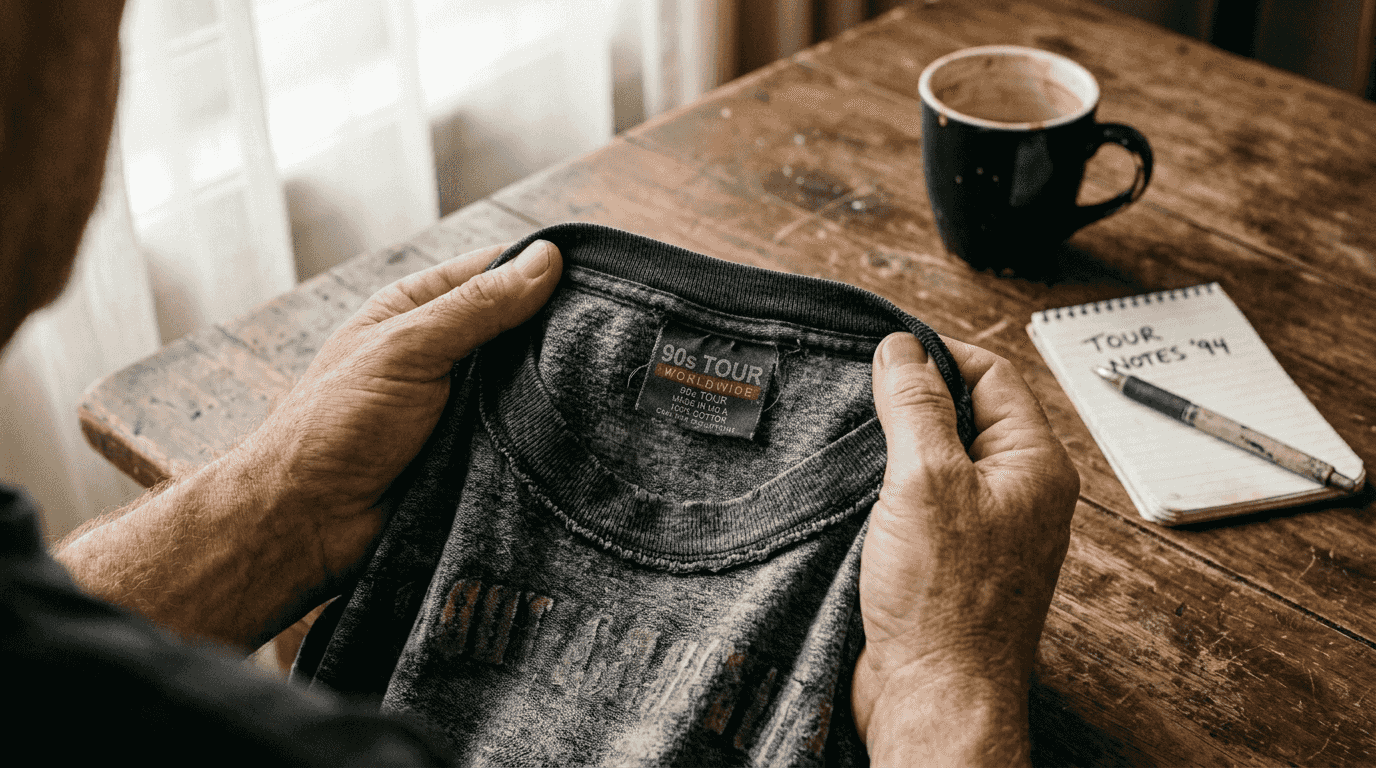
Step three focuses on print quality assessment. Run your fingers across the graphic, feeling for raised texture and natural cracking patterns. Original prints crack in high stress areas like folds and frequently washed sections. The cracking appears random and organic, not uniformly distributed like artificially distressed reprints. Ink may show slight flaking at crack edges.
Step four demands verifying copyright information and tour dates. The copyright year should match the tour or album release year printed on the shirt. Cross reference tour dates with historical records to confirm accuracy. Mismatched dates or generic copyright information indicates reproduction. Identifying deadstock shirts requires additional verification steps.
Step five assesses fabric softness and wear consistency. Authentic vintage cotton feels paper thin and incredibly soft from countless wash cycles. The fabric drapes naturally without stiffness. Wear patterns should appear consistent across the entire garment, not concentrated artificially in specific areas. Colour fading occurs gradually and evenly.
Pro Tip: Use a UV light when inspecting prints in person. Modern inks often fluoresce brightly under UV light, while vintage inks typically do not. This simple test quickly reveals reproductions using contemporary printing methods, even when other details appear convincing.
Rarity, condition and cultural significance impact value
Authenticity alone does not determine market value. Rarity, physical condition, and the band’s cultural importance combine to establish pricing. Understanding these factors helps you make informed purchasing decisions and build a valuable collection strategically.
Rarity stems from multiple sources. Limited production runs for specific tour legs create scarcity. Regional prints sold only at certain venues become highly sought after. Discontinued designs that never received wide distribution command premium prices. Tour shirts from smaller, earlier tours typically exist in lower quantities than major stadium tour merchandise.
Condition grading follows established standards. Mint condition means unworn or barely worn with no visible flaws. Very good shows minimal wear with slight fading but no holes or stains. Good condition includes noticeable wear, fading, and minor flaws while remaining wearable. Poor condition exhibits significant damage like holes, heavy staining, or print loss but may still hold value for rare items.
Band significance and rarity influence value substantially. Culturally iconic bands like Metallica, Pantera, Slayer, and Megadeth generate intense collector demand. Shirts from pivotal tours or album releases fetch higher prices. Cultural relevance creates value beyond mere age.
| Condition Grade | Common Band | Rare Band | Ultra Rare Item | | — | — | — | | Mint | $80 to $150 | $200 to $400 | $500 plus | | Very Good | $50 to $100 | $150 to $300 | $350 to $600 | | Good | $30 to $70 | $80 to $180 | $200 to $400 | | Poor | $15 to $40 | $40 to $100 | $100 to $250 |
Wearability versus collectability represents a fundamental decision. Shirts you intend to wear regularly will continue aging and potentially decrease in value. Collection pieces stored properly maintain or increase value over time. Understanding vintage versus second hand value differences clarifies this distinction.
Primary value drivers include:
- Production rarity and limited availability
- Physical condition and preservation quality
- Band’s cultural legacy and continued relevance
- Tour significance and historical importance
- Provenance and ownership documentation
- Design uniqueness and visual appeal
Best places to find authentic vintage 90s heavy metal shirts
Locating genuine vintage tour shirts requires knowing where serious collectors and reputable dealers operate. Multiple channels exist, each with advantages and verification requirements. Specialised vintage resellers like Defunkd and Metropolis Vintage offer authenticated inventory with detailed provenance. These dealers stake their reputation on authenticity, providing confidence for significant purchases.
Popular online marketplaces including Depop, Grailed, eBay, and Etsy host extensive vintage shirt listings. These platforms serve as primary acquisition channels but require careful seller vetting. Success depends on your authentication knowledge and asking the right questions before purchasing.
Verifying seller credibility protects your investment. Check seller ratings, review history, and return policies carefully. Established sellers with extensive positive feedback and specialised vintage inventory demonstrate reliability. New sellers or those with mixed reviews warrant extra scrutiny and detailed questioning about item specifics.
Trustworthy source indicators include:
- Detailed photographs showing tags, stitching, and print texture
- Accurate descriptions mentioning construction details and flaws
- Knowledge of vintage characteristics in seller communications
- Clear return policies protecting buyers
- Established selling history with positive reviews
- Specialisation in vintage band merchandise
Red flags requiring caution:
- Stock photos instead of actual item images
- Vague descriptions lacking construction details
- Prices significantly below market value
- Seller unable to answer specific authentication questions
- No return policy or final sale only terms
- Multiple identical “vintage” items in inventory
Pro Tip: Always request additional photographs of the tag, neck stitching, and print texture before purchasing online. Reputable sellers readily provide detailed images. Reluctance to share close up photos often indicates authentication concerns or undisclosed condition issues.
Exploring various collecting resources expands your knowledge and source network. Understanding why collectors value band shirts helps you connect with like minded enthusiasts who share leads on authentic inventory.
Explore vintage heavy metal shirts at Vintage Metal Store
Now that you understand authentication and value factors, finding a trusted source becomes essential. Vintage Metal Store specialises in authentic vintage heavy metal tour shirts, offering curated selections verified for authenticity. Each piece undergoes careful inspection to ensure genuine vintage status.
Consider this rare Metallica 1992 tour tee as an example of authenticated vintage inventory. The store maintains an extensive collection of vintage Metallica shirts in Australia, covering various tours and eras.
Browse the complete vintage heavy metal shirt collection to discover authentic pieces from iconic 90s bands. The expertise and quality assurance provided help collectors acquire genuine vintage tour shirts confidently, knowing each item meets strict authentication standards.
How can I tell if a vintage tour shirt is real?
What differences exist between authentic and reprint prints?
Authentic vintage prints display natural cracking patterns with raised texture you can feel under your fingers. Reprints appear smooth and flat with artificially uniform distressing. Original inks crack organically in high stress areas, while reproduction distressing spreads evenly across the design regardless of natural wear patterns.
How do I verify tags and stitching on vintage shirts?
Check for single stitch construction on sleeves and hems by examining the inside seams. Authentic 90s shirts feature tags from Giant, Brockum, Screen Stars, or Winterland with period correct fonts and layouts. Modern tags from Gildan or generic manufacturers indicate reproductions. Following a systematic buying checklist ensures thorough verification.
Are all 90s shirts automatically valuable?
Age alone does not create value. Common designs from major tours with high production numbers remain relatively affordable even when authentic. Rarity, condition, and band cultural significance determine actual market value. A mint condition shirt from a limited regional tour of an iconic band commands far higher prices than a worn common design.
What are best practices for buying online safely?
Request detailed photographs of tags, stitching, and print texture before purchasing. Verify seller credentials through ratings and review history. Ask specific authentication questions about construction details. Only buy from sellers offering clear return policies. Understanding why collectors value band shirts helps you ask informed questions.
How does condition affect collectible value?
Condition dramatically impacts pricing, with mint examples commanding two to three times the price of good condition pieces. However, extremely rare items retain significant value even in poor condition due to scarcity. Collectors must balance condition preferences against rarity and budget. Shirts intended for wearing versus display require different condition standards.
Recommended
- Collect rare 1990s heavy metal tees: expert guide 2026 – Vintage Metal Store
- Ex tour shirts: value and authenticity in metal collecting – Vintage Metal Store
- 7 Top Examples of Vintage Band Tees for Collectors – Vintage Metal Store
- 7 Iconic Famous Heavy Metal Tour Merchandise Tips – Vintage Metal Store


