



TL;DR:
- Vintage tour shirts serve as cultural artifacts that symbolize belonging, shared history, and pivotal moments in metal music.
- Their value has grown due to limited supply, nostalgia cycles, and their significance as collectible and investment assets.
Vintage tour shirts were never just something you threw on because you ran out of clean clothes. They were proof you were there, a signal to every other fan in the room, and increasingly, a collectible market with real economic incentives that go well beyond nostalgia. If you collect heavy metal shirts from the 1990s, you already know there is something different about holding a shirt that saw a Slayer or Pantera crowd in its prime. This article breaks down the cultural meaning, financial reality, and practical collecting strategies that every serious enthusiast needs to understand.
Table of Contents
- Why tour shirts matter: more than a fashion statement
- What makes a tour shirt culturally valuable?
- Tour shirts as economic assets and investment pieces
- Practical collecting: sourcing, authenticity and caring for your tour shirts
- The overlooked legacy of tour shirts in metal culture
- Explore authentic vintage tour shirts and grow your collection
- Frequently asked questions
Key Takeaways
| Point | Details |
|---|---|
| Cultural icons | Tour shirts represent more than memorabilia—they’re woven into music and fan history. |
| Investment potential | Vintage shirts can gain significant value over time if properly sourced and preserved. |
| Authenticity matters | Collectors should verify every shirt to ensure originality and maximise value. |
| Care and preservation | Proper storage and cleaning practices maintain a shirt’s cultural and market value. |
Why tour shirts matter: more than a fashion statement
Walk into any serious heavy metal collector’s space and you will see tour shirts displayed with the same care as vinyl records or signed posters. That reverence did not happen by accident. From the mid-1980s onwards, and especially through the 1990s, tour shirts became the primary physical currency of metal fandom. They were worn at shows, traded between friends, and passed down like heirlooms. They carried the energy of specific moments in time that could never be recreated.
The role these shirts played in metal culture went deeper than most outsiders realise. Wearing a Metallica “Black Album” tour shirt in 1992 was not a fashion choice. It was a declaration of belonging. It told every other person at the venue, in the record shop, or at school exactly where you stood. Metal communities built real social bonds around this shared language of band imagery and tour graphics. The shirt was the handshake.
“Tour shirts were the social media of the 1990s metal scene. You wore your history on your chest, and every other fan could read it instantly.”
Understanding why vintage shirts are collectible today means recognising that their value was embedded from the moment they were printed. These were not mass-produced fashion items. They were tied to specific events, specific line-ups, and specific moments in band histories. A shirt from a 1993 Pantera tour is not interchangeable with any other Pantera product. It documents a particular chapter.
The reasons collectors prize 1990s shirts above many other eras include:
- The 1990s saw peak creative output from bands like Metallica, Slayer, Megadeth, and Pantera
- Shirt designs from this era leaned into genuinely striking, often confronting artwork
- Print runs were smaller than today’s merchandise operations
- Many shirts from this period are now deteriorating, making surviving examples rarer by the year
- The decade represents a specific cultural turning point when metal both peaked commercially and fractured into subgenres
The economic dimension is undeniable. Bands selling tour shirts at the time had no idea they were minting future collector items. Shirts sold for a few dollars at the merch table are now trading for hundreds, and in some cases, thousands.
Pro Tip: If you are new to collecting, focus on shirts from tours tied to landmark albums rather than general merchandise. A shirt from a specific album cycle will always carry more historical weight than a generic band tee from the same year.
What makes a tour shirt culturally valuable?
Not every old shirt is valuable. This is one of the hardest lessons for new collectors. Age alone does not create worth. What matters is a combination of authenticity, design quality, historical significance, scarcity, and emotional resonance within the metal community. Get any one of these wrong and you may overpay for something that will not hold its value.
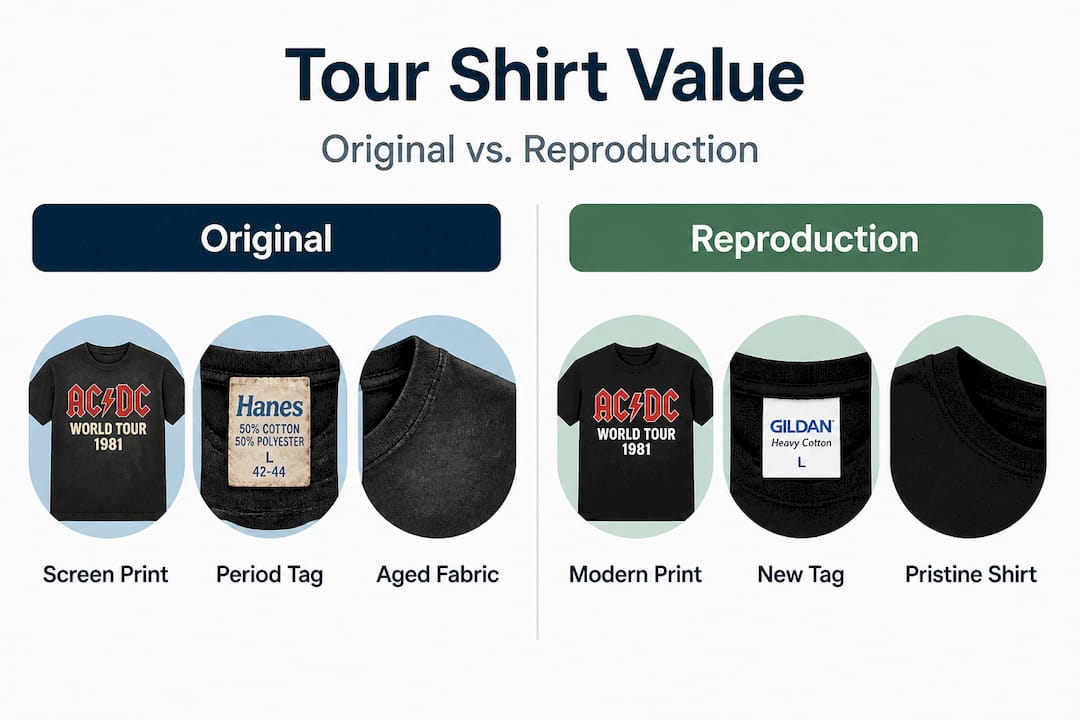
Authenticity is the foundation. An original screen-printed shirt from a 1994 Slayer tour is fundamentally different from a reproduction made in 2010 using the same design. Collectors use the 90s tour shirt checklist approach: examining the tag style, the print method, the fabric weight, and the colour fading patterns. Reproductions often have sharper, cleaner prints than originals because the original inks aged over decades. Knowing the difference takes practice but is absolutely essential.
Here is a comparison of what separates authentic originals from reproductions:
| Feature | Authentic original | Modern reproduction |
|---|---|---|
| Tag style | Period-correct (Anvil, Fruit of the Loom 90s era) | Modern tag or print-in tag |
| Print quality | Aged, slightly cracked ink | Clean, sharp edges |
| Fabric weight | Heavier, denser cotton | Lighter, often thinner |
| Colour depth | Faded naturally over time | Bright, uniform colouring |
| Provenance | Tour dates, specific venues listed | Generic or no tour info |
Design significance also plays a major role. Some 1990s metal shirts featured artwork by known illustrators or collaborative designs that were only available at specific shows. A festival-exclusive design from a one-off show differs massively from standard merchandise sold nationwide. If a shirt was only available at a single concert, its scarcity is locked in permanently.
The five key factors that determine cultural value in order of importance:
- Authenticity and verifiable origin
- Rarity of the specific print run or event
- Historical importance of the tour or show
- Condition of the shirt including print and fabric
- Market timing and current collector demand cycles
Knowing how to preserve old band tees is just as important as finding them. A culturally significant shirt in poor condition loses a substantial portion of its value. Condition is always a pricing variable, and it is one you can control once a shirt is in your hands.
Tour shirts as economic assets and investment pieces
The financial reality of vintage tour shirt collecting has changed dramatically over the past decade. What was once a niche hobby has attracted mainstream attention, auction house interest, and serious investment behaviour. Mainstream recognition of vintage music shirts as genuine economic assets is now well established, with high-profile sales making headlines internationally.
Consider what has happened with a handful of specific examples:
- Metallica “Damage Inc.” tour shirts (1986-87): Originally sold for under $15, these now regularly trade between $300 and $600 in good condition
- Pantera “Vulgar Display of Power” tour shirts (1992-93): Prices have climbed to $400 to $800 depending on condition and print variant
- Slayer “Seasons in the Abyss” era shirts: Rare original prints have fetched over $500 at specialist auctions
These are not outliers. The pattern holds across most major 1990s metal tours where original stock has survived in wearable condition. The economics of vintage shirts are driven by a simple supply and demand equation: shirts are being destroyed or lost every year while demand from collectors and general vintage fashion markets keeps growing.
Several factors shape pricing in this market:
- Nostalgia cycles: Demand spikes when bands reunite, release anniversary editions, or when key members pass away
- Crossover appeal: Shirts that appeal to both metal collectors and general vintage streetwear buyers command premium prices
- Condition grading: Mint or near-mint examples command a significant premium over worn examples
- Provenance documentation: A shirt with a purchase receipt, tour programme, or photograph from the event carries added value
Pro Tip: Holding a shirt through a band’s anniversary tour announcement can increase value significantly. The advantages of second hand band shirts bought before such announcements can be substantial if you have the patience to wait out the market cycle.
The decision to sell or hold is genuinely complex. Shirts tied to bands where a founding member has died tend to hold value permanently rather than cycling through boom and bust patterns. Pantera shirts following Dimebag Darrell’s death in 2004 saw a value floor established that has never really dropped. That kind of emotional and historical permanence is exactly what separates a great investment shirt from a good one.
Practical collecting: sourcing, authenticity and caring for your tour shirts
Building a serious collection requires a sourcing strategy, sharp authentication instincts, and solid preservation habits. Collectors who skip any of these three areas end up with expensive mistakes on their hands.
Sourcing authentic vintage tour shirts involves knowing where to look and where to be cautious:
- Specialist vintage metal stores: These offer authenticated stock with provenance and are the most reliable source for genuine items
- Estate sales and deceased estates: Family members clearing collections often have no idea what they hold, creating opportunities for informed buyers
- Record fairs and metal swap meets: Face-to-face inspection is possible, and sellers are often knowledgeable
- Online auction platforms: High risk without strong authentication knowledge, but genuine finds exist with careful searching
- Ex-tour stock and dead stock suppliers: Genuine unsold merch from original tour operators is some of the cleanest provenance available
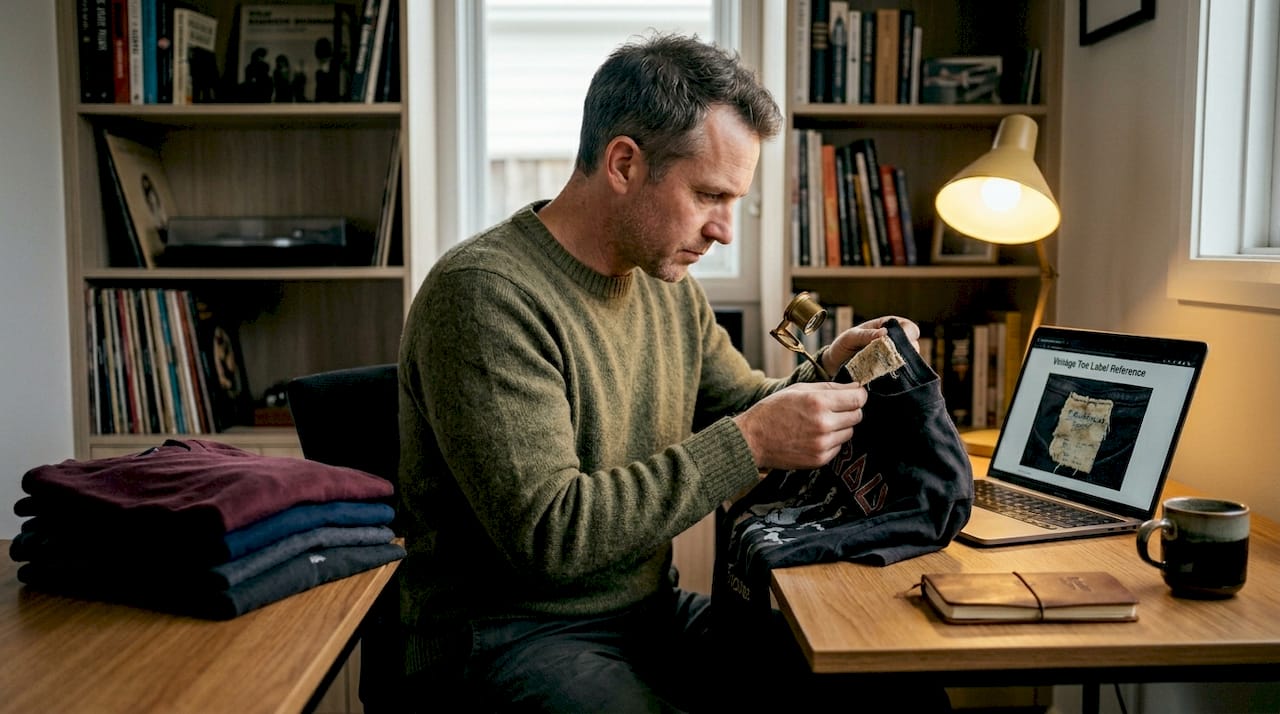
Authentication in practice is where experience matters most. When examining a shirt, always check the label first. Original 1990s shirts typically used single-stitch construction on the sleeves and hem. Modern shirts almost universally use double-stitch. This single detail eliminates a large percentage of fakes immediately. Learning how to spot genuine shirts takes time but dramatically reduces the risk of paying premium prices for reproductions.
Understanding why tour dates on shirts matter so much to collectors is also essential. A shirt listing specific venues and dates from an actual tour is verifiable. You can cross-reference those dates against historical setlists and concert records to confirm legitimacy. Generic shirts without dates are harder to authenticate and typically carry lower value.
Care and preservation is the final piece of the puzzle. Market timing for maximum sale value requires that your shirts remain in the best possible condition throughout the holding period. Follow these non-negotiable care principles:
- Wash inside-out in cold water on a gentle cycle only
- Never tumble dry, always air dry flat to prevent shrinkage and seam stress
- Store folded in acid-free tissue in a cool, dry, dark environment
- For display, use UV-filtering frames and avoid direct sunlight entirely
- Never iron directly onto a printed area
Common pitfalls for new collectors include buying reproductions sold as originals on general marketplace platforms, overpaying for shirts in poor condition because of band name recognition alone, and neglecting storage in humid environments that accelerate fabric and print degradation.
The overlooked legacy of tour shirts in metal culture
Most coverage of vintage tour shirts focuses on prices and authentication. That misses something important. These shirts are, in a very real sense, a form of oral history for the heavy metal scene. Metal culture has never had great archival institutions. There are no dedicated museums with proper funding. The academic study of the genre is still catching up. What does exist, in physical form, are the artefacts that fans created and kept: records, posters, photographs, and shirts.
Every tour shirt carries a story that cannot be found in any official catalogue. The fan who queued for three hours at the Slayer Sydney show in 1991. The teenager who saved for three weeks to buy a Metallica shirt at a Melbourne gig and wore it until it was barely holding together. Those lived experiences are woven into the fabric of these garments in a way that is not sentimental but genuinely historical.
We believe that why vintage T-shirts matter goes beyond the financial return. Wearing, trading, and displaying these shirts is an act of cultural preservation. When a collector rescues a 1993 Pantera shirt from a second-hand bin and treats it with the care it deserves, they are keeping a piece of metal’s living history intact.
The collectors who understand this are the ones building the most meaningful collections. Not just the most valuable ones. The difference matters because it shapes how you collect, what you prioritise, and what you are ultimately building over years of dedicated searching. A collection built on cultural understanding will almost always outperform one built purely on price speculation over the long term.
Explore authentic vintage tour shirts and grow your collection
If you have spent time understanding the cultural and financial weight these shirts carry, the next step is finding genuine pieces worth adding to your collection.
At Vintage Metal Store, we specialise in authenticated vintage heavy metal shirts sourced from ex-tour stock, dead stock, and carefully vetted second-hand collections. Every piece is examined for authenticity before it reaches you. For fans of the big four and beyond, our vintage Metallica shirts collection represents some of the finest authenticated examples available in Australia. If you are searching for a specific piece, the rare Metallica 1992 tour shirt is exactly the kind of historically significant, authenticated item that belongs in a serious collection.
Frequently asked questions
What makes a tour shirt ‘authentic’ in collector circles?
Original versus reproduction is the core distinction. Authentic shirts match period-correct tags, original print methods, single-stitch construction, and carry verifiable provenance linked to actual tour dates.
Are 1990s tour shirts worth more than other decades?
Shirts from the 1990s command strong premiums because market timing aligns with peak nostalgia cycles, and their unique graphic designs are highly sought after across both collector and vintage fashion communities.
How do I care for my vintage tour shirts to maintain their value?
Wash cold inside-out, always air dry flat, store in acid-free tissue away from light and humidity, and never apply direct heat to printed areas.
Where can I buy genuine vintage tour shirts online?
Specialist retailers like Vintage Metal Store focus exclusively on authenticated heavy metal shirts, making it far safer than general marketplace platforms where reproductions are common.
Why do collectors consider tour shirts an investment?
Vintage music shirts appreciate in value due to a permanently shrinking supply, growing demand from both metal collectors and the broader vintage fashion market, and their documented status as genuine cultural artefacts from a specific era in music history.
Recommended


