



TL;DR:
- Authentic 90s heavy metal shirts have thin fabric, cracked prints, and single-needle stitching.
- Modern fakes often feel thick, have vivid prints, and use double-needle stitching.
- Use light tests, fabric feel, print aging, and reference photos to verify genuineness.
You find it hanging on a rack at a market stall: an Iron Maiden or Metallica shirt that looks exactly right. The faded print, the worn collar, the whole vibe screams 1993. Then you get it home, and something feels off. The fabric is too thick, the ink too crisp, the tag suspiciously clean. You’ve been stung by a convincing modern reproduction. It happens to experienced collectors all the time, and with the value of 1990s metal shirts climbing sharply, the fakes have only gotten better. This guide gives you the exact steps to tell the real thing from a copy, every single time.
Table of Contents
- What makes a genuine vintage tour shirt?
- Tools and reference points: What you’ll need
- Step-by-step: Examining materials, tags, print, and wear
- Common mistakes and how to avoid getting stung
- Our take: The truth about authenticity in a sea of copies
- Where to find and buy authentic vintage tour shirts
- Frequently asked questions
Key Takeaways
| Point | Details |
|---|---|
| Check fabric and stitching | Vintage shirts are soft, thin, and usually single-stitched, not stiff or double-stitched. |
| Inspect print wear and tags | Authentic 90s prints show gentle ink cracking and original tags—beware swaps or fresh prints. |
| Use multiple checkpoints | Never trust just one detail; combine feel, look, stitching, and source for authenticity. |
| Avoid rookie mistakes | Don’t rely only on tags or deadstock claims—always look for genuine ageing and provenance. |
What makes a genuine vintage tour shirt?
Before you can spot a fake, you need to know what real looks like. Authentic 90s heavy metal tour shirts have a very specific feel, and once you’ve handled a genuine one, the difference becomes obvious fast.
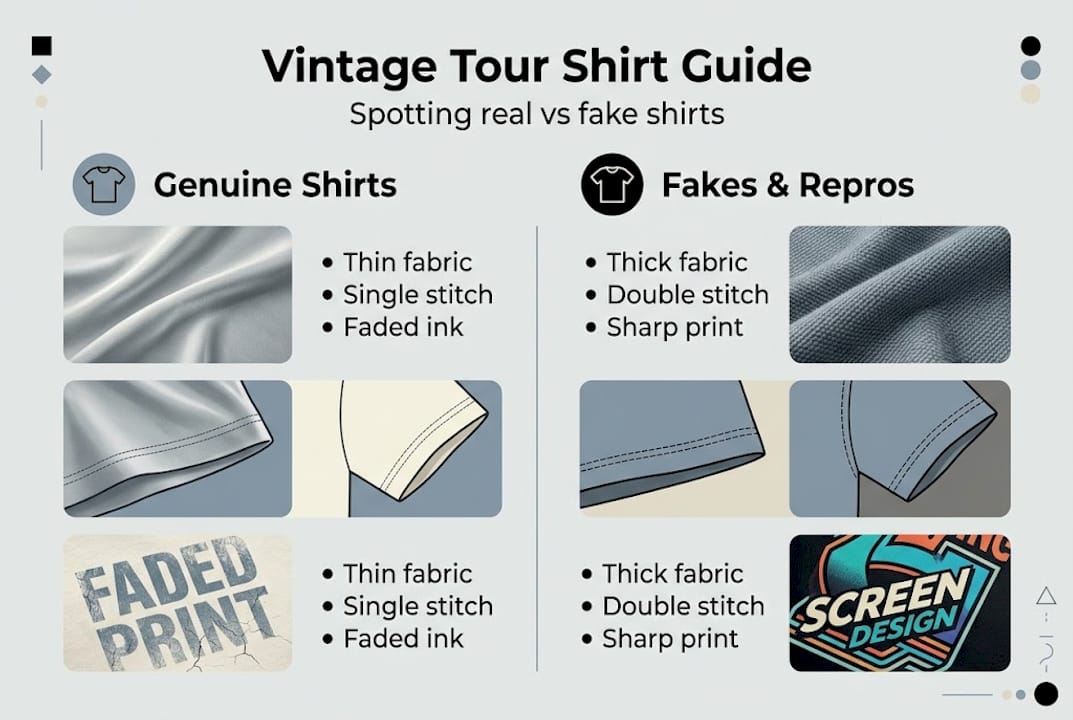
Fabric is your first clue. Authentic 90s heavy metal shirts are made from 100% cotton or 50/50 poly-cotton blends, and decades of washing have made them genuinely soft and thin. Modern reproductions use thicker, stiffer synthetic blends that feel almost board-like by comparison. If a shirt feels heavy and structured, that’s a red flag straight away.
Printing techniques tell a story too. Real 90s screen prints show their age through subtle ink cracking, slight fading at the edges, and a certain flatness to the colour. The ink has bonded with the fabric over time and looks like it belongs there. Reproductions often have prints that sit on top of the fabric, with sharp edges and colours that pop in a way that feels modern and artificial.
Stitching is another marker many collectors overlook. Early 90s shirts were typically single-needle stitched around the hems and collar. This produces a finer, narrower seam. Most modern shirts and reproductions use double-needle stitching, which creates a wider, more visible seam. Run your finger along the hem and you’ll feel the difference immediately.
Brand tags are useful but not foolproof. Legitimate tags from manufacturers like Brockum, Giant, and Hanes were common on genuine tour merch, and knowing what these looked like in the early 90s helps. However, tag swapping is a real tactic among fakers, so never rely on a tag alone.
Key authenticity markers at a glance:
- Thin, soft 100% cotton or 50/50 blend fabric
- Single-needle hem and collar stitching
- Cracked, faded screen print with flat colour
- Era-accurate brand tags (Brockum, Giant, Hanes)
- Slight overall discolouration or patina from age
- No synthetic sheen or modern fabric texture
| Feature | Genuine vintage shirt | Modern reproduction |
|---|---|---|
| Fabric weight | Light and thin | Thick and stiff |
| Print finish | Cracked, faded, flat | Sharp, vivid, raised |
| Hem stitching | Single needle | Double needle |
| Tag style | Era-accurate (Brockum etc.) | Generic or swapped |
| Smell | Musty cotton or old soap | New fabric or plastic |
Pro Tip: Shine a small LED torch through the shirt in a dim room. A genuine thin 90s shirt lets light pass through quite easily. A thick modern reproduction blocks most of the light. It’s a quick, reliable test you can do anywhere.
If you want to sharpen your eye further, reading up on identifying rare 1990s shirts will give you a solid foundation before you start hunting.
Tools and reference points: What you’ll need
Knowing what to look for is half the battle. Having the right tools with you when you’re hunting makes the other half much easier. Whether you’re at a market, a record fair, or scrolling through an online listing, preparation separates confident buyers from those who get burned.
A small LED torch is essential. It helps with the light test mentioned above and lets you examine print detail and fabric texture in poor lighting conditions. A magnifying glass or your phone’s camera zoom function is equally valuable for checking print edges, tag text, and stitching quality up close. Many collectors keep reference photos saved on their phone so they can compare a shirt in hand to a known genuine example.
Sophisticated fakes can use deadstock blanks with old printing presses, which makes them genuinely difficult to spot by tag or fabric alone. In these cases, ink oxidation and wear patterns become your most reliable indicators. This is why having reference images of real print ageing is so important.
Keep a tour shirt checklist saved on your phone for quick reference while shopping. A good checklist keeps you from skipping steps when excitement takes over.
Your shirt hunting toolkit:
- Small LED torch
- Phone camera with zoom or a magnifying glass
- Reference photos of genuine shirts (saved offline)
- Checklist of authenticity markers
- Knowledge of era-accurate tag brands and shapes
- Patience to check every indicator, not just one
| Check | What to look for | Tool needed |
|---|---|---|
| Fabric thickness | Thin, soft, light-passing | LED torch |
| Print ageing | Cracking, fading, flat ink | Phone camera zoom |
| Stitching type | Single vs double needle | Fingers or magnifier |
| Tag accuracy | Brand, font, print style | Reference photos |
| Smell test | Musty vs new synthetic | Your nose |
For a more detailed walkthrough of what to bring and check before committing to a purchase, the buying checklist is worth bookmarking.
Step-by-step: Examining materials, tags, print, and wear
You’ve got your tools. Now here’s how to actually work through a shirt from first touch to final verdict. Follow these steps in order and you’ll rarely get caught out.
1. Feel the fabric first. Before you look at anything else, hold the shirt and feel its weight. Genuine 100% cotton vintage shirts feel almost tissue-like after decades of washing. If the shirt feels heavy, structured, or slightly rough, be cautious.
2. Check the tag under the neckline. Look for era-accurate manufacturer tags. Brockum was a major tour merch company through the late 80s and early 90s. Giant was common from the mid-80s through the 90s. Check the font, the stitching on the tag itself, and whether it looks like it’s been replaced. A crisp, clean tag on an otherwise aged shirt is suspicious.
3. Inspect the print edges closely. Use your phone camera or magnifying glass. Real 90s screen print edges show micro-cracking and slight bleeding into the fabric weave. Reproduction prints have clean, hard edges and often a slight raised texture.
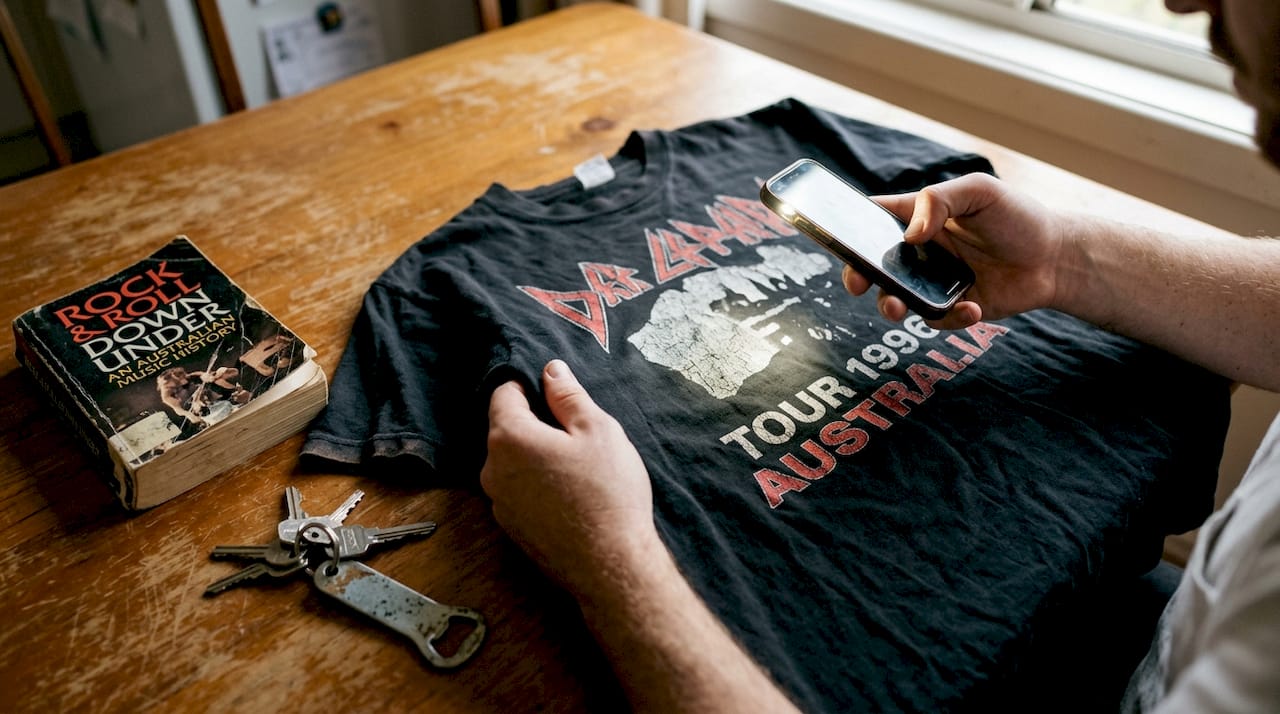
4. Look for natural wear patterns. Genuine shirts show fading at the yoke (the shoulder area), under the arms, and along the collar. This fading is uneven and organic. Artificially distressed shirts often show fading that’s too uniform or in the wrong places.
5. Run your finger along the hem. Single-needle stitching feels narrow and tight. Double-needle is wider and more prominent. Most authentic early 90s shirts use single-needle construction.
6. Smell the shirt. This sounds odd but it works. Real 90s cotton shirts carry a faint musty smell, like old fabric or faded laundry soap. Synthetic fakes often smell new, slightly plasticky, or like fresh dye.
“Some fakes use deadstock blanks with old presses. Only ink oxidation and wear patterns tell the truth.”
Pro Tip: If a shirt smells like it was just unpacked from a warehouse, walk away regardless of how good it looks. Scent is one thing fakers can’t easily replicate.
For more guidance on buying second hand shirts and what to watch for with identifying dead stock, those resources will add depth to your process.
Common mistakes and how to avoid getting stung
Even experienced collectors make errors. The faking industry has become genuinely sophisticated, and some reproductions are good enough to fool people who’ve been collecting for years. Knowing the most common traps is your best defence.
The biggest mistake is trusting a single indicator. A correct tag doesn’t guarantee a genuine shirt. Neither does a convincing print or the right fabric feel in isolation. Fakers know which individual markers collectors check, and they focus their effort there. You need to check everything together.
The value of genuine 90s shirts has surged over 150% in five years, which means the financial incentive to fake them has never been higher. That context matters when you’re assessing a deal that seems too good.
Most frequent collector mistakes:
- Trusting the tag without checking fabric or print
- Assuming “deadstock” labelling guarantees authenticity
- Buying from sellers with no track record or returns policy
- Skipping the smell test because it feels awkward
- Not checking stitching because the print looks right
- Ignoring gut instinct when something feels slightly off
- Failing to compare against reference photos before buying
The deadstock trap is particularly worth understanding. Sophisticated fakes use old blank shirts sourced from genuine deadstock and reprint them using period-appropriate techniques. The blank passes every fabric and tag test. Only the ink ageing gives it away, because reprinted ink lacks the oxidation and micro-cracking that comes from decades of actual exposure.
If you’re ever unsure, don’t rush the purchase. Community forums, collector boards, and specialist blogs are full of people who’ve seen more shirts than you and are usually happy to give a second opinion. There are also authentic retail alternatives worth knowing about if a particular deal feels risky.
Our take: The truth about authenticity in a sea of copies
We’ve handled thousands of vintage tour shirts, and here’s what we know for certain: faking has never been more sophisticated, but it still can’t perfectly replicate the lived-in quality of a real 90s piece. There’s a texture, a patina, a weight to genuine vintage cotton that comes only from time. No factory process can manufacture 30 years of actual wear.
The near-miss buys, the shirts you nearly got fooled by, those are actually your best teachers. Every time you almost buy a fake and catch yourself, you sharpen your instincts. Collectors who’ve been doing this for a decade didn’t start out knowing everything. They learned by handling shirts, making mistakes, and sharing knowledge with others.
True collecting isn’t just about owning pieces. It’s about the community wisdom that gets passed around at markets and in forums, the shared mistakes that save the next person from the same error. The collector stories from people who’ve been doing this longer than most are genuinely worth reading. The thrill is as much in the learning as it is in landing the perfect shirt.
Where to find and buy authentic vintage tour shirts
Ready to put what you’ve learned into practice? The safest starting point is always a specialist retailer with clear provenance, expert vetting, and a returns policy you can actually rely on.

Our collection includes authenticated pieces like the rare Metallica 1992 tour shirt and a broad range of vintage Metallica shirts, plus Iron Maiden, Pantera, Slayer, and deep-cut 90s bands that serious collectors actually want. Every piece in the full authentic shirt range is assessed for fabric, print, tag, and wear markers before it goes up. If you have a shirt you want authenticated or valued, get in touch and we’ll give you honest, expert feedback.
Frequently asked questions
How do I quickly spot a fake 90s heavy metal shirt?
Check for genuinely thin, soft cotton, cracked or subtly faded ink, and single stitch hems. Modern fakes often feel thick or stiff and have fresh print edges that sit on top of the fabric rather than settling into it.
Are deadstock shirts always genuine?
No. Sophisticated fakes can use old stock blanks and reprint them using period techniques, so check ink ageing and wear patterns carefully rather than relying on tags or the deadstock label alone.
What’s the safest way to shop for real vintage tour shirts?
Buy from respected vintage retailers with clear returns policies and expert-authenticated listings, and always check multiple indicators rather than trusting a single marker.
Do all 90s tour shirts use single stitching?
Most early 90s authentic shirts use single stitch hems, but double stitch does appear on later 90s models and some legitimate band shirts, so use stitching as one indicator among several rather than a definitive test.
Recommended
- Vintage tour shirt checklist for 90s metal collectors – Vintage Metal Store
- 7 Steps to the Ultimate Heavy Metal Shirts Buying Checklist – Vintage Metal Store
- Collector’s guide to authentic vintage band tees: 5 expert checks – Vintage Metal Store
- Why Tour Dates on Shirts Matter for Metal Fans – Vintage Metal Store


