



TL;DR:
- Band tee drops are limited releases tied to specific events, creating scarcity and collector appeal.
- Genuine drops feature numbered runs, unique artwork, and official announcements, distinguishing them from reprints.
- Vintage band tees hold higher long-term value and cultural significance compared to modern reprints or overhyped drops.
Not every band t-shirt is created equal, and if you’ve ever missed out on a limited run only to see it flip for triple the price online, you already know this. A band tee drop is a limited-time release of band t-shirts, often exclusive apparel tied to tours, albums, or special events, creating scarcity and urgency for fans and collectors. This guide breaks down exactly how drops work, why they trigger serious FOMO, how they compare to genuine vintage finds, and what you need to do to land the tees that actually matter for your collection.
Table of Contents
- What is a band tee drop?
- How band tee drops work: Mechanics and strategies
- Band tee drops versus vintage: What’s the difference and why it matters
- How to get the most from a band tee drop: Collector tips
- A collector’s perspective: The real trade-offs behind band tee drops
- Exclusive finds for collectors and fans
- Frequently asked questions
Key Takeaways
| Point | Details |
|---|---|
| Band tee drops explained | A band tee drop is a limited, often exclusive t-shirt release designed to drive hype and collectability. |
| Release mechanics matter | Bands use time limits, numbered runs, and marketing tactics to build anticipation and urgency. |
| Vintage vs. drops | Vintage tees carry lasting collector value, while unique drops offer short-term excitement and scarcity. |
| Collector best practices | Prepare for release windows, verify authenticity, and decide what fits your collection goals best. |
What is a band tee drop?
Not all band merch is born the same. Walk into any chain store and you’ll find generic reprints of classic logos. A drop is something else entirely. Understanding what a band tee actually represents in collector culture is the first step to knowing why drops hit differently.
A limited-time band tee release is a specific, time-sensitive batch of shirts tied to a moment: a tour, an album anniversary, a one-off event. The key word is limited. Bands deliberately restrict quantity, sometimes to as few as 100 units, to create demand that far outstrips supply. That gap between want and availability is what turns a shirt into a collector’s item overnight.
Drops carry several defining features that set them apart from standard merch:
- Numbered runs: Each shirt in the batch is assigned a number, confirming exactly how many exist
- Unique artwork: Designs are often created specifically for the drop, never to be reprinted
- Event ties: Linked to a tour date, album launch, or anniversary, adding cultural weight
- Time or quantity limits: Either a 24 to 72 hour window or a hard cap on units sold
- FOMO marketing: Countdown timers, social teasers, and exclusive presale codes build urgency
Bands like Type O Negative built enormous collector demand around releases tied to albums such as October Rust, where the shirt became as iconic as the record itself. When a drop sells out in minutes, it signals cultural relevance. Serious collectors understand the types of vintage band tees that hold long-term value, and they use that knowledge to filter genuine drops from overhyped noise.
Casual listeners might grab a shirt because they like the design. Collectors approach a drop like a strategic purchase, asking whether this piece will appreciate, whether the artwork is unique, and whether the band’s legacy justifies the price. That difference in mindset is what separates a wardrobe from a collection.
How band tee drops work: Mechanics and strategies
Knowing a drop is coming is only half the battle. Understanding the mechanics behind how bands actually launch them gives you a serious edge as a collector.

Bands use three main release methods. Print-on-demand is low-risk and suits smaller acts testing demand without holding stock. Bulk production is used for tours, where shirts are printed in volume and sold at the merch table. Pre-orders let bands gauge interest before committing to a print run, often with a closing date that creates its own urgency.
Here’s a quick comparison of the most common drop formats:
| Format | Quantity | Window | Best for |
|---|---|---|---|
| Print-on-demand | Unlimited | Set time window | Testing new designs |
| Bulk tour stock | 200 to 2,000 units | Event duration | Live show exclusives |
| Limited pre-order | 100 to 500 units | 24 to 72 hours | Album or anniversary drops |
| Dead stock release | Fixed (existing units) | Until sold | Rare vintage finds |
Promotion is where bands build the hype machine. Social teasers, email list exclusives, and countdown timers are all standard tools. Drops tied to album or tour releases consistently maximise sales, and heavy metal fans in particular respond to heavyweight ringspun cotton and garment-dye finishes that deliver a genuine vintage aesthetic. Pricing follows production: standard tees typically sit at $25 to $35 AUD, while heavyweight or specialty prints push $40 to $50 AUD, with band margins running 65 to 80 per cent after bulk costs.
To spot a true drop versus ongoing merch, follow these steps:
- Check for a hard quantity cap or countdown timer on the product page
- Look for drop-specific artwork not found in the standard catalogue
- Verify the release is tied to a specific event or date
- Confirm the band or label is announcing it directly, not a third-party retailer
- Search examples of vintage band tees to compare genuine limited runs against reprints
Some brands have taken gamified drop strategies from streetwear into music merch, using waitlists, raffles, and loyalty tiers to control access. It’s smart marketing, but it also means you need to be signed up and paying attention well before the drop goes live.
Pro Tip: Set calendar reminders for band newsletter announcements, not just social posts. Email lists almost always get first access, and by the time a drop hits Instagram it’s often already sold out.
Band tee drops versus vintage: What’s the difference and why it matters
Grabbing a fresh drop feels exciting. But is it the same as owning a genuine vintage original? For serious collectors, the answer is a firm no, and understanding why protects both your money and your collection’s integrity.
| Type | Scarcity | Cultural value | Resale potential | Risk |
|---|---|---|---|---|
| Exclusive new drop | High (if truly limited) | Moderate, growing | Variable | FOMO fatigue, oversaturation |
| Vintage original | Very high | Extremely high | Strong, proven | Fakes, mislabelling |
| Modern reprint | Low | Low | Minimal | Misrepresented as vintage |
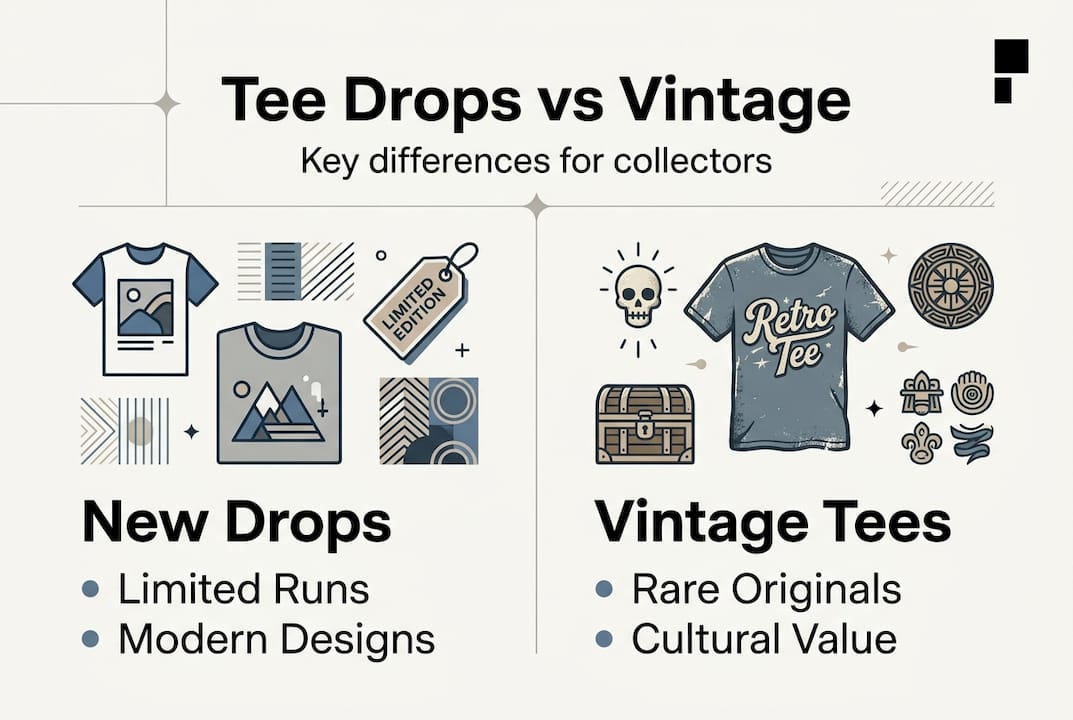
Vintage tees are prized for their cultural and historical value in ways that reprints simply cannot replicate. A shirt from a 1989 Slayer tour carries the weight of that era: the screen printing technique, the fabric weight, the faded ink. No modern reproduction captures that authentically.
The risks with new drops are real:
- FOMO fatigue: Constant drops train collectors to buy impulsively, often for pieces that don’t hold value
- Oversaturation: Some bands release so many “limited” runs that scarcity becomes meaningless
- Mislabelled reprints: Third-party sellers frequently list modern reproductions as rare originals
“Vintage band shirts carry a cultural and historical weight that no limited drop can manufacture. The shirt is a document of a moment in heavy music history.”
Preserving old band tees is a practice that reflects this understanding. A well-kept original from a 1990s tour is a primary source. Knowing what makes a shirt vintage versus a reprint is essential knowledge for any collector who wants to build a collection that actually appreciates over time.
New drops can absolutely earn their place in a serious collection, but only when the band has genuine legacy, the run is truly limited, and the artwork is original. Everything else is just a shirt.
How to get the most from a band tee drop: Collector tips
Strategy separates collectors who land the tees they want from those who miss out and overpay on the secondary market. Here’s how to play it smart.
- Follow official channels first: Band websites and email lists announce drops before social media. Sign up early
- Know your sizing before the drop goes live: Sizing charts vary by printer and fabric. Confirm your size in advance so you’re not guessing under pressure
- Research the band’s drop history: Some acts release frequently, making “limited” a loose term. Others genuinely restrict runs to a few hundred units
- Set a budget ceiling: Decide your maximum spend before the drop opens. Urgency and countdown timers are designed to override rational thinking
- Check production details: Drops tied to album releases like Type O Negative’s October Rust collections use heavyweight ringspun cotton and DTG printing for a vintage feel. These details signal quality and collectability
- Act within the first hour: For genuine limited runs of 100 to 500 units, waiting even a few hours can mean missing out entirely
Managing FOMO is just as important as acting fast. Not every drop deserves your money. Collecting with intention means asking whether this shirt fits your focus area, whether the band has lasting cultural relevance, and whether you’d still want it in five years.
For pieces that truly matter, like a limited edition tour shirt from a band with genuine legacy, acting decisively is the right call. For everything else, patience is a collector’s best tool.
Pro Tip: Track the resale market on platforms like Discogs and eBay for three to six months before committing to any new drop. If previous runs from the same band haven’t held value, the next one probably won’t either.
A collector’s perspective: The real trade-offs behind band tee drops
Drops are exciting. There’s no point pretending otherwise. That countdown timer triggers something real, and when you land a shirt from a band you genuinely love, it feels like a win. But after years of watching the heavy metal merch scene, the trade-offs become impossible to ignore.
The gamified drop model borrowed from streetwear has made buying band merch feel like a competitive sport. That’s not always a good thing. It rewards speed over knowledge, and it trains collectors to react rather than think. Some of the best pieces in any serious collection came from patience, not panic buying.
The collector’s real dilemma is this: chase every drop and risk FOMO fatigue, or focus on the enduring value of genuine vintage originals that no reprint or new drop can touch? The honest answer is that both have a place, but vintage will always be the foundation of a collection that means something. New drops are moments. Vintage originals are history.
When limited actually means limited, a drop can become a genuine artefact. But that’s rarer than the marketing suggests.
Exclusive finds for collectors and fans
If this guide has sharpened your eye for what’s worth chasing, the next step is finding pieces that actually deliver on the promise of genuine scarcity and lasting value.
At Vintage Metal, we stock authentic ex-tour stock, dead stock, and second-hand heavy metal tees sourced directly from tours and bands. Whether you’re after a rare Metallica 1992 tee or want to browse the full range of all Metallica tour shirts, every piece in our collection is the real thing. Explore our full range of vintage band shirts and sign up for alerts so you’re first to know when rare stock lands. These aren’t reprints. They’re the originals.
Frequently asked questions
Why are band tee drops so popular among collectors?
Band tee drops are prized for their scarcity, unique designs, and ties to specific events, making them highly sought after for collection and trading. Their limited-time availability creates urgency that turns a shirt into a cultural artefact.
How can I tell if a band tee drop is truly limited?
Check for numbered runs, countdown timers, transparent quantity caps, and direct announcements from the band or label. Authentic drops use 24 to 72 hour windows or hard unit limits to confirm genuine scarcity.
Are vintage band tees worth more than new limited drops?
Often yes. Vintage originals hold greater cultural and collector value than most new drops, though some exclusive releases do gain value when demand and scarcity remain high over time.
What’s the best way to get early access to band tee drops?
Join band email lists first, then follow official social media accounts and monitor fan forums. Email lists get first access to presale codes and drop announcements before anything goes public.
Recommended
- 7 Iconic Types of Heavy Metal T Shirts for Collectors – Vintage Metal Store
- Why preserve old band tees? Value, culture and know-how – Vintage Metal Store
- 7 Types of Vintage Band Tees Every Collector Should Know – Vintage Metal Store
- Sample band t-shirts: Rare finds and collector value – Vintage Metal Store


