



TL;DR:
- Understanding the quality and origin of second-hand metal tees helps collectors distinguish between genuine vintage pieces and reprints. Authentic tour, deadstock, and logo tees in quality fabrics like heavyweight cotton tend to hold the most long-term value and display character through wear and fading. Evaluating print edges, stitching, and tags is essential to assessing condition and authenticity for building a valuable, meaningful collection.
If you’ve spent any time hunting through racks or scrolling listings for the right piece, you know that understanding the types of second hand metal tees is what separates serious collectors from casual browsers. Not every shirt is created equal, and not every vintage tee deserves the same price tag. The differences between a genuine 1990s tour shirt, a logo tee, and a full-print deadstock piece come down to design, fabric, print method, and wear patterns. This guide breaks all of that down so you can buy smarter, collect better, and never overpay for something that doesn’t hold up.
Table of Contents
- Key takeaways
- Types of second hand metal tees: what to look for first
- 1. Classic tour and concert tees
- 2. Logo tees
- 3. Full-print and all-over graphic tees
- 4. Deadstock and ex-tour stock tees
- 5. Long-sleeve and specialty variants
- 6. Bootleg and unofficial tees
- 7. Comparing types by design, material, and collector value
- 8. Choosing the right second-hand metal tee for your goals
- My honest take on collecting second-hand metal tees
- Find authentic vintage metal tees at Com
- FAQ
Key takeaways
| Point | Details |
|---|---|
| Fabric determines longevity | Cotton and tri-blend fabrics age better and hold prints longer than synthetic materials. |
| Tour tees carry the most value | Original concert and tour shirts with front and back designs consistently attract the highest collector interest. |
| Wear and fading add character | Authentic fading on vintage prints is a feature, not a flaw, and signals genuine age. |
| Logo tees hold value longest | Simple, bold logo designs age better aesthetically and remain collectible across generations. |
| Know your collecting goal | Investment collectors, wearers, and display collectors should prioritise different tee types accordingly. |
Types of second hand metal tees: what to look for first
Before you can confidently compare different metal tee styles, you need a reliable way to evaluate what you’re holding. Second-hand tees vary wildly in quality, and knowing what to check before you buy saves you from expensive mistakes.
Fabric is your starting point. Natural fibres like cotton are more durable and far less prone to pilling than synthetic alternatives. A proper vintage metal tee from the 1980s or 1990s will almost always be a heavy-weight cotton or a cotton-polyester blend. Stretch the fabric gently and let go. Cotton and natural fibres typically snap back to their original shape, which tells you a lot about the shirt’s remaining wearability.
Print style matters enormously. Screen-printed graphics done with plastisol inks hold up across decades. You’ll notice a slight raised texture on the print surface. If the graphic looks flat and woven into the fabric, that’s a sublimation print, common in reproductions. Genuine vintage prints often show cracking at the edges, which is perfectly normal and part of the appeal.
Stitching tells the story. Even stitching and reinforced stress points at the collar, hem, and sleeves indicate a well-constructed garment. A shirt that’s been through fifty washes and still has tight seams was made to last.
Here’s a quick checklist to run through before buying:
- Check the collar for pilling, thinning, or stretch-out that won’t recover
- Feel the fabric weight. Heavier cotton signals better original quality
- Look at print edges for natural cracking versus flaking, which indicates a print beginning to fail
- Inspect seam stitching under the arms and along the hem
- Examine the tag. Original tags from known printers like Screen Stars, Hanes, or Fruit of the Loom help date the shirt
Pro Tip: When buying online, always ask the seller to photograph the collar tag and the print edges in natural light. These two areas reveal more about age and quality than any full-front shot.
1. Classic tour and concert tees
These are the crown jewels of any collection. Classic tour tees were produced in limited runs specifically for band tours and concerts, often screen-printed with a front graphic and a full tour date listing on the back. That back print is what separates a proper tour tee from a standard merch shirt.
The Metallica “Black Album” 1991 tour shirts, for example, carry both the signature skull graphic on the front and a full list of tour dates across North America, Europe, and Australia on the back. That tour context is irreplaceable. You’re not just buying a shirt; you’re buying a document of a specific moment in music history.
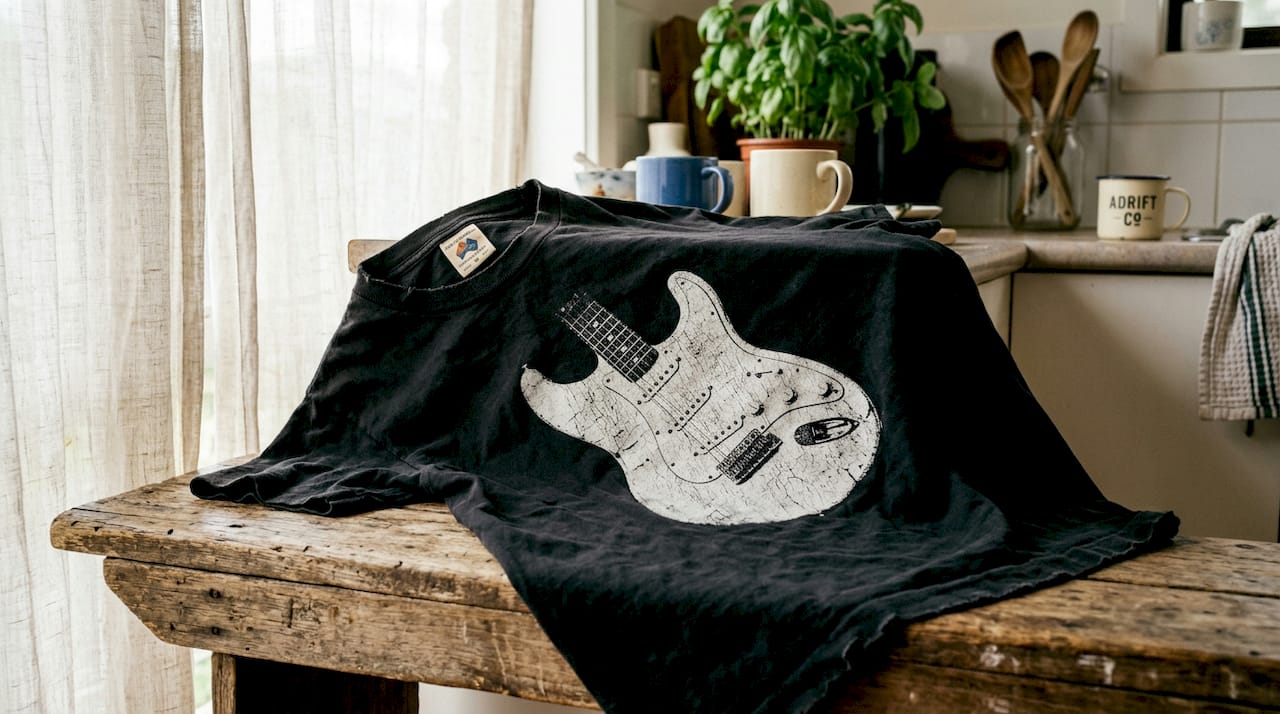
These shirts were printed cheaply and quickly, which is actually a mark of authenticity. Thin, worn-in fabric with a slightly off-centre print is exactly what you want to see. Authentic fade and wear on these vintage prints develops a unique character that modern reprints simply cannot replicate.
2. Logo tees
Logo tees strip everything back to the band’s name, presented in the most iconic way possible. Think the Metallica lightning bolt logo, the Slayer red-and-black hawk, or Motörhead’s Snaggletooth skull. The entire design exists to communicate one thing, loudly and clearly.
What makes these so collectible is their longevity. Logo tees maintain appeal longer than design-of-the-moment graphics, which means they hold collector value across generations. A logo tee from 1988 still reads as cool in 2026 because the design was never trend-dependent.
Simplicity in design allows the artwork to remain legible and impactful over time. These are also often the safest entry point for newer collectors, because logo tees are easier to authenticate and date based on the tag and print style alone.
3. Full-print and all-over graphic tees
These shirts go all in on the visual. Full-print tees typically feature elaborate artwork that covers most or all of the shirt’s surface, often depicting album artwork, battle scenes, or fantasy imagery closely associated with the band’s aesthetic. Iron Maiden’s Eddie character across a full chest print is a perfect example.
These tees are trickier to evaluate because the complexity of the print means more opportunities for things to go wrong. Cracking, fading, and peeling all become more visible across a large graphic. When you find a full-print tee in genuinely good condition, it commands serious attention, particularly if the artwork corresponds to a specific album cycle or tour.
4. Deadstock and ex-tour stock tees
Deadstock refers to shirts that were never sold or worn. They went from the printer to a box, and stayed there. Ex-tour stock comes from the same place conceptually: shirts that were produced for a tour but didn’t move at the merch table.
These are among the rarest varieties of used metal tees you’ll encounter because they combine the authenticity of original production with condition that often rivals new. The fabric hasn’t been washed repeatedly, the print is fully intact, and the tag is usually pristine. Com specialises in exactly this category, sourcing genuine ex-tour stock and deadstock from heavy metal tours and bands.
Finding deadstock in sizes other than the ubiquitous XL is genuinely rare. If you come across a deadstock small or medium from a notable tour, that’s a serious collector’s piece.
5. Long-sleeve and specialty variants
Long-sleeve metal tees exist in far smaller quantities than their short-sleeve counterparts. They were produced less frequently, often only for specific legs of a tour or as limited winter merchandise. For that reason alone, they carry a scarcity premium in the collector market.
Beyond long sleeves, you’ll occasionally encounter zip-up hoodies with screen-printed graphics, raglan sleeves, and baseball-style tees from certain bands and eras. These aren’t common, and their rarity makes them worth knowing about. A genuine 1980s thrash metal raglan tee is a standout piece in any collection.
6. Bootleg and unofficial tees
Bootleg tees occupy a genuinely interesting place in metal collecting. These are shirts produced without the band’s official authorisation, often sold outside venues during major tours. They were printed quickly, usually on cheaper stock, and often feature designs that official merch couldn’t or wouldn’t use.
The irony is that bootleg tees from the 1980s and early 1990s are now legitimately collectible in their own right. They document a parallel economy that existed around live music, and they’re historically interesting for exactly that reason. Authenticity here means confirming the shirt is a genuine bootleg from the era, not a modern fake of a fake.
7. Comparing types by design, material, and collector value
Understanding the differences between these types helps you build a collection with purpose rather than just accumulating shirts. Here’s a practical comparison:
| Type | Design complexity | Fabric durability | Collector value | Best for |
|---|---|---|---|---|
| Tour and concert tees | Medium to high (front/back) | Variable, often thin cotton | Very high | Investment collectors |
| Logo tees | Low (bold, simple) | Good to excellent | High and stable | All collector types |
| Full-print tees | Very high | Medium (print can fail) | High in good condition | Display and investment |
| Deadstock and ex-tour | Any | Excellent (unworn) | Very high | Serious investment |
| Long-sleeve and specialty | Variable | Good | High due to rarity | Completing a collection |
| Bootleg tees | Variable | Often thin | Moderate to high | Historical interest |
Pro Tip: Soft tri-blend and ringspun cotton tees fade beautifully and maintain their feel over decades. When you’re assessing a shirt’s long-term value, fabric quality is as important as the graphic printed on it.
For collectors focused on resale value, tour tees and deadstock pieces consistently perform best over time. Logo tees hold steady because they never go out of style. Full-print tees are boom-or-bust depending on condition. Checking a platform like Escrobox can help you gauge which styles are commanding real resale interest right now.
8. Choosing the right second-hand metal tee for your goals
Not every collector wants the same thing, and the best tee for you depends entirely on why you’re collecting. Here’s how to match your goal to the right type:
- Investment and rarity focus: Go for original tour tees and verified deadstock. These hold value and appreciate when provenance is clear. A well-documented vintage t-shirt grading approach will help you assess condition precisely.
- Authentic daily wear: Logo tees and standard merch shirts in good condition are your best bet. They’re durable, readable, and won’t make you anxious about washing them.
- Style and vintage fashion appeal: Full-print tees and specialty variants give you the visual impact that makes vintage metal apparel stand out in any outfit.
- Budget-conscious collecting: Bootleg tees and less prominent bands’ concert shirts can be found at lower prices while still offering genuine vintage appeal. The classic examples worth studying will sharpen your eye for quality at any price point.
- Building a diverse collection: Mix types deliberately. One strong tour tee, two or three logo tees, and a specialty variant tells a more complete story than a wall of identical merch.
The cultural significance of what you’re collecting is worth sitting with. These shirts weren’t made to be archived. They were printed fast, sold cheap, and worn hard. The ones that survived are the ones worth having.
My honest take on collecting second-hand metal tees
I’ve spent years handling hundreds of vintage tees, and the thing that surprises newer collectors most is how wrong their assumptions about rarity are. They come in thinking a mint-condition shirt with a perfectly intact print is the holy grail. And sometimes it is. But some of the most collectible pieces I’ve encountered were faded, cracked, and clearly worn to within an inch of their life.
The fade tells you the shirt was there. It was at the show, on someone’s back, in the pit. That’s irreplaceable context. A deadstock shirt is beautiful, but a properly worn 1986 Metallica tour tee that’s clearly been through it carries a kind of authenticity that a pristine warehouse find can’t match.
Where I see collectors go wrong most often is prioritising the design over the material. A great graphic on a cheap synthetic shirt from a later reprint is worth a fraction of the same graphic on original heavyweight cotton from the correct era. Learn your fabrics before you spend serious money.
My preference has always been logo tees in genuine vintage cotton. Simple, legible, and nearly impossible to fake convincingly when you know what you’re looking at. They’re the most collectible metal tees for a reason.
— David
Find authentic vintage metal tees at Com
If you’re ready to stop hunting through misfiled racks and start building a real collection, Com’s curated selection of second-hand heavy metal tees is worth your time. The focus is on genuine ex-tour stock and deadstock pieces sourced directly from heavy metal tours and bands, which means you’re getting shirts with real provenance, not reprints dressed up as originals.
The collection includes some genuinely rare pieces, including the Metallica 1992 Don’t Tread on Me USA tour shirt, a legitimate collector’s item that rarely comes up in this condition. If Metallica is your focus, the full vintage Metallica shirts catalogue is worth browsing. For a broader look across bands and styles, the complete vintage metal tees collection covers everything from classic thrash to classic heavy metal.
FAQ
What are the most collectible types of second hand metal tees?
Original tour and concert tees with front graphics and back tour date listings are consistently the most collectible, followed by verified deadstock pieces in excellent condition. Logo tees from iconic bands also hold strong long-term value.
How do I know if a vintage metal tee is genuine?
Check the collar tag for era-appropriate printer brands like Screen Stars or Hanes, look for natural print cracking and fabric fading consistent with age, and assess stitching quality at the seams. A collector’s guide to grading can provide detailed criteria for specific eras.
Do fading and wear reduce the value of a second-hand metal tee?
No. Authentic fading and wear are considered desirable by most collectors because they confirm genuine age and use. Modern reprints cannot replicate the natural character that decades of wear produces.
What fabric should I look for in a vintage metal tee?
Heavyweight cotton and tri-blend fabrics are the most desirable. Natural fibres are more durable, resist pilling, and fade in ways that actually improve the look of vintage prints over time.
What is the difference between deadstock and ex-tour stock?
Deadstock refers to shirts produced but never sold, often found in original storage. Ex-tour stock specifically means shirts produced for a tour’s merch table that didn’t sell at the shows. Both categories represent unworn originals and typically command premium prices.
Recommended
- Master rare tee terminology: The collector’s guide – Vintage Metal Store
- How to Sell Vintage Metal Tees for Maximum Profit – Vintage Metal Store
- Vintage vs Second Hand Shirts: Value for Collectors – Vintage Metal Store
- How to customise metal tees for a personalised vintage look – Vintage Metal Store


