


Customising vintage heavy metal t-shirts presents a unique challenge for collectors and enthusiasts who want to express their individuality while preserving the authentic character and potential value of rare band merchandise. Whether you own deadstock from legendary 90s tours or second-hand tees with decades of history, finding the right balance between personalisation and preservation requires careful technique selection and execution. This comprehensive guide walks you through proven DIY methods, essential tools, and collector-conscious approaches that let you create a distinctive look without compromising the integrity of your prized metal tees.
Table of Contents
- Key takeaways
- What you need: tools and materials for customising metal tees
- Step-by-step guide to customising your vintage metal tee
- Commercial and preservation-conscious customisation options
- Discover authentic vintage metal tees and custom gear
- How to customise metal tees: frequently asked questions
Key Takeaways
| Point | Details |
|---|---|
| Edge distressing | Use coarse sandpaper to rub the collar sleeves and hem until fibres fray for authentic worn edges. |
| Strategic rips | Pinch fabric between your fingers and make small cuts with scissors, then gently pull to extend tears for a natural worn look. |
| Bleach fading | Mix one part bleach to three parts water in a spray bottle, mist targeted areas and monitor colour lift for three to five minutes before neutralising with a vinegar water solution. |
| Safety measures | Work in a well ventilated space, wear gloves and test on inconspicuous areas first to protect the fabric and your health. |
| Reversible patches | Collectors favour reversible customisation such as Velcro patches to preserve value and allow later restoration. |
What you need: tools and materials for customising metal tees
Before diving into customisation, assembling the right toolkit ensures you achieve professional results while minimising risk to your vintage shirts. The materials you select directly impact both the aesthetic outcome and the long-term preservation of your tees.
Essential tools for metal tee customisation include coarse sandpaper or a Dremel rotary tool for edge distressing, sharp fabric scissors or a safety razor for controlled ripping, diluted bleach solution or strong tea for colour fading, quality fabric paint designed for cotton, an assortment of Velcro backed patches, and a basic sewing kit with heavy duty thread. You might also consider cheese graters for subtle texture work, pumice stones for gentle abrading, and spray bottles for even bleach application.
Fabric selection matters enormously when customising vintage metal merchandise. Heavyweight cotton absorbs distressing treatments most effectively, with authentic 90s tour tees offering ideal texture after decades of wear and washing. The natural softening that occurs over time creates the perfect canvas for additional weathering techniques. Modern reproduction shirts rarely match this quality, which is why vintage t shirts matter to serious collectors who appreciate authentic fabric characteristics.
Safety precautions become critical when working with chemical distressing agents. Always work in well-ventilated spaces when using bleach, wear protective gloves to prevent skin irritation, keep a neutralising solution of water and vinegar nearby, and test chemical reactions on inconspicuous areas first. Sharp tools require equal caution, with controlled cuts away from your body and proper disposal of razor blades after use.
| Material/Tool | Best use | Pros | Cons |
|---|---|---|---|
| Coarse sandpaper | Edge fraying, general distressing | Affordable, controlled application | Time intensive for large areas |
| Diluted bleach | Colour fading, vintage wash effect | Dramatic results, fast acting | Irreversible, can weaken fibres |
| Fabric scissors | Strategic rips, collar removal | Precise cuts, safe to use | Requires steady hand |
| Velcro patches | Reversible customisation | Removable, preserves value | Less secure than sewn |
| Fabric paint | Adding designs, touch ups | Permanent colour, creative freedom | Can stiffen fabric, ages differently |
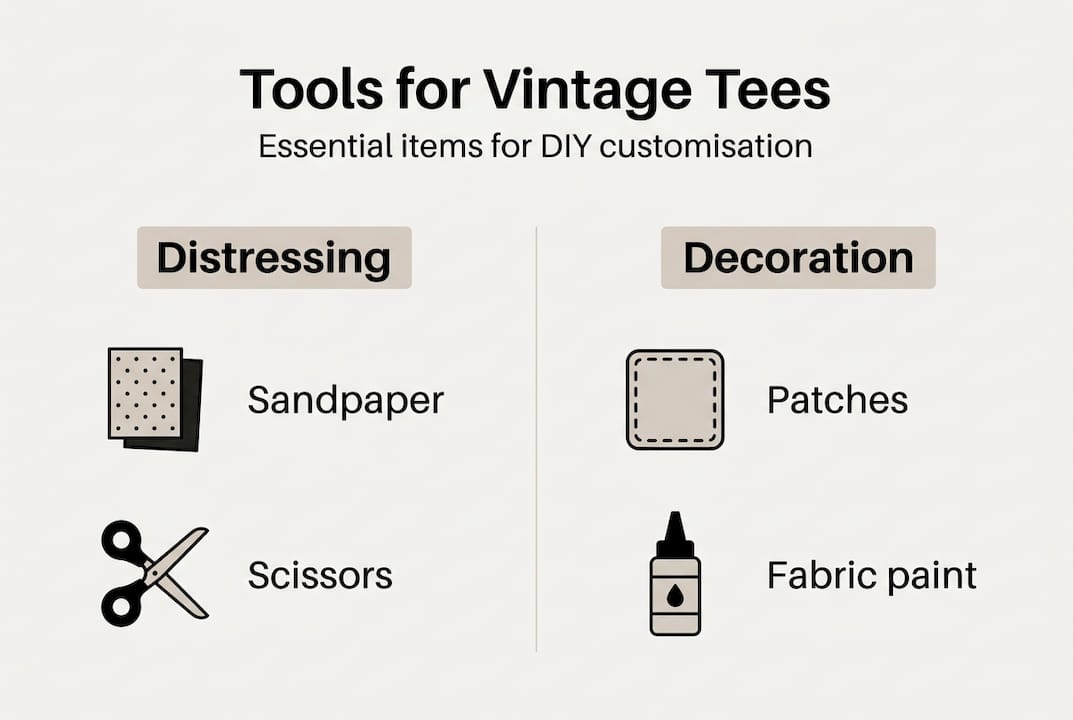
Pro Tip: Always test your chosen distressing method on a hidden area like the inside hem or an old shirt of similar fabric weight before applying techniques to visible sections of valuable vintage tees.
The distressing approach you select should match your shirt’s existing condition and your aesthetic goals. Techniques like sandpaper application along edges, strategic scissor cuts for authentic rips, and bleach or tea washes for graduated fading each create distinct vintage characteristics. Understanding how these methods interact with aged cotton helps you predict and control the final appearance.
Step-by-step guide to customising your vintage metal tee
With your materials assembled and safety measures in place, you can now execute specific customisation techniques that transform your vintage metal tee while respecting its heritage.
Distressing for authentic wear
- Begin with edge distressing by rubbing coarse sandpaper along the collar, sleeves, and hem in circular motions until fibres begin to fray naturally
- Create strategic rips by pinching fabric between your fingers and making small cuts with scissors, then gently pulling to extend tears organically
- Apply controlled fading by mixing one part bleach to three parts water in a spray bottle, misting targeted areas, and monitoring colour lift for three to five minutes
- Neutralise bleach immediately with a vinegar water solution to stop the chemical reaction and prevent fabric degradation
- Finish with a cold water rinse and air drying to assess results before making additional modifications
The distressing process requires patience and restraint. Overdoing any single technique creates an obviously manufactured look rather than the authentic patina that develops naturally over decades of wear. Build effects gradually through multiple light applications rather than aggressive single treatments.
Patch application methods
Patches offer the most versatile customisation option for metal tees, allowing you to showcase additional bands, tour dates, or personal symbols. Iron-on patches suit quick application for beginners, while sewn patches provide the durability and authentic battle jacket aesthetic preferred by serious collectors.
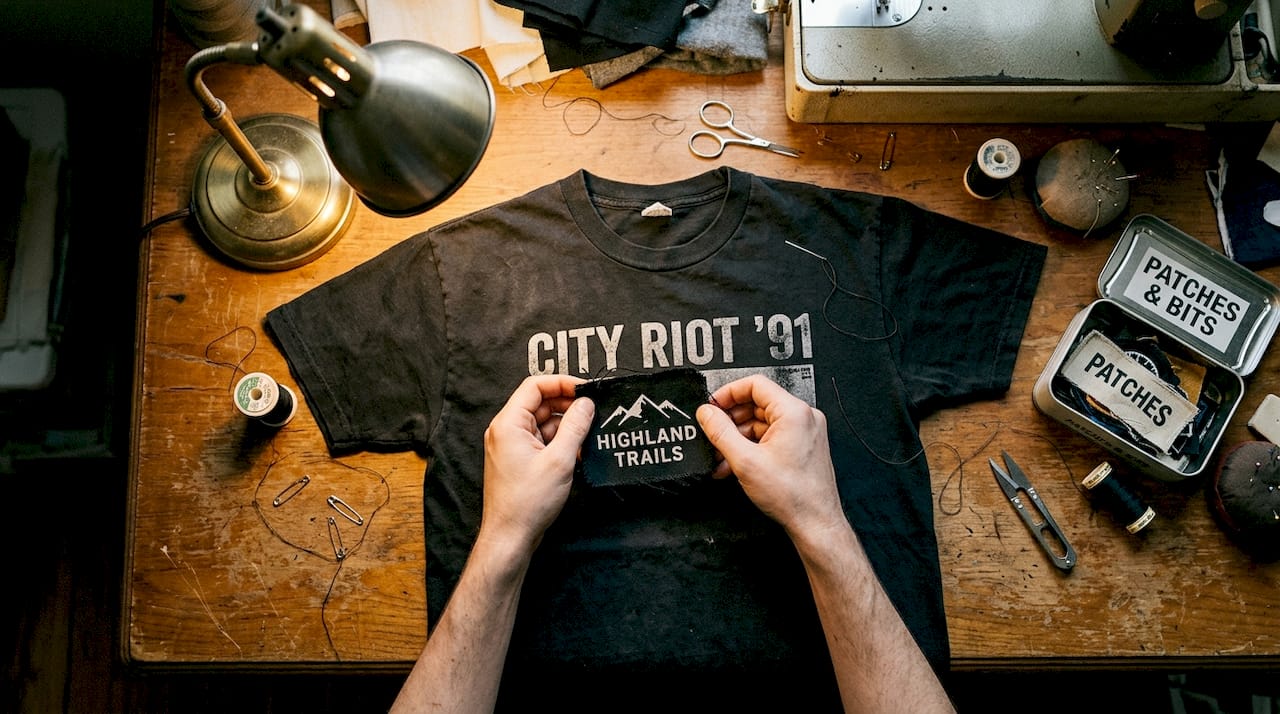
For iron-on application, preheat your iron to the cotton setting without steam, position the patch precisely on your shirt, cover with a thin cloth, and apply firm pressure for 30 to 45 seconds. Allow the patch to cool completely before testing adhesion. Hand sewing patches creates a more permanent bond using a whip stitch or blanket stitch around the perimeter, securing each patch with tight, even stitches that won’t pull loose during wear or washing.
Pro Tip: Use Velcro backed patches for completely reversible customisation that lets you change your tee’s appearance without permanent alteration, preserving potential resale value for rare collectibles.
Painting and colour modification
Fabric paint adds unique designs or refreshes faded graphics on vintage tees. Select paint formulated specifically for cotton to ensure proper adhesion and flexibility. Thin layers applied with sponge dabbing create better results than heavy brush strokes that can stiffen fabric. Allow each layer to dry completely before adding additional colour, and heat set the paint with an iron after 24 hours for wash durability.
Tie dye techniques work beautifully on faded vintage shirts, creating psychedelic effects that complement metal aesthetics. However, remember that dye processes are completely irreversible and will permanently alter your shirt’s appearance and collector value.
Warning: Avoid creating chest rips directly over heavy ink areas on 90s tour tees, as the aged screen printing tends to crack dramatically when fabric tension increases, creating an unflattering fractured appearance that detracts from the vintage aesthetic.
Understanding when to stop customising proves just as important as knowing which techniques to apply. Step back regularly to assess your progress, comparing the modified shirt against your original vision. The goal is enhancing the vintage character, not overwhelming it with excessive alterations. If you’re working with particularly valuable pieces, consider whether the customisation truly adds personal value that justifies potential impact on collectibility, or explore the preservation focused options covered in the next section. Learning how to sell vintage metal tees helps you understand which modifications collectors accept and which permanently diminish market value.
Commercial and preservation-conscious customisation options
For collectors who want personalised metal tees without risking damage to authentic vintage pieces, commercial customisation services and reversible modification methods offer compelling alternatives to DIY distressing.
Commercial printing technologies have evolved significantly, with direct to garment printing now delivering photorealistic designs on heavyweight cotton blanks that closely mimic vintage shirt quality. DTG printing excels at reproducing faded tour graphics, bootleg style designs, and custom artwork with the soft hand feel characteristic of aged screen prints. Garment dyeing services can recreate the sun faded, repeatedly washed appearance of genuine vintage tees on new shirts, giving you the aesthetic without the rarity concerns.
Professional distressing services employ industrial techniques like enzyme washing, stone washing, and controlled abrading that achieve consistent vintage effects difficult to replicate at home. These commercial processes often produce more uniform results than DIY methods, though they lack the unique character of hand distressed pieces.
| Customisation method | Ease of execution | Approximate cost | Permanence | Impact on collector value |
|---|---|---|---|---|
| DIY sandpaper distressing | Moderate | Under $20 | Permanent | Moderate to high reduction |
| Velcro patch application | Easy | $30 to $60 | Reversible | Minimal if removable |
| Professional DTG printing | Easy | $40 to $80 | Permanent | Not applicable (new shirts) |
| Hand sewn patches | Moderate | $20 to $50 | Permanent | Low to moderate reduction |
| Commercial garment dye | Easy | $50 to $100 | Permanent | Not applicable (new shirts) |
| Bleach fading | Difficult | Under $10 | Permanent | High reduction |
Collectors strongly prefer reversible methods like Velcro backed patches over permanent sewing or iron-on application when modifying authentic vintage band merchandise. This preference stems from the understanding that original, unmodified condition commands premium prices in the secondary market. Even tasteful customisation can reduce a rare tour shirt’s value by 30 to 50 percent among serious collectors.
Preservation focused customisation strategies include:
- Using removable Velcro patches that attach securely but leave no permanent marks
- Applying temporary fabric markers that wash out completely
- Layering vintage tees over long sleeve shirts for visual interest without alteration
- Framing particularly valuable shirts as display pieces rather than wearing them
- Purchasing commercial reproductions for heavy customisation while keeping originals pristine
Pro Tip: Choose commercial customisation services that offer garment dyeing or DTG printing on quality heavyweight cotton blanks to create custom vintage style tees that capture the aesthetic you want without risking damage to irreplaceable authentic pieces from your collection.
The decision between DIY modification and commercial alternatives ultimately depends on your shirt’s rarity, your personal attachment to the piece, and your long term collecting goals. A common tour shirt from a major band’s arena run makes an excellent candidate for experimental distressing, while a rare club show tee from an early tour deserves preservation in original condition. Some enthusiasts maintain separate collections, with one group of shirts for wearing and customising, and another for archival preservation and potential future sale. This approach lets you enjoy the creative satisfaction of personalisation while protecting your most significant pieces.
For those seeking authentic vintage aesthetics on new shirts, services like custom vintage style tees offer pre-distressed blanks with customisable graphics that deliver the look without the collectibility concerns. These commercially produced options have improved dramatically in recent years, with printing techniques and fabric treatments that closely approximate genuine vintage characteristics.
Discover authentic vintage metal tees and custom gear
Whether you’re looking to expand your collection with authentic pieces perfect for customisation or seeking rare unmodified vintage tees to preserve, Vintage Metal offers an extensive selection of genuine heavy metal merchandise from the golden era of rock.
Our inventory includes authentic deadstock and second-hand shirts from legendary 80s and 90s tours, featuring bands like Metallica, Slayer, Iron Maiden, and countless underground acts that defined the metal scene. Each piece carries the genuine fabric weight, printing quality, and construction details that make vintage tees irreplaceable. You’ll find everything from common tour shirts ideal for DIY customisation projects to museum quality rarities that deserve archival preservation.
Explore our curated collections:
- Vintage Metallica shirts spanning multiple tours and eras
- Rare Metallica 1992 tour tee from the Black Album era
- Complete vintage heavy metal collection with regular new additions
Browsing authentic vintage options helps you understand the quality differences between genuine tour merchandise and modern reproductions. When you’re considering which pieces to customise versus preserve, having access to both common and rare examples lets you make informed decisions about your collection strategy. We specialise in helping Australian metal enthusiasts build collections that balance wearable pieces with investment quality rarities.
How to customise metal tees: frequently asked questions
What tools are best for distressing vintage metal tees?
Coarse sandpaper, fabric scissors, and diluted bleach solution form the essential toolkit for DIY distressing. Sandpaper creates authentic edge fraying, scissors allow controlled rips, and bleach produces graduated fading effects. Always test these tools on inconspicuous areas first, as vintage fabric reacts differently than modern cotton.
Can I customise vintage tees without affecting their collector value?
Reversible modifications like Velcro backed patches preserve collector value by allowing complete removal without leaving permanent marks. Any permanent alteration including sewing, cutting, or chemical distressing will reduce resale value, particularly on rare tour shirts. Consider purchasing common pieces for heavy customisation while keeping rare finds in original condition.
How do I safely apply patches to metal tees?
Iron-on patches require medium heat without steam, applied with firm pressure for 30 to 45 seconds through a protective cloth. Hand sewing provides stronger attachment using whip stitch or blanket stitch around patch perimeters. Velcro backing offers the safest reversible option that won’t damage vintage fabric.
What fabrics take customisation best?
Heavyweight cotton, especially from authentic 90s tour shirts, accepts distressing treatments most effectively due to its dense weave and natural softening over time. Modern lightweight cotton and cotton blends resist distressing and produce less authentic results. Fabric weight of 180 to 200 gsm provides ideal texture for modification.
Are commercial customisation options worth considering?
Commercial DTG printing and garment dyeing services deliver consistent professional results on quality blanks, creating custom vintage style tees without risking authentic pieces. These options cost $40 to $100 but provide uniform distressing and high-resolution graphics difficult to achieve through DIY methods. They work brilliantly when you want specific designs on vintage style shirts while preserving original collectibles.
Recommended


