



TL;DR:
- Understanding key terms like single-stitch, double-stitch, deadstock, and provenance enables collectors to identify genuine vintage metal tees confidently.
- Examining construction details, wear patterns, and material clues helps distinguish authentic shirts from fakes and reprints in real-world conditions.
- Mastering terminology, condition assessment, and provenance enhances credibility and value, guiding collectors toward trusted sources and accurate evaluations.
Even seasoned collectors have made the mistake of spending serious money on a supposed 1980s Metallica tour shirt, only to unbox a modern reprint with factory-fresh graphics and machine-tight double-stitching. The loss stings, but the real culprit is almost always the same: a shaky grip on the terminology that separates genuine article from clever copy. Whether you’re chasing deadstock finds, ex-tour stock, or early pressing originals, knowing the precise language of rare metal tees gives you the power to buy with confidence, trade with credibility, and build a collection worth being proud of.
Table of Contents
- The lingo of rare metal tees: Key terms defined
- Material clues: How stitching and construction reveal authenticity
- Condition, provenance and value: The big three
- Modern pitfalls: Fakes, reprints and overhyped buzzwords
- What most collectors miss about rare tee terminology
- Level up your collection with trusted vintage metal sources
- Frequently asked questions
Key Takeaways
| Point | Details |
|---|---|
| Know essential terminology | Defining terms like single-stitch and deadstock helps you navigate the collector scene with confidence. |
| Spot authentic vintage traits | Physical markers like stitching and natural wear are your best evidence for true vintage metal tees. |
| Provenance supports value | Documentation like ticket stubs or tags can greatly increase the collectible worth of a shirt. |
| Beware reprints and buzzwords | Crisp graphics and vague terms often point to modern fakes—always investigate before purchasing. |
| Build collector credibility | Clear language and buyer know-how make you a smarter, more trusted member of the metal tee community. |
The lingo of rare metal tees: Key terms defined
Every serious collector needs a working vocabulary before they start hunting. Without it, you’re relying on gut feel and seller spin, which is a dangerous combination in a market where a single shirt can change hands for hundreds or even thousands of dollars.
Here are the cornerstone terms you’ll encounter again and again:
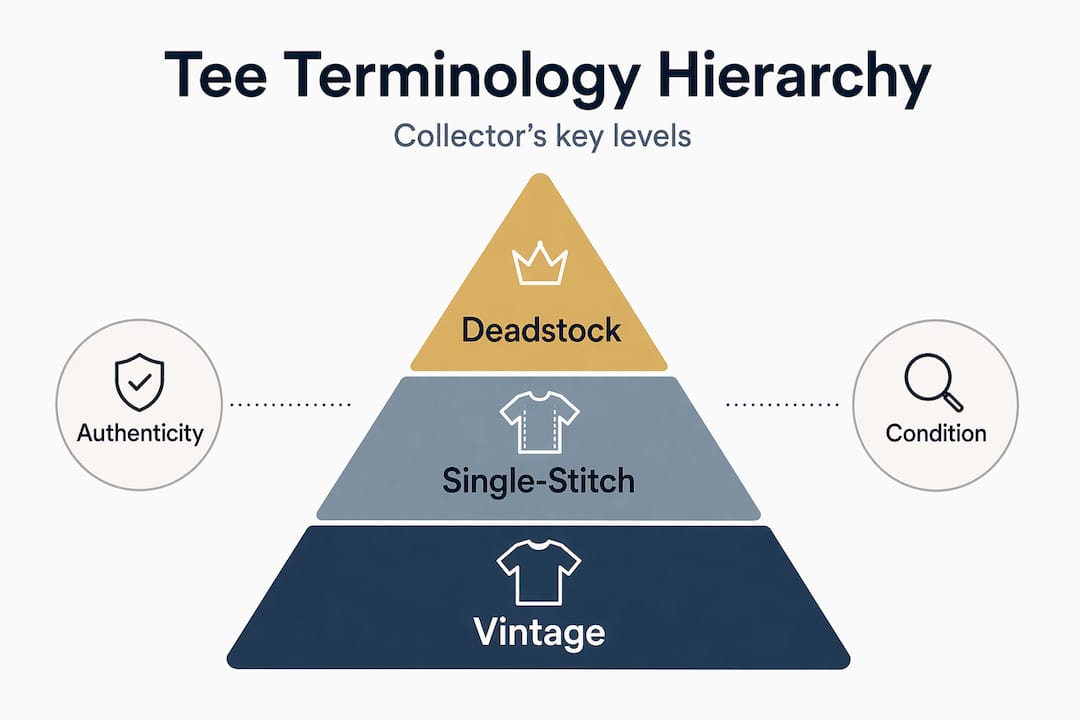
- Single-stitch: One visible row of stitching along the hem of sleeves and the bottom of the shirt. Single-stitch hems indicate pre-mid-1990s production, making this the single most reliable authenticity marker for vintage tees. Sellers who skip this detail in listings are either uninformed or hoping you are.
- Double-stitch: Two visible rows of stitching. Became standard from the mid-1990s onward. If a claimed 1988 tour shirt has double-stitching, that’s a major red flag.
- Deadstock: Unused, unworn vintage shirts that have never been washed or worn, often still bearing original tags, fold creases, and shop stickers. These command premium prices for good reason.
- Provenance: The documented history of a shirt’s ownership or origin. Provenance can include original receipts, ticket stubs from the actual tour, photographs, or letters confirming authenticity. Even a worn, faded shirt gains considerable value when solid provenance is attached.
- True vintage: Generally accepted as any shirt manufactured 20 or more years ago, with period-correct construction methods and materials. Not to be confused with “retro-styled” or “vintage-inspired” reproductions.
- Tour stock / ex-tour stock: Shirts produced specifically for sale at concerts, often with specific venue or date references. Genuine tour stock can be deadstock (unsold at the merch table) or worn.
- Screen printing era: Refers to the specific screen-printing techniques of an era, which leave distinct ink textures, colour saturation, and cracking patterns. Early plastisol prints behave very differently to modern water-based inks.
| Term | What it means | Collector context |
|---|---|---|
| Single-stitch | One row of hem stitching | Pre-1995 construction standard |
| Double-stitch | Two rows of hem stitching | Post-mid-1990s; flags reprints on older designs |
| Deadstock | Unworn with original tags | Premium value; often still folded |
| Vintage | 20+ years old, period construction | Authenticity requires more than just age |
| Provenance | Documented history/ownership | Boosts value even on worn pieces |
For a thorough breakdown of what genuine deadstock looks like in person, the dead stock shirts guide is an excellent starting point. And if you want to cross-reference multiple authenticity checks at once, the authentic vintage band tees checks resource covers the full process in detail.
Material clues: How stitching and construction reveal authenticity
Now you know what the core terms mean, let’s dig into how to verify these features in the wild. Terminology only gets you so far. The real skill is reading the physical object in your hands.
The construction of a shirt tells a story about when and where it was made. Pre-1995 shirts were typically sewn on equipment that left a single row of stitching along the sleeve hem and body hem. This wasn’t a stylistic choice; it was simply the industry standard of the time. When garment manufacturing shifted in the mid-to-late 1990s, double-stitching became the norm because it was faster and more durable for mass production. That shift is your calibration point.
“Vintage is defined as 20+ years old with period-correct construction. Genuine condition shows natural wear like collar stretch and dye irregularities, not artificial distressing.” Why 90s band tees are so valuable
Here’s what to look for decade by decade:
| Decade | Typical stitching | Collar type | Common wear signs |
|---|---|---|---|
| 1980s | Single-stitch | Narrow rib, often stretched | Collar yellowing, ink cracking, fabric thinning |
| Early 1990s | Single-stitch | Slightly wider rib | Dye fade, sleeve hem rolling, paper-thin fabric |
| Late 1990s | Double-stitch emerging | Tagless or printed labels appear | Less dramatic fade, prints remain bold |
| 2000s | Double-stitch standard | Printed labels, structured collar | Minimal fading, crisp prints |
One point that trips up even experienced collectors: modern reprints deliberately use single-stitching to fake authenticity. So single-stitch is necessary but not sufficient on its own. You also need to assess the collar construction, the fabric weight, the ink texture, and the overall patina of the garment. Authentic vintage shirts tend to show an interplay of all these features together. No single detail clinches it alone.
Natural versus artificial wear is another crucial distinction. Genuine ageing produces irregular collar stretching (because real necks are asymmetrical), random ink cracking (stress follows actual folding and washing patterns), and uneven fading that concentrates near seams and high-contact areas. Artificial distressing, by contrast, tends to be too uniform. Sandpaper treatment leaves linear scuffs. Chemical washing creates blanket fading without the subtle variation of decades of real use. For a deeper look at identifying genuine vintage tour shirts, the signs of authentic wear are well documented.
Pro Tip: Don’t confuse dry rot with ordinary wear. Dry rot is the actual chemical breakdown of cotton fibres due to age and storage conditions. It leaves the fabric brittle and prone to tearing at minimal stress. While dry rot confirms genuine age, it significantly reduces a shirt’s structural integrity and therefore its value. If you press lightly on the fabric and it resists or crackles, check carefully before purchasing.
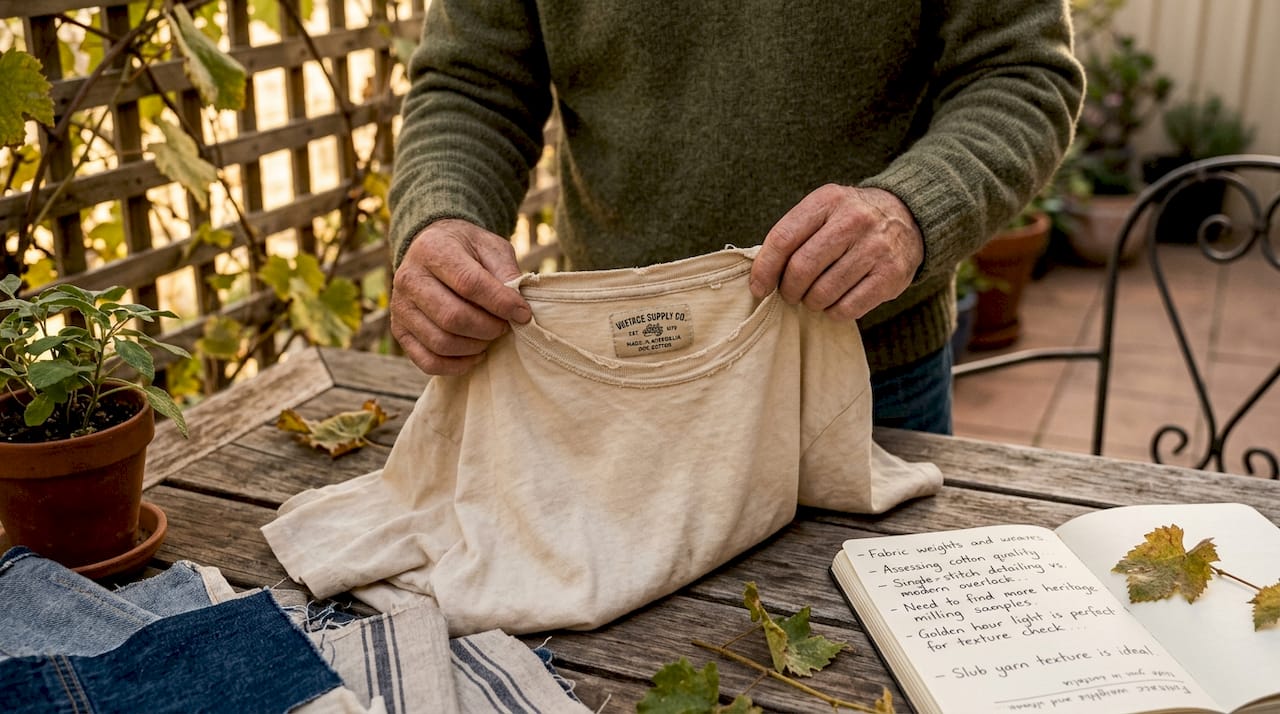
For a broader perspective on what period-correct American sportswear construction looks like, the vintage US sportswear guide is a solid external reference point.
Condition, provenance and value: The big three
Having mastered how to spot physical features, next is understanding the “why” behind value: how condition and history change what a shirt is really worth. A rare shirt without condition is a damaged relic. A pristine shirt without provenance is just an old shirt. Together, condition and provenance create collectibility.
Here’s how to evaluate each factor:
-
Condition: Assess the fabric integrity first. Is the cotton still holding its weight, or has it thinned to near-transparency? Check the collar for stretching and yellowing. Examine the print for cracking, peeling, or fading. A shirt in genuinely worn but structurally sound condition is often more desirable than one that’s been stored badly and is brittle. Condition grades used by serious collectors range from “Mint” (basically deadstock) down to “Fair” (visible damage but historically significant).
-
Provenance: This is the documentation trail. Receipts, ticket stubs, and photographs can dramatically increase the value of a worn tour piece. A Slayer tour shirt with a corresponding ticket stub from the 1991 Clash of the Titans tour is worth substantially more than the same shirt without any supporting documentation. Provenance doesn’t need to be extensive; even a single credible piece of evidence shifts buyer confidence.
-
Value factors: Beyond condition and provenance, rarity matters. Limited regional tour runs, specific city dates, or shirts from bands that broke up or members who passed away all create scarcity value. The interplay of period-correct construction with genuine wear, combined with any provenance, creates the upper tier of collectible value.
Pro Tip: Subtle dye fade is your friend, not your enemy. Uniform, deep fading across the body of a shirt, especially with brighter patches near seams where the fabric was protected, is a hallmark of real age and real laundering. Artificially aged shirts typically fake fade by applying chemicals evenly, which produces the opposite effect. If a supposed vintage shirt looks uniformly faded with no variation near seams, be suspicious.
Common pitfalls include buying on aesthetic alone, failing to photograph the shirt in natural light from multiple angles, and not documenting the provenance before you take ownership. If you’re acquiring a shirt for future resale or trade, photograph every detail on the day of purchase: tags, stitching, print condition, and any accompanying documents. The dead stock step guide walks through how to catalogue and verify shirts systematically, and the vintage metal t-shirts guide is essential reading for building your collecting framework.
Modern pitfalls: Fakes, reprints and overhyped buzzwords
With all the core terms and concepts under your belt, it’s time to tackle the new wave of potential traps and collector headaches. The reprint and tribute market has become increasingly sophisticated, and marketing language has evolved to keep pace.
Perfectly crisp graphics or double-stitch on claimed 1980s or 1990s metal tour tees are the clearest signals of a reprint. Modern screen-printing produces sharp, vivid results that simply didn’t exist in the 1980s, when inks were applied by hand with less consistency and more variation. If the artwork on a supposed 1986 Metallica shirt looks like it was printed yesterday, that’s because it probably was.
Be especially wary of these overused and often misleading listing terms:
- “Retro-inspired”: Almost always means modern production imitating old aesthetics.
- “Repro”: Openly a reproduction, yet sometimes listed alongside genuine vintage at similar prices.
- “Archival”: Vague term implying historical connection without specifying any.
- “Tribute”: Another term for reproduction, often with slightly altered artwork to sidestep licensing.
- “Bootleg”: Can mean authentic era bootleg (actually collectible) or modern fake (worthless in collector terms). Context and construction matter.
- “Rare find”: Meaningless without substantiation. Every listing claims rarity.
Pro Tip: If a listing uses five evocative adjectives but never mentions single-stitch construction or shows close-up photos of the hem and collar, treat it with serious caution. Genuine vintage sellers who know their product lead with the construction details because that’s what justifies the price.
Before committing to a purchase, ask for detailed photographs of the stitching, the tag (both front and back), the print texture under raking light, and the interior seams. A hesitant or evasive response tells you everything you need to know. Understanding the difference between vintage and second hand shirts is also foundational here, as the terms are often conflated but mean very different things to serious collectors. The buying checklist for shirts gives you a systematic approach that removes guesswork entirely.
For further reading on spotting genuine period apparel, the guide on identifying authentic sportswear offers useful construction comparisons that translate well to the metal tee world.
What most collectors miss about rare tee terminology
Here’s something you won’t find in basic forums or beginner guides: the terminology isn’t just about protecting your wallet. It’s about your standing in the collector community.
Most disputes and disappointments in heavy metal tee collecting come down to rushed assumptions. A buyer assumes “vintage” means what they think it means. A seller assumes their definition of “original” aligns with the buyer’s. Neither party took the time to establish shared language before the transaction, and everyone walks away frustrated or out of pocket.
Getting the language right does more than save money. It signals to other serious collectors that you’re worth dealing with. In a market that operates heavily on trust and reputation, being the person who can articulate why a shirt is what it is carries enormous social currency. When you can point to the single-stitch hem, describe the ink cracking pattern, and explain the provenance documentation without prompting, you earn credibility that opens doors to private collections and early access to rare stock.
The deeper truth is that values fluctuate. Prices rise and fall with trends, social media hype, and celebrity endorsements. But expertise is permanent. A collector who genuinely understands the construction, history, and language of rare metal shirts will always be able to evaluate a piece accurately, regardless of what the market is doing at that moment. That knowledge protects you in down markets and empowers you in hot ones.
Our recommendation is to treat terminology as a living practice. Read, handle shirts, ask questions, and refine your understanding continuously. The deep dive on vintage tees is a great place to keep sharpening that knowledge over time. Every shirt you assess carefully is a lesson that compounds.
Level up your collection with trusted vintage metal sources
If you’re ready to turn knowledge into action and hunt for true rarities, here’s where to look next.
At Vintage Metal, every shirt is sourced and assessed with the exact criteria this guide covers. The focus is on genuine ex-tour stock, deadstock, and authentic second-hand pieces from iconic heavy metal tours and bands, not repros, not tribute prints, not “retro-inspired” imitations.

Rare pieces move fast in this market. Stock like the rare Metallica 1992 tour tee from the Don’t Tread on Me USA run doesn’t sit around for long once serious collectors find it. If you’re building a focused collection, browsing the full vintage Metallica shirts range is a strong starting point for understanding what genuine period-correct metal merchandise looks and feels like at the top end of the market.
Frequently asked questions
What is the difference between vintage and deadstock tees?
Vintage tees are 20 or more years old with period-correct construction and natural wear, while deadstock are unworn originals, often still with tags, folds, and no signs of washing or wearing.
How can I tell if my heavy metal tee is a reprint?
Check for double-stitch hems, crisp graphics, and an absence of natural wear patterns like collar stretching or dye fade; these are the most consistent signs of a modern reprint rather than a genuine original.
Does dry rot increase or decrease the value of a rare tee?
Dry rot typically decreases value because fabric brittleness from age compromises structural integrity, even though it does confirm genuine age and rules out modern reproduction.
What documentation boosts the value of a worn tour tee?
Original ticket stubs, receipts, and event photographs all add to provenance and can significantly increase the value of a worn tour piece by establishing a credible ownership and origin trail.
Recommended
- Why metal tees are collectible: value, authenticity, culture – Vintage Metal Store
- Sample band t-shirts: Rare finds and collector value – Vintage Metal Store
- Inside band tee drops: exclusive merch hype and collecting – Vintage Metal Store
- What makes a band shirt rare: collector value explained – Vintage Metal Store


