



TL;DR:
- Proper grading of vintage metal t-shirts involves assessing print condition, fabric integrity, tags, and provenance.
- Authentic vintage shirts are from the original era (pre-2000), distinguished by specific features like print dating and fabric weight.
- The value of a shirt depends on its grade, rarity, band popularity, and historical provenance, with experience shaping nuanced judgment.
Grading vintage heavy metal t-shirts is one of the most debated topics in the collector community, yet it remains poorly understood by many who are just starting out. Condition, authenticity, and provenance all play a role, but knowing how they interact is what separates a savvy collector from someone who overpays for a reprint. Whether you’re chasing a 1990s Slayer tour shirt or a deadstock Pantera tee, a reliable grading framework protects your investment and your credibility. This guide breaks down exactly how grading works, what criteria matter most, and how to apply that knowledge before your next purchase.
Table of Contents
- What does ‘vintage’ mean for metal t-shirts?
- The grading scale: From mint to distressed
- Main grading criteria explained
- How grading affects value and buying decisions
- Why grading is more art than science for real collectors
- Discover and grade your next vintage metal tee
- Frequently asked questions
Key Takeaways
| Point | Details |
|---|---|
| True vintage defined | Genuine vintage metal t-shirts are typically from the 1980s and 1990s with era-accurate features. |
| Grading categories matter | Condition grades like mint or distressed directly impact collectability and value. |
| Criteria drive value | Print, fabric, tags, and provenance are the pillars of accurate grading for collectors. |
| Buy what you love | Some wear adds story and appeal, so choose the grade that fits your collecting style and goals. |
What does ‘vintage’ mean for metal t-shirts?
With so much confusion around value and condition, let’s clarify what actually makes a t-shirt ‘vintage’ in the world of heavy metal merch. The term gets thrown around loosely, and that looseness costs collectors real money.
True vintage, in collector terms, means a shirt produced and sold during the original era of the band’s activity, typically pre-2000. For heavy metal, that sweet spot is the 1980s and 1990s, when screen printing was done by hand, fabric blends were heavier, and licensing was far less regulated. What counts as vintage is widely misunderstood, even among experienced buyers.
The problem is mass-produced reprints. Bands and third-party licensees have flooded the market with shirts that look old but were printed last year. They use distressed graphics, faded colour palettes, and even fake tag designs to mimic the originals. For new collectors, this is a minefield.
Here’s what to check when assessing whether a shirt is genuinely vintage:
- Original print dates: Graphics should correspond to a specific tour, album, or era. If the artwork references an album that dropped in 1994, the shirt should show signs consistent with that period.
- Tag details: Hanes, Fruit of the Loom, and Screen Stars tags from the late 1980s and 1990s have distinct fonts, stitching, and label layouts that differ from modern versions.
- Band licensing markers: Some shirts carry official licensing text or copyright details that can be cross-referenced against known authentic examples.
- Fabric weight and feel: Older shirts used heavier cotton blends that feel noticeably different from modern lightweight alternatives.
Understanding the vintage vs second hand distinction is also critical. A second hand shirt is simply pre-owned. A vintage shirt is pre-owned and from the original era. They are not the same thing, and the price difference reflects that.
Pro Tip: Always cross-check the tour dates or album release year against the graphics on the shirt. If a shirt claims to be from a 1993 tour but the graphic references a 1997 album, something is off.
The grading scale: From mint to distressed
Once you know what truly counts as vintage, the next key is understanding how shirts are graded. Grading and authenticating processes rely on standardised scales that retailers and serious collectors use when pricing and assessing tees.
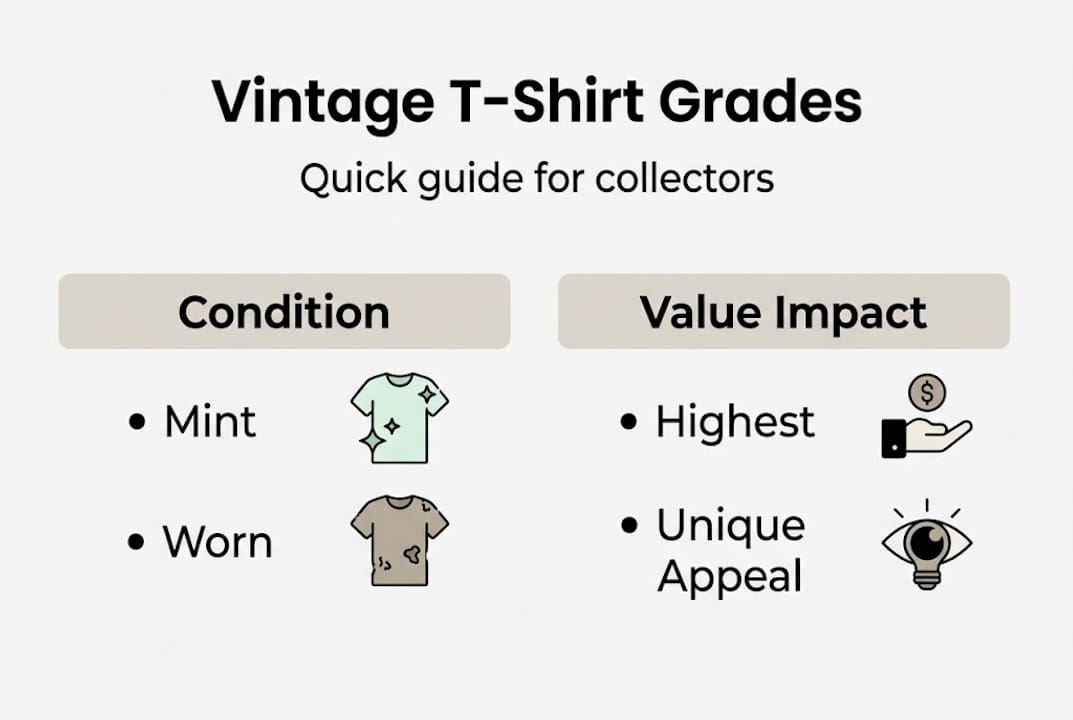
Here’s a practical breakdown of the main grades:
| Grade | Description | Value impact |
|---|---|---|
| Mint / Deadstock | Unworn, original tags, no flaws | Highest possible |
| Excellent | Minimal wear, vibrant print, no damage | Very high |
| Very Good | Light fading, minor wash wear | High |
| Good | Noticeable fade, small stains or pinholes | Moderate |
| Distressed | Heavy wear, repairs, significant fading | Lower, niche appeal |
The most sought-after shirts are deadstock, meaning they were never worn after leaving the venue or warehouse. These are incredibly rare and command serious prices. Classic grading examples show just how dramatically condition affects what collectors are willing to pay.
When inspecting a shirt, work through these checks in order:
- Overall print condition: Look for cracking, peeling, or significant fading across the main graphic.
- Fabric integrity: Check for pinholes (common near the collar from pins or badges), thinning fabric, or repairs.
- Staining: Underarm yellowing, collar discolouration, and body stains all affect grade.
- Seam and hem condition: Fraying or unravelling at the hem or sleeves drops the grade.
- Tag condition: A missing or removed tag can reduce value even on an otherwise excellent shirt.
Pro Tip: Some distressing actually adds to a shirt’s appeal. A faded Metallica shirt worn to dozens of shows carries a story that a mint reprint never will. Not all flaws reduce value, especially if the shirt is genuinely rare.
Main grading criteria explained
Understanding the broad grading categories, let’s look at the essential elements experts examine when assigning a grade. Print, material quality, and provenance are the three pillars of accurate grading, and each one tells a different part of the shirt’s story.
Print condition is usually the first thing a collector’s eye goes to. Vintage screen prints crack and fade in specific ways over decades. A genuine 1990s print will show organic, fine cracking across the ink rather than the uniform distressing you see on modern fakes. Colours shift and dull in ways that are very hard to replicate artificially.

Fabric type and tag details can distinguish true vintage from modern reprints, and this is where vintage fabric identification becomes genuinely useful. Single-stitch construction on the sleeves and hem is a strong indicator of pre-1994 manufacturing. Double-stitching became standard after that point. Fabric weight, the presence of a 50/50 cotton-polyester blend, and the texture of the weave all provide clues.
Here are the key grading criteria collectors use:
- Print: Cracking pattern, colour accuracy, ink adhesion, and graphic completeness.
- Fabric: Weight, weave type, softness from age (not washing), and any thinning or holes.
- Tags: Era-specific fonts, country of manufacture, and licensing text.
- Measurements: Shirt sizing for vintage differs significantly from modern sizing, and accurate measurements confirm authenticity.
- Provenance: Documentation, purchase receipts, photographs, or known collection history.
Provenance is the wildcard that can dramatically boost a shirt’s value and grade. A shirt with a photo of someone wearing it at the actual 1992 Metallica tour, or one that came directly from deadstock identification sources like original venue stock, carries far more weight than an identical shirt with no history.
Shirts with intact original tags fetch up to 20% higher sale prices on collector markets. That single detail, a small paper or woven tag, can be the difference between a good price and a great one.
How grading affects value and buying decisions
With grading criteria in hand, what does this actually mean for value and the choices collectors make? The relationship between grade and price is not always linear, and understanding the nuances helps you buy smarter.
Grading criteria significantly influence what collectors pay and how shirts are marketed. A shirt in excellent condition can be two to three times more valuable than a heavily worn example of the same design. But band popularity and rarity also play a role.
| Factor | Impact on value |
|---|---|
| Grade (mint vs distressed) | Up to 3x price difference |
| Band popularity | Major bands command premium prices |
| Rarity of design | Limited tour prints worth significantly more |
| Provenance | Can add 10-20% to assessed value |
The main value drivers collectors should weigh up include:
- Grade: The single biggest lever on price for comparable shirts.
- Band and era: A 1990s Pantera shirt outperforms a lesser-known band from the same period.
- Print rarity: One-off tour designs, regional prints, or promotional shirts are worth more than standard merch.
- Condition of tags: As noted, intact tags add measurable value.
Use the buying checklist for value before committing to any significant purchase. And if you want a structured approach to the whole process, the 2026 buying workflow lays out a step-by-step framework that accounts for all these variables.
“The right shirt in the right grade is a piece of music history, not just clothing.”
Some collectors deliberately buy lower-grade shirts for wearability. A heavily faded Sepultura tee that you can actually wear to a gig without anxiety serves a different purpose than a mint example locked in an archival sleeve. Both approaches are valid. The key is knowing what you’re buying and why.
Why grading is more art than science for real collectors
All these systems and frameworks are vital, but there’s one truth seasoned collectors learn over time: grading is a conversation, not a verdict.
The scales and criteria give you structure, and that structure matters enormously when you’re spending serious money. But experienced collectors know that a shirt with faint, natural fade from years of genuine wear can carry more appeal than a technically higher-graded example that feels sterile. A custom repair done by the original owner, a small bleach spot from a chaotic show, these things can elevate a shirt’s story rather than diminish it.
We’ve seen shirts graded as ‘good’ sell for more than ‘excellent’ examples simply because the buyer connected with the provenance. The history behind a shirt, who wore it, where it went, what it survived, adds a layer that no grading scale fully captures.
The tour shirt assessment checklist is a great starting point, but real expertise comes from handling hundreds of shirts and developing your own calibrated instinct. Trust the frameworks, then trust your gut.
Discover and grade your next vintage metal tee
Ready to use your grading knowledge? Here’s where to find trusted vintage metal t-shirts for your collection.
At Vintage Metal, every shirt in the collection is sourced from genuine ex-tour stock and deadstock, so you’re not guessing at authenticity. Apply everything you’ve learnt here before you browse. Check the print, the tags, the fabric, and the provenance details provided with each listing. If you’re after something specific, the Metallica vintage shirts collection is a strong place to start, and the rare Metallica 1992 tour tee is a standout example of exactly what a well-graded, historically significant shirt looks like in practice.
Frequently asked questions
What are the most important factors when grading a vintage t-shirt?
Print, fabric, and tags are the core grading criteria, with provenance adding significant weight to the final assessment. All four work together to determine an accurate grade.
Do small flaws like pinholes or faded prints reduce a shirt’s value?
Minor flaws can add character to a genuinely rare shirt, but severe wear or staining typically lowers the grade and price. The effect of flaws on value depends heavily on their extent and type.
How can I tell if a t-shirt is truly ‘vintage’ or just a modern reprint?
Look for era-specific tags, single-stitch construction, and accurate print dates, then cross-check against original band tours or album releases. Tags and print dating are the most reliable indicators of genuine vintage status.
Is it better to buy a mint condition vintage shirt or a worn one?
Mint shirts hold higher market value, but many collectors prefer shirts with genuine wear for authenticity and wearability. Both condition and collector preference shape the final buying decision.
Recommended
- 7 Steps to the Ultimate Heavy Metal Shirts Buying Checklist – Vintage Metal Store
- Collector’s guide to authentic vintage band tees: 5 expert checks – Vintage Metal Store
- Vintage vs Second Hand Shirts: Value for Collectors – Vintage Metal Store
- Identifying Dead Stock Heavy Metal Shirts Step-by-Step – Vintage Metal Store


