



TL;DR:
- Dead stock metal tees are original, unworn band shirts from past tours that are highly valued for their rarity and condition. Proper authentication, safe purchasing, careful preservation, and respectful styling are essential to maintain their cultural and financial value over time.
Dead stock metal tees are original, unworn band t-shirts from past tours or official releases, never sold to the public and prized above all other band merch for their rarity and untouched condition. For collectors chasing Metallica, Slayer, Bathory, and other legends, these pieces represent the purest connection to metal history. The best dead stock metal tee tips cover four pillars: authentication, safe purchasing, preservation, and styling. Get all four right and your collection holds both cultural and financial value for decades.
1. How to authenticate genuine dead stock metal tees
Authentication is the first skill every collector must build. A genuine dead stock tee has never been worn, washed, or altered, but that does not mean it looks factory fresh. Fabric can yellow slightly or develop a faint musty smell from decades of storage. These signs of age are normal and actually support authenticity.
Check these markers before you commit to a purchase:
- Original tags: Genuine tees from the 1980s and 1990s carry single-stitch construction and tags from manufacturers like Fruit of the Loom, Hanes, or Anvil. Double-stitch hems appeared widely after the mid-1990s. A tag inconsistent with the claimed era is a red flag.
- Print method: Discharge printing softens the fabric and ages naturally, developing a vintage crackle while maintaining durability. Plastisol prints from the era feel slightly raised and show age-appropriate cracking. Modern reproductions often use DTG (direct-to-garment) printing, which sits flat and looks too clean.
- Print distressing: Natural cracking looks random, not uniform. Sloppy or perfectly symmetrical distressing points to a reproduction or low-quality bootleg.
- Fibre integrity: Dead stock fabric can suffer dry rot, which weakens fibres in seemingly pristine pieces. Gently stretch a small section of the hem. If it tears with minimal force or feels brittle and tacky, the fabric has degraded.
- Band-specific markers: Tour dates, venue lists, and artwork should match documented tour history. Cross-reference against collector databases or band discography archives.
Pro Tip: Use a UV torch to check for repairs or bleach stains invisible to the naked eye. Genuine dead stock tees show consistent fabric fluorescence. Patched or treated areas glow differently.
The collector’s guide to spotting genuine dead stock at Vintage Metal Store goes deeper on era-specific tag and print markers worth bookmarking.
2. Top tips for purchasing dead stock metal tees safely
Buying dead stock tees requires more caution than buying second-hand pieces. The price premium is real, and so is the risk of counterfeits. Follow a structured approach every time.
- Buy from specialist sellers. General marketplaces like eBay carry genuine pieces, but also floods of bootlegs. Specialist stores like Vintage Metal Store curate and authenticate stock before listing. The extra cost of buying from a trusted source is always worth it.
- Demand multiple photos. Request close-ups of the tag, print, hem stitching, and any areas of wear or storage marks. Avoid purchases based solely on photos when physical inspection is possible, but detailed images are the minimum standard for online buying.
- Understand price benchmarks. Metallica 1992 tour shirts and early Slayer tees rank among the most coveted and valuable dead stock metal tees globally and in Australia. A genuine Metallica 1992 “Don’t Tread on Me” tour tee in dead stock condition commands a significant premium. If a price looks too good, it almost certainly is.
- Check return policies. Reputable sellers offer returns if an item is not as described. No return policy on a high-value tee is a serious warning sign.
- Avoid bulk “lot” purchases from unknown sources. Counterfeit lots are common. Individual, authenticated listings give you far better control over what you are actually buying.
- Use the retro shirt shopping guide from Vintage Metal Store to build a repeatable buying checklist before you spend.
Pro Tip: Ask sellers for the provenance story. Genuine dead stock often comes from warehouse clearances, old merch distributors, or estate sales. A seller who can tell you exactly where a piece came from is far more credible than one who cannot.
3. Essential care and preservation for dead stock tees
Preservation is where most collectors make costly mistakes. A single wrong wash can destroy decades of print integrity in minutes.
The core rules for dead stock t-shirt care are non-negotiable:
- Wash cold. Water temperatures above 27°C cause cotton shrinkage and print damage. Wash at or below 25°C to maintain print integrity for five or more years. That is not a guideline. It is the threshold between preservation and degradation.
- Turn inside out. Washing inside out reduces friction on the print surface. This single step extends print life significantly.
- Use pH-neutral detergent. Avoid tumble drying and fabric softener, as both damage print and fibres. A pH-neutral detergent like Woolite or a dedicated garment wash protects colour and fabric structure.
- Air dry flat in shade. Hanging a vintage tee to dry stretches the neck and shoulders over time. Lay it flat on a clean towel, away from direct sunlight, which fades prints rapidly.
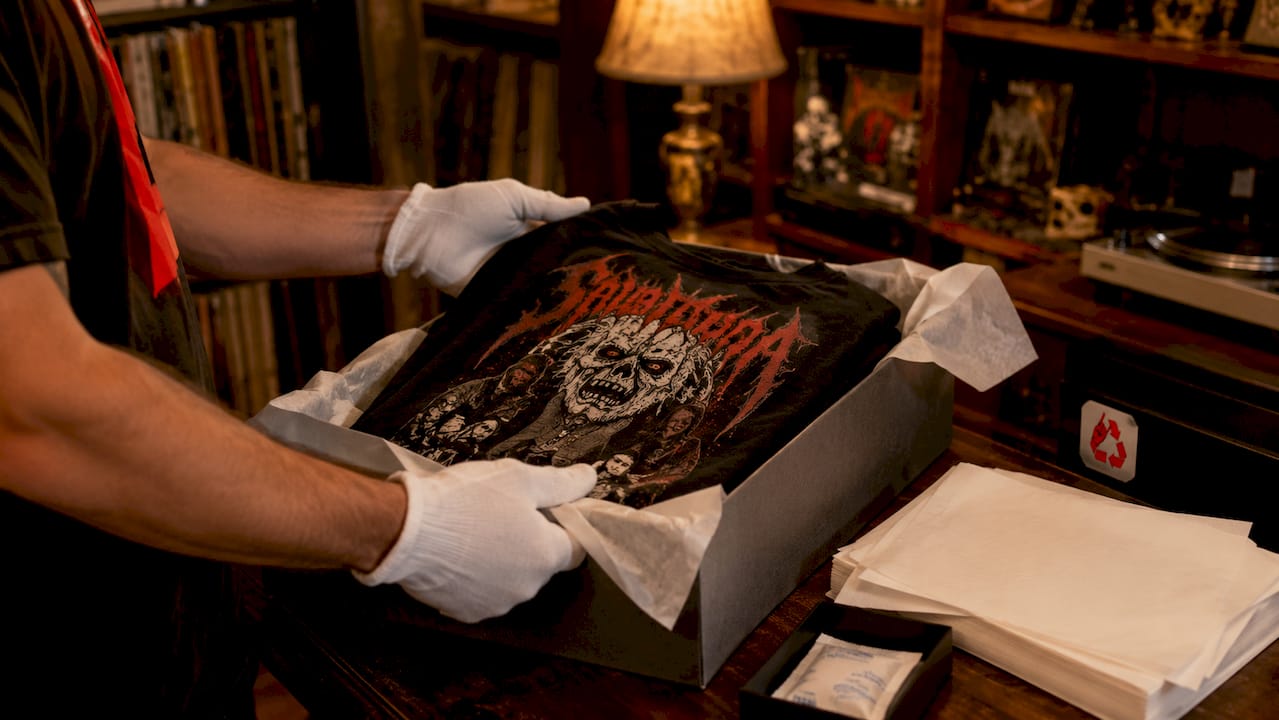
- Store flat, not folded or hung. Long-term hanging distorts the shape. Flat storage in acid-free tissue paper inside an archival box is the gold standard for pieces you are not wearing regularly.
- Control humidity and light. Store tees in a cool, dry space with stable humidity. Fluctuating humidity accelerates dry rot and print cracking.
Pro Tip: If you are storing a tee long-term, place a small silica gel packet inside the archival box. It absorbs excess moisture and dramatically reduces the risk of mould and fibre degradation.
The preserving shirt prints guide at Vintage Metal Store covers acid-free storage materials and sourcing options for Australian collectors.
4. How to style metal tees to honour metal culture
Styling a dead stock metal tee is about respect, not costume. The goal is to let the tee lead while the rest of your outfit supports it without competing.
Structured, tailored pieces like unbuttoned blazers or wool coats prevent the costume look and preserve metal identity. This approach, drawn from dark academia metal fashion, works because the contrast between the raw energy of a band tee and the structure of tailored clothing creates visual tension that reads as intentional.
Key metal tee fashion tips for styling dead stock pieces:
- Keep the tee as the focal point. Build the outfit around it. Neutral colours in the rest of your look, charcoal, black, and deep navy, let the print do the work.
- Layer with purpose. Wearing a black metal or death metal tee under an unbuttoned blazer or vintage knit captures dark academia metal style without losing metal identity. The key is fit. Oversized tees work best with slim or straight-leg trousers.
- Choose footwear that grounds the look. Chelsea boots, worn leather boots, or clean white trainers all work. Avoid anything too polished or too athletic.
- Skip the accessories overload. One or two pieces, a ring, a chain, or a wristband, are enough. Stacking too many accessories pulls focus from the tee.
- Avoid ironing the print directly. If you need to press the tee, use a pressing cloth or iron inside out on a low setting.
“The band tee is the statement. Everything else is the frame.”
For more ideas on building outfits around vintage pieces, the vintage metal tee styling guide at Vintage Metal Store covers 90s-authentic looks worth exploring.
5. Comparing dead stock metal tees by band, era, and rarity
Not all dead stock metal tees carry equal weight in a collection. Band, era, and print method all determine value and collectibility.
| Band | Era | Print style | Rarity level | Collectibility |
|---|---|---|---|---|
| Metallica | 1992 tour | Screen print, plastisol | Very high | Investment grade |
| Slayer | Late 1980s | Discharge print | Very high | Investment grade |
| Bathory | 1980s | Screen print | Extremely high | Museum grade |
| Pantera | Early 1990s | Plastisol screen print | High | Strong collector demand |
| Sepultura | Early 1990s | Screen print | Moderate to high | Growing demand |
The 1980s produced the rarest pieces. Print runs were smaller, quality control was inconsistent, and survival rates are low. Tees from this era in genuine dead stock condition are exceptionally scarce. The 1990s, particularly 1991–1996, represent the sweet spot for collectors: large enough runs that pieces surface occasionally, but significant enough culturally that demand remains strong.
Regional variants add another layer of rarity. A Slayer tee from a specific Australian or European leg of a tour differs from the standard US version. These regional pieces command premiums because they were produced in smaller numbers and rarely left their country of origin.
Condition interacts directly with collectibility. A Bathory tee with print cracking and minor fabric yellowing is still a serious collector’s piece. The same tee with dry rot or a bleach stain drops significantly in value. Dead stock status, meaning unworn and unaltered, is the single biggest value multiplier across all bands and eras.
The advantages of second-hand band shirts article at Vintage Metal Store explains how condition grading works in practice for Australian buyers.
6. How to identify bootleg metal tees before you buy
Bootleg metal tees have existed since the 1980s and the quality of fakes has improved significantly. Knowing the difference protects your investment.
The most reliable bootleg indicators are tag inconsistencies and print quality. A tee claiming to be from 1989 with a tag style that did not appear until 1998 is immediately suspect. Bootlegs often use modern blank tees as the base, and modern construction details are hard to fake convincingly.
Print quality is the second tell. Genuine vintage screen prints show age-appropriate ink cracking that looks organic and random. Bootlegs and modern reproductions show either no cracking at all (too clean) or uniform, artificial-looking distressing applied deliberately. The identifying bootleg metal tees guide at Vintage Metal Store covers specific band examples with photo references.
Artwork accuracy matters too. Bootleg printers often work from low-resolution scans, resulting in slightly blurred or colour-shifted prints. Compare the artwork against documented originals from collector archives or auction records. Even small differences in font weight or colour saturation can confirm a fake.
Key takeaways
Dead stock metal tees hold their value only when collectors combine rigorous authentication, careful purchasing from trusted sources, correct preservation, and considered styling.
| Point | Details |
|---|---|
| Authenticate before buying | Check tags, print method, fibre integrity, and artwork accuracy against documented originals. |
| Buy from trusted specialists | Specialist sellers like Vintage Metal Store authenticate stock; general marketplaces carry high bootleg risk. |
| Wash cold and air dry flat | Keep water below 25°C, use pH-neutral detergent, and dry flat in shade to protect prints long-term. |
| Store flat in acid-free materials | Flat archival storage with silica gel prevents dry rot, colour fade, and fabric distortion. |
| Let the tee lead your outfit | Build looks around the print using neutral tailored pieces; avoid accessories that compete with the artwork. |
What I have learned from years of chasing dead stock gems
The thrill of finding a genuine dead stock Slayer tee from the late 1980s never gets old. But the mistakes I made early on were expensive lessons I want to save you from.
The biggest mistake I see collectors make is trusting photos alone. A listing can look perfect and still hide dry rot, a bleach patch under the arm, or a repaired collar. I learned to always ask for more images, always ask about provenance, and always factor in the cost of a return if something is not right. Patience is not optional in this hobby. The right piece at the right price takes time to find.
The second mistake is over-washing. I have seen collectors ruin genuinely rare pieces by washing them too enthusiastically after purchase. If a tee is in dead stock condition and not visibly soiled, the best thing you can do is store it correctly and leave it alone. Washing introduces risk every single time.
What has changed most in the years I have been collecting is the quality of information available. Collector communities, specialist stores, and detailed authentication guides mean there is no excuse for buying blind anymore. The tools exist. Use them.
My honest advice: build your collection slowly, focus on condition over quantity, and never compromise on authentication. One genuine Metallica 1992 tour tee is worth more than twenty questionable pieces.
— David
Explore rare dead stock tees at Vintage Metal Store
Vintage Metal Store carries a curated selection of authenticated dead stock and ex-tour metal tees, sourced directly from warehouses, distributors, and estate collections across Australia and internationally.
The collection includes the rare Metallica 1992 “Don’t Tread on Me” tour tee, one of the most sought-after pieces in Australian metal collecting. The full vintage Metallica shirts collection covers 80s, 90s, and Y2K era pieces, all verified for authenticity. Vintage Metal Store also stocks vintage Slayer shirts in dead stock condition for collectors chasing investment-grade pieces. Australian-based shipping and a knowledgeable team make every purchase straightforward. Shop now and wear the legacy.
FAQ
What does dead stock mean for metal tees?
Dead stock metal tees are original band t-shirts that were never sold or worn, typically from past tours or official releases. They are prized for their untouched condition and rarity compared to second-hand or worn pieces.
How do I spot a fake vintage metal tee?
Check the tag construction, print method, and artwork accuracy against documented originals. Uniform or artificial-looking print distressing and tag styles inconsistent with the claimed era are the clearest signs of a bootleg.
What is the safest way to wash a dead stock metal tee?
Wash at or below 25°C inside out using a pH-neutral detergent, and air dry flat in shade. Avoid tumble drying and fabric softener, as both damage print and fibres.
Which dead stock metal tees are most valuable in Australia?
Metallica 1992 tour shirts and early Slayer tees rank among the most coveted and valuable dead stock pieces in Australia due to their limited runs and cultural significance.
How should I store a dead stock metal tee long-term?
Store flat in acid-free tissue paper inside an archival box, in a cool, dry space away from direct light. Add a silica gel packet to control humidity and reduce the risk of dry rot.
Recommended
- Types of second hand metal tees: collector’s guide – Vintage Metal Store
- Why metal tees are collectible: value, authenticity, culture – Vintage Metal Store
- How to Sell Vintage Metal Tees for Maximum Profit – Vintage Metal Store
- Master rare tee terminology: The collector’s guide – Vintage Metal Store


