



TL;DR:
- Plastisol ink on 1990s band tees is brittle and prone to cracking from heat, detergents, and agitation.
- Proper care involves cold, pH-neutral washing, dry brushing, and careful storage to preserve prints.
- Restoration is limited; prevention and gentle handling are essential for maintaining vintage heavy metal tees.
You pull your prized 1993 Pantera tour tee from the wash and the chest print has cracked clean across the middle. That sick feeling is familiar to any serious collector. Plastisol ink, the PVC-based standard used on virtually all 1990s heavy metal band tees, is brittle by nature and cracks fast when exposed to heat, agitation, or alkaline detergents. One wrong wash cycle can wipe thousands of dollars off a shirt’s collectable value. This guide walks you through exactly what works, what to avoid, and how to keep those iconic prints alive for decades to come.
Table of Contents
- Understanding 1990s heavy metal tee prints
- Preparing for restoration: Tools and environment
- Step-by-step: Cleaning and restoring faded or cracked prints
- Safe storage and ongoing preservation
- When to repair: Patches, stitching, and expert tricks
- Why preservation trumps restoration: A collector’s take
- Find authentic vintage metal tees and expert resources
- Frequently asked questions
Key Takeaways
| Point | Details |
|---|---|
| Know your prints | 1990s heavy metal tees use plastisol ink, requiring special care to avoid irreparable cracking. |
| Gentle cleaning only | Always turn tees inside out, use cold water and pH-neutral detergent, and avoid harsh agitation. |
| Dry methods for cracks | Cracked or brittle prints should only be spot cleaned with dry or minimally damp methods to prevent further damage. |
| Proper storage matters | Acid-free tissue, retail folding, and climate-controlled storage dramatically extend tee longevity. |
| Preservation over restoration | Once damage occurs, focus on ongoing preservation—true restoration is often not possible for vintage prints. |
Understanding 1990s heavy metal tee prints
To preserve your tees, you first need to know what you’re up against. The prints on 1990s band shirts are not painted on like modern digital transfers. They are screen-printed layers of plastisol ink, built up in multiple passes to create that thick, slightly raised feel you know from a genuine tour shirt. That texture is also what makes them vulnerable.
Understanding what makes a shirt vintage goes beyond the tag and the year. The ink itself tells the story. Plastisol is a suspension of PVC particles in a plasticiser, and over decades that plasticiser slowly migrates out of the ink layer. The result is a print that becomes increasingly brittle. Once that process starts, dry methods extend viability by five or more years compared to wet cleaning.
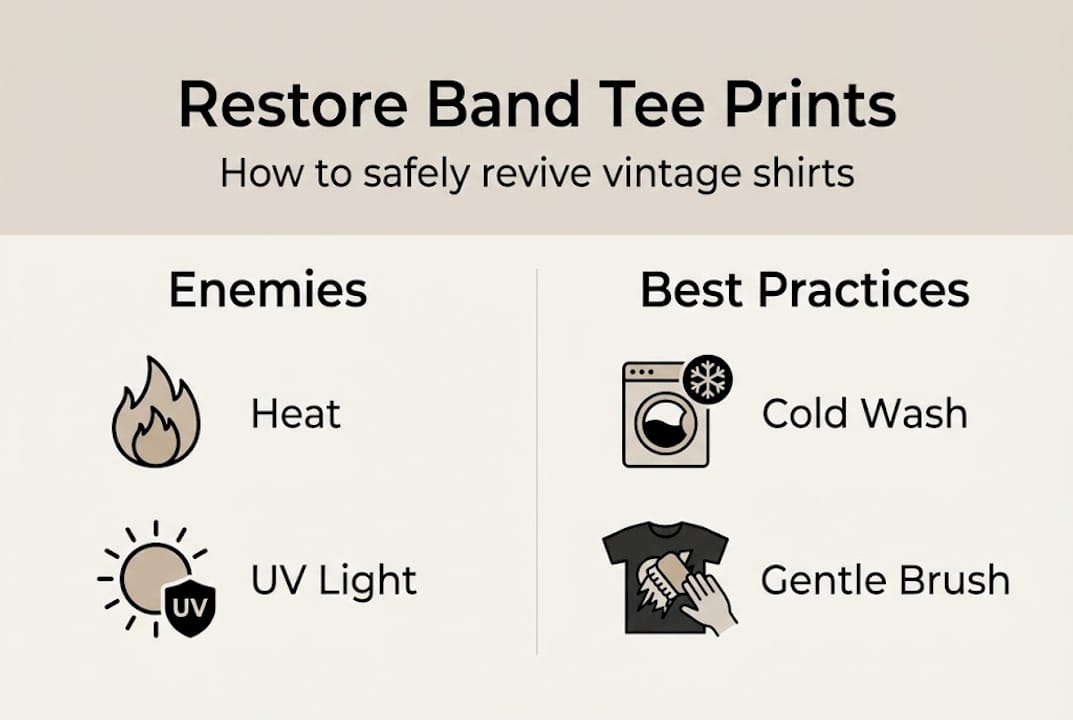
The four primary enemies of print integrity are alkaline pH, mechanical agitation, thermal shock, and UV exposure. These four stressors are responsible for the vast majority of print degradation on vintage tees. Standard laundry detergents sit at pH 9 to 11, which is highly alkaline and actively breaks down the plasticiser bond. A hot wash followed by a tumble dry is essentially a controlled demolition of your print.
| Stressor | Effect on plastisol | Risk level |
|---|---|---|
| Alkaline detergent | Breaks plasticiser bonds | Very high |
| Mechanical agitation | Causes micro-fractures in ink | High |
| Heat above 30°C | Softens and distorts ink layer | High |
| UV light exposure | Fades pigment, dries out ink | Moderate |
The key vulnerabilities to watch for include:
- Cracking along fold lines where the shirt has been stored flat
- Edge peeling on large graphic areas where ink meets fabric
- Colour ghosting where pigment has leached into the surrounding cotton
- Ink lifting on areas of heavy wear like the chest and shoulders
“Prevention is always more effective than restoration. Once plastisol has cracked and separated from the fabric weave, no amount of careful cleaning will reverse that structural loss.”
This is why vintage t-shirts matter so much to serious collectors. They are finite objects. Handle them accordingly.
Preparing for restoration: Tools and environment
Armed with an understanding of what makes these shirts vulnerable, let’s get prepped for safe restoration. The right tools make the difference between a successful clean and an irreversible mistake.
For any wet cleaning, the non-negotiable requirements are cold water below 30°C, a pH-neutral enzyme-free detergent such as castile soap, a mesh laundry bag, and inside-out orientation. Turn inside out before any contact with water, use the gentlest cycle available, and never exceed that temperature threshold. Enzymes in standard detergents actively digest organic material, including the proteins in aged ink binders.
Your workspace matters just as much as your products. Work on a clean, flat surface away from direct sunlight. Indirect or artificial light only. Dust and grit act as abrasives against a brittle print surface, so wipe down your work area before laying the shirt flat.
Essential tools checklist:
- pH-neutral, enzyme-free detergent (castile soap is ideal)
- Mesh laundry bag (fine weave, not coarse)
- Soft natural-bristle brush for dry cleaning
- Distilled water (not tap water, which contains chlorine)
- Clean white cotton cloths for blotting
- Acid-free tissue paper for storage
- Breathable garment bag
| Product | Recommended | Avoid |
|---|---|---|
| Detergent | Castile soap, Woolite Dark | Persil, Omo, enzyme formulas |
| Water | Distilled, cold | Hot tap water, chlorinated |
| Drying | Flat air dry, shade | Tumble dryer, direct sun |
| Brush | Soft natural bristle | Synthetic stiff bristle |
Pro Tip: Before any restoration attempt, photograph the print under good lighting from multiple angles. This gives you a baseline record and helps you track whether your method is working or causing further stress.
For a deeper look at ongoing care after restoration, the vintage band shirt care guide covers routine maintenance in detail.
Step-by-step: Cleaning and restoring faded or cracked prints
With everything ready, it’s time to address marks, grime, and the trickiest cracks. The most important decision you make here is whether the print is intact or already cracked, because the method is completely different for each.
For intact or lightly faded prints (wet clean method):
- Turn the shirt completely inside out
- Place inside a fine mesh laundry bag
- Fill a basin with cold distilled water and a small amount of castile soap
- Submerge and gently agitate by hand for no more than two minutes
- Rinse thoroughly with cold distilled water until soap is fully removed
- Press water out gently. Never wring or twist
- Lay flat on a clean towel in a shaded area to air dry
Cold hand-washing shows negligible fade after twelve or more washes, while wet cleaning accelerates delamination by 70% on prints that are already cracked. That stat should inform every decision you make.
For cracked or brittle prints (dry method only):
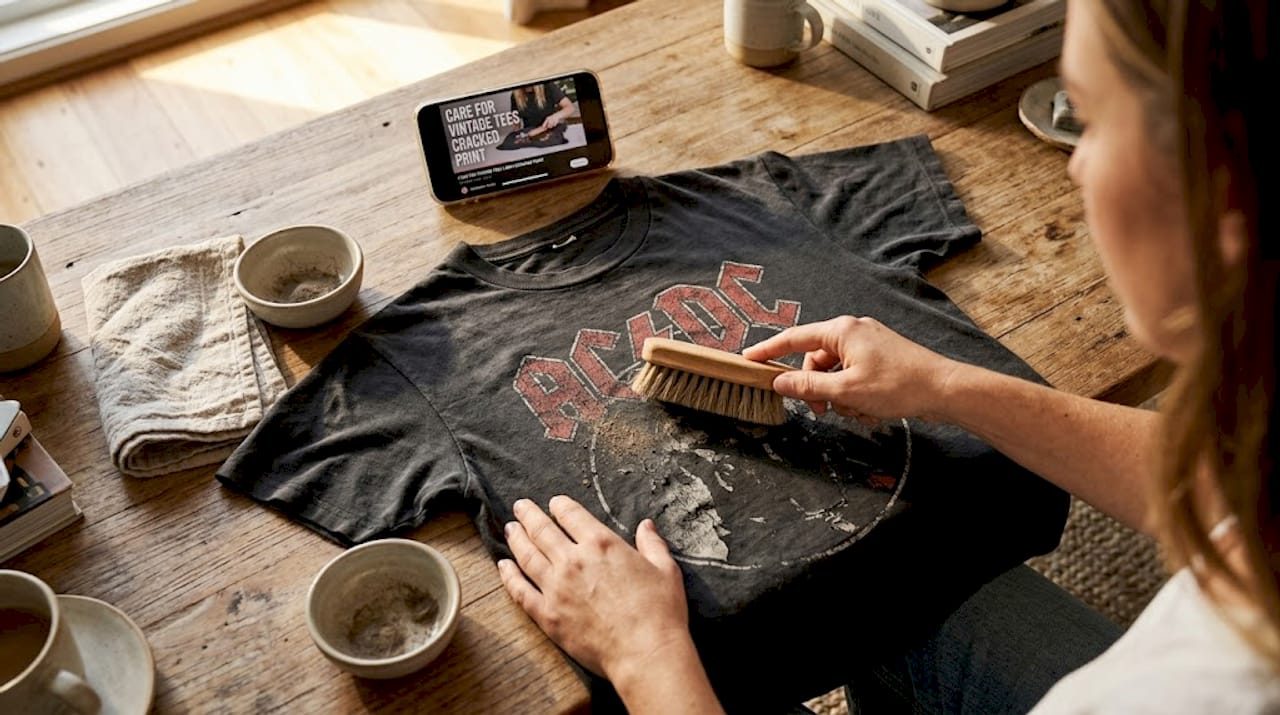
Avoid water entirely on a cracked print. Instead, dry brush dust away with a soft natural-bristle brush using light strokes that follow the direction of the print, not across it. For odour, spot-dab a solution of distilled water with one percent white vinegar using a cotton cloth. For persistent odour, activated charcoal sachets placed inside a sealed bag with the shirt overnight work without any contact with the print surface.
Pro Tip: The biggest mistake collectors make is treating a cracked print like a faded one. If you can see ink lifting at any edge, classify it as cracked and go dry-only, no exceptions.
For guidance on what to do after cleaning, see storing vintage metal tees before you put anything away. If damage is severe, professional restoration guidance may offer a useful reference point, though specialist textile restorers for screen-printed garments are rare.
“The moment you introduce water to a cracked plastisol print, you risk separating the ink layer from the fabric permanently. There is no going back from that.”
Safe storage and ongoing preservation
Once you’ve restored your tee print, staying vigilant is what keeps results lasting. The restoration work you’ve done can be undone quickly by poor storage. This is where most collectors lose ground after doing everything else right.
The correct storage method for a restored tee is the retail fold. Lay the shirt face down, fold the sleeves in, then fold the body into thirds so the print faces inward and is protected by layers of fabric. Place a sheet of acid-free tissue between each fold to prevent ink transfer and reduce friction. Fold with acid-free tissue and store in breathable bags in a dark, cool location at 18 to 21°C and 40 to 50% relative humidity.
Ongoing preservation checklist:
- Store in a breathable cotton or muslin bag, never plastic
- Keep away from exterior walls where temperature fluctuates
- Check stored shirts every six months for signs of mould or new cracking
- Avoid hanging for long periods as shoulder stress distorts the fabric
- Keep out of direct or indirect sunlight at all times
- Wash hands before handling to avoid transferring oils to the print
Pro Tip: A small digital hygrometer inside your storage area costs very little and tells you instantly if humidity is creeping above 50%. Mould on a vintage tee is almost always a storage problem, not a cleaning problem.
For more detail on long-term care, storing for lasting quality and preserving old band tees are both worth bookmarking.
When to repair: Patches, stitching, and expert tricks
Restoration brings tees back from the brink, but what if the fabric or ink itself is damaged? Physical repair is a different discipline from cleaning, and it requires a steady hand and a clear-eyed assessment of what you’re trying to achieve.
For small tears in the fabric beneath or beside a print, Stitch Witchery or professional repair is the recommended approach for 1990s tees with heavy ink coverage or thinning fabric. Iron-on adhesive web like Stitch Witchery bonds fabric edges without adding bulk, and it’s reversible with heat if you need to redo it.
| Damage type | Recommended repair | Avoid |
|---|---|---|
| Small fabric tear | Stitch Witchery adhesive web | Iron-on patches over print |
| Edge peeling ink | Fabric glue, fine brush application | Heat press, steam iron direct |
| Pin holes | Hand stitch with matching thread | Machine stitching near print |
| Large print loss | Professional textile restorer | DIY ink touch-up |
When to attempt home repair:
- Tear is less than 2cm and away from the print centre
- Ink peeling is at the very edge and not spreading
- Fabric is still structurally sound around the damage
When to seek professional guidance:
- Tear runs through the print itself
- Fabric is thinning across a large area
- You are unsure and the shirt has significant monetary value
Pro Tip: Always test any adhesive on an inside seam allowance first. Some fabric glues react badly with aged cotton and leave a permanent stain that is far worse than the original damage.
Knowing shirt authenticity tips before you attempt any repair helps you understand what original details to protect and what a restorer will look for.
Why preservation trumps restoration: A collector’s take
Here’s the uncomfortable truth most guides won’t say plainly. True restoration of a degraded plastisol print is largely a myth. You can clean, you can stabilise, you can halt further damage. But you cannot reverse years of plasticiser loss or reattach ink that has separated from the weave. The collector community has known this for years, and the sooner you internalise it, the better your decisions become.
Minimise washing frequency and prioritise steaming and spot cleaning over full washes. That single habit will do more for your collection than any restoration product on the market.
We see collectors spend real money on treatments that promise to revive cracked prints, and the results are almost always disappointing. The shirts that hold their value and their integrity are the ones that were handled carefully from the start. Less intervention, not more, is the mark of an experienced collector. Community knowledge, shared openly, is worth more than any commercial restoration trend. Trust the importance of vintage tees to guide your priorities.
Find authentic vintage metal tees and expert resources
Ready to continue your collection or up your care game? Whether you’re hunting for a replacement for a shirt that didn’t survive the wash, or you want to add a pristine piece to your collection, we stock authenticated vintage and deadstock heavy metal tees sourced directly from tours and original stock.

Check out the Rare Metallica 1992 Tour Tee as an example of the condition and provenance we stand behind. Browse the full range of vintage Metallica shirts or explore our wider selection of rare heavy metal concert shirts to find your next piece. Every shirt in our catalogue comes with the kind of care knowledge you’ve just read about baked into how we store and handle stock.
Frequently asked questions
How can I remove odours from vintage tee prints without causing damage?
Apply a solution of one part white vinegar to three parts distilled water with a cotton cloth, dabbing lightly rather than rubbing. Vinegar neutralises odours without the pH shock that bleach or baking soda would cause on aged plastisol.
Should I ever machine wash a cracked print heavy metal tee?
No. Wet cleaning cracked prints accelerates delamination significantly, so dry brushing and spot cleaning are the only safe options for any print showing signs of cracking or lifting.
What is the best way to fold and store restored tees?
Use a retail fold with acid-free tissue between each fold layer, then place the shirt inside a breathable cotton bag in a dark, cool location. Ideal storage conditions are 18 to 21°C and 40 to 50% relative humidity.
Can I restore heavy cracking or missing ink in vintage prints myself?
You can stop further damage spreading with careful dry handling and edge stabilisation, but restoring lost ink is beyond DIY methods. Professional repair from a specialist textile restorer is the only realistic option for significant ink loss, and even that has limits on aged plastisol.
Recommended
- Restore vintage metal band tees without ruining prints – Vintage Metal Store
- How to Store Vintage Metal T Shirts for Lasting Quality – Vintage Metal Store
- How to customise metal tees for a personalised vintage look – Vintage Metal Store
- How to store vintage metal shirts for lasting quality – Vintage Metal Store


