



TL;DR:
- Proper dry cleaning techniques help vintage shirts avoid print flaking and preserve their lifespan.
- Use gentle tools and pH-neutral, enzyme-free agents to prevent irreversible damage.
- Prioritizing preservation over restoration maintains both cultural significance and value.
Picture this: you’ve just scored a 1993 Metallica tour shirt in near-perfect condition. You wash it once, and the print starts flaking off in chunks. That sickening feeling is something no collector should ever experience, yet it happens constantly because traditional cleaning methods were never designed for fragile screen-printed graphics on aged cotton. Hot water, harsh detergents, and machine tumbling are the enemies of vintage band shirts. This guide walks you through the exact restoration and cleaning methods used by serious collectors and conservators, so your rarest pieces survive for decades rather than disintegrating after a single wash.
Table of Contents
- Essential tools and materials for safe restoration
- Step-by-step restoration: Dry cleaning for cracked or delicate prints
- Safe washing for lightly worn or undamaged shirts
- Troubleshooting and common mistakes in restoration
- Why modern restoration prioritises preservation over perfection
- Explore rare and restored vintage metal band tees
- Frequently asked questions
Key Takeaways
| Point | Details |
|---|---|
| Dry cleaning for cracked prints | Dry methods preserve fragile ink and extend the print lifespan by years. |
| Avoid harsh chemicals | High-pH detergents and baking soda will ruin vintage prints—use only pH-neutral cleaners. |
| Correct washing for solid shirts | Use cold water, gentle cycles, and air-drying for undamaged shirts to prevent flaking. |
| Preservation over perfection | Minor flaws are part of collectible value and over-cleaning can reduce authenticity. |
Essential tools and materials for safe restoration
Before you touch a single shirt, you need the right kit. Working with the wrong materials is how irreplaceable tees get destroyed, and it happens faster than you’d expect. Think of this stage as setting up a surgical theatre: everything must be clean, controlled, and purpose-built for the task.
Understanding band shirt care essentials starts with knowing what belongs on your workbench and what absolutely does not. The preservation basics are straightforward once you see them laid out clearly.
Essential tools checklist:
- Handheld vacuum with a soft brush attachment
- Natural-bristle soft brush (never synthetic)
- Distilled water only, never tap water
- White cotton cloths for blotting
- pH-neutral, enzyme-free detergent
- White vinegar (diluted 1:4 with distilled water)
- Nitrile gloves and a face mask
- Flat mesh drying rack
- Clean, lint-free work surface
Safe vs. unsafe cleaning agents:
| Agent | Safe? | Reason |
|---|---|---|
| pH-neutral detergent | Yes | Gentle on aged fibres and inks |
| Distilled water | Yes | No minerals to degrade fabric |
| White vinegar (diluted) | Yes (with care) | Neutralises odours without harsh chemicals |
| Baking soda | No | Alkaline pH accelerates fibre breakdown |
| Bleach or OxiClean | No | Destroys vintage dyes and print adhesion |
| Hot water | No | Causes shrinkage and print delamination |
| Enzyme-based detergent | No | Breaks down protein-based fibres in aged cotton |
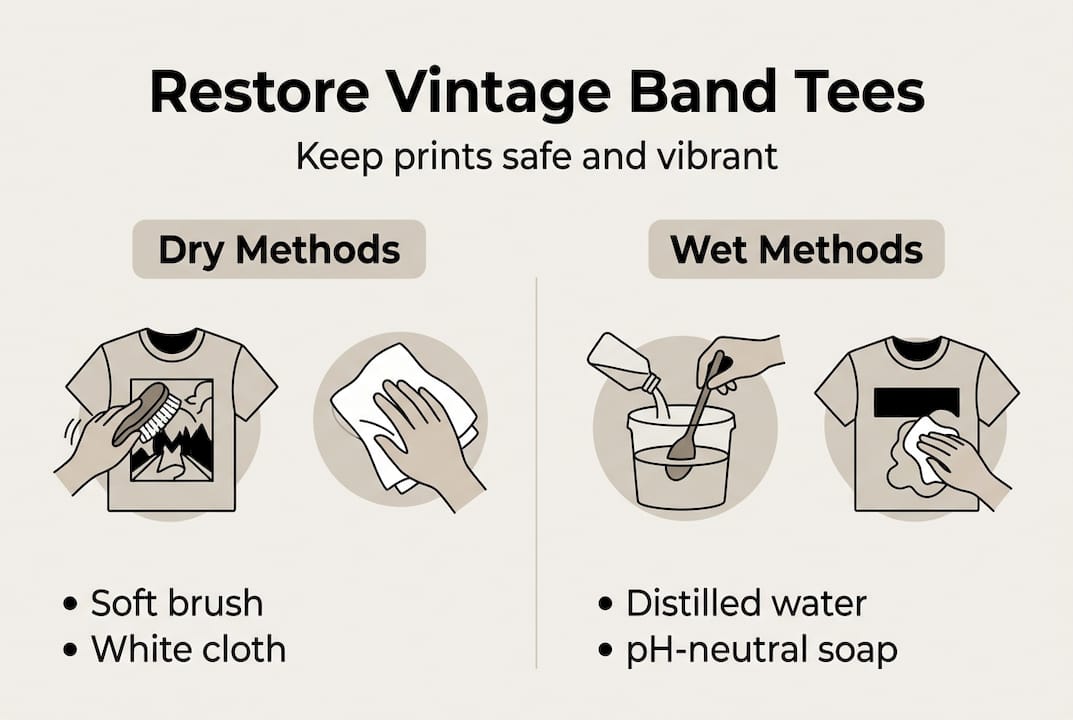
Dry cleaning methods are preferred for vintage band tees with cracked prints to avoid accelerating delamination. This is not just a cautious recommendation; it is the standard that serious collectors and textile conservators follow.
Safety gear matters more than most collectors realise. Aged fabrics can release fine fibres and dust that irritate airways, especially when you’re brushing or vacuuming. Always wear nitrile gloves to avoid transferring skin oils onto the fabric, and use a face mask when working with shirts that have been stored for decades.
Pro Tip: Set up a dedicated flat surface covered with a clean white sheet before you begin. This prevents cross-contamination from dyes or residues on your workbench, and the white background lets you immediately spot any colour bleed or ink flaking during the process.
Step-by-step restoration: Dry cleaning for cracked or delicate prints
With your tools ready, it’s time to work through the safest restoration method for fragile or cracked prints. This approach treats the shirt like the artefact it is, not a piece of laundry.
Traditional laundering accelerates delamination by up to 70%, while dry brushing combined with spot dampening carries low risk and extends viability to five or more years. Compare that to hand-washing, which can reduce that window to just one or two years before significant flaking begins. The numbers make the case for dry methods on their own.
Step-by-step dry restoration process:
- Lay the shirt flat on your clean white surface, print-side up.
- Use the handheld vacuum on its lowest setting with the soft brush attachment to remove loose dust and debris. Move slowly and never press down.
- Take your natural-bristle brush and gently sweep across the fabric in one direction only. Never scrub in circles.
- Inspect the print closely under good lighting. Note any areas of active flaking or lifting.
- For spot treatment, dampen a white cotton cloth with distilled water only. Blot the soiled area gently; never rub. Keep moisture well away from cracked print areas.
- If a stain is stubborn, apply a tiny amount of diluted white vinegar to the cloth and blot again. See removing stains without water for additional techniques on dry stain removal.
- Allow the shirt to air dry completely on a flat mesh rack, away from direct sunlight or heat sources.
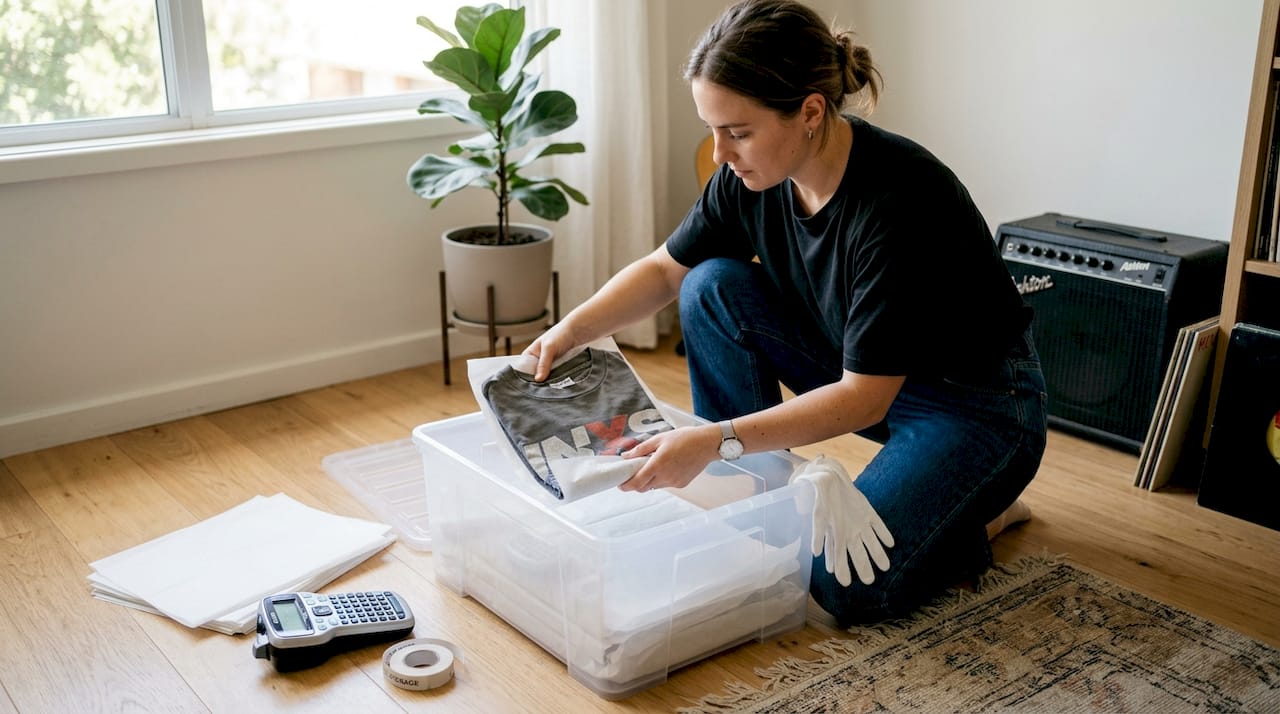
- Once dry, consider storing after cleaning correctly to lock in your restoration work.
Warning: Never submerge a vintage tee with cracked or lifting prints in water. Even brief soaking can cause entire sections of the print to separate from the fabric in minutes, and that damage is permanent.
Pro Tip: Always use a white cloth when spot-treating. A coloured cloth can transfer dye onto the aged cotton, creating a new problem while you’re trying to fix the original one.
Understanding why preservation matters goes beyond just aesthetics. A shirt restored correctly retains both cultural significance and monetary value. One that’s been over-cleaned is worth a fraction of its potential.
Safe washing for lightly worn or undamaged shirts
Not every shirt in your collection needs the full dry treatment. Shirts with solid, undamaged prints and minimal cracking can tolerate a careful wet wash, provided you follow the right process without shortcuts.
Over 83% of print failures are caused by high-pH detergents, according to Rock and Roll Hall of Fame conservators working with a sample of over 200 shirts. That single statistic should make you rethink every detergent currently under your sink.
Safe wet washing process:
- Turn the shirt completely inside out.
- Fill a clean basin with cold distilled water.
- Add a small amount of pH-neutral, enzyme-free detergent and mix gently.
- Submerge the shirt and agitate very lightly with your hands for no more than two minutes.
- Rinse thoroughly with cold distilled water until no detergent remains.
- Press water out gently by rolling the shirt in a clean white towel. Never wring or twist.
- Lay flat on a mesh rack to air dry, away from sunlight.
Detergent comparison for vintage shirts:
| Detergent type | pH level | Safe for vintage prints? |
|---|---|---|
| pH-neutral, enzyme-free | 6.5 to 7.5 | Yes |
| Standard laundry detergent | 9 to 11 | No |
| Woolite or similar | 7 to 8 | Use with caution |
| Enzyme-based bio detergent | Varies | No |
Knowing the types of band tees in your collection helps you decide which shirts can handle a gentle wet wash and which ones need dry treatment only.
Pro Tip: For shirts with persistent odours, soak them for 20 minutes in a solution of cold distilled water and a small splash of white vinegar before washing. This neutralises odour-causing bacteria without raising the pH or stressing the fabric.
Avoid freezing shirts to remove smells. It simply does not work on vintage garments and can cause fibres to become brittle. Baking soda is equally problematic: its alkaline nature actively breaks down aged cotton fibres over time.
Troubleshooting and common mistakes in restoration
Even collectors who know better sometimes make mistakes under pressure. Here’s how to identify what went wrong and limit the damage before it becomes permanent.
Most common restoration errors:
- Over-wetting the print area during spot treatment
- Using enzyme-based or high-pH detergents on aged cotton
- Scrubbing stains aggressively instead of blotting
- Drying in direct sunlight or using a tumble dryer
- Using baking soda to treat odours, which accelerates hydrolysis due to its alkaline pH of 8.3
- Freezing shirts to remove smells, which has no effect on odour molecules
For odour issues, activated charcoal sachets placed inside a sealed bag with the shirt for 48 to 72 hours are the correct solution. No moisture, no chemicals, no risk.
Dry vs. wet cleaning: Lifespan comparison:
| Method | Risk level | Expected print lifespan |
|---|---|---|
| Dry brushing and spot dampening | Low | 5 or more years |
| Careful hand-washing | Medium | 1 to 2 years |
| Machine washing (cold) | High | Less than 1 year |
| Machine washing (warm or hot) | Extreme | Immediate damage likely |
If you notice ink flaking mid-process, stop immediately. Lay the shirt flat and allow it to dry completely before assessing. Attempting to continue cleaning a shirt that’s already flaking will accelerate the damage significantly.
For stains that won’t budge with dry methods, consult a textile conservator before attempting anything more aggressive. The buying checklist is also worth revisiting to understand which shirts are worth the investment of professional conservation versus those better suited to careful home care.
Statistic callout: Mixing up cleaning steps or using the wrong agent even once can cause irreversible damage. With cracked prints, there is no second chance.
Why modern restoration prioritises preservation over perfection
Here’s a view that might surprise you: the goal of restoring a vintage metal shirt is not to make it look new. It never should be. The fading, the softness of aged cotton, the slight cracking on a 30-year-old print — these are not flaws. They are evidence. They are proof that this shirt was there.
Institutions like FIT and the Rock and Roll Hall of Fame emphasise conservation training and recommend professional consultation for edge cases like lifting cracks. Their philosophy is not about restoring to mint condition; it’s about stabilising what exists and preventing further loss.
We’ve seen collectors ruin genuinely rare pieces by over-cleaning them. A shirt that had minor surface dust and a few small stains became a ghost of itself after someone decided it needed to look perfect. The print lost its vibrancy, the fabric lost its character, and the value dropped significantly.
Minor flaws are part of the story. Learning to live with them, and knowing when not to intervene, is the mark of a mature collector. Understanding what a band tee truly represents culturally helps shift your mindset from cleaning to preserving, which is where the real value lives.
Explore rare and restored vintage metal band tees
Now that you know how to care for what you already own, it’s worth thinking about what you’d like to add to your collection.

At Vintage Metal, we source ex-tour stock, dead stock, and second-hand heavy metal shirts with a focus on authenticity and condition. Whether you’re hunting for rare Metallica shirts or more obscure finds like Becoming the Archetype shirts, every piece in our catalogue has been selected for collectors who take preservation seriously. Browse the full range at shop vintage metal shirts and put your restoration knowledge to work on something genuinely worth preserving.
Frequently asked questions
What cleaning method is safest for cracked prints on vintage metal band shirts?
Dry brushing and spot dampening are the safest options for cracked prints, as they prevent flaking and preserve the shirt’s lifespan well beyond what any wet method can achieve.
Why shouldn’t I use baking soda or freezing to remove smells from old band tees?
Baking soda’s alkaline pH of 8.3 actively accelerates fibre breakdown through hydrolysis, and freezing has no effect on odour molecules or bacteria in vintage garments.
Can I machine wash a lightly worn 1990s tee safely?
If the print is fully intact and undamaged, machine washing inside-out on cold with a pH-neutral enzyme-free detergent is the safest approach, but you should never use warm water or tumble dry.
How can I increase the value of my restored vintage metal band tee?
Correct restoration using dry or careful wet cleaning with minimal intervention preserves authenticity. Dry methods extend print viability to five or more years compared to one to two years for wet washing, which directly supports long-term collectable value.
Recommended
- Why preserve old band tees? Value, culture and know-how – Vintage Metal Store
- How to customise metal tees for a personalised vintage look – Vintage Metal Store
- How to Style Vintage Metal Tees with Authentic 90s Vibes – Vintage Metal Store
- Vintage band shirt care guide for collectors 2026 – Vintage Metal Store
- 8 Ways to Remove Ink Stains from a Canvas Bag (Part 1)


