



If you think a band t-shirt is just a souvenir from a sweaty night at a gig, think again. These garments carry decades of cultural weight, tribal allegiance, and raw self-expression that no framed poster or vinyl record can quite replicate. Band t-shirts evolved into badges of identity and tribal affiliation, particularly in heavy metal, where what you wear on your back tells the world exactly who you are and what you stand for. This guide traces their rise, unpacks their collector value, and explains why the right vintage tee is one of the most powerful artefacts in music history.
Table of Contents
- How heavy metal band t-shirts became cultural icons
- Design evolution and what makes a classic 90s metal tee
- Band t-shirts as identity, community and rebellion
- Collectors’ lens: Value, authenticity and the vintage revival
- Band t-shirts in the music economy and wider culture
- Explore and collect: Find your next vintage band t-shirt
- Frequently asked questions
Key Takeaways
| Point | Details |
|---|---|
| Symbol of belonging | Band t-shirts are vital symbols of identity for heavy metal fans, not just souvenirs. |
| Collector value factors | Authenticity, ageing, rarity and production quirks all boost a t-shirt’s worth. |
| Economic impact | Band tees help fund musicians and shape fashion but raise sustainability questions. |
| Vintage revival | Genuine 90s band tees are in high demand among collectors and fans for their history and authenticity. |
How heavy metal band t-shirts became cultural icons
Now that you see band t-shirts are more than souvenirs, let’s trace how they became badges of identity in metal circles.
Band t-shirts originated as simple concert souvenirs in the 1960s and 70s, but by the 1980s and 90s they had transformed into something far more loaded. In the metal world, a tee wasn’t just merchandise. It was a declaration. Wearing an Iron Maiden or Slayer shirt in 1988 told everyone around you exactly which tribe you belonged to, no words needed.
“The t-shirt became the uniform of the outsider, the calling card of the metalhead, and the most democratic form of fan expression ever created.”
The visual language of metal tees is its own dialect. Skulls, pentagram imagery, band logos rendered in gothic or jagged fonts, and back-print artwork that looked more like a painting than a garment. These weren’t random design choices. They were deliberate signals. You can read more about the history of metal band shirts to understand how these visual codes developed across different subgenres.
Key ways metal tees functioned as cultural icons:
- Tribal markers: Subgenres like thrash, death metal, and black metal each had distinct visual styles that fans wore to signal allegiance.
- Anti-fashion statements: In an era of pop gloss, a battered black tee was a deliberate rejection of mainstream aesthetics.
- Band promotion: Before social media, a fan wearing a shirt was a walking advertisement, spreading the word city by city.
- Community currency: Spotting someone in the same shirt at school or on the street was an instant connection, a shortcut to friendship.
Design evolution and what makes a classic 90s metal tee
With the evolution mapped out, it’s time to break down what makes a true 90s metal tee special, inside and out.
1990s heavy metal tees featured oversized graphics, high ink saturation, and served as cultural identifiers among music tribes. The artwork often wrapped around the entire garment, front and back, with ink coverage so heavy the shirt felt almost stiff when new. Screen printing on heavyweight cotton, single-stitch construction, and black as a symbol of rebellion all signal authenticity in a genuine period piece.
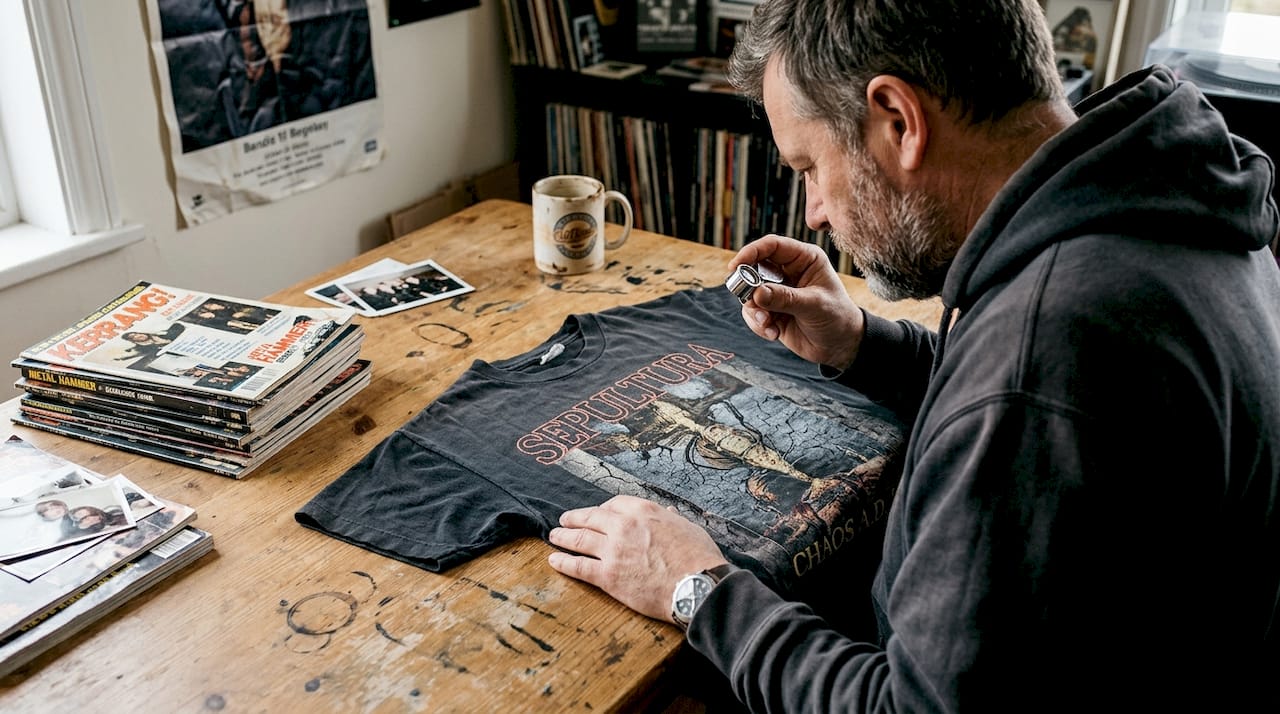
You can study classic metal tee examples to train your eye before you start hunting. Understanding why vintage t-shirts matter to collectors also helps frame what you’re actually looking for.
| Feature | Authentic 90s metal tee | Modern reprint |
|---|---|---|
| Construction | Single-stitch hem | Double-stitch hem |
| Fabric weight | Heavyweight 100% cotton | Lighter blended fabrics |
| Ink feel | Thick, slightly cracked with age | Flat, even, no ageing |
| Label brand | Brockum, Giant, Anvil | Generic or licensed modern tags |
| Graphics | Off-centre, hand-separated colours | Digitally precise, uniform |
| Colour | Deep, faded black | Consistent, uniform black |
Pro Tip: Always check the tag first. Labels like Brockum, Giant, and Hanes Beefy-T were standard in the 90s. If the tag looks too clean or uses a modern font, the shirt probably isn’t what it claims to be. Ink cracking on the print is a good sign, not a flaw.
Authenticity features to look for:
- Single-stitch seams along the sleeves and hem
- Faded or cracked ink that shows genuine age rather than artificial distressing
- Period-correct label brands such as Brockum or Giant
- Tour-specific artwork referencing actual dates, cities, or album cycles
- Heavyweight cotton that feels dense and substantial, not thin or stretchy
Band t-shirts as identity, community and rebellion
Understanding their visual language leads us to why band tees mean so much: identity, belonging, and spirit.
A band tee is a second skin. For many metal fans, it’s not something you put on to look cool. It’s something you put on because it reflects who you actually are. The shirt carries the weight of memories: the gig you attended, the album that got you through a rough year, the band that made you feel less alone.
“Black was practical, symbolic of rebellion and defiance, and it became the defining colour of an entire cultural movement.”
The social function of band tees is just as powerful as the personal one. In a crowd of thousands, spotting someone in a rare tour shirt creates an instant bond. It’s a silent conversation that says: I was there, I know this, I’m one of you. That’s a form of communication that no algorithm can replicate. Explore why vintage shirts are collectible to understand how this emotional connection translates into lasting value.
Top 4 ways fans express themselves through band t-shirts:
- Allegiance signalling: Wearing a specific band’s shirt announces your musical loyalties without saying a word.
- Era identification: A 1994 Pantera tour tee tells people you were part of that specific moment in metal history.
- Outsider identity: The deliberately confrontational imagery on many metal tees is a conscious rejection of mainstream culture.
- Personal history: Fans often wear shirts from pivotal gigs or albums, turning the garment into a wearable memory.
Collectors’ lens: Value, authenticity and the vintage revival
Now that band tees’ social power is clear, let’s see why collectors hunt them down, what drives value, and how the market has shifted.
Value hinges on tags, fabric, print ageing, and rarity. Imperfect production, the kind that would have been considered a quality control issue in 1992, often adds value over modern reproductions. An off-centre graphic or a slightly uneven print run is proof of hand-separated screen printing, not a reason to walk away.
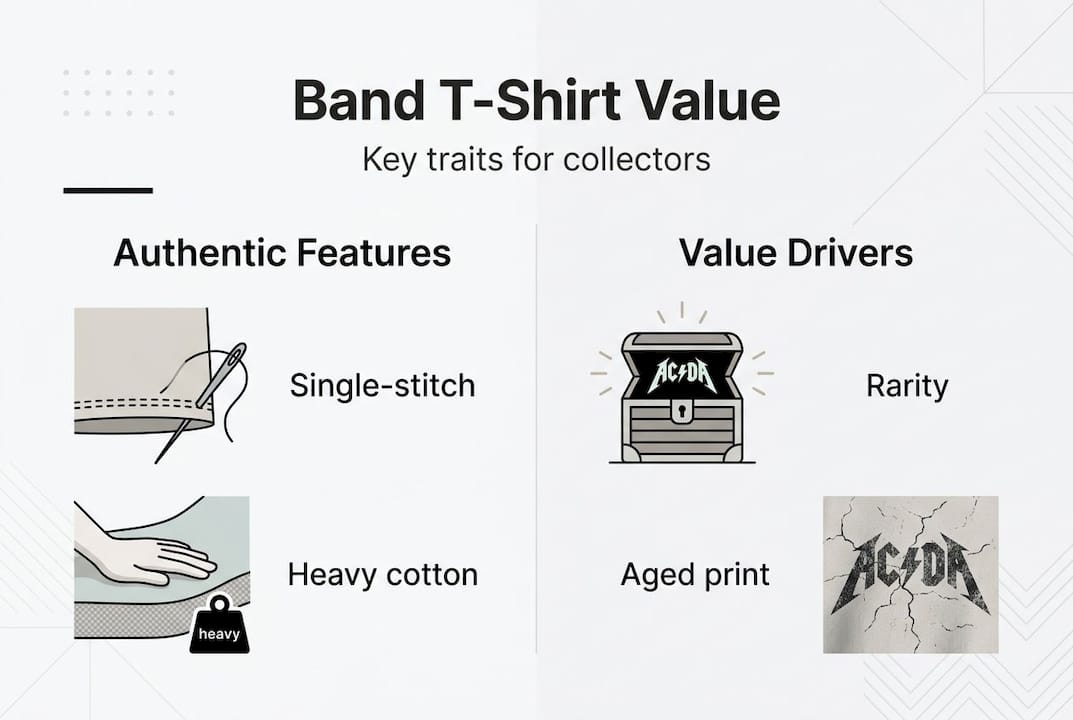
Bootleg 90s tees can gain value as authentic period pieces. Mass production reduced scarcity at the time, but it also boosted recognition, and that recognition now fuels the vintage market. A bootleg Metallica shirt from 1991 with unique artwork that never appeared on official merchandise can be worth more than the official version.
| Type | Collector value | Key traits |
|---|---|---|
| Official tour tee (period) | Very high | Licensed, tour-specific, period tags |
| Bootleg (period) | High if rare | Unique artwork, unofficial, period fabric |
| Modern licensed reprint | Low | New construction, no ageing, modern tags |
| Modern bootleg | Very low | No historical or cultural authenticity |
Pro Tip: Don’t dismiss a shirt because it’s a bootleg. If it was made in the early 90s with period-correct materials and has genuinely aged, it’s a legitimate piece of history. The question is always: was it made then, not who made it.
Features that drive collector value:
- Tour-specific graphics referencing actual dates or venues
- Limited print runs from regional or one-off events
- Authentic print ageing with natural cracking and fading
- Rare label variants from specific pressing plants or regions
Learn more about authentic vintage shirt features and check out tour merchandise tips to sharpen your eye before your next purchase.
Band t-shirts in the music economy and wider culture
Collectors’ obsession mirrors broader changes, as band t-shirts now fuel music business and cultural trends as well as debates.
Band tees are not just cultural objects. They are economic ones. For touring bands, merchandise has always been a critical income stream, often outpacing what they earn from recorded music. In the streaming era, that dependence has only grown. The global merch market reached $14 billion in 2024, though t-shirts also draw criticism for their environmental impact, particularly the fast-fashion model of cheap licensed reprints.
The economic, fashion, and environmental picture of band tees today:
- Income for artists: Merchandise revenue directly supports bands, crew, and touring infrastructure, especially for independent acts.
- Fashion crossover: Vintage metal tees now appear in high-end fashion editorials and on runways, a long way from the mosh pit.
- Environmental cost: Mass-produced licensed tees contribute to textile waste, making the vintage and second-hand market a more sustainable choice.
- Cultural legitimacy: The mainstream embrace of metal aesthetics has brought new audiences to the genre, though purists debate whether that dilutes the culture.
For collectors and fans, buying vintage and ex-tour stock is both a cultural act and a responsible one. You’re preserving a piece of history rather than adding to the pile of disposable fashion. Browse the vintage metal blog for deeper dives into the culture and market.
Explore and collect: Find your next vintage band t-shirt
Armed with knowledge, you’re ready to find or pass on the next grail band tee. Here’s where to start.
There’s a particular feeling that comes with holding a genuine 90s metal tee. The weight of the cotton, the cracked ink, the faded black that tells you this shirt has lived. Whether you’re building a serious collection or hunting for a piece that connects you to a specific era, the right shirt is out there.
At Vintage Metal, we stock genuine ex-tour stock, dead stock, and second-hand heavy metal tees sourced directly from tours and bands. Every piece is curated for authenticity, so you’re not gambling on a reprint. If you’re after something specific, check out the rare Metallica 1992 tour tee as a benchmark for what a genuine period piece looks and feels like. Browse the full range of vintage Metallica shirts or explore all vintage band shirt listings to find your next piece of wearable history.
Frequently asked questions
What makes a 90s heavy metal t-shirt authentic?
Authentic 90s metal tees feature single-stitch construction and heavyweight cotton, along with period label brands like Brockum or Giant. Collectors verify tags, fabric and print ageing as the primary markers of a genuine piece.
Are bootleg band t-shirts from the 1990s valuable?
Period bootlegs can be valuable if they feature rare or unique artwork and were produced with period-correct materials. Rarity and authentic ageing matter more than whether the shirt was officially licensed.
How do band t-shirts signal community and fan identity?
Band t-shirts evolved into badges of identity and tribal affiliation, allowing fans to signal allegiance and find like-minded people instantly. The shirt acts as a shortcut to connection within the metal community.
Why is black the most common colour for heavy metal band t-shirts?
Black is practical and symbolic of rebellion and defiance, making it the natural choice for a genre built on outsider identity. It also provides the ideal backdrop for the high-contrast, detailed artwork that defines metal tee design.
Do band t-shirts still fund music in the digital era?
Yes, band tees remain a vital income stream as music sales decline. The global merch market hit $14 billion in 2024, with t-shirts making up a significant share of that revenue for touring acts.
Recommended
- Why collect band t-shirts: a heavy metal guide 2026 – Vintage Metal Store
- Why bands sell tour shirts: culture and economics explained – Vintage Metal Store
- What Is a Band Tee and Why It Matters for Collectors – Vintage Metal Store
- History of Metal Band Shirts: Collectors’ Insight – Vintage Metal Store


