



TL;DR:
- Vintage heavy metal band T-shirts are highly valuable due to scarcity and cultural significance. Original shirts linked to specific tours, designs, and eras command higher prices. Social media and fashion crossover accelerate trend prices and demand for authentic vintage tees.
Band T-shirts are never just fabric and ink. For heavy metal enthusiasts, they represent lived experience, tribal identity, and increasingly serious investment. Some vintage heavy metal tees now command five-figure prices at auction, leaving newcomers and seasoned collectors alike asking the same question: how does a concert shirt become a cultural artefact worth thousands? Understanding the mechanics behind band T-shirt trends matters whether you are hunting for your next find, protecting an existing collection, or simply trying to make sense of why your old tour shirt is suddenly worth more than your car.
Table of Contents
- The origins: How band T-shirts enter the scene
- Scarcity, collectibility, and the rise of vintage
- The cultural power of metal T-shirts
- Modern drivers: How trends start and spread today
- The real value of band T-shirt trends: a collector’s viewpoint
- Find authentic vintage metal T-shirts and start your collection
- Frequently asked questions
Key Takeaways
| Point | Details |
|---|---|
| Scarcity sparks trends | Limited edition and original tour shirts are the foundation of collectible value in heavy metal T-shirts. |
| Culture drives demand | Band tees are more than fashion—they serve as identity markers and memorabilia for fans and collectors. |
| Modern factors matter | Social media, streetwear crossover, and sustainability trends influence which shirts see resurgent or new hype. |
| Provenance is key | Collectors value shirts with documented origins, authentic designs, and emotional connections to memorable events. |
The origins: How band T-shirts enter the scene
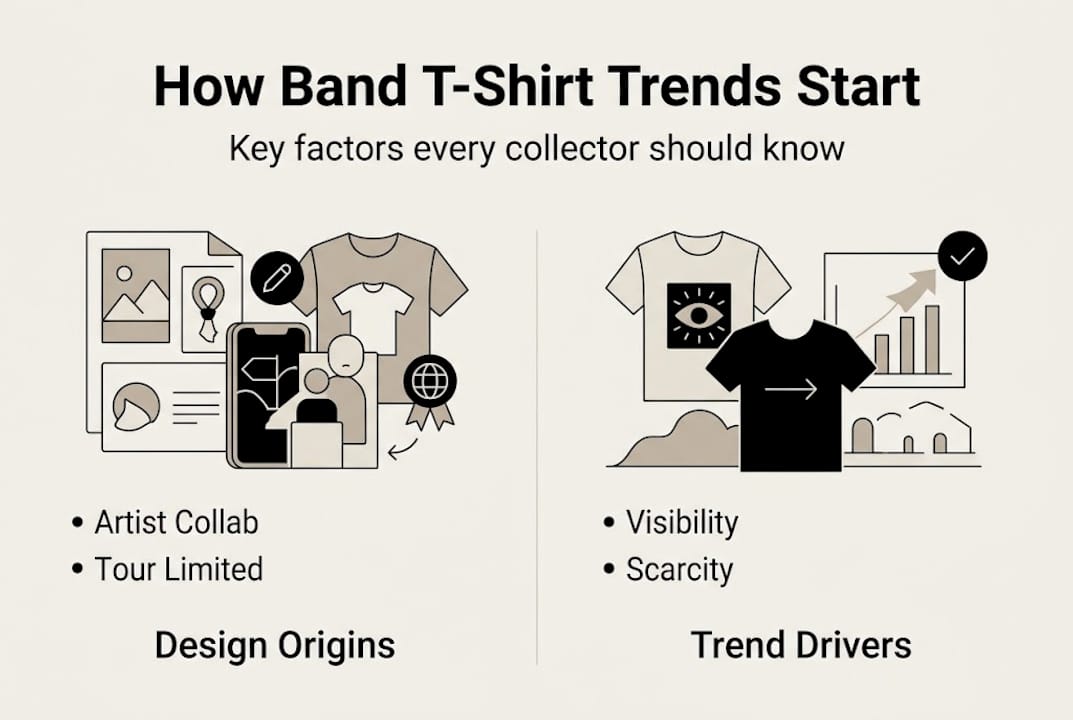
Every iconic band T-shirt begins with a decision: who designs it, how many get made, and where they are sold. These three variables quietly determine whether a shirt fades into obscurity or becomes a legend. The history of metal band shirts is really a history of deliberate scarcity meeting passionate audiences.
Bands and labels have long commissioned artists for tour designs that are specific to an album cycle or a single leg of a tour. Think of the elaborate illustrations that defined early Maiden or Slayer artwork. These were not corporate merchandise decisions made in a boardroom. They were collaborations between bands and visual artists who understood the culture, producing work that felt dangerous, specific, and alive. That specificity is part of what gives early shirts their energy decades later.
Limited production at shows is equally critical. When a band only sells shirts at the venue on a given night, the supply is hard-capped from the start. There are no restocks. If you were not there, you missed out. This is the original scarcity model, and it still drives desire today.
Key factors that create trend momentum at the source:
- Collaboration with respected artists whose work has its own following
- Production runs tied strictly to individual shows or short tours
- Venue-only sales that exclude mail order and online access
- Visual designs that reward metal knowledge (references, iconography, in-jokes)
- Word of mouth and peer visibility as fans wear shirts to subsequent gigs
Pro Tip: If you ever attend a gig where shirts are sold only at the merch table with no online equivalent, buy one. Even if the band is not yet huge, limited-run tour shirts from early career moments tend to appreciate fastest.
| Factor | Impact on desirability |
|---|---|
| Artist collaboration | High: adds artistic provenance |
| Limited production run | Very high: restricts future supply |
| Venue-only sale | Very high: creates built-in scarcity |
| Tour-specific design | High: links shirt to a specific moment |
| Mass retail distribution | Low: reduces collectibility significantly |
Visibility then does the rest. A killer shirt worn by the right person at the right show spreads through a scene like a rumour. Other fans notice, want one, and discover they cannot easily get one. That gap between desire and availability is where trends are truly born.
Scarcity, collectibility, and the rise of vintage
Once you understand how scarcity is baked into the origins of great metal shirts, the vintage market begins to make complete sense. The shirts that survived the 70s and 80s are rare simply because most of them did not. They were worn until they fell apart, lost in moves, or thrown out by parents who had no idea what they were holding.
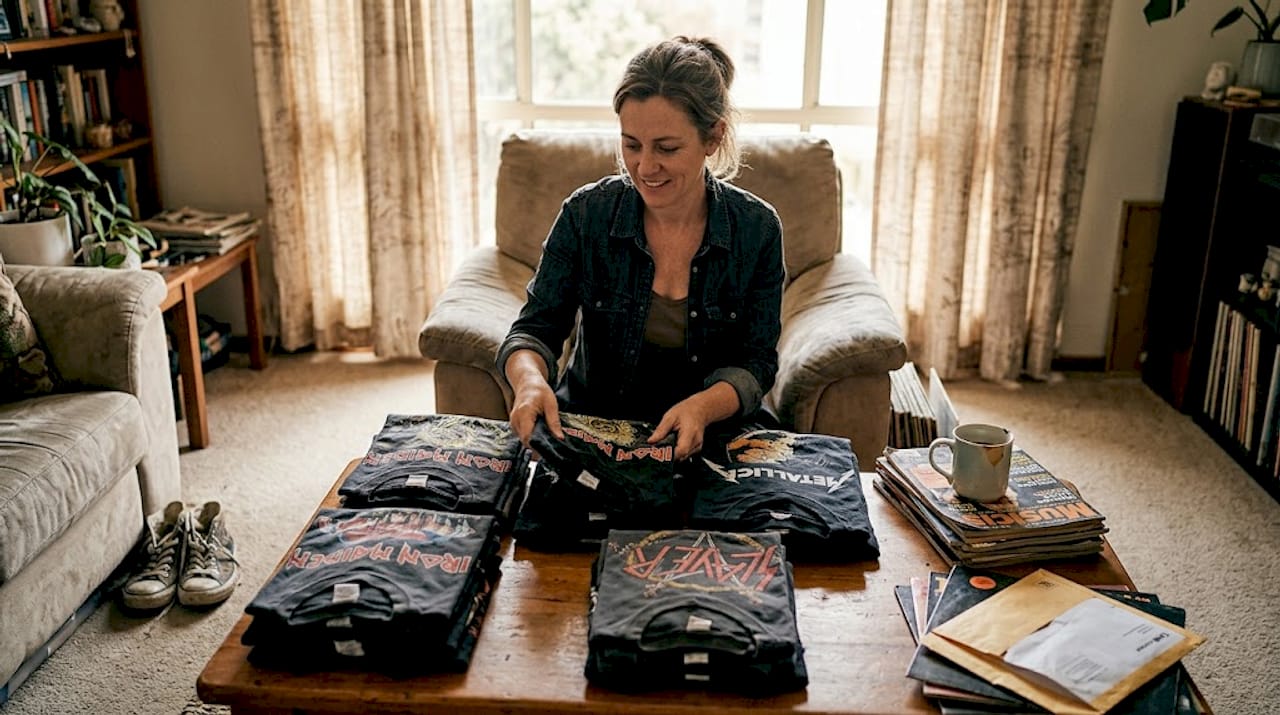
Vintage tee market values have reached extraordinary heights, with examples like Led Zeppelin shirts fetching upwards of $10,000 at resale. This is not an outlier. It reflects a structural reality: the supply of original 70s and 80s shirts is fixed and shrinking, while the number of people who want them keeps growing.
Why vintage shirts command premium prices over reissues:
- Original shirts are proof of attendance, a physical receipt from a specific night in history
- Period-correct printing techniques (single-colour screen printing, certain ink textures) cannot be perfectly replicated
- Ageing fabric develops a patina that authenticated the shirt’s era at a glance
- Reissues, however faithful, carry no direct link to the original cultural moment
- Collector communities actively police fakes, meaning authentic originals carry social as well as financial premium
The so-called vintage boom arrived when streetwear culture discovered classic metal merchandising. Suddenly, a Black Sabbath shirt was not just for metal fans. It was a style statement for a far broader audience. This collision of subculture and mainstream fashion expanded demand dramatically, pulling prices up across the board.
Knowing how to spot authentic vintage tees is now a genuine skill. Tags, stitching, print registration, and fabric weight all tell a story. Collectors who develop this eye gain a real advantage in a market where repro shirts are increasingly sophisticated.
Statistic to know: Original tour shirts from major 80s metal acts can now resell for 50 to 100 times their original purchase price, reflecting both cultural nostalgia and genuine rarity.
For those serious about the pursuit, browsing rare concert shirts from verified sources is one of the smartest starting points. Provenance matters enormously in this market, and documented examples are always worth more than undocumented ones.
The cultural power of metal T-shirts
Scarcity alone cannot explain why a metal T-shirt carries so much weight. These garments operate as a form of language within the culture, and that linguistic function is inseparable from their value.
Wearing the right shirt to a show communicates knowledge and commitment instantly. Metal has always had its tests, unspoken gatekeeping rooted not in cruelty but in a shared love of something that feels earned. A shirt from the right tour, the right era, or featuring the work of a respected artist like Pushead (whose illustrations for Metallica are among the most recognised in the genre) signals membership far more effectively than any verbal introduction.
What a metal T-shirt communicates beyond fashion:
- Geographic connection (tour dates printed on the back place the wearer at specific shows)
- Temporal connection (era-specific designs place the wearer within a chapter of metal history)
- Aesthetic alignment (choosing a shirt with complex artwork signals deeper engagement with the culture)
- Community identification (other fans immediately recognise and respond to significant designs)
As collectibles and community are deeply intertwined in metal culture, these shirts function as what researchers might call material culture: objects that carry social meaning beyond their physical form. In practical terms, they are the handshake, the credential, and the conversation starter all at once.
Band tees also serve as walking billboards that reinforce fandom and community at street level, spreading band awareness in a way that no algorithm can fully replicate. The physical presence of a well-worn shirt in a pub or at a gig carries an authenticity that a social media post simply does not. That embodied quality is part of why understanding why fans collect band tees reveals so much about the culture itself.
“The shirt is not merchandise. It’s a document.” This is how serious collectors tend to talk about significant pieces, and they are not being precious. They are being accurate.
The tour dates printed on the back of a shirt carry emotional and monetary value simultaneously. They place the garment in time. They make it irreproducible. A reissue might copy the front graphic perfectly but it can never copy those dates, that venue list, that specific moment in a band’s life.
Modern drivers: How trends start and spread today
The mechanics of trend-making have shifted significantly in the past decade, even if the underlying dynamics of scarcity and culture remain the same. Today’s collectors need to understand both the old rules and the new accelerators.
Social media has compressed the timeline between something becoming cool and it becoming expensive. A single post from a respected collector or a celebrity photographed in a significant vintage shirt can move prices within days. This acceleration is both opportunity and risk for collectors: the window to acquire undervalued pieces has narrowed considerably.
The key modern drivers reshaping band T-shirt trends:
- Social platforms (particularly Instagram and Depop) create instant global visibility for rare finds
- Streetwear crossover brings new, often wealthier buyers into the vintage metal space
- Nostalgia cycles run faster now, meaning 90s metal is already being reappraised as seriously collectable
- Small-batch and sustainability-focused production from current bands echoes the original scarcity model
- Celebrity adoption creates spikes in demand for specific bands or eras, sometimes overnight
Pro Tip: Follow respected vintage dealers and collectors on social media, not to copy their purchases, but to understand which eras and bands are attracting attention before prices peak. Awareness is the collector’s most valuable tool.
For those building a collection focused on a particular era, the expert guide to rare 90s tees offers specific guidance on what to look for and what to avoid. Meanwhile, dedicated collections like vintage Metallica shirts demonstrate how band-specific collecting can create real depth and genuine value over time.
Modern merch trends confirm that while social media and streetwear crossover fuel demand, vintage 80s shirts remain the undisputed gold standard for serious collectors. The new audiences may drive prices, but they rarely change what the most knowledgeable collectors actually pursue.
The real value of band T-shirt trends: a collector’s viewpoint
Here is the uncomfortable truth that most trend coverage ignores: mainstream attention is a double-edged sword for metal collecting. When a vintage Black Sabbath shirt appears on a pop star, prices go up. That is real and measurable. But something else happens too. The shirt gets detached from its cultural context, and the community that originally gave it meaning watches from the sidelines while outsiders set the price.
Purists rightly value original tour merch for its authenticity, but mainstream adoption inflates prices while simultaneously diluting the subcultural credibility that made those shirts meaningful in the first place. As collectors, we need to hold both of those realities at once.
The genuinely smart approach is to prioritise provenance, design origins, and personal resonance over price tags or band popularity. A shirt from a band you love, from a tour you wish you could have attended, designed by an artist whose work moves you, is worth more in real terms than a shirt that is simply expensive. Explore the collector’s guide to memorabilia for frameworks that ground collecting in culture rather than hype. The hype cycle will always move on. The culture endures.
Find authentic vintage metal T-shirts and start your collection
If this has sharpened your appetite to collect seriously, the next step is finding pieces with genuine authenticity and verified provenance. That is harder than it sounds in a market flooded with reproductions and misrepresented originals.
At Vintage Metal, we source directly from ex-tour stock and deadstock from real heavy metal tours and bands, so every shirt in the collection carries a documented connection to the culture you care about. Whether you are after shop vintage Metallica shirts from specific eras, hunting through our rare concert shirts collection, or simply want to browse all vintage metal shirts to see what speaks to you, you are dealing with shirts that have a real story behind them.
Frequently asked questions
Why do some band T-shirts become collector’s items?
Scarcity, original designs, and historical connections to key tours or moments make some band T-shirts highly sought after. Tour-specific releases with limited production runs are almost always the pieces that appreciate most significantly over time.
How can you tell if a metal T-shirt is authentic vintage?
Look for original tags, period-correct print quality, single-stitch seams, and natural wear patterns consistent with the claimed era. Collectors use original production details as their primary authentication checklist alongside fabric weight and collar construction.
Are reissue or replica band shirts valuable for collectors?
Most serious collectors place far higher value on original period shirts, regarding reissues as decorative rather than truly collectable. Originals hold value that mass-produced reissues simply cannot replicate, though rare anniversary editions occasionally attract attention.
What’s driving the recent surge in band T-shirt prices?
A combination of nostalgia, the booming vintage clothing market, and celebrity and influencer promotion on social media is pushing prices sharply upward. Social media amplifies trend cycles and price spikes faster than any previous mechanism, compressing years of appreciation into months.
Recommended
- Why collect band t-shirts: a heavy metal guide 2026 – Vintage Metal Store
- Band t-shirts in metal culture: identity, value and collecting – Vintage Metal Store
- Collector’s guide to vintage heavy metal t-shirts: spot, value, collec – Vintage Metal Store
- History of Metal Band Shirts: Collectors’ Insight – Vintage Metal Store


