



TL;DR:
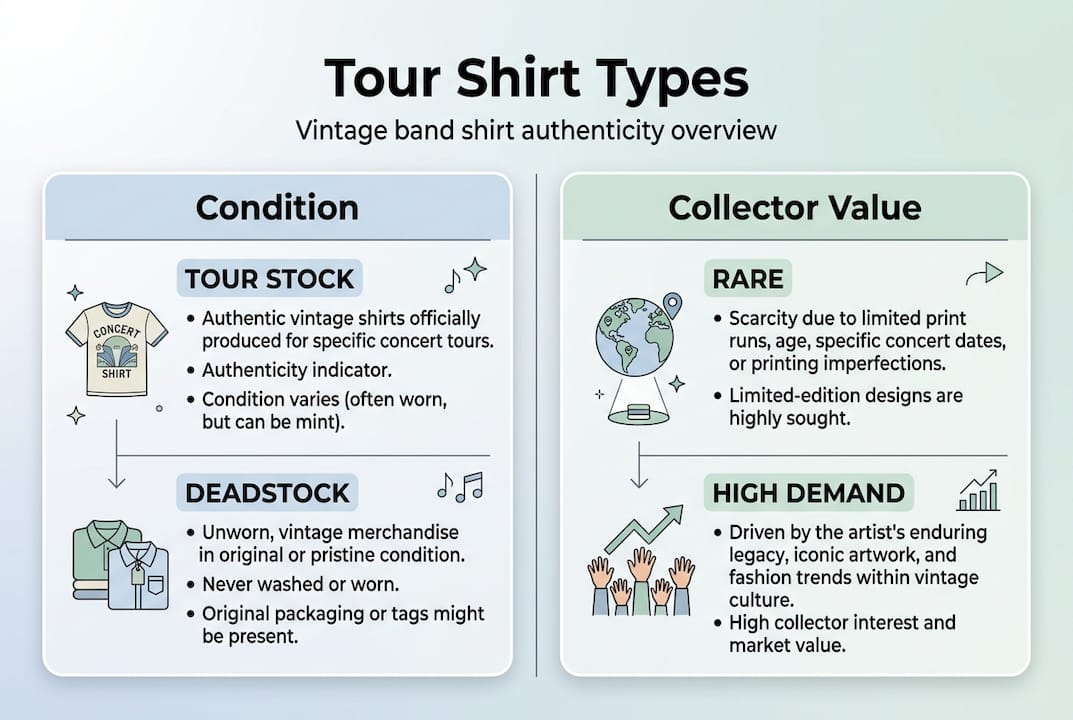
- A tour stock shirt was made specifically for a tour and never sold publicly.
- Deadstock shirts are unused, unworn, and often in pristine condition, highly valuable to collectors.
- Authenticity verification involves examining tags, print aging, stitching, and provenance documentation.
The difference between a tour stock shirt and a standard vintage band tee can mean a $400 swing in value, yet the terminology still confuses even experienced collectors. Sellers misuse “deadstock,” buyers conflate “ex-tour stock” with “worn,” and the whole mess costs people real money. Common 1990s metal tour shirts sit between $100 and $400, but rare deadstock examples from landmark tours regularly push past $500. This guide cuts through the noise, lays out precise definitions, and gives you the tools to make smarter decisions whether you are buying, selling, or just obsessing over the collection.
Table of Contents
- Defining a tour stock shirt: The essentials
- Tour stock vs deadstock vs worn: What collectors really want
- What makes vintage tour stock shirts so valuable?
- How to spot authentic ex-tour stock and avoid fakes
- Why chasing tour stock shirts is more than investment
- Explore rare and authentic vintage metal shirts
- Frequently asked questions
Key Takeaways
| Point | Details |
|---|---|
| Tour stock shirt meaning | A tour stock shirt is official merch produced for a band’s tour, often left unsold and highly valued by collectors. |
| Deadstock vs ex-tour stock | Deadstock means unworn, pristine condition; ex-tour stock may have minor storage wear or band crew provenance. |
| Value is condition driven | Rarity and condition, especially deadstock status, can multiply prices for 1990s metal shirts. |
| Authentication is crucial | Fakes using deadstock blanks exist, so verifying provenance and details is essential for buyers. |
Defining a tour stock shirt: The essentials
Not all vintage band tees are equal, and the language used to describe them matters enormously when real money is on the table. A tour stock shirt is merchandise that was produced specifically for a band tour, printed in quantities intended for sale at venue merch tables, but never actually sold or distributed to the general public. These shirts exist in a fascinating grey zone: they were made to be worn and traded, yet they ended up boxed in warehouses, tour crew storage, or merch company offices long after the tour finished.
The phrase “ex-tour stock” signals that the shirt came directly from tour production and bypassed the retail experience entirely. This is different from a shirt that a fan bought at a show in 1994 and eventually resold. Ex-tour stock implies a chain of custody that skips public ownership altogether, which is precisely what gives it added credibility.
Key distinctions every collector should know:
- Tour stock: Produced for a specific tour, held in tour production inventory, never sold at shows or retail
- Ex-tour stock: Same as tour stock, often with the added implication of merchandise that moved through official tour channels (merch companies, crew storage)
- Deadstock: Unused, unworn, often new with tags, from any production run that remained unsold regardless of origin
- Reprint or bootleg: A shirt printed at any point after the original tour, regardless of how authentic it looks
- Mint condition: Worn but in essentially perfect condition, no fading, no cracking, no distortion
The overlap between tour stock and deadstock is where things get interesting. Deadstock tour shirts are unused, new with tags originals from tour production that remained unsold, prized for their pristine condition. A 1990s Metallica shirt that sat in a merch company box for thirty years qualifies as both tour stock and deadstock simultaneously. That crossover is the holy grail for serious collectors.
| Term | Worn? | Sold publicly? | Tags present? | Collector premium |
|---|---|---|---|---|
| Tour stock | No | No | Sometimes | High |
| Deadstock | No | No | Usually yes | Very high |
| Ex-tour stock | Rarely | No | Variable | High |
| Vintage (worn) | Yes | Yes | Rarely | Moderate |
| Reprint | N/A | Often | Sometimes | Very low |
Pro Tip: If a listing uses “deadstock” without photos of original tags, stitching, and the interior print label, treat it as a red flag. Genuine deadstock sellers can always show the evidence. Vague descriptions of condition are a classic marker of reprints dressed up with premium language.
Collecting iconic 1990s heavy metal shirts is far more rewarding when you know exactly what category each piece belongs to before you buy.
Tour stock vs deadstock vs worn: What collectors really want
With definitions established, the real question becomes which category collectors actually chase and why. The answer is more nuanced than most guides admit.
Deadstock is the obvious prize for investors. Unused, pristine, with original tags and no wash fading, a deadstock shirt represents the shirt exactly as it was in 1993 or 1994. For bands like Metallica, Megadeth, Pantera, and Sepultura at their commercial peak, the print colours are vivid, the fabric is uncollapsed, and the sizing label reads as a direct document of that era. These shirts often circulate within dealer networks before ever reaching the open market.
Tour stock that was stored rather than worn sits just below deadstock in terms of condition but can still be extraordinary. Storage conditions matter enormously. A shirt box-stored in a climate-controlled warehouse is vastly different from one that spent years in a damp tour van. The distinction within tour stock is often about the chain of custody, who held it, how, and for how long.
Then there is the worn shirt, and here is where the collecting community genuinely divides. Some collectors prefer thrashed, well-worn ex-tour stock for its story, its patina, and the lived-in evidence of authenticity. A shirt with legitimate show wear, sweat stains from the crew, or a small repair sewn in on the road carries a kind of provenance that a pristine boxed shirt simply cannot. There is an argument that these worn examples are actually harder to fake convincingly.
“The shirt that looks like it survived the entire Countdown to Extinction tour is sometimes more compelling than the one that never left its plastic sleeve. Condition is not always the whole story in this hobby.”
What each category appeals to:
- Deadstock attracts investors, completionists, and collectors building archival-quality sets
- Tour stock (stored, unissued) appeals to enthusiasts who want rarity without paying deadstock premiums
- Worn ex-tour stock draws in collectors motivated by provenance, narrative, and direct connection to the music
- Genuinely worn fan shirts attract buyers who want affordability with verified era authenticity
Authentication is the critical challenge across all three categories. Fakes on deadstock blanks are a real and growing problem. Counterfeiters source genuine period blanks, screen print copied tour artwork, and present the result as original deadstock. The blank itself can pass basic date tests, making the print the only reliable indicator. This is why understanding print characteristics, ink ageing, and screen registration marks is non-negotiable for serious buyers.
Looking at examples of vintage band tees from documented collections is one of the fastest ways to train your eye before spending significant money.
If you want to go deeper on verification strategies, the expert tips for finding rare shirts resource covers the specifics in detail.
What makes vintage tour stock shirts so valuable?
Value in the 1990s metal tour shirt market is driven by a cluster of overlapping factors, none of which operates in isolation. Understanding each one lets you evaluate any shirt systematically rather than relying on gut feel or seller hype.
The four core value drivers ranked:
- Rarity of production run: Some tours produced limited quantities. A regional leg of a 1992 Megadeth tour might have generated far fewer shirts than a headline arena run. Smaller print runs directly reduce supply.
- Band legacy and era: Shirts from the commercial and artistic peak of a band’s career carry a premium. Metallica’s Black Album era, Pantera’s Vulgar Display of Power cycle, and Megadeth’s Countdown to Extinction campaign are consistently the most sought after.
- Condition: Deadstock condition adds a significant premium. Unwashed, unfolded, with original tags, a shirt can be worth two to three times an identical worn example.
- Provenance documentation: A shirt that comes with verifiable history, photographs from the tour, purchase receipts, or crew documentation, is worth substantially more than one presented with no background.
| Shirt type | Typical price range | Notes |
|---|---|---|
| Common 90s metal vintage | $100 to $200 | Widely available bands, good condition |
| Mid-tier tour stock | $200 to $400 | Known bands, verified tour origin |
| Rare deadstock (major band) | $500 to $900 | Metallica, Pantera, Megadeth peak era |
| Exceptional provenance deadstock | $900+ | Documented chain of custody, tags |
The Metallica 1992 Don’t Tread on Me USA tour shirt is a strong example of how tour specificity drives value. That shirt is tied to a particular leg of a particular tour at a moment when Metallica was the biggest band in the world. It is not just a Metallica shirt. It is a document of a specific place and time.
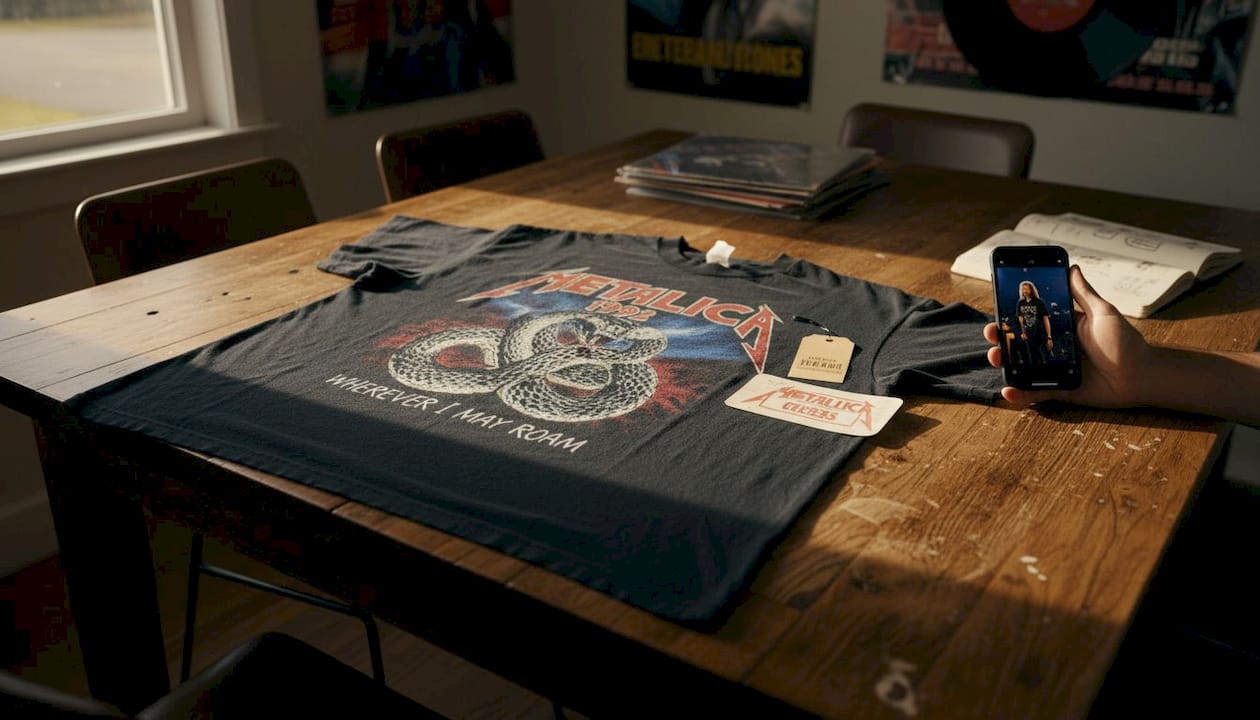
Similarly, the Metallica Black Album Europe 1991 tour shirt commands attention because European tour stock from that campaign is scarcer than the domestic equivalent, production quantities for European legs were smaller, and the shirts often carried region-specific artwork variations.
Collector demand has also shifted. Younger buyers entering the market in their mid-twenties and thirties are chasing the shirts from their early teenage years. The 1990s heavy metal catalogue is now their nostalgia era, which means demand continues to rise as supply stays fixed or diminishes through wear, loss, and damage.
How to spot authentic ex-tour stock and avoid fakes
Authentication is the skill that separates confident collectors from those who get burned. Here is a practical framework you can apply to any shirt you are evaluating.
Step-by-step authentication process:
- Check the inner neck tag: Authentic 1990s tour shirts use tags from manufacturers like Fruit of the Loom, Hanes, or Anvil that have specific design features dated to that era. Tag fonts, logo styles, and label materials changed by year. Cross-reference the tag design with documented examples from verified collections.
- Examine the print: Authentic 1990s screen prints show specific ageing characteristics. Ink sits on top of the fabric with slight texture. Colours have natural fading patterns. Overly bright or perfectly saturated prints on supposedly aged shirts are a warning sign.
- Study the stitching: Period shirts use specific thread weights and stitch counts. The seam construction at the collar and sleeves follows patterns consistent with the manufacturer and era. Reprints often use modern stitch construction even on period blanks.
- Look at the size label: Font choice, care instruction language, and country of manufacture details changed throughout the decade. A shirt claiming to be from 1992 with a care label format that was not introduced until 1997 is a fake.
- Ask for provenance: Genuine ex-tour stock often comes with some history. Who held it, where was it stored, how did it enter the market. Sellers who cannot answer these questions at all are worth approaching with extra scepticism.
Key red flags in listings:
- No photos of the inner tag or neck label
- Print colours that look too vivid for a thirty-year-old shirt
- Seller claims “deadstock” without photographic evidence of tags
- Pricing that sits well below market for the claimed condition
- Vague descriptions like “vintage feel” or “looks old” rather than specific era documentation
Fakes on deadstock blanks are the most challenging authentication problem because the blank itself passes basic date testing. This is why print forensics, not just fabric age, is essential. Comparing the claimed print to documented originals from the same tour is the most reliable check.
Pro Tip: Build a reference library of confirmed authentic shirts before spending serious money. Follow established collectors, study auction records with provenance photos, and compare print details obsessively. The investment in knowledge pays off on every purchase you make after it.
For deeper guidance, the tips for authenticating shirts resource gives you specific markers to check across different eras and bands.
Why chasing tour stock shirts is more than investment
There is a version of this hobby that reduces everything to price charts and condition grades. Collectors who go down that path often miss why these objects matter in the first place.
Tour stock shirts are physical evidence of a specific cultural moment. When you hold a genuine 1992 Metallica tour shirt that never sold, never entered a home, never got washed, you are holding something that was produced in anticipation of an experience and somehow escaped that experience entirely. There is something genuinely strange and wonderful about that.
Many of the most passionate collectors we encounter are not primarily motivated by resale potential. They are after connection. Connection to a time in their life, to music that shaped who they became, to a community of people who take these objects seriously enough to learn the difference between a 1991 Anvil blank and a 1993 Hanes Beefy-T.
The investment angle is real and should not be dismissed. A rare deadstock example from a landmark tour will appreciate if stored correctly. But the collectors who build the most compelling and historically significant collections are the ones who let genuine enthusiasm lead their decisions. They chase iconic 1990s picks because the music meant something, not because a spreadsheet told them to.
There is also a caution worth naming directly. Over-optimising for investment can make collectors paranoid and transactional in ways that strip the joy from the hobby. You end up buying the thing that will appreciate rather than the thing that matters to you. That is a trade worth examining carefully before you commit to it. The shirts that have appreciated most dramatically over the last decade are often the ones that passionate collectors held because they loved them, not the ones that dispassionate investors flipped for short-term gain.
Explore rare and authentic vintage metal shirts
If you’re inspired to track down your own tour stock or deadstock find, here’s where to look next.
At Vintage Metal, we source genuine ex-tour stock and deadstock from 1990s heavy metal tours with full transparency about condition, provenance, and authentication. Our listings include vintage Metallica tour shirts sourced directly from documented collections, as well as a broader range of rare heavy metal shirts from the bands and tours that defined the decade. Every piece is described accurately, with condition notes that reflect the real characteristics of the shirt. If you’re after something specific, the 1992 Metallica tour shirt is exactly the kind of documented piece serious collectors come to us for.
Frequently asked questions
What is the difference between deadstock and ex-tour stock?
Deadstock refers to unworn, unsold shirts in pristine, new condition regardless of origin, while ex-tour stock refers specifically to merchandise that remained within tour production channels and was never sold to the public, which may or may not be in deadstock condition.
Are there fakes of deadstock tour shirts?
Yes. Fakes on deadstock blanks are a known problem in the vintage market, where counterfeiters use genuine period blanks and apply copied tour artwork, making print authentication more important than fabric dating alone.
How much are 1990s tour stock shirts worth?
Most 1990s metal tour shirts sell in the $100 to $400 range, but rare examples in deadstock condition from major bands like Metallica or Megadeth regularly exceed $500 and can push significantly higher with documented provenance.
What are the signs of a genuine tour stock shirt?
Original neck tags, period-correct stitching construction, naturally aged print ink, and a verifiable chain of custody are the primary indicators, with unused new-with-tags originals from tour production representing the gold standard of authenticity.
Recommended
- What makes a band shirt rare: collector value explained – Vintage Metal Store
- Why metal tees are collectible: value, authenticity, culture – Vintage Metal Store
- Why preserve old band tees? Value, culture and know-how – Vintage Metal Store
- Collector’s guide to vintage heavy metal t-shirts: spot, value, collec – Vintage Metal Store


