



TL;DR:
- Authentic vintage heavy metal shirts can be identified through six physical and provenance checks, with convergence indicating authenticity.
- Counterfeit shirts often fail multiple signals, such as print method, stitch type, or tag era, which can be confirmed with tools like a jeweler’s loupe or UV light.
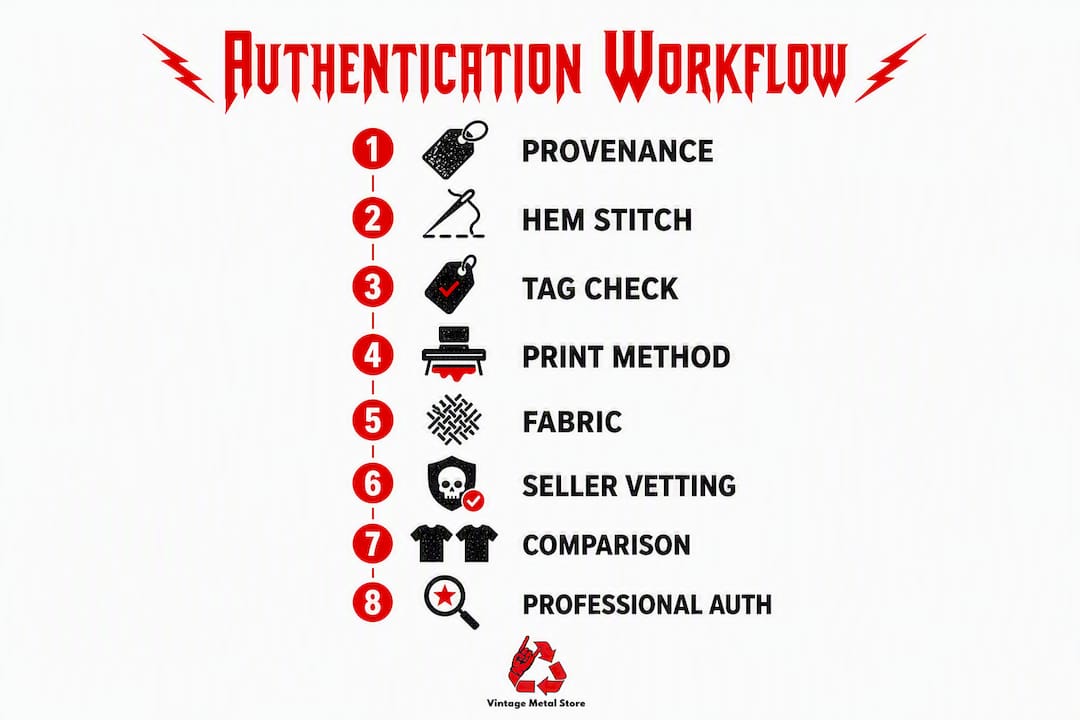
Most genuine vintage heavy metal tees will reveal themselves through six ordered checks: hem stitching, tag era, print method, fabric and construction, copyright stamp, and provenance. Run them in that sequence and you will catch the overwhelming majority of reproductions before you spend a dollar. According to Keep It Classic, a shirt that passes all six is almost certainly real. David, author of Vintage Metal Store’s authentication guides, reinforces this: converging signals beat any single check, every time.
Quick checklist (run before anything else):
- Hem stitch type (single vs double)
- Neck tag era and country of origin
- Print method (plastisol vs DTG or heat transfer)
- Fabric weight, collar shape, and seam placement
- Copyright year on the graphic
- Seller history and provenance photos
Table of Contents
- What does a step-by-step shirt authentication workflow look like?
- How do printing methods tell you whether a shirt is real?
- What fabric and construction checks do collectors rely on?
- How do you vet sellers and read Australian pricing context?
- When is professional authentication worth it in Australia?
- Quick red flags that commonly signal a reproduction
- How do you inspect tags and labels properly?
- What do wash and care labels reveal about authenticity?
- How do you compare against verified authentic examples?
- Can a blacklight or other tools help detect fakes?
- Key takeaways
- Why the workflow matters more than any single check
- Vintage Metal Store: authenticated heavy metal shirts, ready to wear
- Useful sources and example galleries
- FAQ
What does a step-by-step shirt authentication workflow look like?
Start with the listing photos before you commit to purchase. If you are buying in person, move straight to physical checks in this order.
- Provenance and listing vetting. Check seller history, photo quality, and whether the listing shows clear tag and hem shots. Reverse image search the listing photos to confirm they are not recycled from another sale.
- Hem stitching. Flip the shirt and look at the sleeve and bottom hem. Single-stitch hems strongly suggest pre-1996 production; double-stitch became the volume default after 1996–1998.
- Neck tag era and country of origin. Read the tag font, logo style, and origin code against the claimed year. A tag that does not match the production window for the era claimed is an immediate red flag.
- Print method and ageing. Examine the graphic for plastisol cracking, ink bed wear, and faded pigment pooling. DTG prints sit into the fibre and look softer; plastisol sits on top and cracks along stress lines.
- Fabric weight, collar geometry, and seam placement. Heavy vintage cotton feels dense in the hand. Boxy cut and high armpit seams are typical of 1980s–early 1990s tees.
- Copyright and licence stamp. The copyright year on the graphic is the earliest possible production date. A ©1992 stamp means the shirt cannot be from 1989.
Decision rule: Two or more conflicting signals mean you should treat the shirt as a likely reproduction or request more evidence before buying. All six signals aligning points to a likely original.
Pro Tip: Use a 10x jeweller’s loupe under consistent daylight or a daylight-balanced LED to inspect tags and print surfaces. Angled light reveals cracking and ink texture that flat overhead lighting hides entirely.
How do printing methods tell you whether a shirt is real?
Print method is one of the fastest authentication signals on any vintage band tee. Here is how the main methods compare.
| Print method | Visual and feel signals | Era plausibility |
|---|---|---|
| Plastisol screenprint | Sits on fabric surface; discrete ink film; irregular spider-web cracking with age | 1980s to present; dominant on tour merch through 2000s |
| DTG (direct-to-garment) | Ink absorbed into fibres; soft hand; weave visible through print | Mid-2000s onward; hard fail for claimed pre-2005 shirts |
| Sublimation / heat transfer | Smooth, slightly glossy surface; no ink build-up; edges very clean | 1990s onward for transfers; sublimation mainly post-2000 |
| Discharge printing | Bleaches base fabric; no ink layer; print feels like the shirt itself | Used on some 1990s–2000s tees; rare on early tour stock |
Authentic plastisol ageing is irregular. Cracking follows the stress lines of the fabric, concentrating at fold points and chest creases. Artificial distressing looks uniform and stripe-shaped, as though the shirt was dragged across a surface. That regularity is the tell.
Pro Tip: Under a 10x loupe, plastisol shows as discrete raised dots of ink film. DTG ink is absorbed into individual fibres with no raised surface. If a shirt is claimed pre-2005 and the loupe shows absorbed ink with no surface film, that is a hard fail.
What fabric and construction checks do collectors rely on?
Construction signals are physical and hard to fake at scale. These are the ones that matter most.
- Single-stitch vs double-stitch: Single-stitch on sleeves and bottom hem strongly indicates pre-1996 production. Mixed stitch patterns suggest mid-1990s transitional blanks. Double-stitch on both is common post-1996. For pre-2000s shirts, combine at least four of six visual signals before making a call.
- Collar geometry: 1980s–early 1990s tees typically have a wide, slightly ribbed collar that sits away from the neck. Modern blanks run a tighter, thinner collar band.
- Armpit seam placement: Vintage tees often have the side seam set further back toward the armpit. Modern slim-cut blanks bring the seam forward.
- Body proportions: Boxy, drop-shoulder cuts dominate 1980s–early 1990s tour stock. Slim tapered bodies are a post-2000s blank tell.
- Fabric weight and hand-feel: Heavy vintage cotton feels dense and slightly stiff. Modern ringspun blends feel lighter and softer. If a claimed 1980s shirt feels like a modern Gildan, question it.
- Sewn-in vs printed neck tags: Sewn-in woven tags are standard on genuine vintage tees. Printed neck tags (ink directly on the fabric inside the collar) became common on blanks from the mid-2000s onward and are a red flag on anything claimed earlier.
Check the vintage vs reissue differences in construction to sharpen your eye before inspecting a suspect shirt.
How do you vet sellers and read Australian pricing context?
Provenance is the check most collectors skip, and it is where fakes slip through. Run this checklist before committing to any purchase.
- Seller has a documented history of vintage sales, not a new account with one listing.
- Listing includes clear photos of the neck tag, hem stitch, copyright stamp, and wash label.
- Seller can provide an original receipt, tour programme, or photo evidence linking the shirt to a specific show or tour.
- Multiple listings from the same seller are consistent in construction era and tag style.
In the Australian market, rarity, band, tour year, and condition all affect price significantly. A genuine 1992 Metallica tour tee in excellent condition commands a premium that reflects its scarcity. If a price looks suspiciously low for a known rare shirt, treat it as a signal to dig deeper, not a bargain to grab fast. Sellers who refuse to provide close-up photos of tags or hems under reasonable request are a consistent red flag.
Pro Tip: Before purchasing online, reverse image search the listing photos and run a metadata check. Recycled photos from previous sales or stock image sources are a common tactic used to obscure a shirt’s true condition or origin.
For more on buying safely, the second-hand band shirts guide covers Australian platform protections including PayPal Goods and Services and eBay seller feedback.
When is professional authentication worth it in Australia?
Some shirts genuinely need an expert. Here is when to make that call and how to prepare.
- High-value items. If a shirt is priced above what you can afford to lose on a mistake, professional authentication pays for itself.
- Contradictory physical signals. When the tag era says one thing and the stitching says another, a single expert review resolves the conflict faster than weeks of forum debate.
- Provenance gaps. No receipt, no tour evidence, no seller history. The shirt may be genuine, but you need more than your own eyes.
- Auction or marketplace listings above a significant price point. The higher the stakes, the more the authentication fee becomes a sensible insurance cost.
To prepare a submission for an Australian authenticator or archival shop: photograph the neck tag, hem stitch, full front and back, copyright stamp, and wash label under consistent daylight. Measure chest width and body length. Ship in a sealed bag inside a rigid mailer to prevent crease damage in transit. Typical Australian authentication services provide written assessments, and turnaround varies by provider and workload. Vintage Metal Store can assist with guidance on authenticated stock and point you toward reputable assessment options.
Quick red flags that commonly signal a reproduction
Run this list as a fast screen before any deeper check.
- Modern blank (thin, slim-cut, ringspun cotton) with vintage-era graphics printed on top
- Uniform, stripe-shaped fading rather than irregular stress-line wear
- Printed neck tag claiming a pre-2000s era
- DTG print on a shirt claimed to predate 2005
- Copyright year on the graphic that postdates the claimed production year
- Stitch type that does not match the claimed era (double-stitch on a claimed 1980s tee)
- Seller refuses close-up photos of tags, hems, or the copyright stamp
Two or more of these present at once means you should treat the shirt as a likely reproduction and halt the purchase. A very low price for a known rare tour shirt is its own red flag. Genuine scarcity does not discount itself. For a deeper breakdown of counterfeit tactics, the original vs fake band t-shirts guide covers the most common techniques in detail.
How do you inspect tags and labels properly?
Tags are the densest evidence on any vintage tee. Start with the neck tag: read the logo font, the country of origin, and the size system. These three signals together anchor the production era. A tag that claims one era but uses a font or origin code from a later period is a reproduction tell.
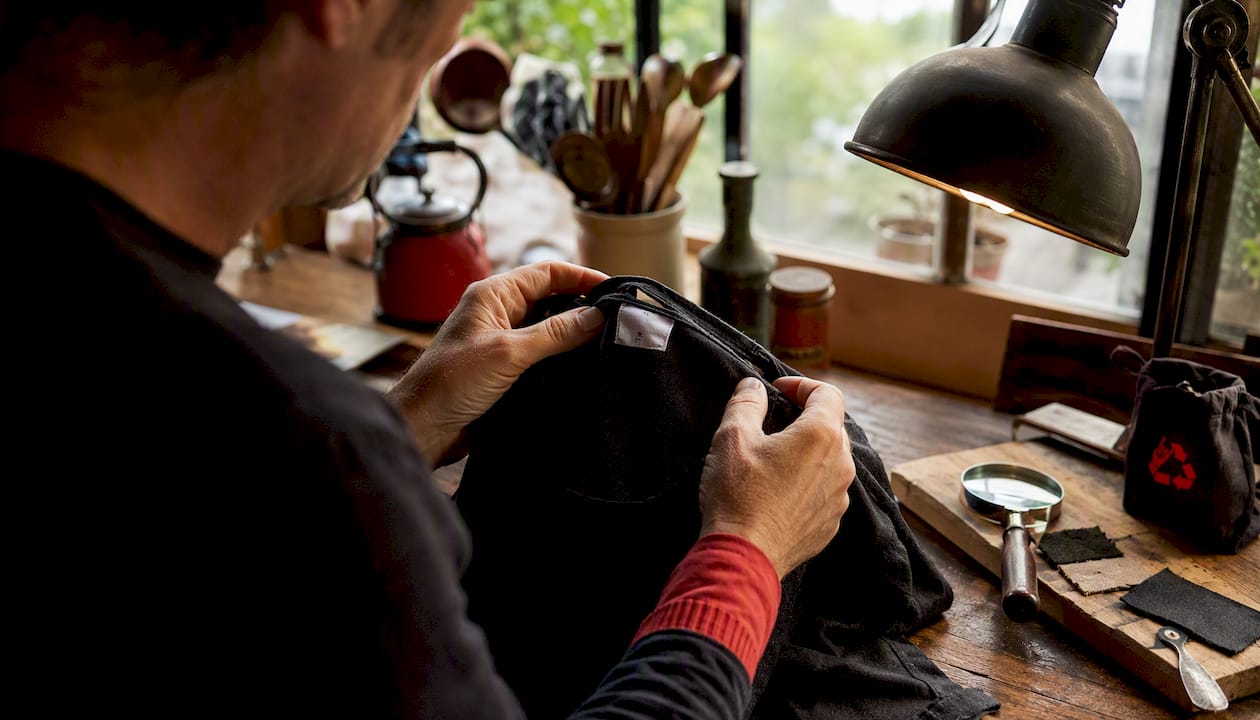
The country of origin matters more than most collectors realise. Early 1990s US tour stock was predominantly made in the USA, Honduras, or Mexico. A shirt claiming that era but tagged “Made in China” or “Made in Bangladesh” deserves serious scrutiny, as production did shift over time but the early runs were not on those lines.
For post-2000s shirts, locate the manufacturer product code on the wash label. Searching that code in Google Images is one of the fastest ways to confirm whether the label matches the claimed shirt. Mismatched codes are a strong counterfeit signal.
What do wash and care labels reveal about authenticity?
Wash labels carry more information than most buyers check. The number of care symbols, the fibre content description, and the label format all changed across decades. Pre-1990s US-made tees often carry minimal care instructions, sometimes just a single sewn-in strip. Multi-symbol care labels with detailed fibre percentages became standard through the 1990s.
Check for pen marks or handwriting on the wash label. Shirts with pen marks on inside labels have frequently been identified as fakes, used to obscure or alter label details. A wash label that looks freshly printed on an aged shirt is also suspicious: genuine vintage labels yellow, fray at edges, and soften with repeated washing.
The RN number (Registered Identification Number) on US-made garments ties to the manufacturer of record and is searchable in the FTC database. It will not give you a production year, but it confirms the manufacturer entity and catches relabelled reproductions where the neck tag and wash label disagree.
How do you compare against verified authentic examples?
The single most reliable cross-check is a side-by-side comparison with a known authentic example from the same band, tour, and approximate year. Online collector communities, archival databases, and specialist stores maintain reference galleries specifically for this purpose.
For heavy metal tees, how to spot genuine tour shirts provides photo references and construction examples you can use for direct comparison. When examining a suspect listing, zoom in on the tag, the hem stitch, and the copyright stamp and compare each element against a verified reference. Discrepancies in font weight, tag placement, or copyright text format are often visible even in standard listing photos.
Can a blacklight or other tools help detect fakes?
A UV blacklight is a useful secondary tool, not a primary one. Genuine vintage cotton and original plastisol inks fluoresce differently under UV than modern synthetic blends and newer ink formulations. A shirt printed on a modern blank will often show a brighter, more uniform UV response than aged natural cotton. This is a supporting signal, not a standalone verdict.
Beyond the blacklight, a 10x jeweller’s loupe is the most practical tool in a collector’s kit. It reveals plastisol dot structure, DTG ink absorption, tag font detail, and stitch density at a level impossible to assess with the naked eye. A daylight-balanced LED torch held at an angle to the print surface shows cracking depth and ink bed separation clearly. These two tools together cover most of what a physical inspection requires.
Key takeaways
Authentic vintage heavy metal tees reveal themselves through a convergence of signals: hem stitch, tag era, print method, fabric weight, copyright stamp, and provenance must all tell the same production story for the shirt to be a likely original.
| Point | Details |
|---|---|
| Run checks in order | Start with provenance and listing vetting, then move through hem, tag, print, fabric, and copyright in sequence. |
| Single-stitch signals pre-1996 | Single-stitch hems and sleeves strongly indicate pre-1996 production; double-stitch is common post-1996. |
| DTG is a hard fail pre-2005 | A DTG print on any shirt claimed to predate 2005 is an immediate authentication failure. |
| Two red flags means stop | If two or more signals conflict or red flags appear, treat the shirt as a likely reproduction and halt purchase. |
| Vintage Metal Store for authenticated stock | For collectors who want to skip DIY checks, Vintage Metal Store lists hand-graded, authenticated vintage and ex-tour heavy metal shirts in Australia. |
Why the workflow matters more than any single check
Modern counterfeits are genuinely good. Repro tags, DTG printing, and chemical ageing techniques have reached a point where a single check will not catch them. What they cannot do is fake every signal simultaneously. A reproduction that nails the tag era will usually fail on the print method. One that gets the print right will often fail on the fabric weight or the stitch type. The workflow catches them because it demands that every physical signal agree.
There is also an ethical dimension worth naming plainly. Bootleg tees, parking-lot merch, and deliberate reproductions sold as originals are different things. A bootleg sold honestly as a bootleg is a collector curiosity. A reproduction sold as a 1992 tour original at a premium price is fraud. The bootleg identification guide at Vintage Metal Store covers how to tell the difference and what your options are when you suspect a seller is misrepresenting stock.
The collectors who get burned are almost always the ones who fell in love with the shirt before they finished the checks. Run the workflow first. Fall in love after.
Vintage Metal Store: authenticated heavy metal shirts, ready to wear
Skipping the DIY workflow entirely is a legitimate choice, especially for high-value pieces where the cost of a mistake is real. Vintage Metal Store hand-grades every shirt before listing, running the same physical checks described in this guide: hem stitch, tag era, print method, fabric weight, and provenance. Each listing includes detailed photos so you can see exactly what you are buying.

The difference between buying from Vintage Metal Store and running your own authentication is access. The team has handled enough genuine ex-tour stock and deadstock to know what period-correct construction feels like in hand, and that reference point is hard to replicate without years of handling real pieces. Whether you are after a rare 1992 Metallica tour tee or want to browse the full range of rare vintage heavy metal concert shirts, every item has been assessed before it reaches you. Browse the authenticated collection and wear the legacy with confidence.
Useful sources and example galleries
Use these resources to compare tags, construction photos, and copyright details when verifying a suspect listing.
Vintage Metal Store guides:
- Authenticate vintage metal shirts with confidence
- Collector’s guide to authentic vintage band tees: 5 expert checks
- Identifying dead stock heavy metal shirts step-by-step
- Collector’s guide to vintage heavy metal t-shirts: spot, value, collect
External references for print methods, tag eras, and professional workflows:
- Keep It Classic: vintage tee authentication guide — detailed signal-by-signal breakdown for hem, tag, print, and fabric checks
- DJR Authentication: real vs fake counterfeit vintage band t-shirts — expert workflow methodology and counterfeit technique overview
| Resource | Best used for |
|---|---|
| Keep It Classic authentication guide | Signal-by-signal reference for hem, tag, print, and fabric checks |
| DJR Authentication guide | Understanding counterfeit techniques and workflow methodology |
| Vintage Metal Store tour shirt guide | Side-by-side photo comparison for genuine tour shirts |
| Vintage Metal Store dead stock guide | Identifying unissued deadstock construction and tags |
FAQ
What is the first check in a shirt authentication workflow?
Start with provenance and listing vetting before any physical check. If buying in person, the hem stitch is the first physical signal to examine.
Does single-stitch always mean a shirt is vintage?
Single-stitch hems strongly suggest pre-1996 production, but they are not definitive on their own. Combine the stitch check with tag era, print method, and fabric weight for a reliable verdict.
What makes DTG printing a hard fail for older shirts?
DTG printing became commercially available in the mid-2000s. A shirt with DTG ink absorption cannot have been produced before that period, making it an immediate authentication failure for any shirt claimed to predate 2005.
How many red flags are enough to walk away from a purchase?
Two or more conflicting signals or red flags mean you should treat the shirt as a likely reproduction and stop the purchase until you have more evidence.
Where can Australian collectors buy already-authenticated vintage metal shirts?
Vintage Metal Store lists hand-graded vintage and ex-tour heavy metal shirts in Australia, with detailed photos and construction checks completed before listing.
Recommended
- Identifying Dead Stock Heavy Metal Shirts Step-by-Step – Vintage Metal Store
- Authenticate vintage metal shirts with confidence – Vintage Metal Store
- Collector’s guide to vintage heavy metal t-shirts: spot, value, collec – Vintage Metal Store
- How to Buy Second Hand Metal Shirts for Collectors – Vintage Metal Store


