



TL;DR:
- Heavy metal fashion originated in the 1970s, representing rebellion and group identity.
- 1980s styles diverged into glam and thrash, with unique clothing signals for each subgenre.
- Vintage 1990s band shirts are highly valued collectibles due to their authenticity and historical significance.
Heavy metal fashion is far more than a wardrobe of black T-shirts and ripped jeans. It’s a living visual language, built over decades, shaped by rebellion, subculture, and an almost obsessive devotion to authenticity. From the leather-clad biker roots of the 1970s through the explosive genre wars of the 1980s and into the collector’s paradise of 1990s tour merch, metal style has always said something profound about who you are. This guide walks through every major era, unpacks the cultural meaning behind key looks, and explains why original vintage band shirts, especially those from the 1990s, are among the most sought-after pieces in any serious collection.
Table of Contents
- Origins: Roots of heavy metal fashion in the 1970s
- Rebellion and identity: Iconic looks of the 1980s
- Battle jackets and personalisation: Thrash and underground culture
- Legacy and collecting: Vintage band shirts through the 1990s and beyond
- Why heavy metal fashion remains a living legacy
- Explore and collect your piece of metal history
- Frequently asked questions
Key Takeaways
| Point | Details |
|---|---|
| Diverse roots | Heavy metal fashion blends styles from biker, rocker, and punk cultures for a unique identity. |
| 1980s innovation | Glam, thrash, and traditional metal scenes created the genre’s most iconic and expressive looks. |
| Personalisation matters | Battle jackets and customisation have always reflected fans’ passion and creativity. |
| Collecting vintage | Original 1990s band shirts and jackets are highly sought after for their history and authenticity. |
| Fashion legacy | Heavy metal style remains a living, evolving tradition valued by fans of all ages. |
Origins: Roots of heavy metal fashion in the 1970s
The visual identity of heavy metal didn’t appear from nowhere. It grew out of a collision of subcultures that were already pushing against the mainstream. Heavy metal fashion originated in the late 1970s, drawing from biker, rocker, hippie, and leather subcultures, with key elements like black clothing, long hair, leather jackets, and band T-shirts remaining constant across decades. That foundation proved remarkably durable.
What made these early looks so powerful was their practicality and symbolism working together. A leather jacket wasn’t just tough-looking. It signalled membership in a community that valued grit, independence, and a refusal to conform. Denim vests, military boots, and studded belts followed naturally from the same logic. These weren’t fashion choices made in front of a mirror. They were statements.
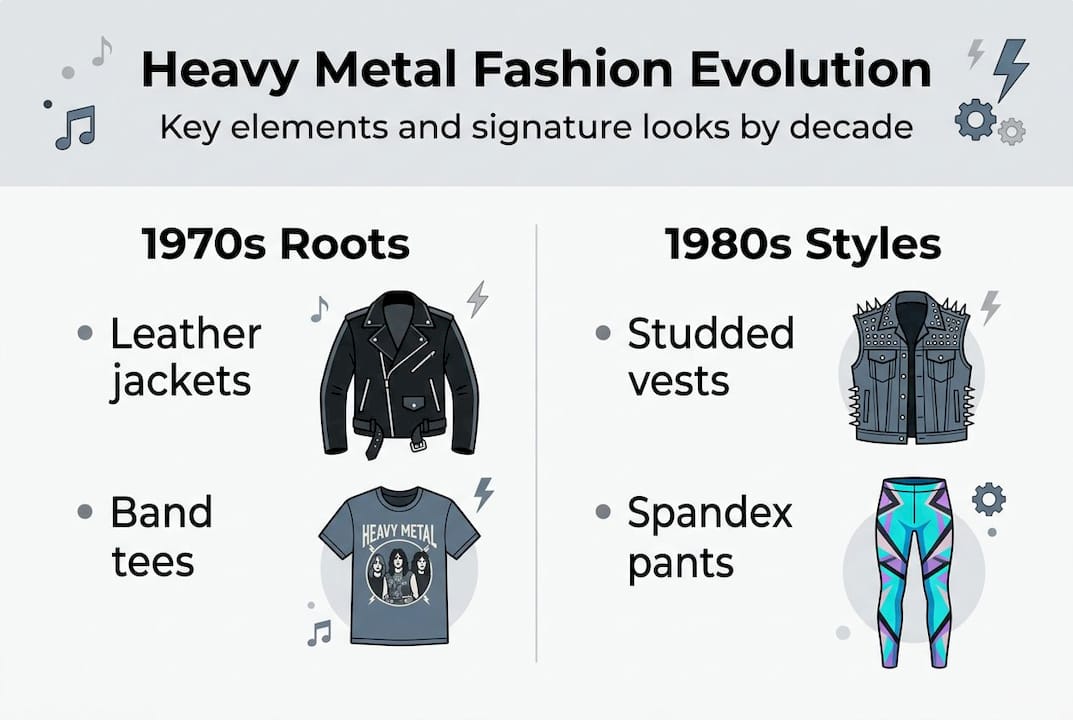
The early icons set the template that everyone else would build on. If you’re hunting for truly rare pieces, early rock influences from this period are the hardest to find and the most historically significant.
Pro Tip: Original 1970s and early 1980s band merchandise is extraordinarily scarce. If you find a piece with original screen printing, a single-stitch hem, and a period-correct label, treat it like the artefact it is.
Early icons and their visual signatures:
- Judas Priest: Black leather, metal studs, biker caps, and an almost militaristic precision in their look
- Motörhead: Bullet belts, denim, and a raw, road-worn aesthetic that looked genuinely dangerous
- Iron Maiden: Graphic-heavy shirts featuring Eddie, paired with classic denim and leather combinations
| Element | Origin | Why it mattered |
|---|---|---|
| Leather jacket | Biker subculture | Durability, rebellion, group identity |
| Band T-shirt | Rock concert culture | Direct fan connection to the band |
| Studded belt/wristband | Punk crossover | Aggression, DIY personalisation |
| Denim vest | Working-class roots | Canvas for patches and self-expression |
Rebellion and identity: Iconic looks of the 1980s
If the 1970s laid the groundwork, the 1980s blew the doors off entirely. Heavy metal splintered into subgenres, and each one developed its own visual code. The fashion became a way of declaring not just that you loved metal, but which metal you loved.
Rob Halford revolutionised the style in 1978 with leather costumes and studs inspired by leather subculture. Motörhead’s bullet belts and Iron Maiden’s graphic-driven approach followed, and by the early 1980s the New Wave of British Heavy Metal had made these looks globally recognisable.
Then came the split. Glam metal brought colour, excess, and androgyny. Thrash metal stripped everything back to aggression and utility. These weren’t just musical differences. They were philosophical ones, expressed entirely through clothing.
The 1980s saw glam metal embrace spandex, teased hair, and leather pants, while thrash metal incorporated military influences like bullet belts, combat boots, and camo pants from bands like Metallica and Megadeth. By the late 1980s, vintage Metallica shirts and similar band tees had become global subcultural markers recognised far beyond the metal community.
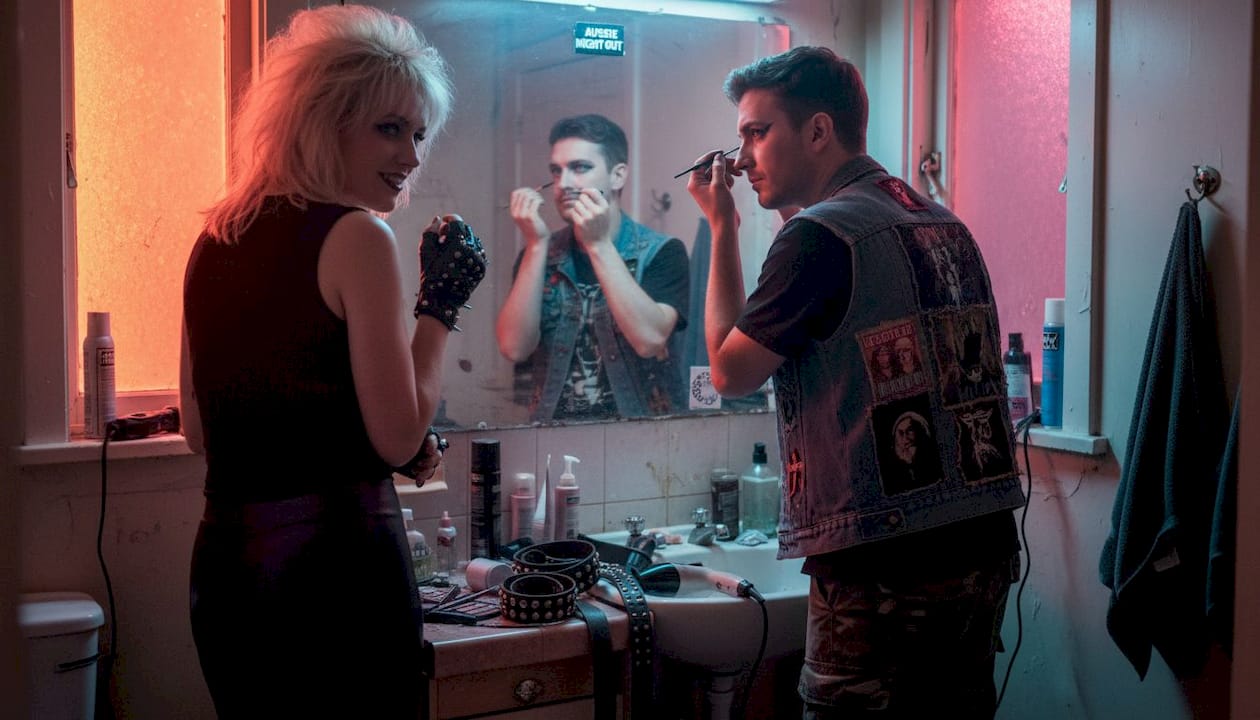
Comparison of 1980s metal fashion styles:
| Style | Key garments | Colours | Attitude |
|---|---|---|---|
| Glam metal | Spandex, leather pants, scarves | Bright, neon, bold | Theatrical, flamboyant |
| Thrash metal | Jeans, combat boots, camo | Black, olive, grey | Raw, aggressive, functional |
| NWOBHM | Leather jackets, studs, band tees | Black, silver | Structured, iconic, powerful |
How fans adopted and adapted band looks:
- Sourcing band shirts directly from concerts or mail-order catalogues
- Customising jeans with bleach, rips, and painted band logos
- Adding patches to denim jackets to signal allegiance to specific bands
- Layering bullet belts and studded wristbands for a more aggressive edge
- Growing hair long as a deliberate counter to mainstream grooming norms
Battle jackets and personalisation: Thrash and underground culture
While mainstream metal was filling arenas, the underground was doing something more interesting. It was making fashion deeply, irreversibly personal. The battle jacket, also called a kutte, became the ultimate expression of that impulse.
Battle jackets emerged from biker and punk roots, becoming central to metal fashion in the 1980s. Customised with band patches, studs, and spikes, they functioned as personal expressions of fandom, especially in thrash and underground scenes. No two were alike. That was the entire point.
As one long-time collector put it:
“A battle jacket isn’t something you buy. It’s something you build over years. Every patch is a memory, a gig, a record that changed how you heard everything.”
The DIY ethos behind battle jackets came directly from punk. Metal and punk had a complicated relationship musically, but they shared a contempt for manufactured culture. Making your own jacket, painting your own logos, sourcing your own patches from tape traders and zine sellers, that was a form of resistance as much as a fashion choice.
Pro Tip: Start with a genuine vintage denim vest rather than a new one. The fading, the texture, and the weight of an original piece gives your battle jacket a foundation that no new fabric can replicate. Check out battle jacket DIY guides for practical advice on sourcing and building.
Typical elements on a battle jacket:
- Large back patch featuring a favourite band’s album artwork
- Smaller patches from concerts, festivals, and underground labels
- Sewn or safety-pinned badges from specific tours or releases
- Painted logos in metallic or white paint on the front panels
- Spikes or studs along the shoulders and collar
- Rare or hand-made badges that signal deep knowledge of the scene
Legacy and collecting: Vintage band shirts through the 1990s and beyond
By the 1990s, grunge and alternative music were pulling mainstream attention away from metal. But the core of metal culture, the leather, denim, and patches that reflected rebellion and subcultural identity, never disappeared. It just became more concentrated among those who truly cared.
And in that concentration, something valuable happened. The band shirts from this era became collector gold. Original 1990s tour shirts carry a weight that modern reprints simply cannot replicate. They were made for specific tours, sold at specific venues, and worn by people who were actually there. That context is irreplaceable.
For anyone serious about building a collection, the guide to band shirt collecting is essential reading. And browsing the full vintage shirt selection gives you a sense of what’s actually available in the market right now.
Key features of authentic vintage 1990s band shirts:
| Feature | What to look for | Red flag |
|---|---|---|
| Label | Single-stitch, period-correct brand (Anvil, Fruit of the Loom) | Modern tagless or heat-transfer label |
| Cracked, faded screen print | Crisp, plasticky DTG print | |
| Stitching | Single-stitch hem and sleeves | Double-stitch (post-1994 indicator) |
| Collar | Slightly stretched, natural wear | Perfectly round, unworn |
Steps to verify a shirt’s era and authenticity:
- Examine the label for manufacturer name and country of origin
- Check the stitching style, single-stitch indicates pre-mid-1990s production
- Look at the print quality, genuine vintage prints crack and fade in characteristic patterns
- Research the tour dates printed on the shirt against known setlist archives
- Compare the graphic style to original concert programmes and flyers from the period
Why heavy metal fashion remains a living legacy
Here’s what most fashion commentary gets wrong about metal style: it treats it as nostalgia. A look back. A retro trend being recycled by people who weren’t there the first time. That reading completely misses the point.
Heavy metal fashion has never been trend-driven. It was built in opposition to trends. Every era, from the leather-and-studs of the 1970s through to the battle jackets of the thrash underground, was a deliberate rejection of whatever the mainstream was doing. That refusal to follow is the constant thread.
What we see today in serious collectors isn’t nostalgia. It’s continuity. The person hunting for an original 1992 tour shirt understands, at some level, that they’re participating in the same culture that produced it. They’re not buying a costume. They’re extending a lineage.
The deeper meaning behind collecting band shirts is something that takes time to fully appreciate. Rarity matters. Personalisation matters. But what matters most is the understanding that every authentic piece carries a story that no reproduction can fake. Today’s collectors are, in the truest sense, the custodians of metal’s visual history.
Explore and collect your piece of metal history
If this journey through metal fashion history has sparked something, the next step is finding pieces that carry that history on them. Authentic vintage shirts from the 1990s are out there, but they require a trusted source.
At Vintage Metal, we specialise in genuine ex-tour stock and deadstock from some of the most significant heavy metal tours ever staged. Whether you’re after shop vintage Metallica shirts from their peak touring years, browsing rare concert shirts from bands that defined an era, or chasing a specific collectors’ holy grail like the 1992 Metallica Don’t Tread on Me USA tour shirt, we stock the real thing. Every piece in our collection is verified, original, and part of the story you’ve just read.
Frequently asked questions
What is the origin of heavy metal fashion?
Heavy metal fashion originated in the late 1970s, drawing influences from biker, rocker, hippie, and leather subcultures, with leather jackets, band shirts, and long hair as its defining features.
Why are 1990s band shirts considered valuable for collectors?
1990s band shirts are prized for their authenticity, rare tour-specific designs, and direct connection to metal’s most culturally significant touring period. Original prints and period-correct labels make them genuinely irreplaceable.
What are battle jackets and why are they important?
Battle jackets are customised denim or leather vests decorated with patches, studs, and painted logos, each one reflecting a fan’s unique identity and history within metal culture. No two are ever the same.
How can you tell if a metal shirt is vintage?
Check the label manufacturer, stitching style, print quality, and any tour dates printed on the shirt, then cross-reference those dates against known archives to confirm the shirt’s era and authenticity.
Recommended
- Why Vintage T-Shirts Matter for Metal Fans – Vintage Metal Store
- How to Style Vintage Metal Tees with Authentic 90s Vibes – Vintage Metal Store
- Band t-shirts in metal culture: identity, value and collecting – Vintage Metal Store
- 1990s Heavy Metal Shirts: 150% Value Surge & Iconic Designs – Vintage Metal Store


