



TL;DR:
- Revival heavy metal, or NWOTHM, is a movement focused on creating original music inspired by 70s and 80s metal. It emphasizes vintage aesthetics, analog production, and a strong connection to classic metal legends like Iron Maiden and Judas Priest. The scene thrives through dedicated festivals, online communities, and loyal fans, especially among Gen Z listeners.
Revival heavy metal is defined as the New Wave of Traditional Heavy Metal (NWOTHM), a movement dedicated to reviving and expanding upon the classic sounds of 70s and 80s heavy metal through original compositions. The NWOTHM emerged in the mid-2000s as a direct response to the polished, digital production that dominated mainstream metal. Bands like Cauldron, Skull Fist, and Enforcer led the charge, writing new music soaked in the spirit of Judas Priest, Iron Maiden, and the New Wave of British Heavy Metal (NWOBHM). This is not a tribute act movement. It is a living, breathing genre with its own identity, community, and growing catalogue of original work.
What is revival heavy metal and where did it come from?
The roots of the NWOTHM lie in a period of decline. Through the 1990s, grunge and alternative rock pushed traditional heavy metal out of the mainstream. Bands that had filled stadiums in the 1980s found themselves playing smaller venues or disbanding entirely. The genre entered what many fans call its leanest years.
The turning point came in 2003. The returns of Rob Halford to Judas Priest and Bruce Dickinson to Iron Maiden gave the metal world a jolt of credibility and commercial energy. Tim ‘Ripper’ Owens, who had fronted Judas Priest during Halford’s absence, reflected that those returns reenergised heavy metal’s cultural and commercial vitality, transitioning the genre from its leanest years back to stadium-level tours.
From that foundation, a new generation of bands began writing original material that honoured the classic metal template. The NWOTHM formalised as a distinct movement by the mid-2000s, with key catalysts including:
- The reunion tours of Iron Maiden and Judas Priest drawing massive new audiences
- Underground tape-trading and early internet forums connecting fans across continents
- Small independent labels signing bands committed to the classic metal sound
- Festivals dedicated exclusively to traditional and revival metal gaining traction in Europe and North America
The NWOTHM is best understood as an evolution, not nostalgia. Revivalist artists produce original music inspired by classic metal, acting as curators of the genre rather than cover bands. That distinction matters enormously to the scene’s credibility.
What are the key characteristics of revival metal?
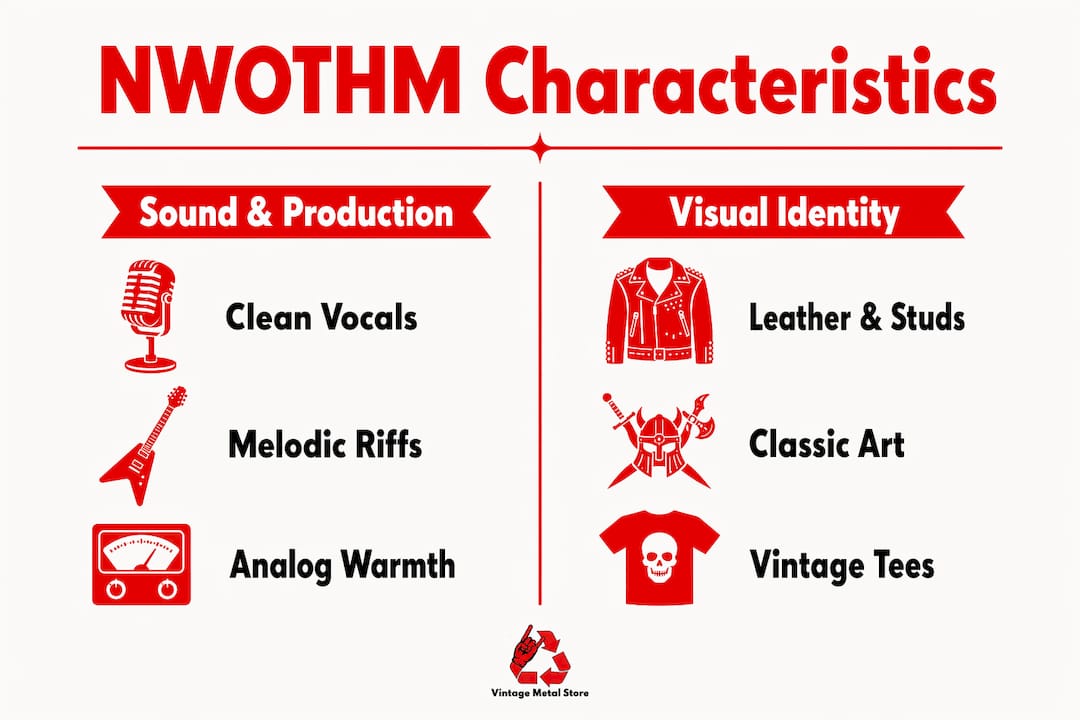
The NWOTHM has a very specific sonic and visual identity. Understanding it helps you tell a genuine revival band from a band simply wearing the aesthetic.
Sound and production
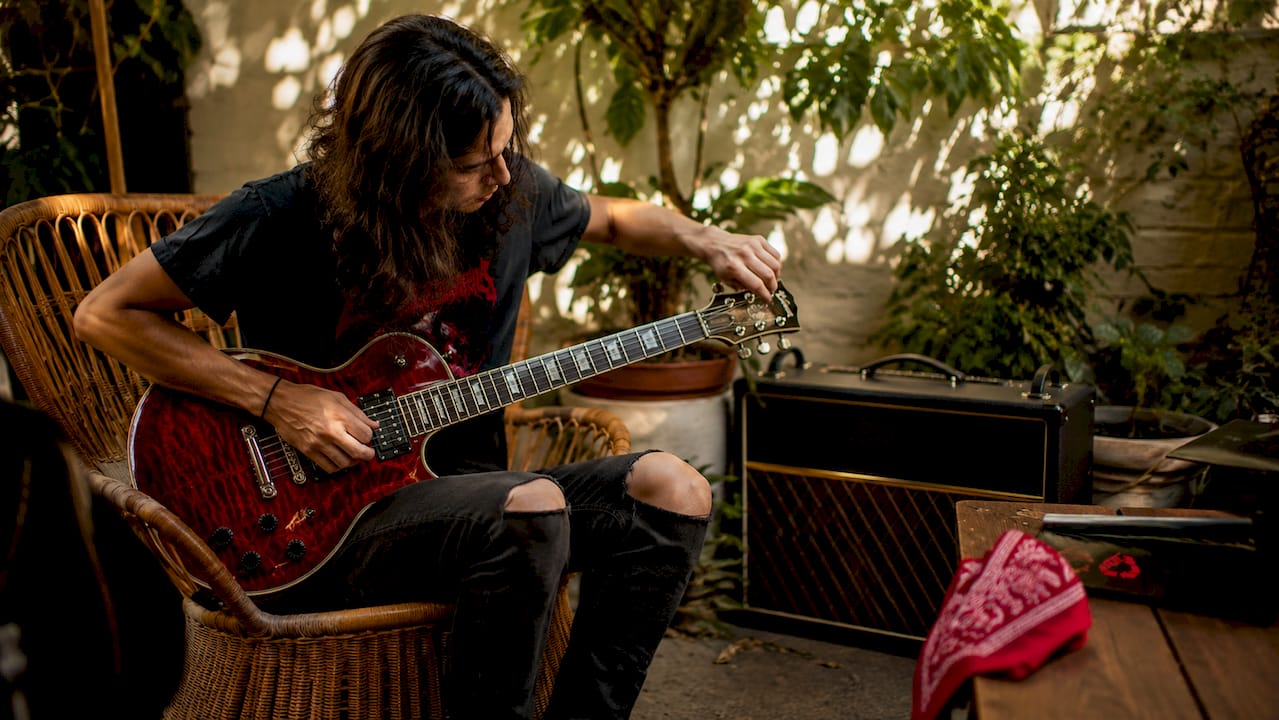
Revival heavy metal centres on powerful clean vocals, melodic guitar riffs, and technically demanding solos. Think the twin-guitar harmonies of Iron Maiden or the screaming falsetto of Rob Halford. NWOTHM practitioners intentionally use analog recording and vintage aesthetics to separate themselves from the over-compressed digital production that defines much of modern metal. The result is a warmer, more dynamic sound with genuine punch.
The contrast with modern metalcore or djent is stark. Where those genres favour down-tuned riffs and heavily processed tones, revival metal keeps the guitars bright and the vocals front and centre.
Visual identity
Leather jackets, studded wristbands, and classic horror or fantasy artwork define the NWOTHM visual language. Album covers draw on the painted, illustrative style of 1980s metal art. Band logos use the jagged, angular typography of the era. This is a deliberate, aesthetic and philosophical choice to maintain authenticity and signal allegiance to the tradition.
The vintage band tee aesthetic carries enormous weight in this community. Wearing the right shirt communicates your knowledge of the genre’s history.
Pro Tip: When identifying a genuine NWOTHM release, check the production credits. Analog recording, live drum tracking, and minimal digital processing are reliable markers of authenticity.
| Feature | Revival heavy metal (NWOTHM) | Modern metal trends |
|---|---|---|
| Vocals | Powerful clean, melodic, high range | Screamed, processed, or auto-tuned |
| Production | Analog, warm, dynamic | Digital, compressed, heavily layered |
| Guitar tone | Bright, harmonic, classic gain | Down-tuned, heavily distorted |
| Visual style | Leather, studs, painted fantasy art | Minimalist, graphic design-led |
| Song structure | Verse-chorus, anthemic, melodic solos | Breakdown-driven, polyrhythmic |
The modern revivalist community also blends traditional metal tropes with emerging genres like synthwave and blackgaze, appealing to listeners who want intensity without abandoning melody.
Which bands define the revival heavy metal movement?
The NWOTHM has produced a rich catalogue of bands and albums that demonstrate the movement’s depth and vitality.
Core revival bands
- Enforcer (Sweden): Arguably the most internationally recognised NWOTHM band. Their album Diamonds (2012) is considered a landmark of the movement.
- Skull Fist (Canada): Known for high-energy performances and an unashamedly 80s sound, they brought the genre to North American audiences.
- Cauldron (Canada): Praised for their melodic approach and consistent output, Cauldron helped define the NWOTHM’s commercial appeal.
- White Wizzard (USA): An early force in the American NWOTHM scene, blending classic NWOBHM influences with a modern recording sensibility.
- Striker (Canada): Prolific and technically sharp, Striker expanded the genre’s reach through relentless touring and strong album output.
Legacy bands as pillars
Iron Maiden and Judas Priest are not NWOTHM bands. They are the genre’s founding pillars. Their ongoing tours and releases provide the movement with a living reference point. When Maiden releases a new record, it validates the entire tradition the NWOTHM is built upon.
The critical distinction is this: revivalist bands avoid becoming tribute acts by writing original material and educating new audiences about deep-cut classic metal, not just the well-known hits. A band playing only “The Trooper” and “Breaking the Law” covers is a tribute act. A band writing new songs in that spirit is a NWOTHM band.
How do festivals and digital platforms fuel the revival?
The NWOTHM’s growth depends heavily on both live events and online discovery. Neither alone would sustain the movement at its current scale.
- Keep It True (Germany): One of the longest-running and most respected traditional metal festivals in the world. It draws bands and fans from across Europe, North America, and Australia every year.
- Hell’s Heroes (USA): A Houston-based festival that has become a pillar of the North American NWOTHM scene, booking both legacy acts and emerging revival bands on the same bill.
- Frost & Fire (USA): A California festival that helped legitimise the NWOTHM in the American market, running from 2015 until its final edition in 2018 but leaving a lasting impact on the scene.
- YouTube channels and streaming playlists: Channels dedicated to NWOTHM full albums and curated Spotify playlists have become primary discovery tools for new fans. Events like Keep It True and Hell’s Heroes, combined with YouTube discovery hubs, fuel fan engagement and scene vitality in ways that were impossible before the internet era.
- Social media communities: Facebook groups, Reddit communities, and Discord servers connect fans globally, sustaining conversation between festival cycles and driving album sales for independent bands.
Gen Z metal fans are among the most loyal listeners in the genre, consuming full albums and deep catalogues rather than chasing trends. That behaviour sustains the NWOTHM economically in a streaming era that typically rewards singles over albums. Fans gravitate to revival heavy metal as an authentic alternative to formulaic, algorithm-driven pop music. The genre offers something streaming algorithms cannot manufacture: genuine craft and a sense of belonging to a tradition.
Key takeaways
Revival heavy metal succeeds because it combines original composition with the authentic sound, production, and visual identity of classic 70s and 80s metal, giving fans a living genre rather than a museum piece.
| Point | Details |
|---|---|
| NWOTHM defined | Revival heavy metal is original music inspired by classic 70s and 80s metal, not cover or tribute performances. |
| Historical catalyst | The 2003 returns of Rob Halford and Bruce Dickinson reignited traditional metal’s commercial and cultural momentum. |
| Analog production | NWOTHM bands use analog recording and vintage aesthetics to signal authenticity and separate from modern digital metal. |
| Community drivers | Festivals like Keep It True and Hell’s Heroes, plus YouTube discovery channels, sustain the global NWOTHM community. |
| Gen Z loyalty | Gen Z fans consume full albums and deep catalogues, providing the genre with a loyal and growing audience base. |
Why revival metal matters more now than ever
I have been following heavy metal for a long time, and the NWOTHM is the most genuinely exciting development the genre has seen since the NWOBHM itself. What strikes me most is that it is not driven by nostalgia alone. Nostalgia is passive. The NWOTHM is active.
The bands in this movement are not looking backwards with longing. They are looking backwards to find tools they can use to build something new. Enforcer’s Zenith (2019) sounds like it could have been recorded in 1983, yet it feels completely current. That tension between past and present is where the genre’s energy lives.
What I find most encouraging is the age of the fans turning up at Keep It True and Hell’s Heroes. Teenagers and early-twenties listeners are discovering Judas Priest and Iron Maiden through NWOTHM bands, then going back to the source. That is how a tradition stays alive. It does not get preserved in a glass case. It gets passed on through people who love it enough to make it their own.
The mainstream music industry will never fully understand this scene, and that is precisely why the scene is healthy. It does not need a major label push or a streaming algorithm to survive. It needs passionate fans, dedicated festivals, and bands willing to put in the work. All three are present in abundance right now.
— David
Wear the legacy: vintage and revival metal gear at Vintage Metal Store
The NWOTHM is as much about how you wear your passion as how you listen to it. At Vintage Metal Store, you will find authentic vintage band shirts and rare tour merch that connect you directly to the tradition this movement honours.
The collection includes genuine ex-tour and dead-stock pieces from the bands that built heavy metal’s legacy. If you want to own a piece of that history, the rare Metallica 1992 tour shirt is exactly the kind of artefact serious collectors seek out. For a broader look at what is available, browse the full vintage Metallica shirts collection spanning the 80s, 90s, and Y2K eras. These are not reprints. They are the real thing, and they do not last long.
FAQ
What does NWOTHM stand for?
NWOTHM stands for New Wave of Traditional Heavy Metal. It is the formal name for the revival heavy metal movement that emerged in the mid-2000s.
Are NWOTHM bands just tribute acts?
No. NWOTHM bands write original music inspired by classic metal rather than performing covers. That distinction defines them as a genuine movement rather than a nostalgia circuit.
Which revival heavy metal bands should I start with?
Enforcer, Skull Fist, and Cauldron are the most accessible entry points. Each band demonstrates the core NWOTHM sound while offering a distinct regional flavour.
How do I identify revival heavy metal music?
Listen for clean powerful vocals, melodic twin-guitar riffs, analog production warmth, and anthemic song structures. Those elements together signal an authentic NWOTHM release.
Why is Gen Z drawn to revival heavy metal?
Gen Z metal fans consume full albums and deep catalogues, treating metal as a heritage genre. Revival metal offers authenticity and community that algorithm-driven pop cannot replicate.
Recommended


