



Charcoal fade band tees are genuine vintage heavy metal shirts, tour tees and deadstock pieces that have naturally aged into that soft, sun‑bleached grey we all chase. This isn’t a modern reprint dyed to look old. Before you hand over a cent, do one thing: get a close‑up of the single‑stitch hem, the tag, and the print texture. That trio tells you more than any seller’s description ever will.
Two signals should give you confidence:
- The hem stitching is single‑line and slightly uneven, not a crisp double‑stitch.
- The print has a soft, cracked texture that feels sunk into the fabric, not sitting on top like a sticker.
One red flag stops the deal instantly: a print that looks brand new against a shirt claiming to be thirty years old. Fade and print age should always match.
Key Takeaways
Authentic charcoal fade band tees are proven through combined checks, not one shortcut, and genuine wear adds value where structural damage subtracts it.
| Point | Details |
|---|---|
| Check the trio first | Inspect single‑stitch hems, woven tags and print texture together before trusting any listing. |
| Fade should look uneven | Genuine charcoal fading is heaviest on shoulders and chest, not uniform across the shirt. |
| Provenance adds real value | Matching tour dates, receipts or ownership history can significantly lift a shirt’s price. |
| Buy from documented sellers | Specialist sellers who photograph tags and hems protect you far better than blind marketplace listings. |
| Shop verified stock | Vintage Metal Store lists authenticated ex‑tour and deadstock tees with condition photos and provenance notes included. |
Table of Contents
- What is a charcoal fade band tee, exactly?
- Checklist: inspecting seams, tags, print and fade
- Where should you buy vintage charcoal fade tees?
- What drives the price of a collectible band tee?
- How do you care for and store a vintage charcoal tee?
- Why the “mint condition” obsession gets vintage collecting wrong
- Buy your next charcoal fade tee from people who live this
- Sources
- FAQ
What is a charcoal fade band tee, exactly?
The term covers a specific, narrow category: heavy metal tour shirts and band merch from roughly the 1980s through the late 1990s that have faded from black to a warm charcoal grey through decades of washing, wear and sun exposure. It’s not a style choice a brand ships new. It’s a chemical and physical process that only happens with age, and it can’t be faked convincingly once you know what to look for. That’s the whole game in this hobby: telling real patina from manufactured distressing.
Checklist: inspecting seams, tags, print and fade
Every seasoned collector runs the same mental checklist before they buy, because no single detail proves authenticity on its own. Multi-point checks matter, since authenticating vintage shirts requires evaluating print method, fabric ageing, stitching accuracy and provenance together, not any single clue in isolation.
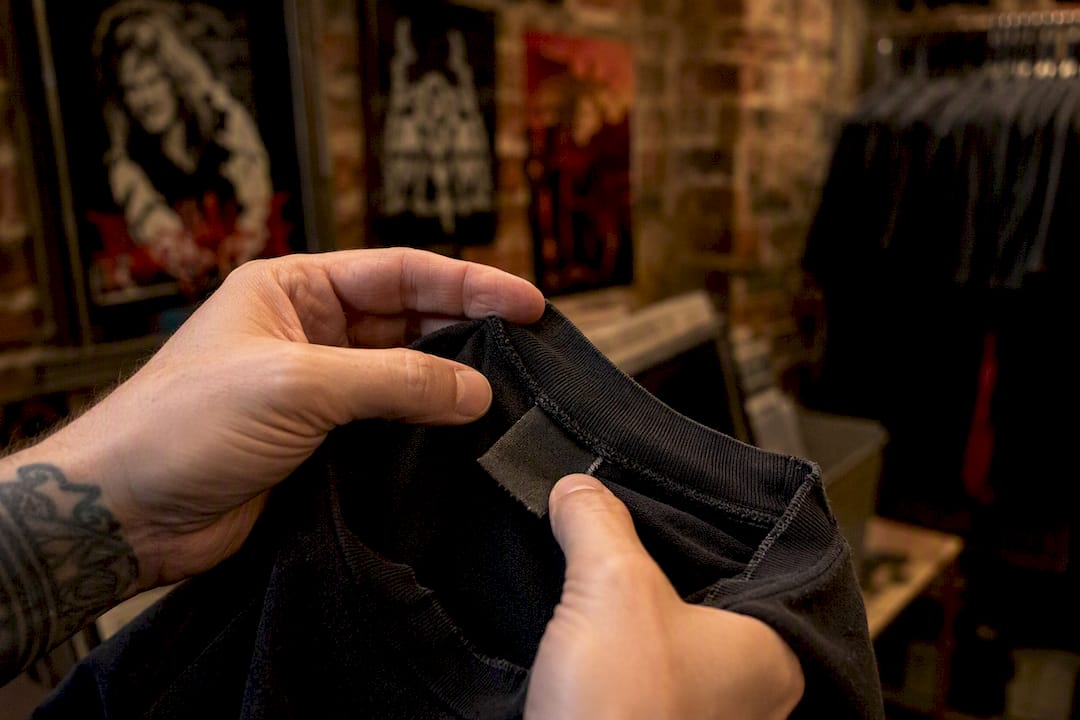
- Check the hems. Original vintage tees almost always use single‑stitch construction on the sleeves and bottom hem, while most reprints from the 2000s onward use double‑stitch. Watch for “hybrid” shirts too. Some sellers replace a torn hem with new stitching, so check that the stitch type is consistent all the way around, not just on one edge.
- Read the tag. Woven cloth tags from labels like Screen Stars, Brockum, Tultex or certain Hanes runs point to genuine 1980s–1990s manufacturing. A flimsy printed or tear‑away tag is a strong sign of a later reprint.
- Study the print. Original plastisol screen prints sink into the cotton and crack finely with age. Modern direct‑to‑garment prints sit on top of the fabric and look glossy even when artificially “aged.”
- Assess the fade pattern. Genuine charcoal fading happens unevenly, heavier on the shoulders and chest where sun and friction hit hardest. Uniform, all‑over greying usually means chemical washing or sanding done to fake age fast.
- Chase provenance. Backprint tour dates that match a real setlist, an original receipt, or a documented ownership chain add real weight. Blank types like Screen Stars, Tultex and 50/50 cotton blends were standard before 1995, so knowing your blanks helps date a shirt even without a tag.
Pro Tip: Photograph the tag, hem and print edge in raking light before you buy sight unseen. Cracked plastisol throws tiny shadows that a flat, glossy DTG print never will.
Values on well‑documented pieces reflect how seriously this market takes provenance now. High‑demand 1990s shirts listed as high as $3,999 in 2025, and that kind of number only holds up when every check above lines up.
Where should you buy vintage charcoal fade tees?
Specialist vintage sellers beat general marketplaces for one reason: they document provenance instead of just photographing a shirt and hoping. Auction houses and private sales increasingly favour well‑documented pieces, which tells you where the serious money in this hobby is heading.
Before you commit to a listing, request:
- Close‑up photos of the tag, both hems and the print edge under natural light.
- A full backprint list, including tour dates and city stops if it’s a tour shirt.
- Any provenance documents, receipts or ownership history the seller can share.
- Honest disclosure of holes, repairs or repainting, not just the flattering shots.
Negotiate on condition, not on the shirt’s story. A genuine hole or thinning fabric is a fair reason to ask for a lower price. A vague answer about the tag is a reason to walk. If a seller won’t provide close‑ups or gets defensive about basic questions, treat that as your answer. For a second opinion on trickier pieces, independent authentication checklists are worth running before you finalise a high‑value purchase.
Pro Tip: Ask for a photo of the shirt laid flat next to a tape measure. Shrinkage and stretch patterns over decades are hard to fake and tell you a lot about genuine age.
What drives the price of a collectible band tee?
Six factors stack together to set value, and it’s rare for a shirt to score high on all of them at once: rarity, the artist’s cultural impact, tour significance, how iconic the artwork is, garment condition and verified authenticity.
- Rarity – limited print runs or short tour legs push scarcity up fast.
- Artist impact – shirts tied to bands with enduring cultural weight hold value longer.
- Tour significance – a shirt from a legendary or notorious tour leg outperforms a generic album tee.
- Iconic artwork – striking, well‑remembered graphics command a premium over plain text designs.
- Condition – natural, even wear reads as character; holes and structural damage read as loss.
- Verified authenticity – documented provenance can double or triple what an unverified example fetches.
Everyday collectible tees in reasonable condition typically sit in modest double or low triple figures. Investment‑grade pieces, the ones with rare tour dates, iconic art and airtight provenance, are where prices climb toward the top end of the market. Natural patina, that gradient fade and soft cracking, tends to add appeal rather than subtract it. Rips, holes and stains do the opposite.
How do you care for and store a vintage charcoal tee?
Preserving a genuine charcoal fade tee means resisting the urge to over‑clean it. Every wash is a small risk to a print that’s already decades old.
- Wash rarely, and gently. Cold hand wash or a mesh bag on a delicate machine cycle, inside out, then line dry away from direct sunlight.
- Store it flat or rolled. Use acid‑free tissue between folds and avoid sealed plastic bags, which trap moisture and encourage mildew.
- Control the environment. Keep pieces away from high humidity and heat, both of which accelerate fabric breakdown and print lifting.
- Rotate wear and document condition. If you actually wear a piece, alternate it with others, and photograph it periodically so you have a condition record if you ever sell.
- Insure valuable shipments. For anything approaching investment‑grade value, use tracked shipping and appropriate insurance both buying and selling.
Pro Tip: Never frame a shirt with adhesive mounts. The glue reacts with cotton and plastisol over time and can leave marks no amount of careful washing will remove.
Why the “mint condition” obsession gets vintage collecting wrong
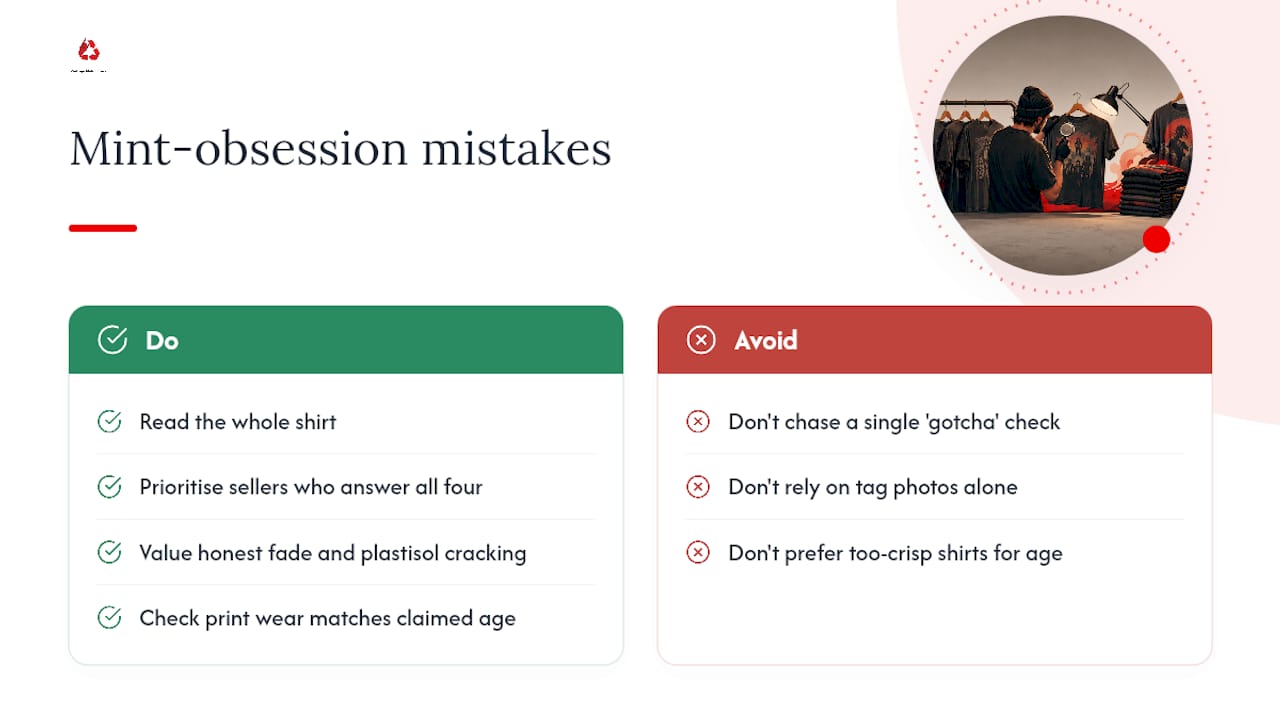
Most buying guides treat wear as a defect to minimise. That’s backwards for this category. Sun‑faded gradients and fine plastisol cracking are part of what makes a genuine charcoal fade tee desirable, not a flaw to apologise for. A shirt that looks too crisp for its claimed age should worry you more than one with honest fading.
Where I think collectors go wrong is chasing a single “gotcha” check, like the tag alone, instead of reading the whole shirt. Tags get swapped. Hems get replaced. It’s the combination of stitching, print texture, fade pattern and provenance together that actually protects your money. Prioritise sellers who can answer questions about all four without hesitation. Anyone can Photoshop a tag close‑up. Almost nobody can fake convincing wear on a print that’s supposed to be thirty years old.
— David
Buy your next charcoal fade tee from people who live this
Vintage Metal Store deals exclusively in genuine second‑hand and ex‑tour heavy metal shirts, which means you’re buying from people who inspect every hem and tag before it’s ever listed, not scrolling a general marketplace hoping the seller knows the difference.

Our current stock includes pieces like the rare Metallica 1992 tour tee, a genuine Soulfly 1998 Dynamo Open Air tour shirt, and Australian metal acts such as the Toxicon band shirt. Every listing includes the close‑up photos, tag detail and condition notes this guide walks you through, plus our own authentication and collector checklists if you want to double‑check anything yourself before buying.
Browse the full shop or head straight to the Metallica collection if that’s the tour history you’re chasing, and message us directly if you want extra photos before you commit.
Sources
- The big business of vintage music t‑shirts — Hollywood Reporter
- NOSTOS — vintage band tee reprint and bootleg identification guide
- DJR Authentication — Real vs Fake: Counterfeit vintage band T‑shirts
- How nineties band T‑shirts became the decade’s hottest collectible — The Globe and Mail
- Keep It Classic LV — vintage tee authentication guide
FAQ
What makes a band tee “charcoal fade” instead of just faded?
Charcoal fade refers specifically to black shirts that have aged into a warm grey tone through years of washing and sun exposure, distinct from shirts printed in grey from new.
How can I tell a reprint from a genuine vintage tee?
Compare stitching, tag type and print texture together. Single‑stitch hems and woven legacy tags paired with a soft, cracked print are strong combined signals of authenticity.
Does natural fading increase or decrease a shirt’s value?
Even, natural fading typically increases desirability among collectors, while structural damage like holes or thinning fabric decreases it.
What’s a fair price for an investment‑grade vintage tour tee?
Prices vary widely by rarity and provenance, but documented 1990s pieces have listed as high as $3,999 when authenticity is fully verified.
Where can I buy authenticated charcoal fade band tees online?
Specialist sellers like Vintage Metal Store document provenance and condition on every listing, which gives buyers far more confidence than unverified marketplace listings.
Recommended
- Why band tee authenticity matters for collectors – Vintage Metal Store
- Print fade on vintage band tees: a collector’s guide – Vintage Metal Store
- Collector’s guide to authentic vintage band tees: 5 expert checks – Vintage Metal Store
- Collector’s guide to vintage heavy metal t-shirts: spot, value, collec – Vintage Metal Store


