



A long-sleeve band shirt earns its place in a collection when the stitching, tag and print all point to the same era, and when the seller can back that up with real provenance. Vintage Metal Store, along with conservation authorities like the Canadian Conservation Institute and the Smithsonian, all point to the same first move: check the hem before you check the price.
Before you bid or buy, run through this:
- Check the tag wording and the hem stitching (single stitch usually beats double stitch for age).
- Ask the seller for provenance photos, not just a listing description.
- Request flat-lay measurements rather than trusting the printed size.
The biggest red flag in the whole hobby is a shirt with no provenance and only one blurry photo. Walk away from that one every time.
Key Takeaways
Authenticating a long-sleeve band shirt comes down to matching stitching, tag and print evidence against provenance, then storing it the way conservators store fragile textiles.
| Point | Details |
|---|---|
| Check stitching first | Single-stitch hems are a common and trusted signal of an older vintage shirt, typically indicating manufacture before 1996. |
| Demand real provenance | A credible history includes receipts, era photos or a consistent seller record, not just a claim. |
| Grade condition honestly | Large holes through artwork and odour contamination are deal-breakers; small hem frays are not. |
| Store, don’t wear, fragile pieces | Muslin wrapping and acid-free tubes protect fibres far better than a night out in a rare shirt. |
| Measure flat, not by tag | Compare pit-to-pit, shoulder and sleeve length against a shirt you already own for fit. |
| Shop with a specialist | Vintage Metal Store lists ex-tour and deadstock long sleeves with condition notes, flat measurements and provenance details. |
Table of Contents
- What is the instant checklist for buying long sleeve band shirts?
- How do you authenticate and date a vintage long sleeve band shirt?
- What condition grade actually protects a shirt’s value?
- How should you store and preserve a fragile vintage shirt?
- Why do vintage long sleeve sizes run differently to modern shirts?
- What questions should you ask a seller before buying?
- A specialist seller’s view on long sleeve band shirts
- Where can collectors find authenticated long sleeve band shirts?
- Sources
- FAQ
What is the instant checklist for buying long sleeve band shirts?
Before any money changes hands, run the shirt through a checklist that covers authenticity, condition and fit. Collectors who skip this step are the ones who end up with a $200 reprint.
Work through these points on every listing:
- Tag type and wording — legacy woven tags (Screen Stars, Hanes Beefy-T, Tultex) versus a modern printed tag.
- Hem and collar stitching — single stitch is a strong age signal; double stitch usually means newer stock.
- Print wear and cracking — plastisol ink ages in a specific way that’s hard to fake.
- Copyright or tour year printed on the artwork — this should match the claimed era.
- Ex-tour stamps or repair history — genuine ex-tour stock often carries small marks from handling.
- Flat measurements — pit-to-pit, shoulder, sleeve and body length, not just the tag size.
- Photo quality and angles — multiple angles, good lighting, no filters hiding damage.
- Shipping and returns terms — know these before you commit, not after.
Pro Tip: Insist on an inside-out shot of the hem and a close-up of the tag stitching before you commit. A seller with nothing to hide will send both without hesitation.
Credible provenance for ex-tour or deadstock pieces usually means a purchase story that holds up: a receipt, a photo from the era, or a seller history that shows the shirt has been consistently described the same way across time. A vague “estate find” with no supporting detail isn’t provenance, it’s a guess.
How do you authenticate and date a vintage long sleeve band shirt?
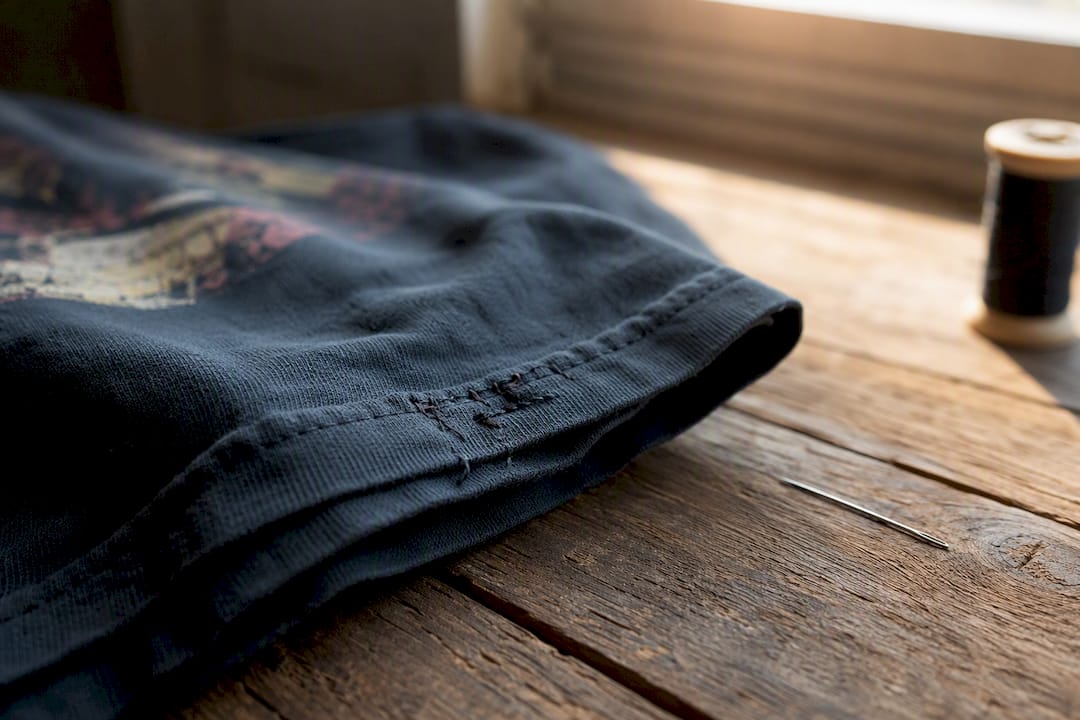
Single-stitch hems usually indicate a shirt made before 1996, and that single detail does more authentication work than almost anything else on the garment. Run your fingers along the sleeve cuff and the bottom hem. One row of stitching, evenly spaced, is the signal collectors look for first, according to vintage tee authentication guides.
The woven tag tells the next part of the story. Screen Stars, Hanes Beefy-T and Tultex tags were common on the blanks bands printed on through the 90s, and their fonts, weave and stitching have a distinct look that’s genuinely hard to replicate cheaply.
Plastisol ink ages by cracking in a fine, web-like pattern rather than peeling in sheets, and that ageing pattern is one of the most reliable print-based clues available. Copyright years or tour dates printed directly into the artwork should line up with the band’s actual touring history, and a quick cross-check against known tour dates will catch most bootlegs immediately.
Build your own verification workflow before you buy:
- Tag close-up, front and back.
- Inside-out hem shot showing stitch count.
- Print close-up showing ink texture and any cracking.
- A direct question to the seller about where the shirt came from.
The stitching and tag test remains the fastest way to separate a genuine piece from a reprint, and it costs you nothing but a good photo.
What condition grade actually protects a shirt’s value?
Holes, stains and repairs don’t all cost the same amount of value, and knowing which faults are fatal saves you from either overpaying or walking away from a fair deal.
Think in three rough tiers. Collector-grade pieces show minimal wear: light fading, a soft hand-feel from age, no structural damage. Display or wear-grade pieces have visible flaws such as small hem frays, minor fading or a discreet, well-executed repair, but they still hang and photograph well. Restorative-grade pieces need work before they’re presentable, often carrying holes, print damage or seam failure.
The deal-breakers are consistent across the hobby:
- Large holes running through the main artwork.
- Odour contamination that hasn’t aired out (smoke, mildew, damp).
- Structural seam failure at the shoulder or side.
Acceptable, or even expected, faults include small hem frays, light overall fading and a neatly done discreet stitch repair.
Pro Tip: Photograph any repair before and after, and ask the seller whether restoration work was done by hand or with a machine. A well-documented, hand-stitched repair barely dents value; an undisclosed machine patch over the front print tanks it.
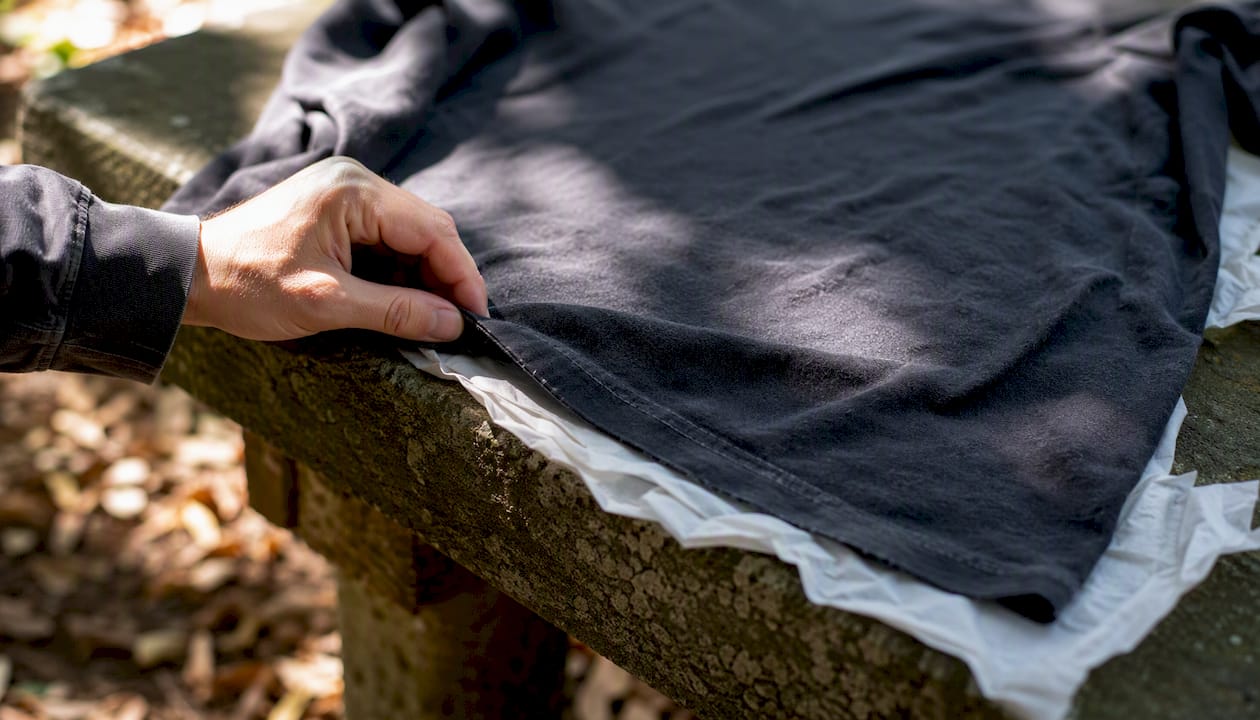
How should you store and preserve a fragile vintage shirt?
Collectors should favour storage and display over wearing fragile pieces, full stop. Skin oils, sweat and the mechanical stress of movement all speed up fibre breakdown, and conservation guidelines from the Canadian Conservation Institute treat everyday wear of rare textiles as the single biggest avoidable cause of damage.
A handful of rules will keep a rare shirt in the condition you bought it in:
- Do wrap it in clean cotton muslin.
- Do roll fragile pieces on a wide, acid-free tube rather than folding them.
- Don’t seal it in airtight plastic, which traps condensation and encourages mould.
- Don’t place it directly against wood, which leaches acids into the fabric over time.
- Don’t wear a genuinely fragile piece, even for one gig.
The workflow itself is simple. Start with clean hands and a clean surface. Take flat measurements and photos for your own record before you touch anything else. Pad the sleeves with acid-free tissue, then either roll the shirt on a wide tube or store it flat, with muslin and tissue separating any folds. Padded hangers are fine for sturdier pieces on display, but Smithsonian guidance on antique textile storage is clear that painted or heavily printed surfaces should be stored flat, never rolled, because rolling can crack the print.
Washing is where most collectors do real damage. Most fragile vintage shirts shouldn’t be washed at all. Where a robust, non-coloured cotton piece genuinely needs it, conservation notes on washing textiles recommend supporting the fabric in a nylon mesh screen, testing colourfastness first, and skipping the washing machine, dryer and iron entirely.
Vintage Metal Store’s own storage guide for vintage metal t-shirts covers the acid-free materials worth keeping on hand if you’re building a proper collection rather than a drawer of shirts.
Why do vintage long sleeve sizes run differently to modern shirts?
Always trust flat measurements over the tagged size. A vintage “large” from the mid-90s often measures closer to a modern medium, and tag sizing was never standardised across manufacturers the way it roughly is today.
Take these five measurements on any long-sleeve shirt before buying:
- Chest — measured flat, pit to pit, then doubled.
- Shoulder width — seam to seam across the back.
- Sleeve length — from the shoulder seam to the cuff.
- Body length — from the collar seam down to the hem.
- Cuff width — collar seam to cuff comparison on both sleeves, checking for even wear.
Compare those numbers against a modern shirt you already own and fits well, rather than against the tag. Vintage Metal Store’s band shirt sizing guide is worth keeping open in a second tab while you shop, especially if you’re buying across different decades where blanks varied more than people expect.
What questions should you ask a seller before buying?
A few direct questions separate a trustworthy listing from a risky one. Ask how long the seller has held the piece, whether they have any original purchase proof, and whether they’ll provide extra close-up photos of the inside hem, the tag and any repair or wash marks. Ask about shipping insurance and the returns policy before you pay, not after something arrives damaged.
Watch for these red flags:
- Low-quality photos, or only one angle offered.
- Refusal to send additional photos when asked politely.
- Tag claims that don’t match the stitching or print style.
- Pressure to move the sale off-platform.
- A price that’s suspiciously low for a piece claimed to be rare.
For anything approaching four figures, ask for a short video showing the fabric drape and how the print moves with the fabric. It’s a small ask that catches problems photos simply can’t show, and it’s a fair one for a seller with real stock and genuine ex-tour or deadstock provenance to make.
A specialist seller’s view on long sleeve band shirts
Every week brings a new batch of long sleeves through the shop, and the ones worth getting excited about are still the ex-tour and deadstock pieces nobody else is chasing. Right now that’s a Triple Kill Australian Band Logo Shirt with genuine tour-era stitching, an Archspire Stay Tech 3/4 Sleeve Tour Shirt that turned up in deadstock condition, and a Hollow World Australian metal band shirt with the kind of print wear that tells its own story.
None of that matters without the basics: accurate measurements against our own sizing guide, and honest condition notes rather than a generic “good condition, please see photos” line. That’s the standard collectors deserve.
Where can collectors find authenticated long sleeve band shirts?
Vintage Metal Store exists for exactly the collector this article is written for: someone chasing genuine tour history and deadstock rarity, not reprint racks. Every listing carries multi-angle photos, detailed condition notes on holes, seam integrity and print cracking, and flat-lay measurements so you’re buying against real numbers, not a tag.
Current stock includes pieces like the Rare Metallica 1992 Tour Tee, alongside curated collections such as vintage Metallica shirts and vintage Archspire band shirts. If you’d rather browse broadly first, the full long-sleeve collection is the place to start. Rock the legends properly, and check the full catalogue before that rare piece finds another collector first.
Sources
- Canada
- Antique textile storage - Smithsonian Institution
- How To Authenticate Vintage T-Shirts | Keep It Classic
- Vintage band tee reprint and bootleg identification guide - NOSTOS
FAQ
What’s the fastest way to check if a shirt is genuinely vintage?
Check the hem stitching first. A single-stitch hem, paired with a legacy woven tag, is the quickest reliable signal collectors use to date a shirt.
Should I ever wash a rare vintage band shirt?
Most fragile vintage shirts shouldn’t be washed at all. Where a sturdy, non-coloured cotton piece needs it, use a nylon mesh support and test colourfastness first, never a washing machine.
How do I know what size a vintage long sleeve actually is?
Ignore the tag and take flat measurements, pit to pit for the chest and shoulder seam to cuff for the sleeve, then compare those numbers to a modern shirt that already fits you well.
Does a small repair ruin a vintage shirt’s value?
Not if it’s discreet and documented. A neat, disclosed hand-stitched repair barely affects value, while an undisclosed machine patch over the print does real damage.
Where can I buy authenticated long sleeve band shirts online?
Vintage Metal Store lists ex-tour and deadstock long sleeves with detailed condition grading, multi-angle photos and flat measurements, which covers most of the due diligence collectors need before buying.
Recommended
- 7 Steps to the Ultimate Heavy Metal Shirts Buying Checklist – Vintage Metal Store
- Identifying Dead Stock Heavy Metal Shirts Step-by-Step – Vintage Metal Store
- Spot genuine vintage band shirts: your essential checklist – Vintage Metal Store
- Original vs fake band t shirts: the collector’s guide – Vintage Metal Store


