



Sustainable band merch, in the truest collector’s sense, means vintage, second-hand, and deadstock band T-shirts resold as reused merchandise. Not organic cotton. Not recycled polyester. A real 1992 Metallica tour shirt that already exists, already carries its history, and needs no new production to reach your hands. That’s the lowest-impact merch you can own, and it’s also the most coveted. Before you buy anything, request clear neck and tag close-ups, flat measurements, and a provenance statement from the seller. If they can’t provide those three things, walk away. Look for sellers who grade condition honestly, label pieces as deadstock, ex-tour, or worn vintage, and back their listings with a returns or authenticity policy.
Key takeaways
Buying pre-owned or deadstock band tees is the most direct form of sustainable band merch available, and authentication is the skill that separates a genuine find from an expensive reprint.
| Point | Details |
|---|---|
| Authenticate before you buy | Check sewn-in tags, single-stitch hems, raised ink texture, and graphic placement on every piece. |
| Prioritise specialist sellers | Estate sales and specialist vintage dealers yield higher authenticity than general thrift or large open marketplaces. |
| Know the grade and price | Deadstock, ex-tour, and worn vintage carry different value; compare recent realised sales before committing. |
| Care extends the life | Cold wash, hang dry, no bleach, and flat storage keep vintage tees wearable and preserve collector value. |
| Vintage Metal Store | Stocks individually verified deadstock, ex-tour, and worn vintage heavy metal shirts with condition grading and provenance notes. |
Table of Contents
- How to verify sustainable band merch: the authenticity checklist
- Where do you find genuine vintage and deadstock band tees?
- Condition grading and realistic price bands
- How bands create sustainable merch from thrifted shirts
- How to care for, repair, and upcycle your vintage band tees
- How to buy vintage band tees safely online
- Why the metal community wins when collectors buy reused merch
- Verified vintage band merch at Vintage Metal Store
- Sources
- FAQ
How to verify sustainable band merch: the authenticity checklist
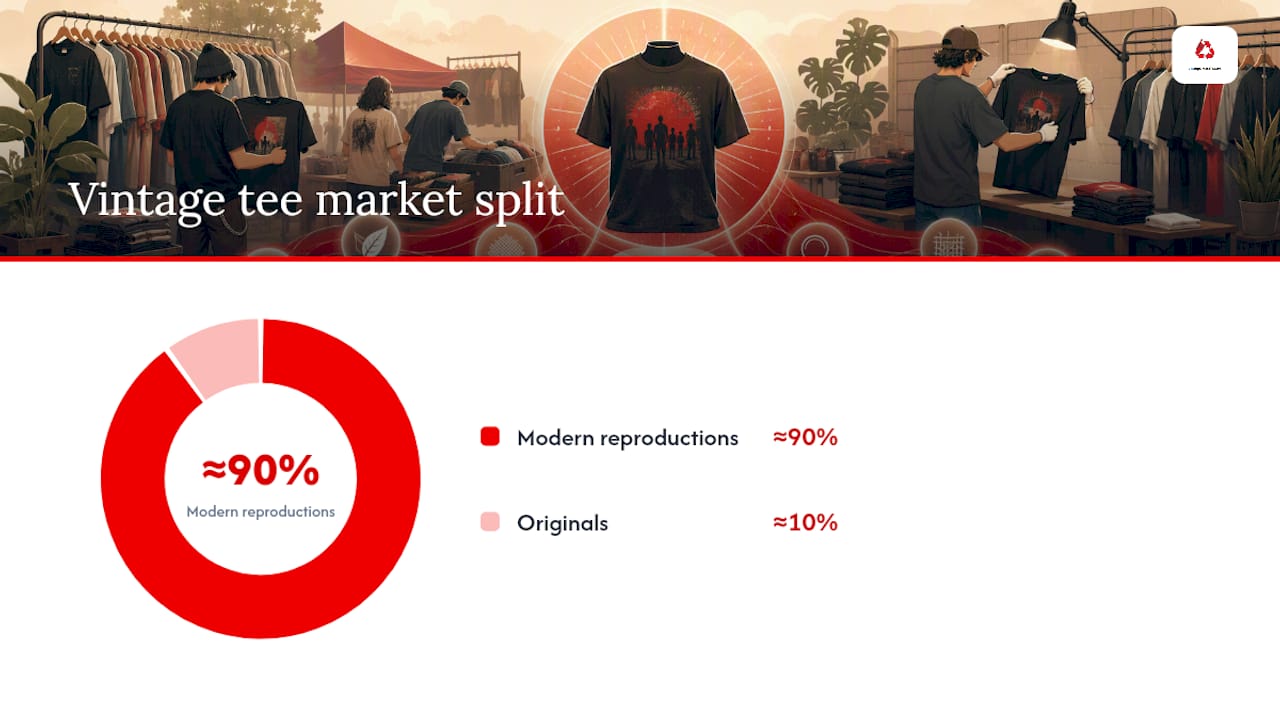
The vintage band tee market is flooded with reproductions, with some estimates putting modern prints against originals at roughly 9:1 or 10:1. That ratio makes authentication non-negotiable before you spend serious money.
What to check in photos or in person:
- Sewn-in tag vs heat-press: Pre-1990s shirts almost always have a woven, sewn-in neck tag. A heat-pressed or printed-inside tag is a strong indicator of a later reprint.
- Single vs double stitching: Single-stitched hems are a reliable marker for shirts made before the mid-1990s. Double-stitched hems became standard after that.
- Ink texture: Authentic screen-print ink on older shirts feels raised and shows cracking or crazing with age. Flat, smooth ink that looks digitally printed is a red flag.
- Graphic placement and margins: Original tour tees have consistent, intentional placement. Reprints often sit too high, too low, or have uneven margins front and back.
- Blank thickness: 1980s shirts typically used thinner, lighter cotton blanks. A heavy, structured blank on a supposed 1985 shirt deserves scrutiny.
- Collar wear: Genuine age shows in the collar. Uniform, pristine ribbing on a shirt claimed to be 30 years old is suspicious.
Measurement guide: Ask for flat chest (pit to pit), body length (collar to hem), and sleeve length. Era sizing ran smaller, so a genuine 1990s XL often measures closer to a modern M or L. Cross-reference measurements against known era sizing charts before committing.
Photo checks to request: Neck tag close-up, inner seam stitching, hem detail, and a flat-lay shot of the full print. A hanger shot showing drape and collar shape is a useful bonus.
Pro Tip: Small holes, light staining, and faded print are signs of genuine age and honest wear. Dry rot, a shiny or brittle fabric sheen, and disintegrating seams mean the shirt is beyond wearable condition, regardless of how rare it is.
For a deeper breakdown of original versus reproduction tells, the original vs fake band T-shirts guide at Vintage Metal Store covers photo examples and stitching comparisons in detail.
Where do you find genuine vintage and deadstock band tees?
Not all channels are equal, and knowing where to prioritise your search saves time and money.
Specialist vintage dealers are the strongest starting point. They’ve already done the sourcing work, tend to grade condition honestly, and often carry provenance notes on how and where a shirt was acquired. Specialist vintage stalls and estate sales consistently yield higher authenticity than general thrift racks, where shirts are mixed without curation.
Estate sales and deceased estates are where genuinely rare pieces surface. Shirts stored in wardrobes for decades often arrive in remarkable condition, sometimes still with original tags. Prices can be low relative to collector value, and authenticity risk is lower because the provenance is traceable to a single owner.
Ex-tour and deadstock drops from bands, labels, or former crew members are another strong channel. These pieces were never worn or were worn briefly on tour, and provenance is often documented. Follow band social accounts and metal community forums where these drops are announced.
Large online marketplaces offer the widest selection but carry the highest fraud risk. Use the retro shirt shopping guide to build your listing evaluation process before browsing.
Questions to ask every seller verbatim:
- When and where was this shirt sourced?
- Can you show the printed label, neckline, and inner seam?
- Do you offer an authenticity guarantee or return window?
- What are the flat chest, body length, and sleeve measurements?
Local thrift shops are opportunistic finds rather than reliable sources. Worth checking regularly, but don’t build a collection strategy around them.
Condition grading and realistic price bands
Three grades define the pre-owned band tee market, and confusing them is how collectors overpay.
Rarity and provenance push prices well above these bands. A documented crew-worn shirt from a landmark tour, or a deadstock piece from a band with a small original pressing, can reach multiples of the deadstock range. Before committing at the high end, check recent realised sale prices on specialist platforms and request the maker or manufacturer tag for era dating.
Pro Tip: Request a photo of the manufacturer tag, not just the band’s printed label. Manufacturer tags like Fruit of the Loom, Screen Stars, and Hanes carry their own era-dating cues, and cross-referencing the tag style against known production years is one of the fastest authenticity checks available.
The vintage vs second-hand shirts guide at Vintage Metal Store explains how value shifts between grades and what separates a collector-grade piece from a wearable daily driver.
How bands create sustainable merch from thrifted shirts
A documented example from Athens, Georgia shows exactly how this works in practice. A local band thrifted blank shirts for roughly US$3 each and had them screen-printed locally for approximately US$7 per shirt, producing a limited run of low-impact merch that fans responded to positively. The total cost per shirt sat well below standard new production merch, and the sourcing story itself became part of the appeal.
The process, step by step:
- Source thrifted blanks in target sizes and colours, inspecting each for fabric integrity and print adhesion suitability.
- Sort by size and colour consistency so the finished run looks cohesive.
- Test print adhesion on a sample blank before committing the full run.
- Print with a local screen-printer, keeping the run small enough to avoid creating new deadstock.
- Quality-check each finished shirt for ink coverage and seam integrity.
- Label each piece as upcycled or thrifted-blank merch, with the sourcing documented.
What bands should communicate to buyers:
- Where the blanks came from and approximate sourcing date.
- That sizing may vary because blanks are pre-owned and not standardised.
- That the sustainability claim is about reuse, not new eco-production.
At scale, the deadstock model goes further. UMG’s Bravado division shipped hundreds of thousands of unsold concert shirts to be shredded and respun into recycled cotton for new garments, demonstrating that deadstock is a circular resource rather than a write-off. For collectors, that context matters: deadstock pieces you buy today are being preserved, not discarded.
How to care for, repair, and upcycle your vintage band tees
The shirt that survives another decade is the most sustainable one you own.
Washing and storage: Cold, gentle machine wash or hand wash only. Hang dry away from direct sunlight. Never use chlorine bleach on screen-print ink. Store flat or on wide, padded hangers to prevent collar stretch. Avoid plastic storage bags, which trap moisture and accelerate fabric degradation.
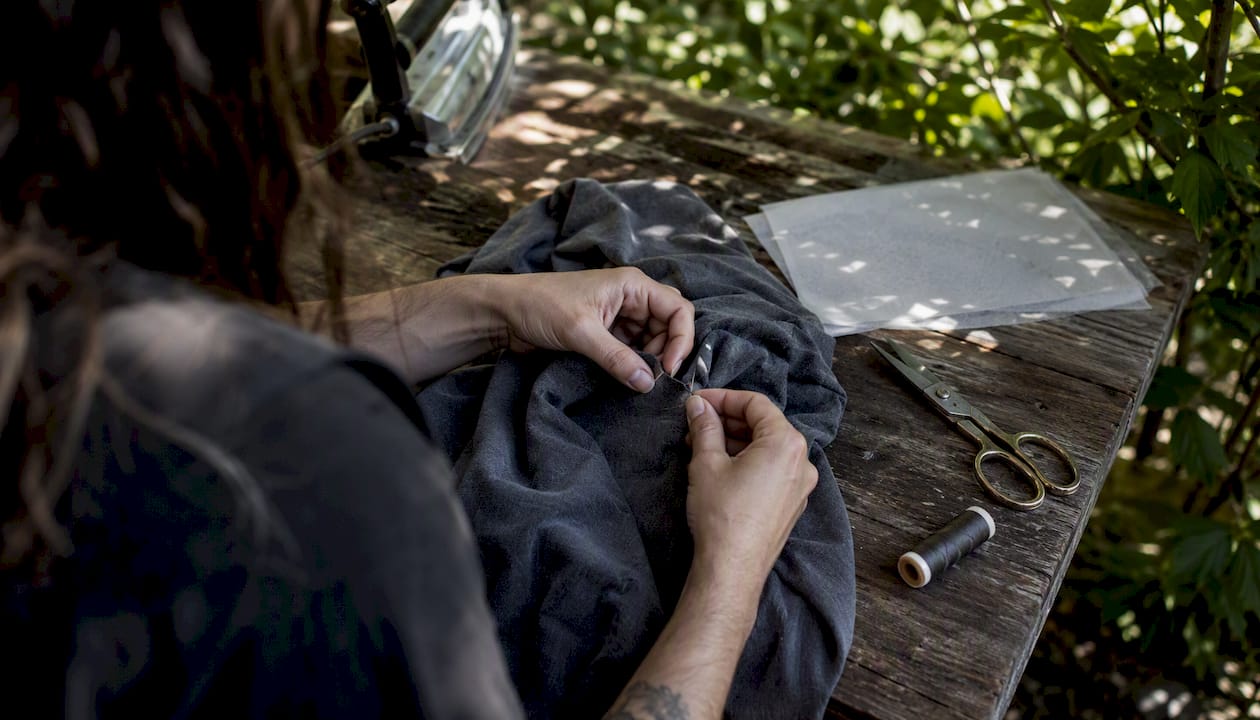
Repair basics: A small hole in the body fabric is repairable with an invisible stitch and a lightweight iron-on backing for support. Dry rot, identified by fabric that tears at the slightest tension or feels brittle, cannot be repaired and signals the shirt is past wearable life. Darning works well for small areas of thin fabric, particularly on collars and cuffs.
Upcycle ideas that preserve the graphic: Patch worn areas with complementary denim or canvas. Shorten sleeves to convert a long-sleeve into a short-sleeve without touching the print. A shirt whose fabric has failed beyond repair can be framed as memorabilia, preserving the graphic permanently. Accessories like tote bag inserts or patches cut from non-graphic areas are another option.
Collector value note: If you’re holding a shirt for resale, avoid any alteration. Repairs that are invisible to the eye are acceptable; structural changes that alter the original garment reduce collector value significantly.
How to buy vintage band tees safely online
Buying remotely adds risk. These steps reduce it.
- Use payment platforms with buyer protection. PayPal Goods and Services, credit card payments, and similar platforms give you recourse if the item doesn’t match the listing. Avoid direct bank transfers or off-platform payment requests.
- Insist on high-resolution photos. Tag close-up, inner seam, hem stitching, and a full flat-lay of the print. Blurry or distant photos are a red flag, not a minor inconvenience.
- Ask for provenance in writing. A seller who can’t tell you where or when they sourced a shirt is selling you a story, not a shirt.
- Check for ‘vintage style’ language. Listings that describe a shirt as “vintage style,” “vintage inspired,” or “retro” without showing a sewn-in tag are almost certainly selling reproductions.
- Compare the asking price to recent sales. A price far below market for a supposedly rare piece is as suspicious as one far above it. Both warrant extra scrutiny.
- Request measurements before paying. Sellers who refuse to provide flat measurements are either hiding condition issues or don’t know what they have.
Sellers unable to supply tag photos and provenance at higher price points are high-risk. That’s not a negotiating position; it’s a hard rule. The essential tips for buying second-hand band shirts guide covers platform-specific red flags in more detail.
Why the metal community wins when collectors buy reused merch
There’s a version of “sustainable band merch” that gets a lot of attention: new shirts made from organic cotton, printed with water-based inks, shipped in compostable mailers. That’s a legitimate category. But it’s not what most collectors are actually after, and it’s not where the real environmental argument lives.
A shirt that already exists has already consumed its water, its dye, its transport. Cotton T-shirt production uses thousands of litres of water per garment, and dyeing and finishing processes contribute substantially to water pollution. Buying a shirt that’s already been through all of that and keeping it in circulation for another decade is a more direct impact reduction than buying a new shirt made slightly more carefully.
The metal community has always understood this intuitively. Wearing a shirt from a 1994 tour isn’t nostalgia tourism; it’s preservation. The shirt carries the legacy of a specific moment in metal history, and keeping it out of landfill is both the ethical and the collector-correct choice. Reproductions undermine that. When a buyer pays vintage prices for a modern reprint, they’re not preserving anything. They’re funding the exact production cycle that pre-owned merch sidesteps.
Vintage Metal Store’s approach, verifying provenance, grading condition honestly, and labelling pieces as deadstock, ex-tour, or worn vintage, is what the pre-owned merch market needs more of. Transparency is what separates a genuine collector resource from a marketplace where reproductions hide behind vague listings.
Verified vintage band merch at Vintage Metal Store
Vintage Metal Store stocks verified vintage and deadstock heavy metal T-shirts, individually listed with condition grading, provenance notes, and detailed photos of tags, seams, and print texture. Every listing is labelled by grade: deadstock, ex-tour, or worn vintage, so you know exactly what you’re getting before you add it to your cart.
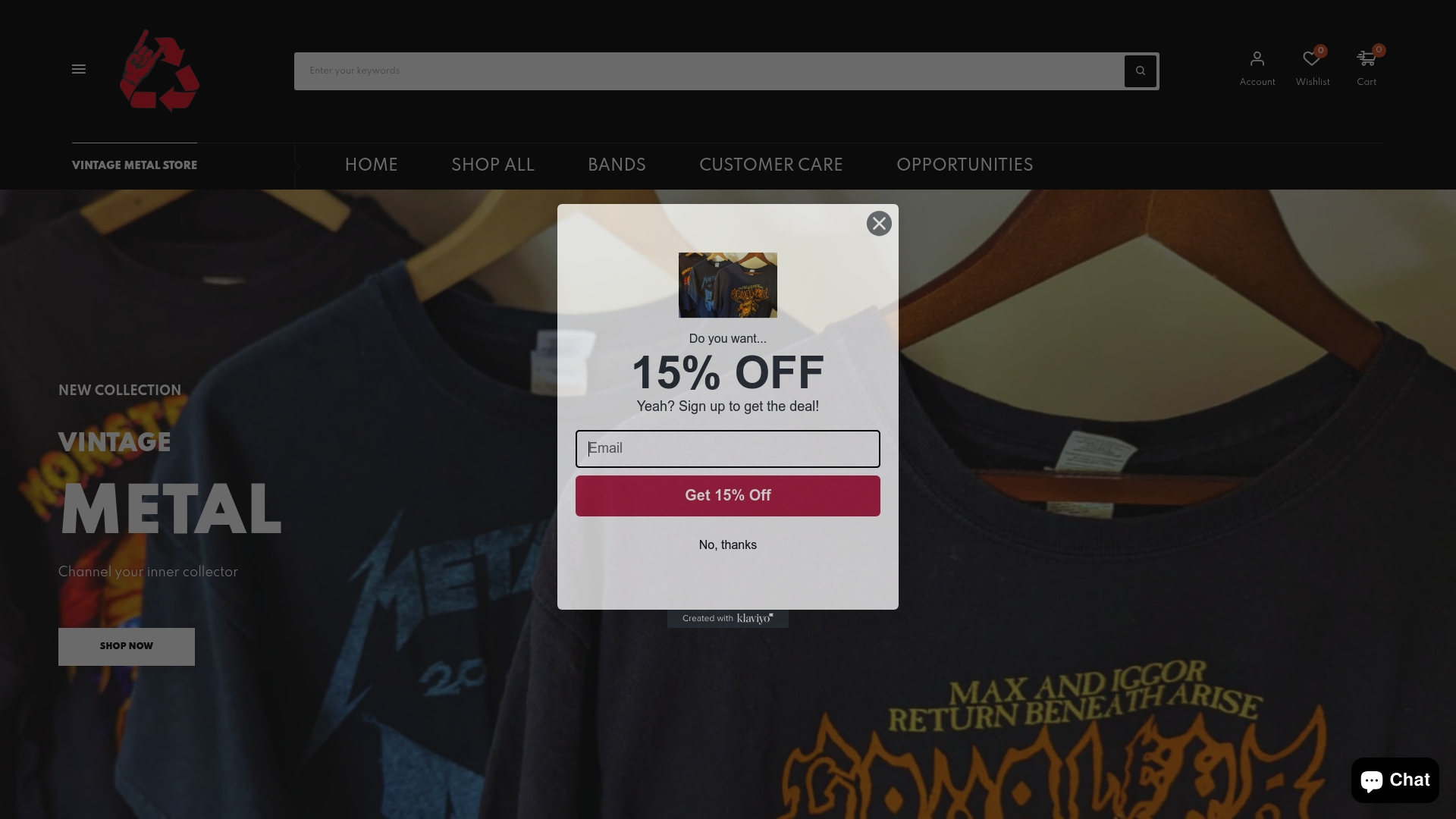
Listings include flat measurements, collar and hem close-ups, and shipping and returns information. If you need extra provenance detail on a specific piece, contact the store directly. For collectors chasing a specific band or era, sourcing requests are welcome.
Browse verified vintage Metallica shirts or check the rare 1992 Metallica tour tee as an example of how a high-value, verified listing is presented. The full catalogue at Vintage Metal Store covers Australian metal acts alongside international heavyweights, all sourced and graded before listing.
Sources
The following sources informed the authentication guidance, environmental context, and market data in this article. Check them when verifying specific claims or researching further.
- Sustainable merch finds a home in Athens’ music scene — Grady Newsource
- Vintage band tees: Joint Custody’s 9 tips to spot originals — District Fray
- Vintage band tees: a no‑BS buying guide — WEAR2AM Blog
- How to shop for vintage band tees, according to experts — Nylon
When in doubt about any listing, ask for provenance in writing and request the tag and seam photos before paying.
FAQ
What does sustainable band merch actually mean for collectors?
For collectors, sustainable band merch means vintage, second-hand, or deadstock band T-shirts resold as reused merchandise, not new shirts made from eco-friendly materials. Reuse eliminates the need for new production entirely.
How do you tell a genuine vintage band tee from a reprint?
Check for a sewn-in tag, single-stitched hems on pre-1990s shirts, raised or cracked screen-print ink, and correct graphic placement. Reprints typically have heat-pressed tags, double-stitched hems, and flat, smooth ink.
What is a fair price for a deadstock band T-shirt?
Deadstock pieces in unworn condition with original tags typically command prices reflecting their band, era, and rarity, often within well-known collector price bands. Worn vintage pieces in honest condition generally sit between $30 and $120.
Where is the safest place to buy verified vintage band tees online?
Specialist vintage dealers who provide tag photos, flat measurements, condition grading, and provenance notes carry the lowest risk. Vintage Metal Store lists each piece with these details and offers contact for additional provenance information.
How should you wash a vintage band T-shirt to preserve the print?
Cold, gentle wash, hang dry away from sunlight, and no chlorine bleach. These three steps preserve screen-print ink and prevent fabric degradation on shirts that may already be 30 or more years old.
Recommended
- Why band tee authenticity matters for collectors – Vintage Metal Store
- Why preserve old band tees? Value, culture and know-how – Vintage Metal Store
- Original vs fake band t shirts: the collector’s guide – Vintage Metal Store
- Collector’s guide to authentic vintage band tees: 5 expert checks – Vintage Metal Store


