



TL;DR:
- Authentic vintage shirts display clear licensing, copyright info, and era-appropriate details.
- Genuine shirts show aged graphics, soft fabric, and single-stitch construction from the era.
- Tour date accuracy and matching venues are crucial for verifying a shirt’s authenticity.
The vintage band tee market has never been more crowded, and neither has the fake one. Reprints, bootlegs, and cleverly aged reproductions flood online marketplaces, making it genuinely hard to know what you’re holding. For collectors and fans chasing real 90s tour shirts from bands like Metallica, Slayer, or Pantera, the difference between authentic and fake isn’t just about money. It’s about owning a piece of history. This checklist breaks down the key signs that separate a genuine vintage shirt from a convincing copy, so you can buy with confidence every single time.
Table of Contents
- Check licensing and copyright details
- Inspect graphics, ink and shirt fabric
- Cross-check tour dates and venue lists
- Compare tags, stitching and manufacturing details
- Why obsessing over perfection can lead to missing real gems
- Find authentic vintage metal shirts with confidence
- Frequently asked questions
Key Takeaways
| Point | Details |
|---|---|
| Check for copyright | Authentic shirts display correct licensing and copyright details from the band or tour. |
| Inspect print ageing | Natural cracking and fading of graphics suggests true vintage origins. |
| Verify tour history | Tour dates, venues, and cities should precisely match real band records from the era. |
| Study tags and stitching | Era-correct labels and stitching patterns help spot originals from reissues. |
| Imperfect is often authentic | Minor flaws and irregularities usually add to a shirt’s authenticity and value. |
Check licensing and copyright details
One of the clearest markers of an authentic vintage band shirt is the presence of official licensing and copyright information. Real shirts produced during the 80s and 90s were made under strict agreements between bands, their management, and licensed merchandise manufacturers. That paperwork left a paper trail, and it shows up directly on the garment.
Flip the shirt inside out and look at the hem, the seam near the bottom, or the back of the collar. Genuine shirts typically carry copyright notices and printer marks in these spots. You might see something like “© 1992 Metallica” alongside a printer name such as Brockum, Giant, or Winterland. These were the dominant licensed merchandise producers of the era, and their names are a solid starting point when understanding what makes a shirt vintage.
Tour dates and venue lists printed on the shirt should also align with the band’s actual documented history. A Slayer 1991 Clash of the Titans tour shirt, for example, should list venues that match the real tour stops from that year. If the cities seem random or the dates feel off, that’s a serious warning sign.
Here’s what to look for when checking licensing details:
- Copyright year printed on the hem or seam, matching the supposed tour year
- Licensed printer name (Brockum, Giant, Winterland, Screen Stars)
- No QR codes, barcodes, or modern tracking marks anywhere on the shirt
- Correct band name spelling and logo style for that specific era
- Venue and city lists that match documented tour history
Red flags include missing copyright info entirely, misspelled band names, or modern elements like QR codes that simply didn’t exist in the 90s. A fake Metallica shirt might get the artwork right but slip up on the fine print.
Pro Tip: Use the band shirts buying checklist as a companion reference when assessing any shirt. Cross-referencing multiple details at once is far more reliable than relying on a single marker.
Inspect graphics, ink and shirt fabric
With licensing covered, the next checkpoint is the shirt’s actual look and feel. This is where you get tactile, and it matters enormously.
Genuine vintage shirts from the 90s were printed using plastisol inks on single-stitch cotton fabric. Over decades, that ink ages in a very specific way. It softens, develops fine surface cracks, and the colours shift slightly. The graphic might lose some of its original sharpness around the edges. None of this is damage. It’s evidence.
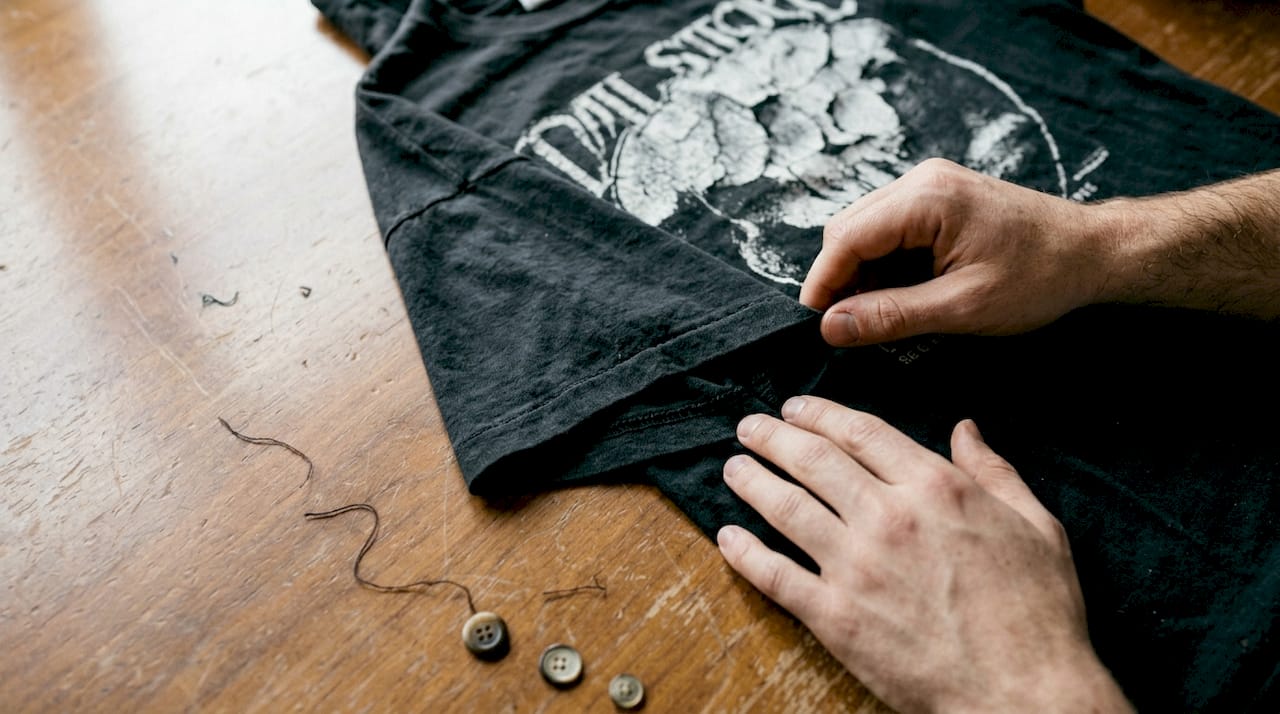
A shirt claiming to be from 1993 with graphics that look freshly printed, perfectly crisp, and vibrant is almost certainly a reprint. As noted by vintage apparel experts, perfect crisp graphics on a supposed early-90s shirt are suspicious because natural ageing is always irregular. Real wear creates variation. One part of the graphic might fade faster than another depending on how the shirt was washed and stored.
The fabric itself tells a story too. Genuine 90s cotton has a particular softness that comes from years of washing. It drapes differently from modern cotton blends. Reprints often use heavier, stiffer fabric or a tri-blend material that feels noticeably different the moment you pick it up.
A shirt that’s been genuinely worn and washed for 30 years doesn’t just look old. It feels old. That softness, that slight thinning of the fabric, that’s something a factory can’t fake convincingly.
Here’s what to look for when inspecting graphics and fabric:
- Fine surface cracking across the ink, especially at flex points like the chest
- Slight colour fading or shifting, particularly in reds and blacks
- Soft, lightweight cotton with some thinning at the collar and cuffs
- Minor print registration issues (slight misalignment of colours) common in era printing
- Irregular fading rather than uniform, even wear
For a deeper breakdown of these visual checks, the authentic vintage band tees checks guide covers edge cases in detail, including how to handle shirts that have been professionally restored.
Pro Tip: Hold the shirt up to natural light. Reprints often show an unnaturally even ink density. Genuine vintage prints let light through unevenly where the ink has worn, which creates a subtle mottled effect across the graphic.
Cross-check tour dates and venue lists
Beyond basic shirt details, the printed tour information is one of the most powerful authentication tools available. Fake shirts often get the artwork right but stumble badly on the historical specifics.
Real tour shirts were produced to sell at specific shows on specific dates. The venues and cities listed on the back of the shirt should match the band’s actual documented itinerary. Tour dates and venues can be cross-referenced using resources like setlist.fm and Discogs, both of which carry detailed historical tour records for major metal acts.
Here’s how to run the verification process step by step:
- Note every city and venue listed on the shirt
- Search the band name and tour year on setlist.fm
- Compare each location against the documented set lists from that tour
- Check Discogs for any additional merchandise or tour records that confirm the dates
- Flag any venues that don’t appear in the historical record
The table below shows how real versus fake tour data typically compares for two iconic 90s metal acts.
| Detail | Genuine shirt | Fake or reprint |
|---|---|---|
| Metallica 1992 tour venues | Matches documented US arena stops | Generic city names, wrong states |
| Slayer 1991 Clash of the Titans | Correct co-headliner billing with Megadeth and Anthrax | Missing co-headliners or wrong year |
| Date format | Month and day listed accurately | Vague or missing dates |
| Venue names | Specific arena or stadium names | Generic “Civic Centre” style entries |
Random or generic venue names are a major tell. A legitimate Metallica shirt from their 1992 US tour will list real arenas in real cities, not a vague collection of “Convention Centres” with no state listed. Learning to identify tour years is a skill that pays off fast once you start applying it consistently. The tour shirt checklist is also worth bookmarking for quick reference during this step.
Compare tags, stitching and manufacturing details
Armed with date and venue proof, it’s time to decode the often-overlooked manufacturer details. The tag inside the collar is one of the most information-dense parts of any vintage shirt, and most buyers barely glance at it.
Genuine 90s band shirts were produced by a small number of dominant blank manufacturers. Names like Hanes, Fruit of the Loom, Screen Stars, and Anvil appear regularly on authentic pieces. These tags have a specific look: woven fabric labels with bold, simple fonts and minimal information. They list the size (often in a single letter format like L or XL, not “Large” written out), country of manufacture, and fibre content.
RN numbers (Registered Numbers assigned to US manufacturers) can also be cross-referenced through the US Federal Trade Commission database to confirm the manufacturer and the era of production. This is a detail that fakers rarely bother to get right.
| Feature | Genuine 90s shirt | Modern fake |
|---|---|---|
| Tag material | Woven fabric label | Printed or heat-transfer label |
| Size format | Single letter (L, XL) | Written out or with modern sizing |
| RN number | Present and verifiable | Missing, incorrect, or modern |
| Stitching | Single-stitch at hem and sleeves | Double-stitch or overlocked edges |
| Country of manufacture | USA, Honduras, or Mexico (era-appropriate) | Bangladesh, China, or unlisted |
Single-stitch construction at the hem and sleeves is particularly important. Modern garments almost universally use double-stitch or overlocked edges for durability. Vintage shirts used single-stitch because it was the standard production method of the era.
Here’s what to check on the tag and stitching:
- Woven fabric tag (not printed or heat-transferred)
- Single-stitch construction at sleeves and hem
- Era-appropriate country of manufacture
- RN number present and matching the claimed manufacturer
- No modern care symbols that weren’t standardised until after the 90s
Missing or swapped tags do happen on genuine shirts, especially pieces that have been heavily worn. As community experts note, tag swaps aren’t automatic deal-breakers if every other detail stacks up. Consult collector communities and cross-reference with the dead stock identification guide or the overview of types of vintage band tees before walking away from a shirt that passes every other test.
Why obsessing over perfection can lead to missing real gems
After all these checks, here’s the thing that experience teaches you: the most authentic vintage shirts are often the ones that look a little rough. A small repair near the collar. A faded section on one sleeve. A tag that’s partially worn away. These aren’t flaws. They’re proof.
We’ve seen collectors pass on genuinely rare pieces because the shirt didn’t look “clean enough.” That mindset is exactly what fake sellers exploit. They produce reprints that look immaculate because they know some buyers equate pristine condition with authenticity. The opposite is usually true.
Seasoned collectors who frequent swap meets, estate sales, and specialist stores know that the bargains come from shirts that others overlook. A well-worn Slayer shirt with a faded back graphic and a slightly distressed collar is far more likely to be real than a crisp, bright reprint with perfect ink. Embracing the quirks, the repairs, and the minor imperfections is part of what makes this hobby genuinely rewarding. For more context on spotting the real from the staged, the tour merchandise tips piece is worth reading before your next purchase.
Find authentic vintage metal shirts with confidence
Putting this checklist into practice is a lot easier when you’re sourcing from people who’ve already done the hard work. At Vintage Metal, every shirt in the collection is assessed against exactly these kinds of criteria before it’s listed.

Whether you’re after Metallica vintage shirts from their peak touring years or something as specific as a rare Metallica 1992 tour tee, the inventory is built around genuine ex-tour stock and dead stock pieces. Browse the full range of vintage heavy metal shirts or reach out directly if you want an authenticity assessment on a shirt you’ve already found. The knowledge is here to help you collect smarter.
Frequently asked questions
What makes a band shirt truly vintage?
A true vintage band shirt is usually over 20 years old, features era-specific tags, and shows period-correct details in design and manufacture. Age alone isn’t enough if the construction and licensing details don’t match.
Are cracked graphics a good sign of authenticity?
Minor cracking and fading often indicate genuine age, but perfectly crisp prints on supposed vintage shirts are usually a red flag. Natural ageing is always uneven and irregular across the graphic.
How do I verify tour dates printed on a shirt?
Compare the shirt’s tour locations and dates to archived set lists and band records using setlist.fm or Discogs to spot inconsistencies. Even one mismatched venue can reveal a fake.
Do missing fabric tags mean a shirt is fake?
Missing or swapped tags can occur naturally over decades and aren’t automatic proof of a fake if other signs match up. Always assess the full picture before making a call.
Recommended
- Discover the advantages of second hand band shirts – Vintage Metal Store
- 7 Steps to the Ultimate Heavy Metal Shirts Buying Checklist – Vintage Metal Store
- Essential tips for buying second hand band shirts in 2026 – Vintage Metal Store
- How to size vintage band shirts for the perfect metal fit – Vintage Metal Store


