



Yes, you can and should negotiate a fair price for a vintage tee. Bargaining is standard practice at markets, fairs, and most second-hand transactions, both online and in person. The trick is opening with a justified number, not a random lowball, and being ready to pay the moment you land on a fair price.
A workable rule of thumb: open significantly below the asking price, depending on condition and how badly you actually want the shirt — more on collectible music apparel at Vinylcollectibles. Before you say a word, do three things:
- Inspect the tee properly (stains, seams, print cracking, fibre wear).
- Mention a comparable sold price you’ve actually seen, not a vague “I’ve seen these cheaper.”
- Make a precise anchor offer rather than a round number.
That’s the whole game in miniature. Everything below is how to play it properly.
Key Takeaways
Negotiating a vintage tee price works best when a precise, condition-backed offer replaces guesswork, and concessions are traded rather than requested outright.
| Point | Details |
|---|---|
| Open with 15 to 25% off | Adjust based on condition, rarity, and how motivated the seller seems to be. |
| Research sold listings first | Use completed sales as your comparable, not the seller’s asking price. |
| Inspect before you offer | Check pit-to-pit measurements, print cracking, seams, and stains, then log flaws with photos. |
| Trade, don’t just ask | Offer faster payment or a bundle purchase in exchange for a lower price. |
| Buy authenticated instead | Vintage Metal Store lists condition and provenance upfront for buyers who’d rather skip the haggling. |
Table of Contents
- How to prepare before you negotiate a vintage tee price
- Tactics for negotiating in person: anchors, bundles, and timing
- Vintage t-shirt bargaining etiquette: what to do and avoid
- A publisher’s view on condition, provenance, and value
- Reading seller resistance during a negotiation
- Negotiating online versus in-person vintage stores
- Why material literacy beats haggling instinct every time
- Get authenticated vintage metal tees without the back-and-forth
- Sources
- FAQ
How to prepare before you negotiate a vintage tee price
Walking up to a stall with a gut feeling and $40 in your pocket isn’t a strategy, it’s a guess. Real leverage comes from knowing what the shirt is actually worth and knowing exactly what’s wrong with the one in front of you.
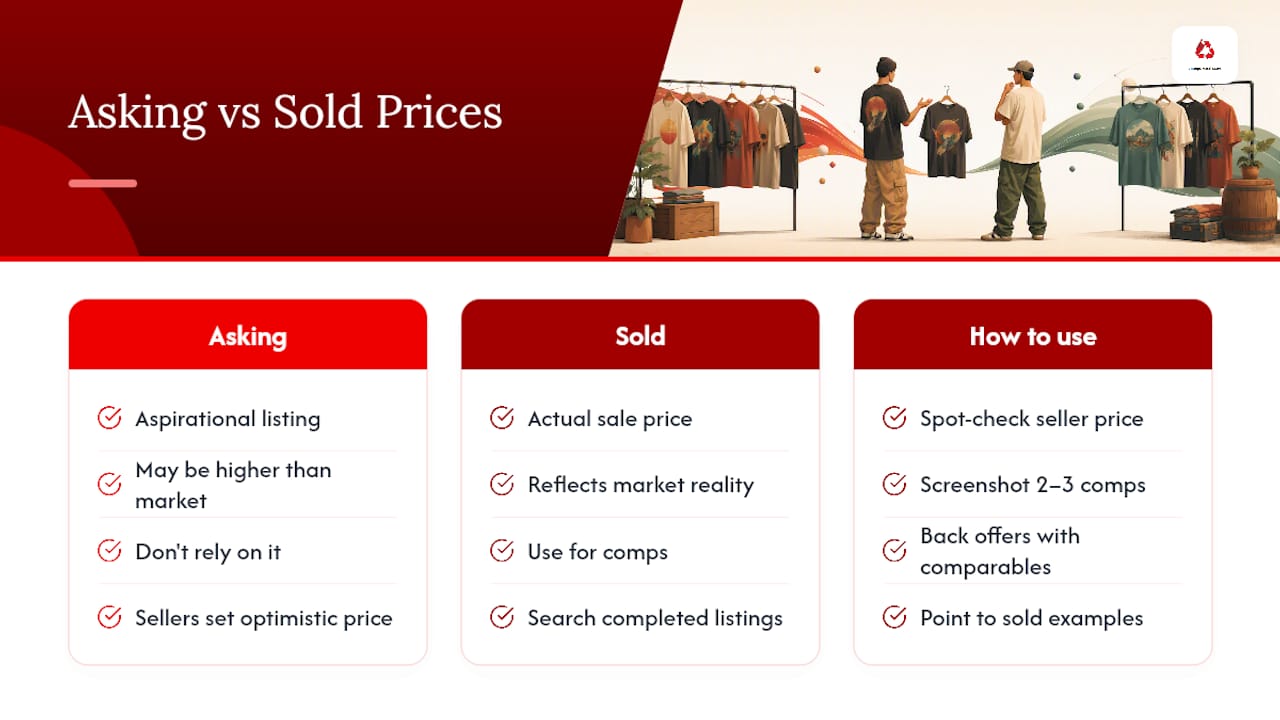
1. Research sold prices, not asking prices. Asking prices on marketplaces are aspirational; sold listings are reality. Search completed sales for the same band, era, and print style before you go shopping, and screenshot two or three comparables. Buyers who back offers with objective comparables from sold listings consistently negotiate better outcomes than those who just lowball on instinct.
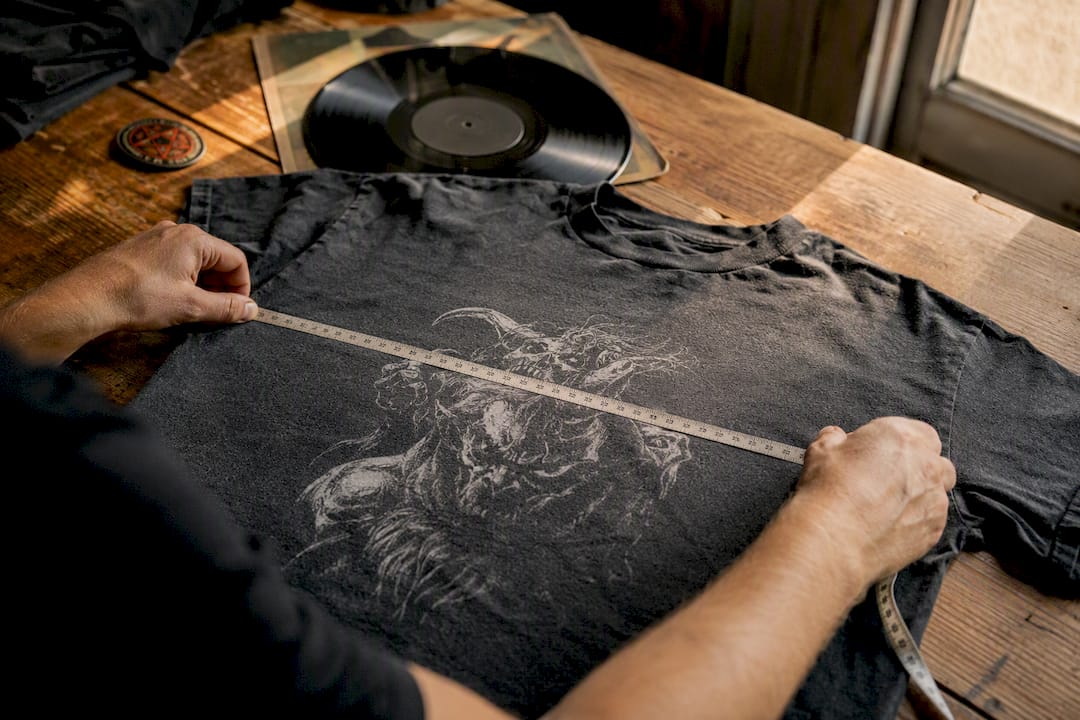
2. Measure before you love it. Vintage sizing rarely matches modern tags, so a “Large” from 1994 might fit like a modern Medium. Pit-to-pit width and front length are the two numbers that actually matter. Vintage Metal Store’s own guide on sizing vintage band shirts breaks down exactly how to take these measurements before you commit to a purchase, not after.
3. Run the condition checklist. Check the print for cracking or fading, the pits and collar for stretching or fraying, and the fabric for pinholes, moth damage, or underarm staining. Each flaw is a legitimate reason to counter the asking price, not an excuse to insult the seller.
4. Log what you find. Snap a photo of every flaw on your phone as you inspect it. When you make your offer, you’re not saying “it’s a bit worn”, you’re pointing at a specific underarm stain and a cracked print, which is a completely different conversation.
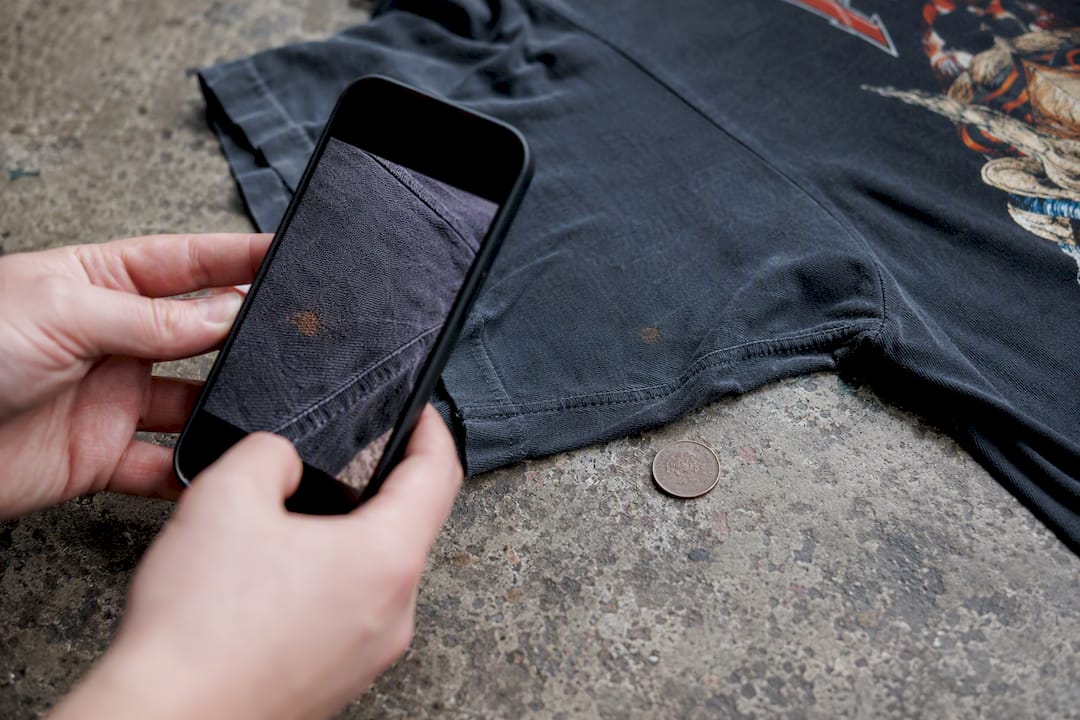
Pro Tip: Photograph flaws next to a coin or ruler for scale. It takes two seconds and gives you an instant, undeniable reference point if the seller pushes back on your assessment of the damage.
Tactics for negotiating in person: anchors, bundles, and timing
This is where preparation turns into a number. Getting the opening offer right shapes the entire conversation that follows.
Why the first number you say matters so much
Negotiation research from Harvard Law School’s Program on Negotiation shows the first offer typically anchors the entire exchange. Whoever speaks first sets the psychological reference point everything else gets measured against. That means you generally want to make the opening offer rather than waiting for the seller to counter down from their asking price.
Precision beats round numbers here too. Offering $67 instead of $70 signals that you’ve actually done the maths rather than picked a number out of the air, and it tends to narrow the seller’s counteroffer.
Three anchor styles, and when to use each
- Conservative anchor (10 to 15% off): Use this for a tee in excellent condition from a sought-after tour, where you don’t want to risk offending a seller who clearly knows what they’ve got.
- Standard anchor (15 to 25% off): Your default for most stalls, especially when you’ve spotted a couple of minor flaws worth mentioning.
- Ambitious anchor (25 to 35% off): Reserve this for tees with genuine condition issues, or vendors packing up at the end of the day.
Trade concessions, don’t just ask for them
Never ask for a discount and offer nothing back. Negotiation specialists are clear that you should trade concessions rather than extract them: if the seller drops the price, offer something in return, faster payment, buying a second item, or committing on the spot instead of “thinking about it.”
Bundling is genuinely one of the fastest paths to a deeper discount. Vendors are usually more motivated to clear two or three items in one transaction than to shave a few dollars off a single sale, since a single bundled sale reduces their unsold stock and their end-of-day pack-up.
Timing and payment as leverage
Markets near closing, or on a slow-traffic day, put sellers in a different mindset. Vendors are more receptive to lower offers late in the day or during quiet periods, simply because packing up unsold stock is worse than a discounted sale. If you can shop later in the day, do it.
Payment matters more than most buyers realise. Sellers consistently favour buyers who can pay immediately and close the deal quickly, since a guaranteed, fast transaction removes their risk. Have cash or a ready card, and say so early: “I can pay right now if we land on a number.” That said, don’t announce your absolute ceiling before you’ve heard their counter, keep a little room to move.
Pro Tip: Phrase your offer as a question rather than a statement: “Would you take $60 given the underarm mark?” This reads as collaborative rather than confrontational, and it’s a small shift that noticeably improves how receptive sellers are.
Skip the bargaining altogether at fixed-price retail counters or with curated sellers who’ve clearly priced with research and provenance documentation. Trying to haggle a firm, well-justified price just wastes everyone’s time and can sour a relationship with a good source you’ll want to return to.
Vintage t-shirt bargaining etiquette: what to do and avoid
Good negotiation etiquette protects your reputation as a buyer worth dealing with, and vintage sellers talk to each other more than you’d think.
Do this:
- Be upfront that you’re genuinely interested in buying, not just browsing for a debate.
- Base every offer on something concrete, a comparable price, a specific flaw, a measurement issue.
- Stay polite even if the seller says no. Polite, data-backed phrasing consistently outperforms aggressive tactics.
Avoid this:
- Don’t insult the shirt or the seller to justify a lowball (“this is basically worthless” rarely lands well).
- Don’t invent a sob story to guilt-trip a discount out of someone.
- Don’t pressure a seller who seems inexperienced or clearly doesn’t want to haggle.
Watch for red flags too. Be wary of vendors leaning hard on the word “rare” without anything to back it up. Vendors sometimes price on perceived rarity rather than actual garment quality, so a seller who can’t answer a specific question about the tour date or print run is worth double-checking against your own comparables. And sometimes paying full price is the right call, especially with a curator who’s clearly done authentication work and priced accordingly. Building that relationship is worth more long-term than saving $15 today.
A publisher’s view on condition, provenance, and value
David from Vintage Metal Store has spent years handling ex-tour stock and deadstock heavy metal shirts, and one lesson comes up constantly: the flaws that tank a t-shirt’s value and those that barely matter aren’t always what buyers assume.
Print condition on a tour shirt, especially screen prints from the 1980s and '90s, often matters more than fabric wear. A shirt with a slightly cracked print but tight seams can still command a strong price if it’s genuinely from that tour, while a pristine shirt with no verifiable provenance won’t. Sleeve tags, print placement, and tour dates are the details that separate real merch from later reproductions, and they’re worth checking before you even start talking numbers. Vintage Metal Store’s guide to authenticating vintage band tees walks through the specific checks worth running.
Once you’ve bought a genuinely rare piece, protect it: store it flat or on a padded hanger away from direct light, and avoid high-heat drying, which is what actually destroys old screen prints.
Reading seller resistance during a negotiation
Sellers signal a lot without saying “no” outright, and reading those cues saves you from pushing a dead conversation or backing off too early on a live one.
A flat, immediate “no” with no counter-number usually means you’ve undershot badly, or the seller genuinely won’t move on that item. Try re-anchoring higher rather than repeating the same offer; a seller who says nothing to a second, slightly improved offer is often just waiting to see if you’ll move first.
A counteroffer that splits the difference is usually a green light. If you offered $50 on a $70 shirt and they come back at $60, that’s an invitation to meet somewhere in the middle, not a final word.
Watch body language and phrasing too. A seller who picks the shirt up, folds it, or starts talking about another buyer’s interest is often signalling they’re close to walking away from the deal. On the other hand, a seller who volunteers extra detail about the shirt’s history, unprompted, is usually building a case for their price and genuinely engaged in finding a number that works.
If a seller repeats the same price twice without adjusting their tone, that’s often a real floor, not a negotiating tactic. Pushing a third time on an unmoved price tends to annoy rather than persuade. That’s the moment to either accept, walk, or ask what would need to change for them to move.
Negotiating online versus in-person vintage stores
The tactics shift depending on where you’re buying, even though the underlying principles stay the same.
Online marketplaces strip away tone of voice and body language, so your written offer has to do all the work. Lead with your comparable evidence in the message itself: “I’ve seen similar condition ones sell for around $X, would you take $Y?” Precise, respectful messages get replies; one-word lowballs usually get ignored or blocked. Response time also matters more online, since a seller who hasn’t sold in weeks is often more flexible than one with three other buyers messaging.
In-person vintage stores, especially curated ones, tend to have less room to move than market stalls, because pricing there usually reflects research and overheads rather than a guess. Staff at these stores are also a genuinely useful resource for provenance questions, so use the conversation to learn, not just to haggle.
Why material literacy beats haggling instinct every time
Most negotiation advice treats bargaining like a personality trait, be bold, be confident, hold your nerve. That’s mostly noise. The buyers who consistently get fair prices on vintage tees aren’t the boldest talkers, they’re the ones who know exactly what they’re looking at before they open their mouth.
The conventional wisdom oversells generic scripts and undersells condition literacy. Knowing that a cracked print on a 1988 tour shirt is normal, but the same crack on a shirt claiming to be deadstock is a red flag, does more for your negotiating position than any clever phrase ever will.
If you take one thing from this article, prioritise the inspection before the tactics. A precise, well-justified anchor beats an aggressive one every time, and precision only comes from actually knowing what you’re holding. Negotiate second. Learn the garment first.
— David
Get authenticated vintage metal tees without the back-and-forth
Not every buyer wants to haggle, and that’s fair enough. Vintage Metal Store exists as the alternative to market-stall guesswork: every tee is condition-checked and honestly described before it’s listed, so you know exactly what you’re paying for without needing sold-listing research or a negotiation script.
Every listing spells out flaws, measurements, and provenance details upfront, the same checks covered earlier in this article, done for you. Browse the rare vintage heavy metal concert shirts collection for genuine ex-tour and deadstock pieces, or check out the rare Metallica 1992 tour tee as an example of the condition detail buyers get with every listing. Head to the Vintage Metallica shirts collection if you’re after something specific, and check the shipping and returns information on any product page before you check out. Fewer unknowns, no back-and-forth, just the shirt and the legacy it carries.
Sources
- How to haggle and negotiate a better price | Business Insider
- Price anchoring 101 | Program on Negotiation, Harvard Law School
- 10 rules of price negotiation that actually work | Academy of Negotiation
- How to buy a great vintage t‑shirt online | GQ
FAQ
How much is my vintage shirt worth?
Check sold listings for the same band, era, and print condition rather than relying on asking prices, since objective comparables give a far more accurate baseline than a seller’s guess or your own instinct.
Which vintage t-shirts are worth money?
Tour-specific merch with verifiable dates, official band tees over reprints, and shirts with rarer print locations or fabric tags tend to hold the most value. Vintage Metal Store’s guide on what makes a shirt valuable breaks down these markers in detail.
Why are vintage t-shirts so expensive?
Genuine tour shirts and deadstock pieces are finite. No more were ever made, and provenance markers like tour dates and sleeve tags push demand well above what a reproduction shirt could ever command.
How much should you sell t-shirts for?
Price around recent sold comparables for the same condition and rarity tier, then build in some room for negotiation since most buyers at markets expect to counter your asking price.
Is it rude to negotiate on vintage clothing?
No, bargaining is standard at markets and most second-hand sales, provided the offer is polite, condition-based, and not an aggressive lowball with no justification behind it.
Recommended
- How to Sell Vintage Metal Tees for Maximum Profit – Vintage Metal Store
- Why preserve old band tees? Value, culture and know-how – Vintage Metal Store
- Vintage t-shirt grading explained: collector’s guide – Vintage Metal Store
- Collector’s guide to authentic vintage band tees: 5 expert checks – Vintage Metal Store


