


TL;DR:
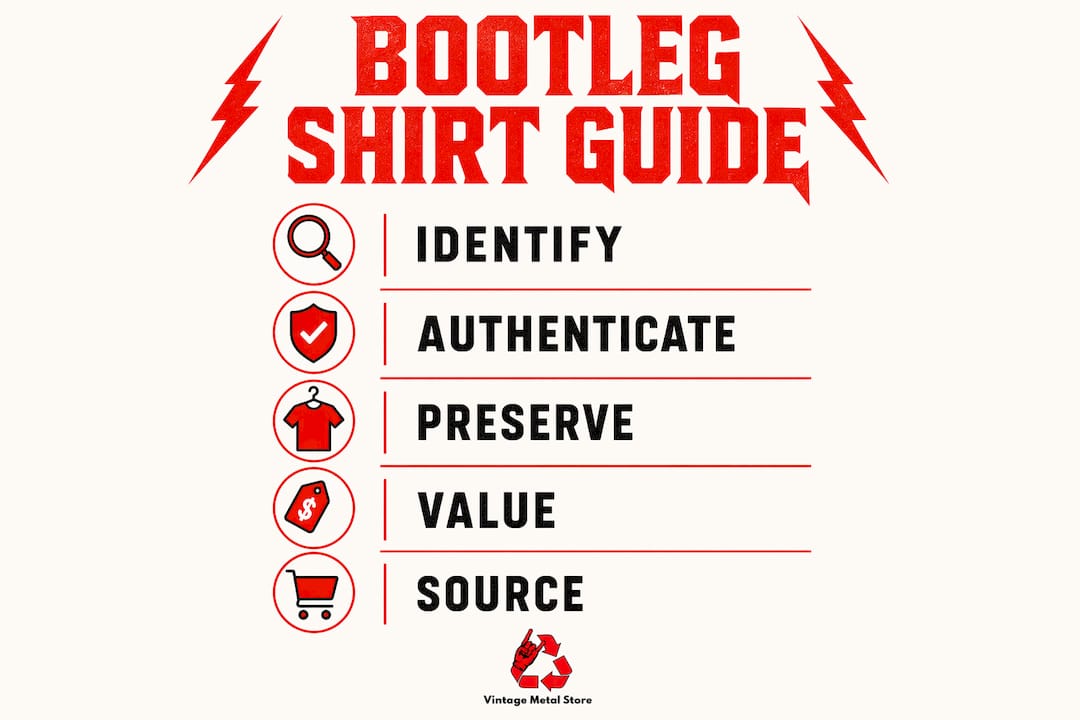
- Bootleg shirts are unauthorized garments that creatively use band imagery without claiming official status, making them highly valued by collectors. They serve as cultural records, capturing fan sentiment and original artwork, especially from the 1980s and 1990s, and are now recognized as a respected category alongside official merchandise. Identifying genuine vintage bootlegs involves checking tags, print quality, fabric construction, and era-specific details to verify authenticity.
What bootleg shirts are and why collectors prize them
A bootleg shirt is an unauthorised garment that creatively appropriates a band’s imagery, logo, or iconography without a licence, but without pretending to be official merchandise. That distinction matters enormously to serious collectors. Where a fake shirt copies an original to deceive, a bootleg intentionally looks unofficial, often twisting the source material into something rawer, stranger, and more expressive than anything a licensing deal would permit.
The role of bootleg shirts in collecting goes well beyond nostalgia. Experienced collectors treat them as folk art and subcultural documentation, capturing fan sentiment at specific cultural moments that official merch, constrained by trademark approval processes, simply cannot. A 1989 Metallica bootleg tee sold outside a stadium in Melbourne tells you something about that night, that crowd, and that era that no Bravado-licensed reprint ever will.
Key reasons collectors value bootlegs:
- Cultural authenticity: Bootlegs document real fan reactions and subcultural energy at the moment they happened.
- Design originality: Freed from brand guidelines, bootleg makers produced genuinely creative, sometimes bizarre artwork that official merch departments would never approve.
- Rarity: Most bootleg runs were tiny, produced by street vendors or local print shops, making survivors genuinely scarce.
- Historical record: They function as primary sources for music historians and fashion researchers alike.
- Collector community identity: Owning a legitimate vintage bootleg signals deep knowledge and commitment within the collecting scene.
The vintage band shirt market has absorbed bootlegs as a distinct and respected category. They sit alongside, not beneath, official tour shirts in serious collections.
Table of Contents
- How to identify vintage bootleg shirts
- The historical and cultural significance of bootleg shirts
- Legal considerations for bootleg shirt collectors in Australia
- Collector value: why some bootleg shirts command high prices
- How to care for and preserve bootleg shirts in your collection
- Where to find authentic bootleg shirts in Australia
- Vintage Metal Store: where serious Australian collectors shop
- FAQ
- Key takeaways
How to identify vintage bootleg shirts
Spotting a genuine vintage bootleg requires a different eye than authenticating official merch. You are not looking for perfection. You are looking for the right kind of imperfection.
Tags and labels
Licensed shirts carry printed tags from known licensors such as Rockoff, Bravado, or Giant. A vintage bootleg will typically have a generic blank brand tag (Fruit of the Loom, Hanes, Screen Stars) or no tag at all. The absence of a licensor name is one of the clearest indicators you are holding an unofficial piece. Post-1990s bootlegs sometimes have no tag whatsoever, cut out to avoid scrutiny.
Print quality and design
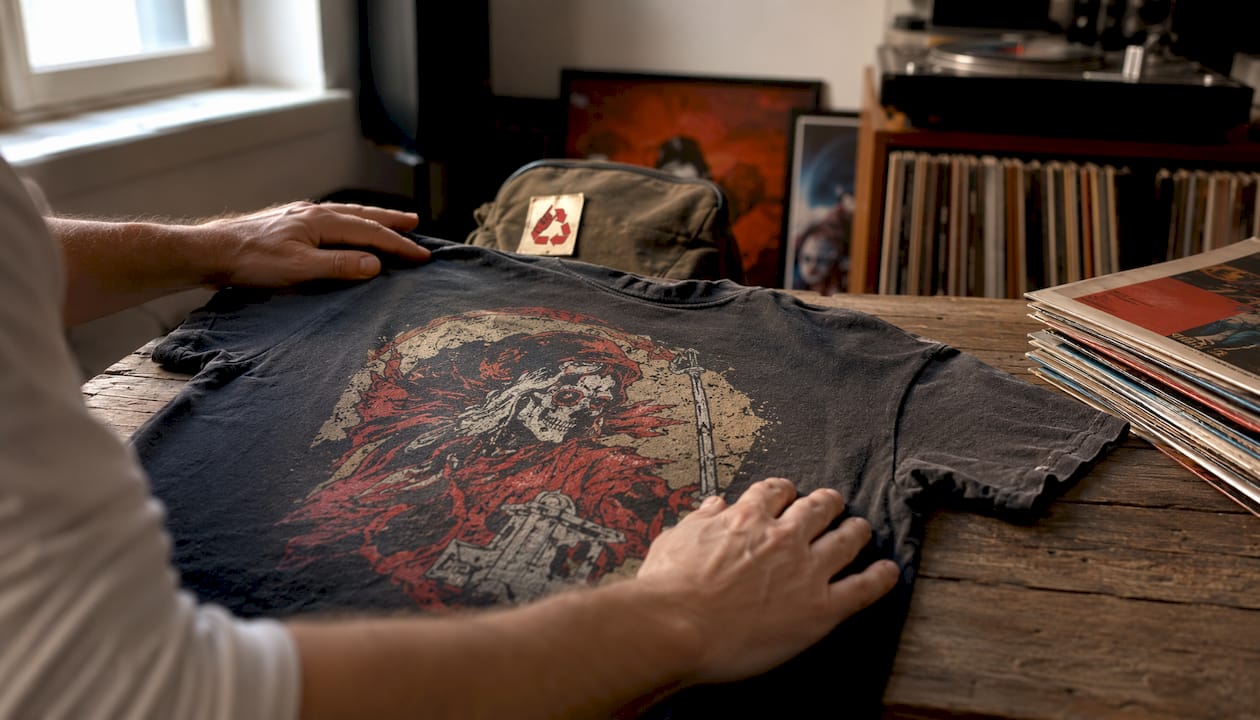
Bootleg prints are often slightly off-register, with colours that bleed or fade unevenly. That is not a flaw to avoid. Collectors actively prize faded prints and manufacturing quirks as proof of age and grassroots origin. The artwork itself tends to be more idiosyncratic than official designs, sometimes featuring unlicensed photography, hand-drawn elements, or imagery that would never clear a legal review.
Fabric and construction
Vintage bootlegs from the 1980s and early 1990s were typically printed on single-stitch construction blanks, with a single row of stitching at the sleeve hem. Double-stitching became standard in the mid-1990s, so a single-stitch construction on a shirt claiming to be from that era is a strong authenticity signal. The fabric itself tends to be a thinner, softer cotton than modern blanks.
Common pitfalls
- Confusing a reproduction (a modern reprint of a classic design) with an actual vintage bootleg. Reproductions use modern blanks and digital printing.
- Mistaking a cut-tag shirt for a bootleg when it may simply be a deadstock official shirt with the tag removed for comfort.
- Assuming all low-quality prints are bootlegs. Some official 1980s merch was also poorly printed.
Pro Tip: Check the sleeve seam construction under good light. A single-stitch hem on a shirt with a Screen Stars or Fruit of the Loom tag and a pre-1994 copyright date on the print is a very strong indicator of genuine vintage bootleg status. Cross-reference the blank brand’s known production years to narrow the window further.
For a deeper breakdown of identifying bootleg metal tees, the construction details alone can confirm or rule out a shirt’s era within a few years.
The historical and cultural significance of bootleg shirts
Bootleg shirts did not emerge from cynicism. They came from passion. When a band played a stadium in 1987 and the official merch table sold out by 9 PM, the street vendors outside with their screen-printed blanks were filling a genuine gap, and doing it with creative energy that the official product often lacked.
That folk art framing is not hyperbole. Bootleg shirts function as subculture journalism, documenting fan culture dynamics in real time. A bootleg shirt from a 1991 Metallica show in Sydney carries visual and material evidence of how Australian metal fans experienced that moment, independent of what the band’s management wanted to communicate.
How bootleg culture shaped mainstream fashion
The influence ran upward. High-end designers began appropriating the bootleg aesthetic from the 2010s onward, with labels like Vetements building entire collections around the deliberate misappropriation of corporate logos. What street vendors outside arenas had been doing for decades became a recognised and celebrated design language. The “bootleg” label shifted from a purely negative legal term into a fashion idiom with genuine cultural cachet.
Modern merch production now treats bootleg-inspired designs as street-level research and development, with unofficial fan-made shirts informing what official releases look like the following season. It is a virtuous cycle: fan creativity feeds back into the industry that originally inspired it.
Australian and international context
| Perspective | Bootleg significance |
|---|---|
| Australian metal scene (1980s–1990s) | Limited official distribution meant bootlegs were often the only merch available at regional shows |
| US rap and metal scenes | 1980s and 1990s bootleg tees now command serious collector premiums for their subcultural authenticity |
| High fashion (2010s–present) | Designers borrowed bootleg aesthetics, legitimising the form as artistic appropriation |
| Collector market (global) | Bootlegs occupy a distinct, respected category alongside official vintage merch |
Australia’s geographic isolation in the 1980s and 1990s made bootlegs especially significant here. International tours were rare, official merch distribution was patchy, and local bootleggers filled the void. An Australian-made bootleg from a major metal tour of that era is now a genuinely rare artefact, carrying both musical and local cultural history.
Legal considerations for bootleg shirt collectors in Australia
Australian copyright and trademark law treats bootleg shirts as unauthorised reproductions. That is the baseline legal reality. However, enforcement in the vintage resale context is complex, and the practical situation for collectors differs meaningfully from the situation for active commercial bootleggers.
What the law covers
- Copyright: The artwork on a band shirt is typically owned by the band, their label, or a contracted artist. Reproducing it without a licence infringes copyright under the Copyright Act 1968 (Cth).
- Trade marks: Band names and logos are often registered trade marks. Unauthorised commercial use can constitute trade mark infringement under the Trade Marks Act 1995 (Cth).
- Consumer law: The Australian Consumer Law prohibits misleading conduct. Selling a bootleg as an official licensed product is a clear breach; selling it accurately described as a vintage bootleg sits in a different legal position.
The grey zone collectors actually operate in
Reselling a vintage bootleg you already own is not the same as manufacturing new bootlegs. Australian courts and rights holders have historically focused enforcement on commercial-scale production and importation, not on individual collectors reselling single items. That said, the legal grey zone is real, and it is not a guarantee of immunity.
Practical guidance for ethical collecting and selling:
- Always describe items accurately: “vintage bootleg” not “official tour shirt.”
- Do not claim provenance you cannot verify.
- Avoid bulk purchasing of modern bootlegs for resale, which moves you closer to commercial infringement territory.
- When selling through platforms like eBay Australia or Depop, accurate description protects both your reputation and your legal position.
The distinction between bootleg and fake matters legally as well as culturally. A fake shirt deceives the buyer into believing they hold an official product. A bootleg, properly described, does not. Transparency is both the ethical standard and the practical legal protection.
Collector value: why some bootleg shirts command high prices
Not all bootlegs are equal. The vintage collector market has developed a clear, if informal, hierarchy of what makes one bootleg worth serious money and another worth a few dollars at a market stall.
The key value drivers
- Era: 1980s and early 1990s bootlegs from the peak of heavy metal and hip-hop culture are the most sought after. The subcultural authenticity of these pieces, capturing real fan sentiment before the internet homogenised music culture, is irreplaceable.
- Rarity: Small print runs, regional distribution, and the simple fact that most bootlegs were worn to destruction means genuine survivors are scarce.
- Design originality: A bootleg with genuinely creative, era-specific artwork commands more than a simple logo reprint on a cheap blank.
- Condition: Mint or near-mint condition is rare for a shirt that was meant to be worn. Collectors pay a premium for it, though some prize honest wear as proof of authenticity.
- Provenance: A shirt with a documented connection to a specific show, city, or moment carries extra value. An Australian-made bootleg from a 1988 Metallica show is worth more than an identical design with no known origin.
Bootleg value versus official merch
Bootlegs and official vintage shirts occupy different but overlapping collector markets. An original licensed tour shirt from a major 1980s metal band can fetch significant sums, but so can a well-documented bootleg from the same era, sometimes more, because the bootleg is rarer and carries a different kind of story. The collector community on forums like Reddit’s r/VintageTees has debated this extensively, with many experienced collectors arguing that the best bootlegs outperform comparable official merch at auction precisely because of their scarcity and cultural specificity.
Pro Tip: Before paying a premium for any vintage bootleg, check the blank brand’s production timeline. Screen Stars, for example, stopped producing their classic blank in the mid-1990s. A shirt on a Screen Stars blank with a 1990s-era design is almost certainly genuine vintage. A Screen Stars blank with a modern digital print is a red flag.
Collectors interested in the crossover between bootleg culture and the broader memorabilia resale market will find useful context in how concert poster flipping mirrors the same rarity-driven value dynamics.
How to care for and preserve bootleg shirts in your collection
Vintage bootlegs are fragile. The cheap blanks and inks used in their production were not made to last decades, which is exactly why survivors are valuable. Treating them like modern garments will destroy them.
Wash as rarely as possible. When you must wash, turn the shirt inside out, use cold water on a gentle cycle, and avoid any detergent with optical brighteners, which degrade vintage inks. Hand washing in cool water with a small amount of pH-neutral soap is the safest option. Never tumble dry. Lay flat to dry away from direct sunlight, which fades prints faster than almost anything else.
For storage, acid-free tissue paper and archival garment bags are worth the investment. Fold along existing creases rather than creating new ones, and store flat rather than hanging. Hanging a vintage shirt on a hanger for years stretches the collar and shoulder seams in ways that cannot be reversed. Temperature and humidity matter too: a cool, dry environment prevents the mould and fabric degradation that ruins collections stored in garages or sheds.
If a shirt has significant value, consider professional textile conservation advice before attempting any cleaning. Some collectors choose never to wash their most important pieces at all, accepting light soiling as part of the authentic record.
Where to find authentic bootleg shirts in Australia
The Australian market for vintage bootlegs is smaller than the US or UK scenes, but it is active and growing. Knowing where to look saves time and money.
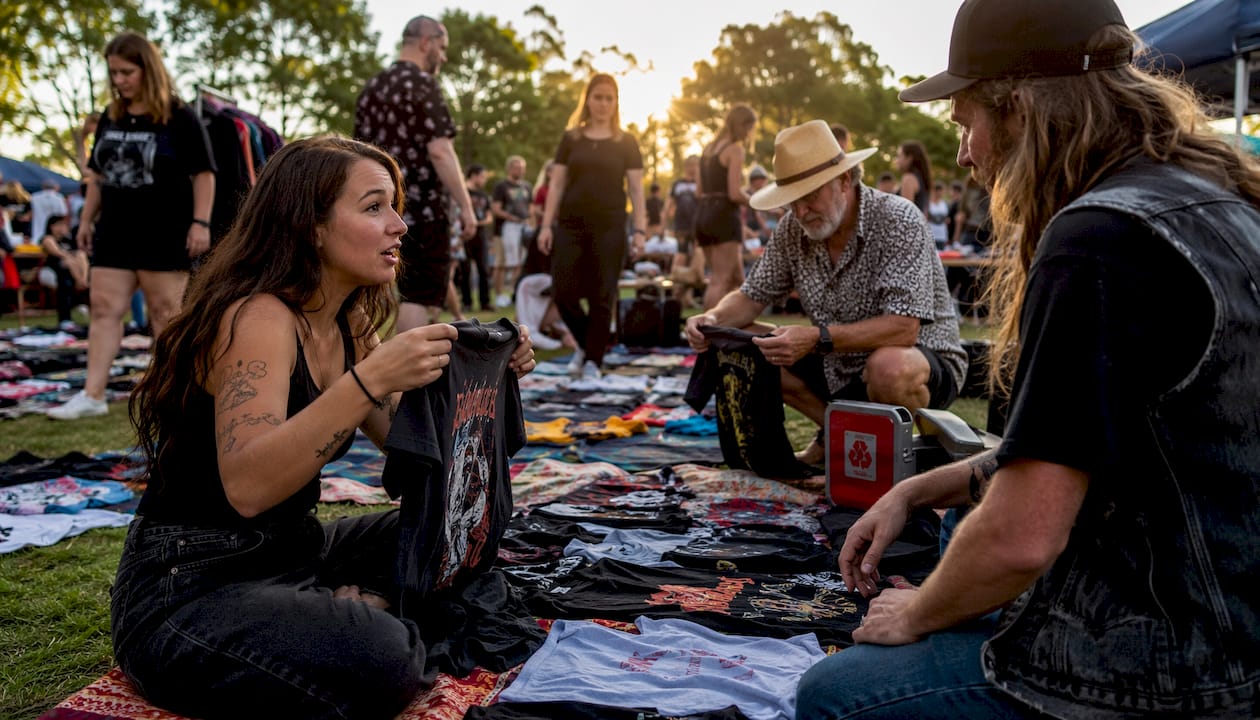
Markets and op shops: The Camberwell Sunday Market in Melbourne and the Rozelle Collectors Market in Sydney remain reliable hunting grounds. Prices have risen as awareness has grown, but genuine finds still surface regularly. Regional op shops outside major cities often yield better results than inner-city stores, where pickers have already cleared the racks.
Online platforms: eBay Australia carries a steady flow of vintage band shirts, including bootlegs. Search specifically for blank brand names (Screen Stars, Fruit of the Loom, Hanes Beefy-T) combined with band names to filter for genuine vintage pieces rather than modern reprints. Depop has a younger seller base and can turn up interesting pieces, though descriptions are less reliable and you need to ask questions about tags and construction.
Specialist dealers and stores: Vintage Metal Store is one of the few Australian dealers focused specifically on heavy metal and hard rock tour merch, including genuine vintage and bootleg pieces. The stock includes ex-tour deadstock and second-hand shirts from actual tours, which means provenance is often clearer than what you find at a general vintage store.
Interstate and international shipping: Do not overlook US-based sellers on eBay or Discogs for Australian-specific bootlegs from major international tours. Australian fans who attended 1980s and 1990s shows sometimes sold shirts internationally, and pieces occasionally surface back in the market.
Collector communities: The Australian vintage tee community on Facebook groups and Instagram is worth joining. Private sales between collectors are common, and reputation matters, so the community self-polices quality and honest description reasonably well.
Vintage Metal Store: where serious Australian collectors shop
If you have read this far, you already know that finding genuine vintage and bootleg heavy metal shirts in Australia takes real knowledge and patience. Vintage Metal Store exists for exactly this community.
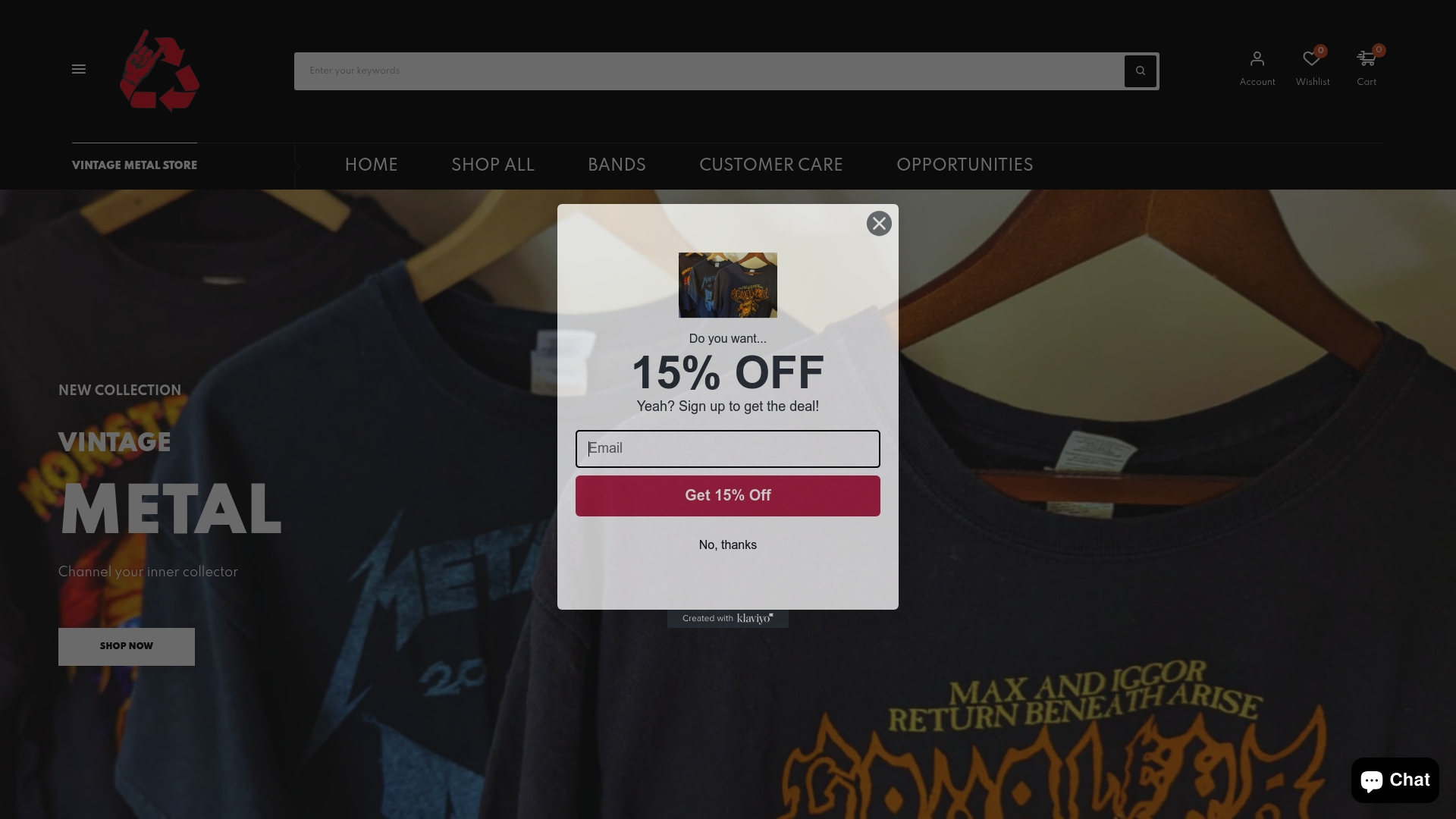
The stock at Vintage Metal Store is sourced directly from ex-tour deadstock, second-hand tour merch, and genuine vintage pieces from heavy metal’s most significant eras. That means you are not sifting through modern reprints or mislabelled fakes. You are getting shirts with real provenance, including pieces like the rare Metallica 1992 tour tee that serious collectors actively hunt. The vintage Metallica collection covers 80s, 90s, and Y2K-era shirts, with the kind of depth you will not find at a general vintage store.
For collectors who want to wear the legacy rather than just read about it, browse the rare vintage heavy metal concert shirts collection and find your next piece of metal history.
FAQ
What does bootleg shirt mean?
A bootleg shirt is an unauthorised garment that creatively appropriates a band’s or brand’s imagery without a licence, without intending to pass itself off as official merchandise.
What is the difference between bootleg and fake?
A fake shirt copies an official product to deceive the buyer into thinking it is genuine. A bootleg intentionally looks unofficial and adds its own creative twist, making no claim to be the real thing.
Is it illegal to buy bootleg shirts in Australia?
Buying a vintage bootleg for personal use or resale sits in a legal grey zone under Australian copyright and trade mark law. Enforcement targets commercial-scale production, not individual collectors, but accurately describing what you are selling remains both an ethical and legal obligation.
Why are some bootleg shirts worth so much?
Rarity, era, design originality, and provenance drive value. Bootlegs from earlier decades are especially prized because they captured genuine subcultural moments in small print runs, making authentic survivors scarce.
How do I know if a bootleg shirt is genuinely vintage?
Check the blank brand’s tag, sleeve seam construction (single-stitch pre-1994), print registration, and fabric weight. A single-stitch Screen Stars or Fruit of the Loom blank with an off-register print and a pre-1994 copyright reference on the design is a strong indicator of genuine vintage status.
Key takeaways
Bootleg shirts are legitimate cultural artefacts with distinct collector value, separate from both official merch and outright fakes, and the Australian vintage metal scene has its own rich bootleg history worth preserving.
| Point | Details |
|---|---|
| Bootlegs vs fakes | Bootlegs creatively reinterpret official designs without claiming authenticity; fakes deceive buyers into thinking they hold genuine licensed products. |
| Identification markers | Single-stitch construction, generic blank tags, and off-register prints are the clearest indicators of genuine vintage bootleg status. |
| Legal position in Australia | Reselling vintage bootlegs accurately described sits in a grey zone; transparency about provenance is both the ethical and practical legal standard. |
| Value drivers | Rarity, era, design originality, and documented provenance are the primary factors driving collector premiums. |
| Vintage Metal Store | Stocks genuine ex-tour deadstock and vintage heavy metal shirts with clear provenance for serious Australian collectors. |
Recommended
- What is a bootleg band shirt? A collector’s guide – Vintage Metal Store
- Identifying bootleg metal tees: a collector’s guide – Vintage Metal Store
- Why fans collect old shirts: Cultural power of vintage metal tees – Vintage Metal Store
- How to display collector shirts: the complete guide – Vintage Metal Store


