



TL;DR:
- Album art shirts transform a music album’s visual identity into wearable art that expresses fandom and cultural connection. Collectors favor shirts with symbols and oblique references over direct reproductions, as they capture the album’s spirit and rarity. Proper design, printing, and care ensure these shirts remain meaningful and enduring symbols of metal history.
Album art on shirts is the wearable translation of a music release’s visual identity, turning a record’s defining imagery into a portable canvas that carries the album’s mood, symbols, and emotional weight. For metal fans and collectors, this goes far beyond a printed logo. A great album art shirt connects you physically to a record you love, the era it came from, and the community that lived it. Understanding what album art on shirts actually means, how designers adapt these visuals for fabric, and what makes one shirt worth collecting over another, gives you a real edge as a collector.
What is album art on shirts and why does it matter?
Album art on shirts is defined as the practice of reproducing or referencing a music release’s visual design on garment fabric, creating a wearable extension of the album’s identity. The visual identity of a record carries emotional and cultural weight that fans want to carry with them. A shirt featuring Iron Maiden’s The Number of the Beast artwork or Metallica’s black album graphic is not just merchandise. It is a statement of allegiance, a piece of music history worn on your body.
The connection between album art and fan identity runs deep in heavy metal culture. Band merchandise history shows that shirts became the primary way fans expressed loyalty to a band long before social media existed. The visual language of an album, its colour palette, typography, and imagery, became shorthand for an entire subculture. Wearing that imagery meant you were part of something.
Album art shirts also serve as cultural documents. They record the aesthetics of a specific moment in music history. A 1992 Metallica tour shirt carries the graphic sensibility of that era in a way no digital file can replicate.
How designers adapt album art for t-shirt printing
Translating album art onto fabric is not a simple copy-and-paste job. Fabric moves, folds, and stretches. Fine detail becomes illegible when a shirt bunches at the waist or creases across the chest. Designers who understand this prioritise bold visual hierarchy over intricate illustration.
The core principles for adapting album art to clothing include:
- Bold, high-contrast imagery. Designs with strong outlines and clear separation between elements survive the printing process and daily wear far better than detailed, photo-realistic art.
- Simple colour palettes. Reducing a complex album cover to three or four dominant colours keeps the print clean and prevents colour bleed on fabric.
- Oversized graphics. Scaling the central image large enough to read from a distance is a standard technique in professional band merch design.
- Strong typography. Band name and album title lettering needs to be legible at scale. Handcrafted font generators help designers echo an album’s original typography without directly reproducing copyrighted cover text.
- The collage approach. Layering multiple poses or symbolic elements creates narrative energy characteristic of iconic 90s graphic tees.
The 90s bootleg aesthetic is one of the most influential design styles in album art shirts. It features off-registration ink, halftone dot patterns, faded colours, and oversized graphics. This style deliberately looks imperfect. That imperfection signals authenticity and era-specific character, which is exactly why collectors prize it. You can read more about this style in the bootleg band shirt collector’s guide.
For printing, Direct-to-Film (DTF) printing handles multi-colour album art in small batches, balancing cost and detail reproduction. DTF works well for complex designs that screen printing would struggle to render cleanly at low quantities.
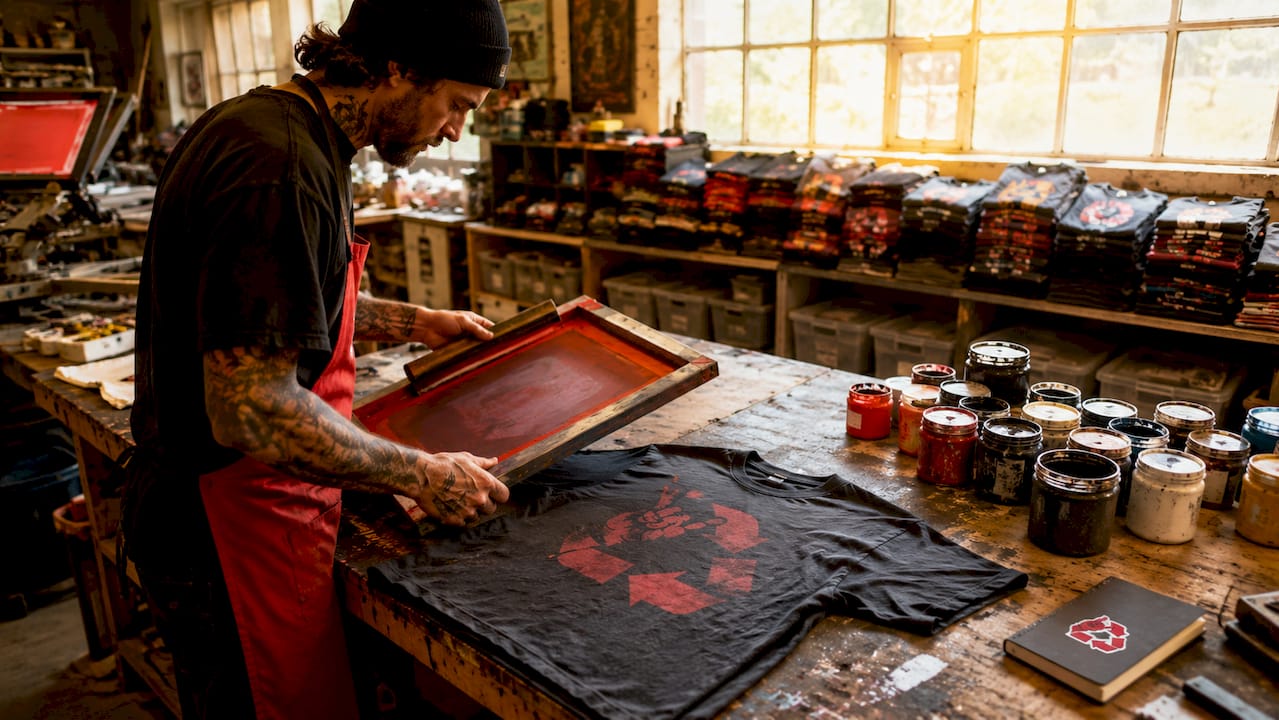
Pro Tip: When evaluating a printed album art shirt, hold it at arm’s length. If the design reads clearly from that distance, the hierarchy is right. If it looks muddy or crowded, the designer has not adapted the original art for fabric.
Why album art shirts resonate with collectors and fans
Album art shirts offer something a streaming playlist cannot. They create an emotional afterlife for the album, linking the wearer to the record’s atmosphere long after the release cycle ends. Putting on a shirt from a specific tour or era triggers the same sensory memory as hearing the opening riff of a favourite track.
“The strongest album shirts reflect the album’s mood or symbol rather than generic branding, creating lasting emotional resonance that connects the wearer to the music’s world rather than just its commercial identity.”
Collectors draw a clear distinction between two types of album art shirts. Direct reproductions place the full album cover on the chest, front and centre. Oblique references use recurring symbols, specific colour palettes, or textural elements drawn from the album’s wider visual campaign. Collectors consistently value oblique references more deeply than straight cover copies. A shirt that captures the spirit of an album through its symbols feels more considered and more rare.
The rarity factor matters enormously in metal collecting. Ex-tour stock and dead stock shirts, pieces that never made it to general retail, carry a provenance that mass-produced reprints cannot match. Visual artists see clothing as a medium to extend their style globally, creating long-term cultural connections that outlast the album cycle itself. A shirt from a 1992 Metallica US tour is not just apparel. It is a primary source document from a specific moment in metal history.
For collectors wanting to understand the full range of heavy metal shirt types, the distinctions between tour shirts, album art shirts, and fan-made pieces are worth knowing well.
Legal considerations when designing album art shirts
Designing album art shirts commercially requires navigating copyright carefully. The 2026 industry standard is clear: using copyrighted album artwork without permission is prohibited and exposes designers and sellers to legal liability. This applies to direct reproductions of cover art, official band photography, and trademarked logos.
Designers working within legal boundaries follow these approaches:
- Use genre aesthetics, not specific artwork. Capturing the visual language of a genre, such as the dark, gothic imagery of death metal or the angular graphics of thrash, without reproducing any specific copyrighted image is the safest creative path.
- Create original typography inspired by album fonts. Fan-made designs use font generators to echo an album’s typographic style without copying the exact lettering from a copyrighted cover.
- Reference symbols and colour palettes abstractly. A shirt using a colour palette strongly associated with a specific album communicates clearly to fans without reproducing any protected artwork.
- Obtain a commercial licence. Bands and labels do issue licences for merchandise production. Working through official channels is the correct path for anyone producing shirts commercially at scale.
- Commission original artwork in the album’s spirit. Many of the most collectible shirts feature original illustrations by artists who understood the album’s visual world deeply enough to create something new within it.
Fan-made and custom designs occupy a different space. A one-off shirt made for personal use sits in a different legal category to commercial production runs. Collectors who seek out fan-made pieces value the craft and personal interpretation they represent, even when those pieces exist in a grey area commercially.
How to choose and care for authentic album art shirts
Choosing an album art shirt worth collecting starts with reading the design itself. Effective album shirts depend on clarity and simple hierarchy. A shirt where the central image reads instantly, where the band name and album reference are legible, and where the colour palette feels intentional rather than accidental, is a shirt that will hold its visual integrity over time.
| Shirt type | Design traits | Collector value |
|---|---|---|
| Original tour stock | Era-specific graphics, single-colour or limited palette, often bootleg aesthetic | Very high |
| Official album release shirt | Full cover art or key symbols, professional print quality | High |
| Dead stock / ex-tour | Unworn, original tags, period-correct printing | Very high |
| Fan-made / custom | Original interpretation, handcrafted typography, limited run | Moderate to high |
| Modern reprint | Clean digital print, wide availability, no provenance | Low |
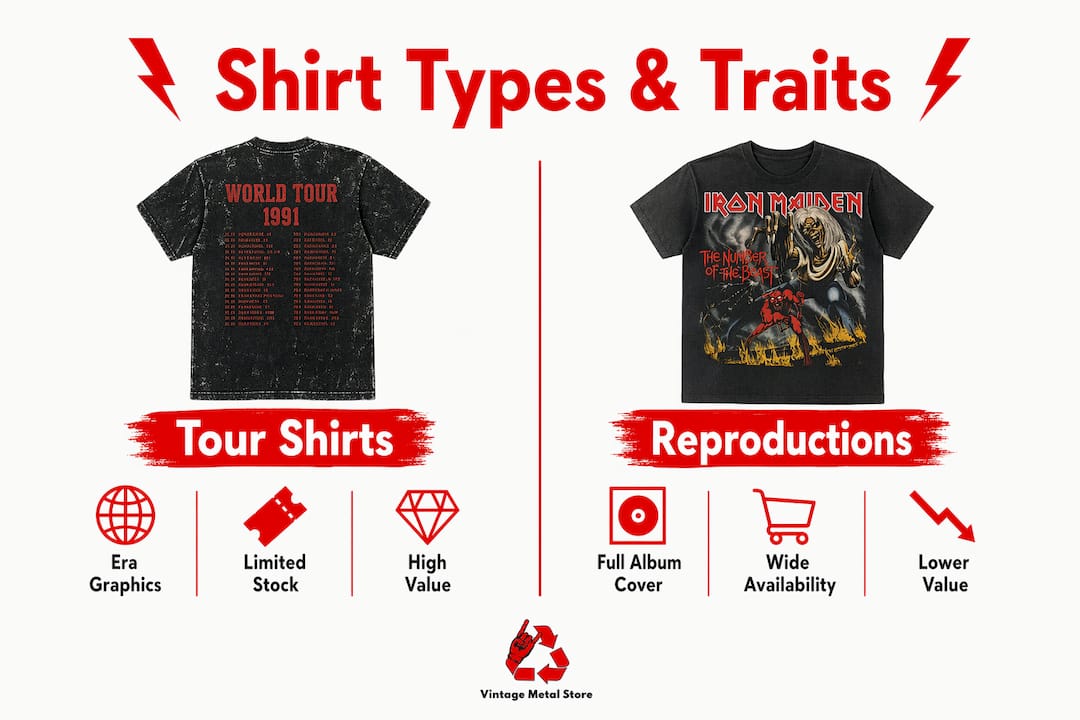
Signs of quality in an authentic vintage album art shirt include a soft, worn hand-feel on the fabric, slight cracking or fading in the print consistent with age, and period-correct label and tag details. A print that looks too sharp and too saturated on an allegedly vintage shirt is a warning sign.
Caring for album art shirts preserves both the fabric and the graphic. Turn the shirt inside out before washing. Use cold water and a gentle cycle. Avoid tumble drying. Lay flat or hang dry away from direct sunlight. Heat is the primary enemy of printed graphics, causing cracking and colour fade far faster than normal wear.
Pro Tip: Store prized album art shirts folded flat in acid-free tissue paper rather than on hangers. Hanging causes shoulder distortion over time and can stress the print at fold points.
For collectors wanting to see examples of vintage band tees that demonstrate these quality markers in practice, studying original pieces is the fastest way to train your eye.
You can also learn about styling pop culture tees in ways that honour the design rather than obscure it, which matters when you are wearing a shirt that doubles as a collector’s piece.
Key takeaways
Album art shirts are wearable primary sources, and their collector value depends on design integrity, printing method, provenance, and how faithfully they capture the album’s visual spirit.
| Point | Details |
|---|---|
| Definition | Album art on shirts translates a record’s visual identity into wearable, portable artwork. |
| Design integrity | Bold hierarchy and simple colour palettes produce shirts that hold their visual clarity over time. |
| Collector value | Original tour stock and dead stock shirts carry provenance that reprints cannot replicate. |
| Legal boundaries | Commercial designs must avoid copyrighted artwork; genre aesthetics and original typography are safe paths. |
| Care and preservation | Cold wash, no tumble dry, and flat storage protect both fabric and printed graphics long-term. |
Why album art shirts are the real archive of metal culture
I have handled a lot of vintage metal shirts over the years, and the ones that stop me every time are not the ones with the most technically impressive prints. They are the ones where you can feel the era in the fabric. A faded, slightly off-registration Metallica shirt from a 1992 US tour tells you something about that moment in metal history that no reissue can replicate. The graphic is imperfect. The cotton is thin from years of wear. That is exactly the point.
What I find most collectors get wrong early on is chasing direct album cover reproductions. The shirts that hold their meaning and their value are the ones that captured the album’s spirit through symbols, colour, and typography rather than just slapping the cover art on a chest. Those oblique references reward the people who know the album deeply. They create a kind of visual shorthand between fans that a straight reproduction never achieves.
The design conversation around album art shirts is also shifting in 2026. DTF printing has made it easier to produce complex, multi-colour designs in small runs, which is great for custom and fan-made pieces. But the best shirts still follow the same rules they always have: bold, clear, and built around a single strong visual idea. Complexity for its own sake produces muddy results on fabric. Simplicity, done with real understanding of the album’s identity, produces something worth wearing for decades.
If you are building a collection, train your eye on original pieces first. Study the iconic 90s band shirt styles that defined the era. Learn what period-correct printing looks and feels like. Then you will know immediately when you are holding something real.
— David
Rare album art shirts worth adding to your collection
Vintage Metal Store carries authentic ex-tour stock and dead stock heavy metal shirts, the kind of pieces that defined the album art shirt tradition at its peak.
Right now the collection includes a rare 1992 Metallica tour tee from the “Don’t Tread on Me” US run, a genuine primary source from one of metal’s biggest eras. The Metallica vintage shirt collection spans 80s, 90s, and Y2K pieces, including club tees and tour shirts with real provenance. For fans of heavier underground metal, Vintage Gamma Sector shirts and Vintage DevilDriver shirts represent the kind of rare, era-specific album art apparel that serious collectors seek out. Browse the full range and wear the legacy.
FAQ
What is album art on shirts?
Album art on shirts is the practice of using a music release’s visual identity as wearable artwork, creating a portable canvas that carries the album’s mood, symbols, and cultural meaning.
What printing method works best for album art shirts?
DTF (Direct-to-Film) printing handles multi-colour album art in small batches, balancing cost and detail. Screen printing suits simpler, bold designs with limited colour palettes.
Why do collectors prefer oblique album references over direct cover copies?
Collectors value shirts that reference an album’s symbols, colour palette, or typography over straight cover reproductions because they demonstrate deeper creative interpretation and feel rarer.
Can you legally print album art on a shirt?
Printing copyrighted album artwork on shirts without a commercial licence is prohibited. Designers use genre aesthetics, original typography, and abstract colour references to create legal album-inspired designs.
How do you care for a vintage album art shirt?
Wash inside out in cold water on a gentle cycle, avoid tumble drying, and store flat in acid-free tissue paper to preserve both the fabric and the printed graphic.
Recommended
- How to display collector shirts: the complete guide – Vintage Metal Store
- Collector’s guide to vintage heavy metal t-shirts: spot, value, collec – Vintage Metal Store
- Why fans collect old shirts: Cultural power of vintage metal tees – Vintage Metal Store
- Spot genuine dead stock shirts: A collector’s guide – Vintage Metal Store


