



That faded Metallica shirt you spotted at the vintage market might spark fierce debate among collectors: is it genuine tour stock from 1992, or a clever modern reproduction? Vintage heavy metal tour merchandise carries decades of mythology about authenticity markers, yet many collectors chase myths rather than facts. This guide traces the evolution of metal tour merch from its DIY club origins in the late 1970s through the collectible explosion of the 1990s, revealing how understanding this history empowers you to identify genuine pieces and build a collection grounded in cultural and investment value.
Table of Contents
- Key takeaways
- The origins of heavy metal tour merchandise
- Growth and diversification of merch in the 1980s and 1990s
- Iconic items, cultural identity, and the value of authenticity
- How to identify and collect valuable metal tour merch
- Explore vintage metal merch at Vintage Metal Store
- Frequently asked questions about metal tour merch
Key Takeaways
| Point | Details |
|---|---|
| DIY merch origins | The earliest heavy metal merch began as simple screen printed shirts created by fans or band members at small late seventies gigs to fund touring. |
| Merch channels grow | Merch moved from intimate venue booths to licensed productions via licensing deals and mail order catalogues, expanding reach and changing the fan experience. |
| Limited run collectibility | Bands began producing limited runs per tour or venue, creating scarcity and driving long term collector interest. |
| Authenticity myths persist | Myths such as single stitch markers exist but do not reliably verify authenticity or value. |
| Cultural and investment shift | Merch migrated from a survival income to a valued artefact and investment. |
The origins of heavy metal tour merchandise
When Black Sabbath and Judas Priest played dingy clubs in the late 1970s, fans couldn’t browse official merchandise booths. Instead, enterprising supporters and band members themselves created simple screen-printed t-shirts to sell directly at shows. These early items emerged from necessity rather than marketing strategy, offering bands a vital income stream when record sales barely covered petrol for the next gig.
The DIY ethic ran deep in the metal underground. Fans hand-embroidered patches onto denim jackets, creating personalised battle vests that proclaimed allegiance to favourite bands. Screen printers worked with local bands to produce small batches of shirts, often with crude but striking imagery that captured the raw energy of the music. This grassroots approach meant each item carried genuine connection between artist and supporter, sold face to face after sweat-soaked performances.
These transactions built something beyond commerce. When you bought a shirt directly from a band member at a Newcastle pub in 1981, you weren’t just purchasing fabric and ink. You were joining a subcultural movement, displaying visible commitment to music that mainstream society dismissed or feared. The shirt became armour and identity, worn proudly to signal belonging to a tribe that valued intensity, rebellion, and sonic extremity.
Key characteristics of early metal merch:
- Hand-screened designs with limited colour palettes due to budget constraints
- Direct sales at venues with no middlemen or licensing agreements
- Strong emphasis on band logos and aggressive imagery reflecting lyrical themes
- Patches and pins as affordable alternatives to shirts for younger fans
Pro Tip: Early DIY merch often featured regional printer tags or hand-written size labels. These details help authenticate pieces from the pre-licensing era when you’re evaluating vintage shirts.
“The shirt wasn’t just merchandise. It was proof you were there, that you understood something the mainstream world couldn’t grasp. Wearing it to school or work was an act of defiance.” – Collector reflecting on 1980s metal culture
Growth and diversification of merch in the 1980s and 1990s
As thrash and death metal exploded globally in the mid-1980s, the cottage industry of band shirts transformed into professional operations. Licensing agreements emerged, connecting bands with established merchandise companies who could produce higher volumes and more complex designs. This shift brought quality improvements but also introduced distance between artists and fans, replacing intimate club transactions with impersonal booth purchases at larger venues.
Two primary channels dominated sales during this era. Merchandise booths at concerts became standard fixtures, staffed by tour crews who travelled with bands and managed inventory. Simultaneously, mail-order catalogues through labels like Earache and Roadrunner allowed fans in remote areas to access designs unavailable locally. These catalogues featured limited edition runs and venue-specific colour variants, deliberately creating scarcity that drove collector interest.
The 1990s marked a pivotal shift in merch strategy. Bands and labels recognised that limited runs per tour or venue increased both immediate sales and long-term collectibility. A Pantera shirt from the Melbourne leg of a 1994 tour might feature different back printing than the Sydney version, making each a distinct collectible. This approach transformed merch from simple souvenirs into strategic releases that savvy fans pursued with the same intensity they brought to rare vinyl pressings.
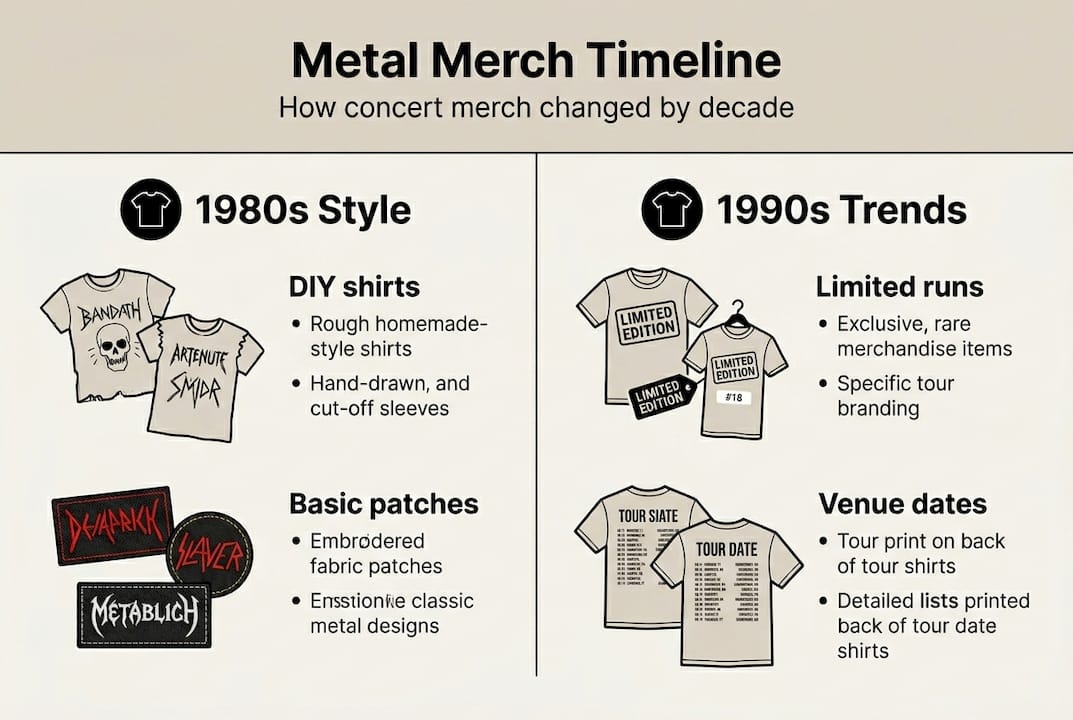
However, success bred imitation. The counterfeit market exploded in the 1990s, flooding markets with unauthorised reproductions that mimicked official designs. Street vendors and dodgy shops sold these fakes to unsuspecting fans, creating an authenticity crisis that persists today. Collectors must navigate this landscape carefully, understanding that a 1990s shirt might be genuine tour stock, official retail merchandise, or an unauthorised copy produced decades ago or yesterday.
Merch evolution timeline:
- Late 1970s to early 1980s: DIY screen-printing and direct band sales at small venues
- Mid-1980s: Professional licensing agreements and merchandise companies enter the scene
- Late 1980s: Tour-specific designs and multi-colour screen printing become standard
- Early 1990s: Limited edition runs and venue variants drive collectibility
- Mid to late 1990s: Counterfeit explosion complicates authenticity assessment
- 2000s onwards: Vintage merch gains investment value alongside cultural significance
| Aspect | 1980s approach | 1990s evolution |
|---|---|---|
| Production | Small to medium licensed batches | Strategic limited runs with variants |
| Sales channels | Concert booths, emerging mail order | Concert booths plus established mail order catalogues |
| Design complexity | 2-3 colour screen prints | Multi-colour designs, photographic prints |
| Collectibility factor | Incidental rarity | Deliberate scarcity marketing |
| Counterfeit presence | Minimal | Widespread and sophisticated |
Pro Tip: When evaluating 1990s tour shirts, check for tour dates and venues printed on the back. Authentic pieces typically list specific cities and dates, while counterfeits often feature generic “world tour” text without details. This simple check helps separate genuine items from reproductions.
Iconic items, cultural identity, and the value of authenticity
Battle jackets represent the pinnacle of metal’s DIY aesthetic, transforming denim vests into wearable manifestations of musical identity. These customised garments emerged alongside thrash metal’s rise in the early 1980s, with fans hand-sewing patches onto jackets to display allegiance to multiple bands simultaneously. What began as purely DIY expression quickly attracted commercial attention, and by the mid-1980s official patches became standard merchandise offerings alongside shirts.
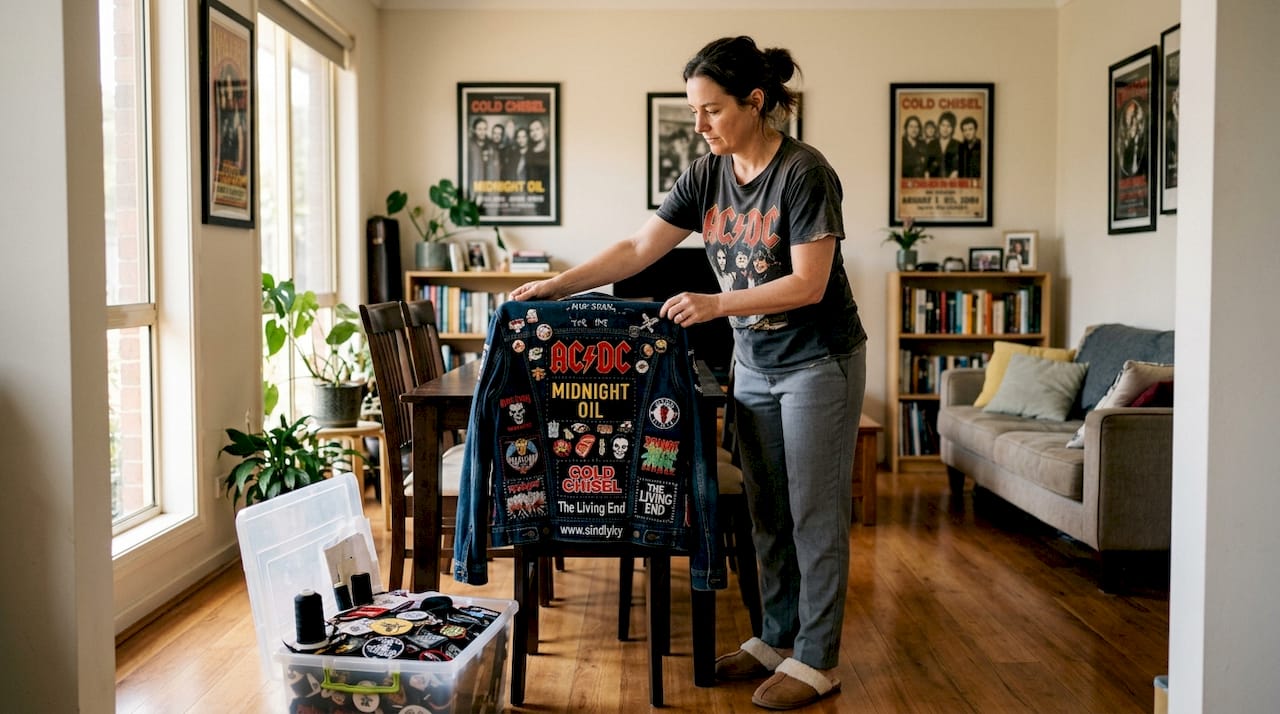
The cultural significance of these items extends beyond fashion. A battle jacket tells a story, mapping a fan’s journey through the metal landscape. The placement of patches, the mix of obscure underground bands with mainstream acts, the wear patterns and repairs all communicate dedication and authenticity within the subculture. This visual language creates immediate recognition among metalheads, establishing credibility and shared values without words.
Authenticity markers have spawned their own mythology, sometimes misleading collectors who chase specific details without understanding context. The single-stitch shirt exemplifies this phenomenon. Many collectors treat single-stitch construction as definitive proof of vintage authenticity, believing modern shirts exclusively use double-stitching. Reality proves more complex: while single-stitch was common in the 1980s and early 1990s, modern reproduction companies deliberately mimic this construction to fool collectors. The marker holds cultural and historical significance but cannot stand alone as authentication.
Physical authentication requires examining multiple factors:
- Fabric weight and texture consistent with era-appropriate blanks
- Print quality and technique matching period production methods
- Label tags from known vintage manufacturers like Screen Stars or Fruit of the Loom
- Wear patterns authentic to decades of use versus artificial distressing
- Tour dates and venues that align with documented band schedules
| Authentication factor | Authentic vintage indicator | Counterfeit or reproduction warning |
|---|---|---|
| Stitching | Single-stitch common but not exclusive | Modern reproductions mimic this detail |
| Fabric | Thicker cotton with natural aging | Artificially distressed thin fabric |
| Cracking consistent with age and wear | Perfect print or fake cracking patterns | |
| Labels | Period-appropriate manufacturer tags | Modern blanks or missing tags |
| Provenance | Documented history or logical wear | Suspiciously perfect condition |
Pro Tip: Authentic vintage pieces often show uneven fading and wear concentrated at stress points like collar and armpits. Reproductions typically feature uniform distressing that looks too perfect. Trust your instincts when something seems artificially aged.
“I’ve seen collectors pay premium prices for reproduction shirts because they fixated on single-stitch construction and ignored other red flags. Authentication requires examining the complete picture, not chasing individual markers.” – Veteran metal merch dealer
The investment dimension emerged strongly in the 2010s as vintage fashion gained mainstream appeal. Rare tour shirts from iconic bands now command hundreds or thousands of dollars, transforming what was once disposable fan gear into serious collectibles. This shift brings both opportunities and challenges, as financial incentives drive increasingly sophisticated counterfeiting while also preserving genuine pieces that might otherwise have been discarded.
Understanding authenticity nuances protects your investment and ensures your collection represents genuine cultural artefacts rather than clever reproductions. The knowledge empowers you to navigate markets confidently, distinguishing between fair prices for authentic items and inflated costs for questionable pieces.
How to identify and collect valuable metal tour merch
Successful collecting demands systematic evaluation combining historical knowledge with practical inspection skills. Tour and venue-specific details provide your first authentication layer. Genuine tour merchandise typically lists specific cities and dates that you can verify against documented tour schedules available through band archives and fan communities. A shirt claiming to represent a 1991 Slayer tour should match known dates and venues from that period.
Stitch evaluation requires nuance rather than blind faith in single-stitch mythology. Examine the construction quality and compare it to documented examples from the claimed era. Single-stitch shirts from the 1980s and early 1990s feature a specific tubular construction technique, but modern reproductions successfully mimic this detail. Use stitching as one data point among many, never as sole authentication.
Patch quality separates genuine vintage items from modern reproductions. Authentic patches from the 1980s and early 1990s typically feature tighter embroidery with specific thread weights and backing materials. Modern reproductions often use looser stitching or incorrect backing that feels different to experienced collectors. Provenance matters enormously: patches with documented history or still attached to period-appropriate jackets carry greater authenticity assurance.
The counterfeit explosion of the 1990s created a complex landscape where unauthorised shirts from that era now possess their own vintage status despite never being official merchandise. Some collectors specifically pursue these bootlegs as cultural artefacts documenting the underground economy surrounding metal culture. Others strictly seek official tour stock. Define your collecting philosophy before investing significant money.
Authentication checklist for metal tour merch:
- Verify tour dates and venues against documented band schedules and historical records
- Examine fabric weight, texture, and aging patterns for consistency with claimed era
- Inspect print quality, technique, and cracking patterns for authentic aging versus artificial distressing
- Check manufacturer labels against known vintage blank suppliers from the relevant period
- Assess overall condition and wear patterns for logical consistency with decades of use
- Research current market values for comparable authenticated pieces before purchasing
- Request provenance documentation or detailed photos when buying remotely
- Consult experienced collectors or reputable dealers when evaluating high-value items
Pro Tip: Join online communities focused on vintage metal shirt collecting where experienced members share authentication knowledge and market insights. These networks provide invaluable education and help you avoid expensive mistakes. The investment in community relationships pays dividends through access to expertise and potential acquisition opportunities.
Building a meaningful collection extends beyond accumulating shirts. Consider focusing on specific bands, tours, or eras that resonate personally. Specialisation allows deeper knowledge development and often yields better investment returns than scattered acquisitions. Document your pieces thoroughly with photos and provenance notes, creating a record that enhances value and facilitates future sales if desired.
The cultural and financial value of metal tour merch continues growing as these items transition from disposable fan gear to recognised cultural artefacts. Your knowledge and careful evaluation ensure your collection represents genuine pieces of music history rather than expensive reproductions.
Explore vintage metal merch at Vintage Metal Store
Now that you understand the history and authentication principles of metal tour merchandise, finding genuine pieces from reputable sources becomes your next priority. Vintage Metal Store specialises in authenticated rare and iconic metal tour shirts, offering curated collections from the golden era of 1990s metal touring. Each piece undergoes careful evaluation to ensure authenticity, giving you confidence in your investment.
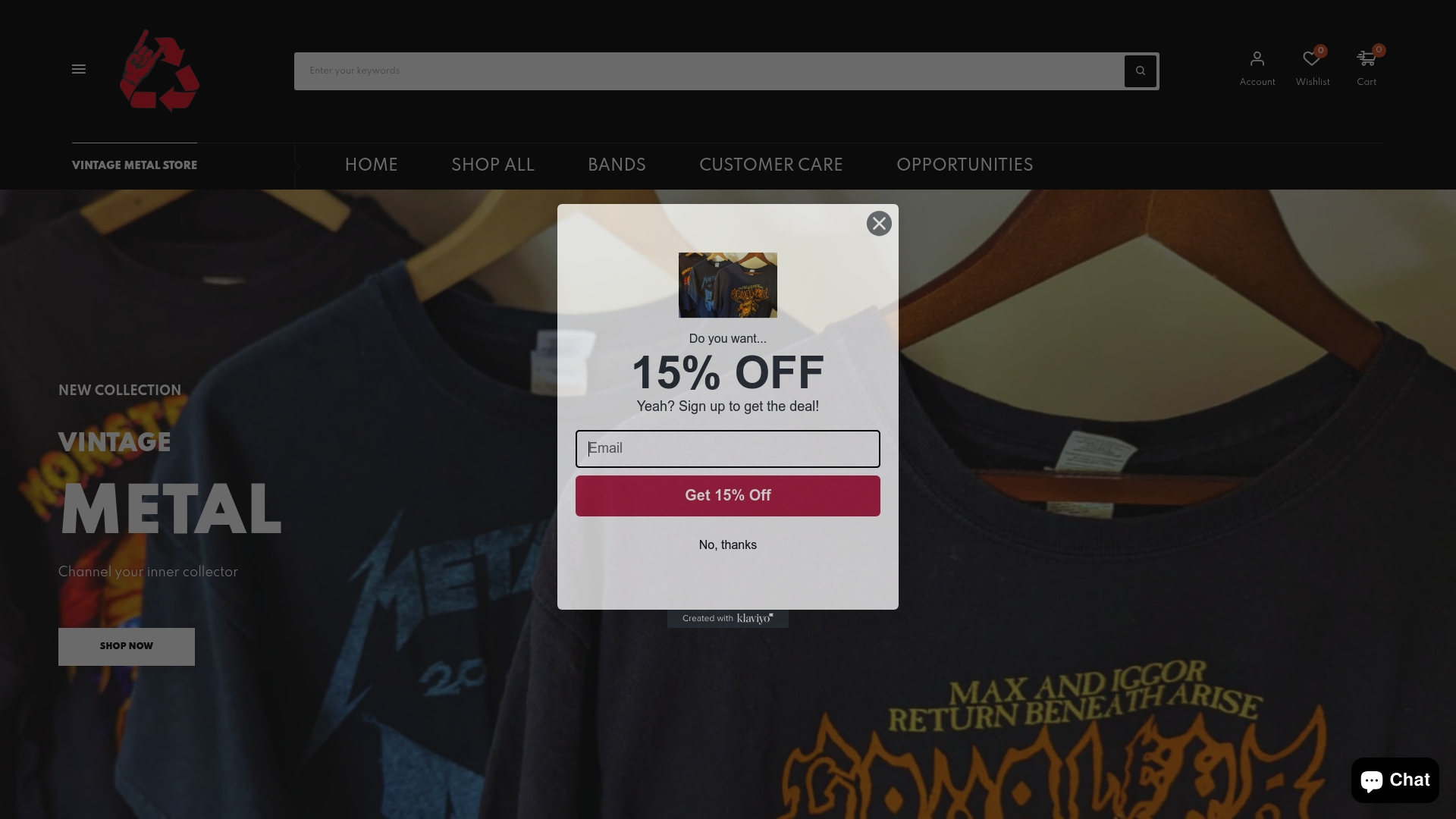
Browse authenticated vintage pieces like this rare Metallica 1992 tour tee featuring documented provenance and period-appropriate construction. The store’s vintage Metallica collection showcases diverse tour shirts and rare designs from across the band’s career. Explore the complete vintage metal catalogue to discover authenticated pieces from thrash legends, death metal pioneers, and iconic tours that shaped heavy music history. Each item represents genuine cultural heritage backed by expertise in vintage metal merchandise authentication.
Frequently asked questions about metal tour merch
When did heavy metal tour merchandise originate?
Heavy metal tour merchandise emerged in the late 1970s and early 1980s as simple screen-printed t-shirts sold directly at small club shows. Bands and supporters created these items to generate income and build fan connections, establishing the foundation for the massive merchandise industry that followed.
Why is 1990s metal merch particularly collectible?
The 1990s saw strategic limited edition runs with venue-specific variants that deliberately created scarcity and collectibility. These items represented peak tour merchandising before digital disruption, and many pieces from this era feature iconic designs from legendary tours that shaped metal history, making them highly sought after by collectors today.
How can collectors spot fake vintage metal shirts?
Authentic vintage shirts require examining multiple factors including tour date accuracy, fabric weight and aging, print quality and technique, manufacturer labels, and logical wear patterns. Single-stitch construction alone doesn’t guarantee authenticity since modern reproductions mimic this detail. Comprehensive authentication combines historical knowledge with physical inspection across multiple markers.
How has metal merch value changed over time?
Metal merchandise evolved from basic survival income for struggling bands in the late 1970s to subcultural identity badges in the 1980s and 1990s, then to serious investment collectibles in the 2010s and 2020s. Rare tour shirts now command hundreds or thousands of dollars, reflecting both cultural significance and mainstream acceptance of vintage fashion as legitimate collecting category.
What makes battle jacket patches culturally important?
Battle jacket patches represent DIY customisation that transforms clothing into personal statements of musical identity and subcultural belonging. These items map individual journeys through the metal landscape, creating visual language that communicates authenticity and shared values within the community. Patches shifted from purely DIY creations to official merchandise by the mid-1980s, documenting the professionalisation of metal culture while maintaining grassroots aesthetic values.
Recommended
- Collect rare 1990s heavy metal tees: expert guide 2026 – Vintage Metal Store
- Vintage Heavy Metal Shirts: $3.2B Market & Design Evolution – Vintage Metal Store
- 7 Iconic Famous Heavy Metal Tour Merchandise Tips – Vintage Metal Store
- History of Metal Band Shirts: Collectors’ Insight – Vintage Metal Store


