



TL;DR:
- Promo tees from the 1990s are rare industry-exclusive items produced in limited runs, making them highly sought after collectibles. Their scarcity, authentic distribution channels, and distinctive graphics transform them into cultural artifacts representing heavy metal’s visual peak. Proper authentication and condition are crucial for valuing and preserving these unique pieces within the memorabilia market.
Not all vintage band shirts are created equal, and if you’ve been treating promo tees like regular tour merch, you’re missing the most compelling story in heavy metal memorabilia. Promo tees are highly sought after precisely because they were never meant for your hands in the first place — produced in tiny runs for record label insiders, radio programmers, and select retailers, then lost to time. For serious collectors of 1990s heavy metal gear, understanding what a promo tee actually is, why it commands serious money, and how to authenticate one can be the difference between landing a grail piece and overpaying for a fake.
Table of Contents
- What is a promo tee in heavy metal memorabilia?
- Why 1990s promo tees are so sought after
- Promo tees vs tour and retail shirts: what truly makes them rare?
- How to spot, authenticate, and care for real promo tees
- Why promo tees are the untold cornerstone of the heavy metal memorabilia market
- Find your next authentic promo or tour tee
- Frequently asked questions
Key Takeaways
| Point | Details |
|---|---|
| Promo tees are rare | Promo tees were usually never sold to the public, making them one of the rarest band shirt types. |
| Value depends on more than age | Cultural significance, provenance, and condition outweigh simple age when setting high collector value. |
| Authentication is crucial | Real promo tees need careful checking for tags, provenance, and signs of authenticity to avoid fakes. |
| 1990s metal tees lead the market | Promo tees from the 1990s heavy metal scene are highly sought after for both their style and scarcity. |
What is a promo tee in heavy metal memorabilia?
The term “promo tee” gets thrown around loosely, but in the world of heavy metal collecting, it has a precise meaning. A promo shirt is a garment produced in a very limited print run, almost never offered to the public through retail channels, shows, or fan club sales. These shirts existed to generate buzz within the music industry itself. Think of them as insider currency — the kind of shirt a metal fan in 1993 would never see hanging in a merch booth.
The role of band t-shirts in metal culture has always been about tribal identity, but promo tees operated on a completely different level. Where a standard tour shirt said “I was there,” a promo tee said “I was part of the machine that made it happen.”
Distribution worked through very specific channels:
- Record labels sent promo tees to radio stations and journalists alongside advance copies of albums, hoping to generate airplay and press coverage.
- Independent retailers who stocked significant volumes of a band’s catalogue might receive a small allocation as an incentive.
- Radio stations were among the most common recipients, sometimes running competitions that put a handful of these shirts into fan hands purely by chance.
- Music industry staff — A&R reps, roadies, label employees — often received them as internal gifts.
As the source notes, promo shirts were mostly given away via labels, stores, or radio rather than sold through retail. That distribution gap is everything. When you add up all those small allocations, the total number of surviving promo tees from any given release is often counted in the dozens rather than the hundreds.
“A promo tee from a 1990s metal release isn’t just a shirt. It’s evidence that the music industry existed in a particular moment, moving through channels most fans never saw.”
Identifying a genuine promo tee requires looking at several physical cues. Screen print quality on promo shirts was often higher than standard merch because these were showpieces. Tags frequently carry label or distributor references rather than generic band merch branding. Sometimes the graphics are unique to the promo run, featuring album artwork that never appeared on public merch, or featuring the label’s logo alongside the band’s. These details aren’t just trivia — they’re the evidence collectors rely on.
Why 1990s promo tees are so sought after
The 1990s represent the absolute peak of heavy metal’s visual intensity. Thrash, groove metal, death metal, and black metal were all producing artwork of extraordinary aggression and complexity, and that energy poured directly into shirt graphics. A 90s metal promo tee isn’t just old fabric — it’s a concentrated capsule of an era that’s genuinely impossible to replicate.
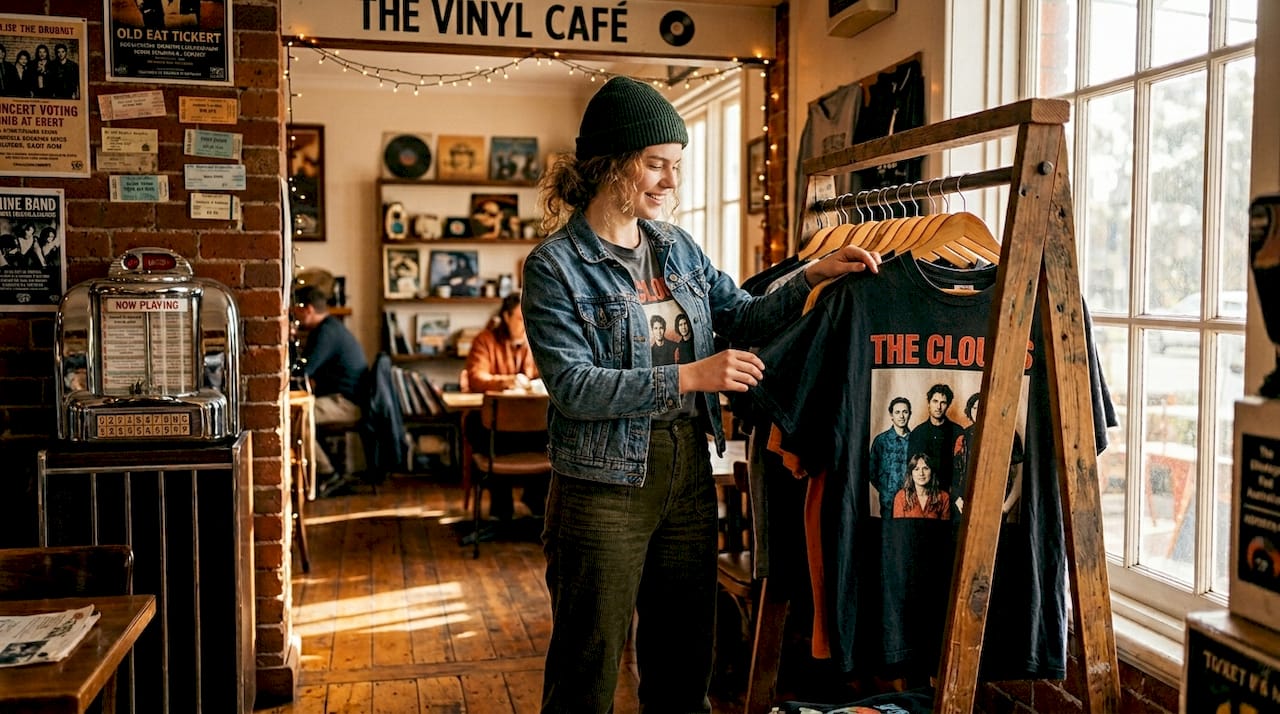
Empirical market data confirms that rare 90s vintage metal shirts regularly sell into the hundreds and even thousands of dollars at auction. The cultural and commercial appetite for these pieces has grown steadily through the 2020s. Younger collectors who weren’t even alive during the 90s are now among the most aggressive bidders, buying into an aesthetic and a cultural moment they can only access through objects.
As documented in the history of band t-shirts, the 80s and 90s promo tees amplified graphic extremes and served as tribal badges — a function that’s only grown more significant in hindsight. What felt like music industry promotional material in 1993 now reads as wearable cultural artefact.
| Shirt type | Typical surviving run | Approximate market range (2026) | Key driver of value |
|---|---|---|---|
| 90s promo tee (major band) | 20 to 100 pieces | $400 to $3,000+ | Scarcity and insider provenance |
| 90s tour shirt (official) | 500 to 5,000+ pieces | $80 to $600 | Tour documentation and era authenticity |
| 90s retail shirt | Thousands | $40 to $300 | Condition and graphic appeal |
| 90s bootleg | Unlimited | $20 to $150 | Mostly low, unless notable |
Three forces drive collector demand for iconic 1990s heavy metal shirts in the promo category:
Nostalgia with a twist. Long-time metal fans aren’t just seeking a memory — they’re seeking a version of the era they never actually had access to. A promo tee represents the industry backstage pass they could never buy.
Investment logic. Supply is permanently fixed. No more 1993 promo tees are being made. As pieces enter private collections or deteriorate, the available market contracts. Collectors who understand why vintage t-shirts matter treat well-documented promo tees as appreciating assets in a way tour shirts simply can’t match.
Aesthetic authority. Wearing or displaying a promo tee in collector circles signals a level of knowledge and access that no amount of money can fake without genuine expertise. The shirts have social capital within the community.
Pro Tip: Focus your search on promo tees tied to album cycles rather than specific tours. Album-cycle promos often feature artwork that never made it to public merch, making them visually distinctive and highly desirable to collectors who prize uniqueness above all else.
Promo tees vs tour and retail shirts: what truly makes them rare?
Understanding where promo tees sit in the hierarchy requires a direct comparison with the other major categories of vintage heavy metal shirts. Not every promo tee automatically outranks every tour shirt — the picture is more nuanced than that, and smart collectors know the difference.
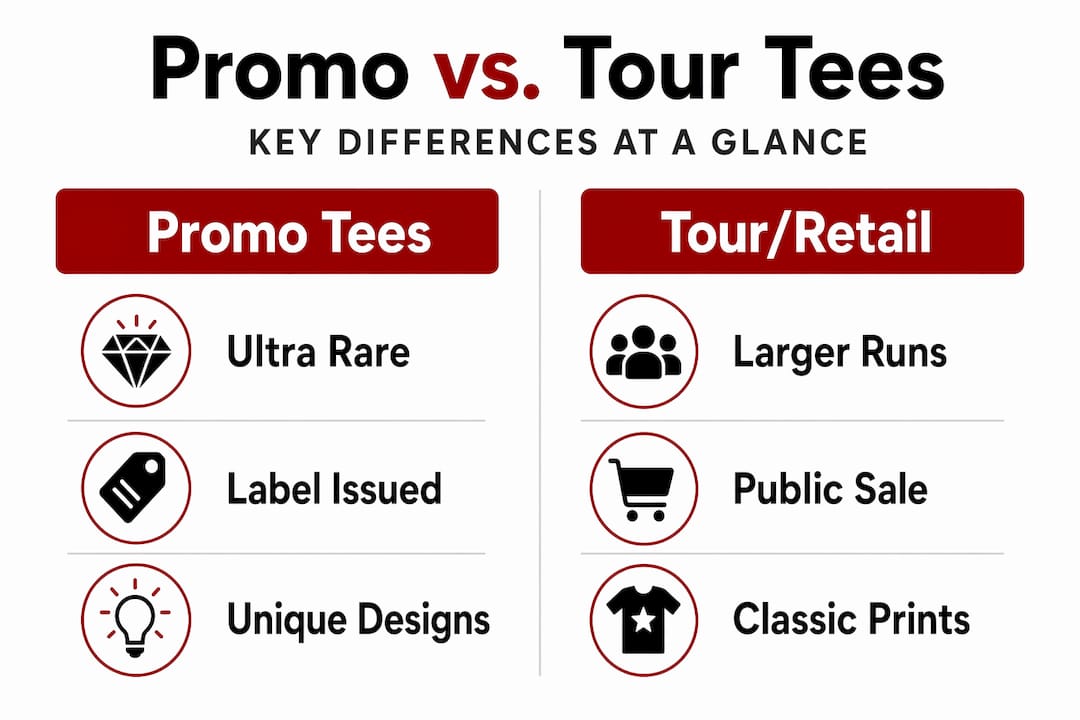
| Feature | Promo tee | Tour shirt | Retail shirt |
|---|---|---|---|
| Production run | Very limited (often under 100) | Moderate to large | Large |
| Distribution channel | Industry only | Merch tables at shows | Stores and online |
| Public availability | Never (or rarely) | At point of sale | Widely available |
| Provenance complexity | High | Medium | Low |
| Counterfeit risk | Medium to high | Medium | Low |
| Investment ceiling | Very high | High | Moderate |
As collectors with experience will tell you, what makes a band tee vintage goes beyond age. Cultural weight matters enormously. Some promo shirts carry less weight than certain tour shirts if the tour in question was a landmark cultural event. An official shirt from a band’s final ever performance, for instance, can outrank a standard promo tee for a mid-tier album release. The collector’s guide to vintage heavy metal t-shirts covers this territory in depth, but the core principle is simple: context and story drive value alongside scarcity.
The counterfeit problem is real and growing. Here’s how to approach authentication systematically:
- Examine the tag first. Genuine 90s shirts feature tags from era-appropriate manufacturers. Gildan, Fruit of the Loom in certain cuts, and Hanes tags all have period-specific characteristics that reproductions frequently get wrong.
- Study the print technique. Original 90s screen prints show specific cracking patterns as they age, and the ink sits differently on the fabric compared to modern reprints using digital or discharge printing.
- Check the fabric weight and feel. Genuine vintage shirts are typically heavier and have a distinctive hand-feel that washed-out modern blanks don’t replicate convincingly.
- Research the specific graphic. Cross-reference the artwork against known genuine examples in collector communities and verified auction records.
- Demand provenance documentation. As noted in guidance on buying vintage t-shirts online, authentication and provenance — ticket stubs, press photos, old receipts — can make or break the value of any vintage shirt.
Understanding vintage t-shirt grading is equally critical. A promo tee in excellent condition is worth dramatically more than the same shirt with significant graphic damage, even if both are genuine. Condition grading in this market uses terms like “mint,” “excellent,” “very good,” and “fair,” with price premiums often doubling or tripling between each category tier.
How to spot, authenticate, and care for real promo tees
Practical knowledge separates the serious collector from someone who just likes old shirts. If you’re spending significant money on a promo tee, you need a reliable process for evaluation before you commit.
Start with this identification checklist:
- Tags and labelling. Authentic promo tees sometimes carry tags referencing the record label or distributor, not just the standard band merch tag. Look for any reference to radio station giveaway series or label promotional programmes.
- Print quality and colours. Promo shirts often used higher-grade inks and more complex colour separations than standard merch. If the print looks unusually refined for the era, that’s actually a good sign.
- Graphic exclusivity. Research whether the design appeared on public merch. A graphic that’s only documented on promo items is a strong authenticity indicator.
- Physical wear pattern. Genuine aged shirts show wear that’s consistent with decades of storage or occasional wear. Even, gradual fading across the fabric is authentic. Artificially distressed pieces show inconsistent fading and feel different under the hand.
- Seller documentation. Any record of where the shirt originated — press photos showing the shirt being worn by label staff, old retail paperwork, or original giveaway documentation — adds significant value.
Authentication expertise is what genuinely separates worthwhile investments from expensive mistakes. If you’re unsure, consult established collector communities or dealers with documented expertise before committing to a high-value purchase. The heavy metal shirts buying checklist is a useful resource to run through for any significant purchase.
Storage and care are just as important as authentication. Keep genuine promo tees folded, not hung — hanging puts long-term stress on shoulder seams and distorts vintage fabric. Store in acid-free tissue paper inside archival boxes away from direct light and humidity. Never wash a high-value promo tee casually. If cleaning is genuinely necessary, seek advice from a textile conservator familiar with vintage garments.
Pro Tip: Photograph every detail of a promo tee when you acquire it — tag, print, inside seams, any fading or damage. This documentation becomes your provenance record and adds demonstrable value if you ever choose to sell. A well-documented shirt consistently outperforms an undocumented one at auction.
Also review the t-shirt grading guide to understand exactly how condition is assessed and how to communicate condition accurately when buying or selling.
Why promo tees are the untold cornerstone of the heavy metal memorabilia market
Here’s the honest truth that most casual buyers haven’t worked out yet: promo tees are systematically undervalued relative to what they actually represent. That gap is narrowing fast, but it still exists, and it exists because of two structural factors most collectors haven’t thought through clearly.
First, the surviving population of genuine promo tees is smaller than almost anyone estimates. Many were worn, discarded, or lost by the radio DJs and label reps who received them. These weren’t people who thought they were holding future collectables — they were doing a job. The shirts that survived largely did so by accident, which means scarcity and industry-only distribution create collector premiums that the market is only beginning to price in correctly.
Second, the knowledge required to identify and authenticate a real promo tee is genuinely specialised. This creates a market where informed collectors can still find underpriced pieces, while less experienced buyers overpay for tour shirts labelled incorrectly as promos. The information gap is real and it matters.
What we’ve seen consistently in the 1990s heavy metal value surge is that promo tees represent the outer edge of the market — the pieces that passionate collectors obsess over while trend-driven buyers focus on more visible categories. That’s actually the position you want to be in if you’re building a serious collection. The passion-driven collector who understands promo tees isn’t just chasing a trend; they’re preserving a piece of industry history that exists nowhere else.
The metal memorabilia world respects knowledge above almost everything else. A promo tee collector who can explain the distribution channel, identify the print run, and verify the provenance carries genuine authority in this scene. That authority isn’t just cultural — it translates directly into better buying decisions and stronger returns.
Find your next authentic promo or tour tee
You now have the knowledge framework to approach promo tees with genuine confidence. Applying that knowledge to an actual collection starts with access to verified, authentic stock — not repro, not mislabelled tour shirts, but the real thing.
At Vintage Metal, we source directly from ex-tour stock, deadstock, and verified industry channels, which means the shirts in our catalogue carry the provenance that serious collectors require. Whether you’re hunting for a specific era, a particular band, or simply the next piece to anchor your collection, start with something proven. Check out this rare Metallica 1992 tour tee as a benchmark for what properly sourced vintage stock looks like — then explore the full range of vintage Metallica shirts to see the depth of what’s available. Your next grail piece is closer than you think.
Frequently asked questions
How can you tell if a promo tee is authentic?
Look for unique tags referencing labels or distributors, distinct graphics that don’t appear on public merch, and provenance documentation like old store or label paperwork. Authentication expertise is essential for separating genuine promo tees from well-made fakes or mislabelled tour shirts.
Are promo tees always worth more than tour shirts?
Not always — as noted in research on what makes a band tee vintage, some iconic tour shirts carry greater cultural weight and fetch higher prices than standard promo tees, but promo tees are generally rarer across the board.
Does condition or fading affect the value of promo tees?
Mild fading adds authenticity and collector appeal, but as guidance on buying vintage shirts confirms, severe damage or fabric disintegration significantly reduces collector interest and market value.
Why are 1990s heavy metal promo tees so desirable?
They combine extreme 90s graphics, era-authentic production quality, and extraordinary scarcity from non-retail distribution — a combination that makes them genuinely irreplaceable documents of heavy metal’s visual and cultural peak.
Recommended
- Collector’s guide to vintage heavy metal t-shirts: spot, value, collec – Vintage Metal Store
- Why preserve old band tees? Value, culture and know-how – Vintage Metal Store
- Why metal tees are collectible: value, authenticity, culture – Vintage Metal Store
- Why 1990s Heavy Metal Tees Appreciate Up to 2750% Value – Vintage Metal Store


