



TL;DR:
- Merch grading involves assessing vintage heavy metal merchandise based on fabric, print, and packaging condition. This evaluation directly influences resale value, with up to a 500% difference between similar items in different grades. Consistent grading standards help collectors buy confidently and preserve the culture’s integrity.
Merch grading is the systematic process of assessing the condition, authenticity, and completeness of heavy metal merchandise to determine its true collectible value. For collectors of vintage band tees, tour shirts, and dead stock, understanding what is merch grading is the difference between paying fair market price and getting burned on a faded, structurally compromised shirt that was sold as “excellent.” The industry term you will encounter alongside grading is “condition assessment,” and both refer to the same disciplined evaluation process. Vintage Metal Store applies this process to every piece of ex-tour stock and dead stock in its catalogue, making grading the foundation of collector trust.
What is merch grading and how does the grading scale work?
Merch grading is a structured merchandise quality assessment that evaluates a physical item against defined condition tiers. The standard grading scale used across the collectibles market runs from Mint through Excellent, Good, Fair, and Poor. Each tier reflects a specific combination of fabric integrity, print preservation, structural stability, and completeness.

The criteria that determine a grade are not arbitrary. Grading requires evaluating fabric preservation, print integrity, structural stability, era authenticity, and storage history to produce consistent pricing. That combination matters because a shirt can look clean in a photo yet fail on every structural measure once you handle it.
Fabric integrity
Fabric integrity is the single most important criterion in grading music merchandise. A dry rot test on vintage band tees involves tugging hidden seams to reveal fabric weakness that print quality alone cannot expose. A shirt with a stunning 1992 graphic but brittle, thinning cotton at the seams cannot grade above Fair regardless of how good it looks on screen.
Print and graphic condition
Print condition covers colour saturation, cracking, peeling, and bleed. A Mint grade shirt retains full colour depth with zero cracking. An Excellent grade allows for very minor softening of edges but no loss of image detail. Good grade shirts show visible fading or light cracking across less than 30% of the print surface. Fair and Poor grades reflect heavy fading, significant cracking, or print loss that compromises the graphic’s legibility.
Tags, packaging, and completeness
Tags and original packaging carry real weight in understanding merch condition. A shirt with its original neck tag, hang tag, and poly bag commands a premium over an identical shirt stripped of all three. Items and packaging must be graded separately to avoid misrepresenting condition and value. Collapsing both into a single grade is a common source of collector disputes.
Pro Tip: When inspecting a vintage tee, check the neck tag first. Original single-stitch tags on shirts from the late 1980s and early 1990s are a strong era-authenticity marker and should be noted separately in any grading record.
Common defects and their classification include:
- Critical defects: holes, tears, severe dry rot, or complete print loss
- Major defects: heavy staining, significant fading across the full graphic, or structural damage at seams
- Minor defects: light odour, minor pilling, small isolated stains outside the print area
Professional quality control standards use Acceptable Quality Limits (AQL) of 0 for critical defects, 2.5 for major, and 4.0 for minor defects. Applying AQL thinking to merch grading gives collectors a consistent framework for deciding whether a defect disqualifies a shirt from a given tier.
How does merch grading affect resale value?
Condition grading has a direct and dramatic effect on what a collector will pay. Two identical 1994 band tees can vary in resale value by up to 500% based on condition grading alone. That figure is not an outlier. It reflects the reality that fabric strength and print preservation drive price more than rarity does.
“Price is primarily determined by fabric strength and print preservation rather than rarity alone. A scarce shirt in Poor condition will almost always sell for less than a common shirt in Mint condition.”
The table below shows how condition tiers typically translate to relative value for a vintage heavy metal tour tee:
| Condition tier | Relative value | Key driver |
|---|---|---|
| Mint | Highest | No defects, original tags, unissued |
| Excellent | High | Minor wear only, full print integrity |
| Good | Moderate | Visible wear, print largely intact |
| Fair | Low | Heavy wear, partial print loss |
| Poor | Minimal | Structural damage, significant fading |
Scarcity and condition interact in ways that collectors often misread. A shirt from a one-off regional tour might be genuinely rare, but if it grades at Fair, the pool of buyers willing to pay a premium shrinks sharply. Market value depends on sold comparables, scarcity, demand, condition, and selling costs. Condition tier is the variable you can assess before purchase. The others require market research.
Packaging completeness adds another layer. A dead stock shirt sealed in its original poly bag with hang tag intact grades differently from the same shirt loose in a box. The sealed version signals controlled storage and zero wear. That distinction alone can shift a shirt from Excellent to Mint, with a corresponding price jump.
What are the common challenges in grading heavy metal merch?
Grading heavy metal merchandise is not always straightforward. Subjectivity, storage history, and inconsistency across sellers all create friction for collectors trying to buy with confidence.
The most common challenge is overgrading. Sellers with emotional attachment to a piece, or those working from photos alone, routinely assign grades one tier higher than a physical inspection would support. Storage history affects merch condition through fading, odour, moisture damage, and shape distortion. A shirt stored in a damp garage for twenty years may look acceptable in a flat-lay photo but fail a basic smell and flex test in person.
Grading from photos is a persistent problem in online markets. Photos can hide dry rot, mask odour, and flatten the appearance of cracking prints. Physical inspection remains the gold standard for any serious merchandise quality assessment.
- Inspect the fabric first. Pull gently at hidden seams and check for brittleness before evaluating the print.
- Grade the item and packaging separately. Record each independently to avoid inflating the overall condition.
- Document storage evidence. Ask sellers for provenance details: where the shirt was stored, for how long, and under what conditions.
- Cross-reference with sold comparables. Use recent sales of similar items at known grades to calibrate your own assessment.
- Seek authentication for high-value pieces. Professional grading confirms condition and authenticity but does not create rarity or cultural significance. Pay for it only when the item’s value justifies the cost.
Pro Tip: Ask for a short video of the shirt being handled, not just flat-lay photos. Movement reveals cracking prints, fabric thinning, and odour-related storage issues that static images hide entirely.
Inconsistency across graders is a real issue in the heavy metal merch community. Without agreed terminology, one seller’s “Excellent” is another’s “Good.” Grading should be treated as an operational discipline with standardised criteria to reduce buyer uncertainty and returns.
How can collectors apply merch grading in practice?
Applying grading principles yourself is the most reliable way to buy and sell with confidence. A consistent checklist removes guesswork and protects both parties in a transaction.
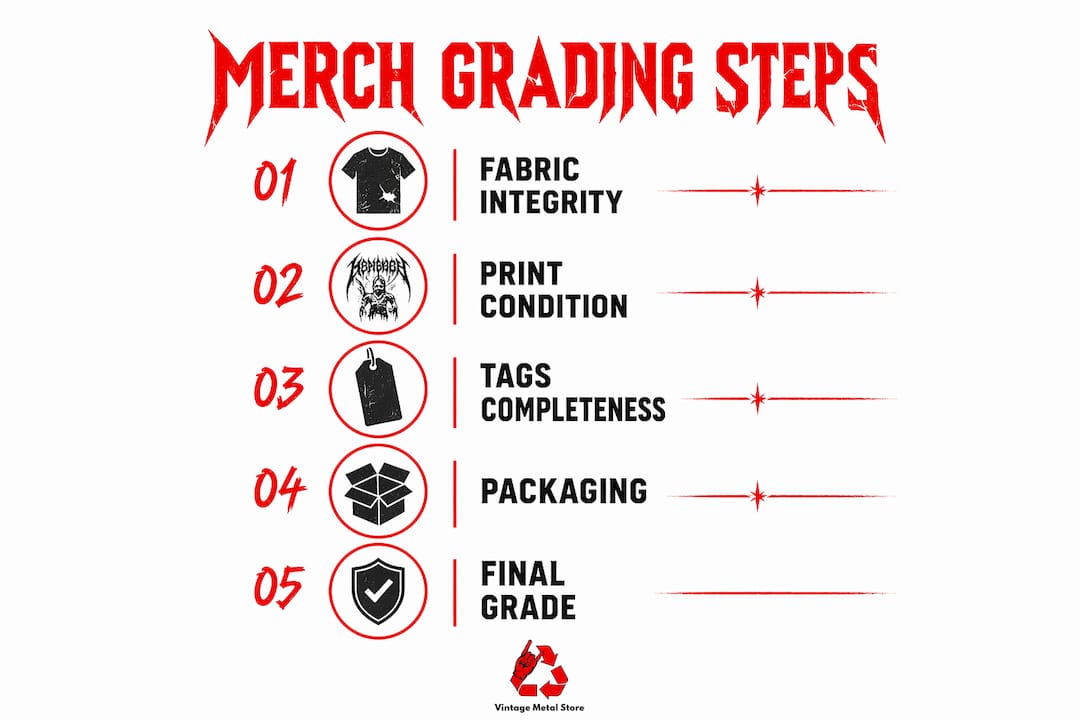
When inspecting a piece, work through these criteria in order:
- Fabric: Perform a dry rot test on hidden seams. Check for thinning, pilling, and any structural weakness at stress points like collar and underarm seams.
- Print: Assess colour saturation, cracking, peeling, and bleed across the full graphic. Note the percentage of the print affected by any defect.
- Tags: Record the presence or absence of neck tags, size tags, and hang tags. Note whether tags are original to the era or replacement.
- Packaging: Grade packaging separately. Note whether original poly bags, inserts, or outer sleeves are present and in what condition.
- Odour and storage: Smell the shirt. Musty or chemical odours indicate poor storage and should lower the grade, even if the visual condition appears strong. Good guidance on caring for graphic prints can help you understand what washing history does to print integrity.
Photographing items to support grading claims requires more than a flat lay on a clean surface. Shoot the full front and back, close-ups of the print, the neck tag, any defects, and the seams. Natural light reveals fading and cracking more accurately than artificial light. Include a ruler or common object for scale.
Maintaining condition after purchase preserves the grade you paid for. Store shirts flat or rolled, never on hangers, in a cool, dry, low-light environment. The print preservation guide from Vintage Metal Store covers the specific storage and handling standards that keep vintage tees at their graded condition over time.
For high-value pieces, professional grading or authentication adds a layer of credibility that supports resale. Grading confirms condition and authenticity but does not add value to common items. Reserve the cost for shirts where the graded price premium exceeds the grading fee.
Key takeaways
Merch grading is the most reliable tool a collector has for assessing value, avoiding overpriced pieces, and selling with credibility in the heavy metal merchandise market.
| Point | Details |
|---|---|
| Fabric integrity is primary | Perform a dry rot test on seams before evaluating print or packaging. |
| Grade item and packaging separately | Collapsing both into one grade misrepresents condition and causes disputes. |
| Condition drives price more than rarity | Two identical tees can vary in value by up to 500% based on grade alone. |
| Storage history changes the grade | Fading, odour, and moisture damage from poor storage lower condition tier. |
| Standardised language reduces disputes | Use consistent tier names and AQL defect categories across all transactions. |
Why grading discipline is the real mark of a serious collector
I have handled thousands of vintage heavy metal shirts over the years, and the single biggest mistake I see collectors make is conflating visual appeal with structural integrity. A shirt can photograph beautifully and still be a week away from falling apart at the seams. The dry rot test is not optional for anything printed before 1995. It is the first thing I do, every time, without exception.
The second mistake is treating grading as a formality rather than a discipline. Grading is only useful when the criteria are applied consistently. When sellers use vague terms like “good used condition” without defining what that means, buyers are essentially buying blind. The heavy metal merch community deserves better than that. Standardising grading language across the collector community would do more for market confidence than any authentication service.
What I find genuinely exciting is that grading awareness is growing. Collectors who understand the grading criteria for vintage tees are making smarter purchases, paying fair prices, and building collections that hold their value. That is good for the culture. It means the shirts that survived decades of tours, storage rooms, and changing hands are being treated with the respect they deserve.
Grading does not create the magic in a 1992 Metallica tour tee. The magic was always there. Grading just makes sure you know exactly what you are getting.
— David
Authentic graded vintage metal merch at Vintage Metal Store
Vintage Metal Store sources, inspects, and grades every piece of ex-tour stock and dead stock before it reaches you. Each shirt is assessed against the same criteria covered in this guide: fabric integrity, print condition, tag completeness, and storage history.

If you want to see grading in action on a genuinely rare piece, the Metallica 1992 tour tee in the Vintage Metal Store catalogue is a strong example of what Mint-to-Excellent graded dead stock looks like. For a broader selection of authenticated, condition-assessed pieces, browse the full range of rare vintage concert shirts and shop with confidence knowing every grade is backed by physical inspection.
FAQ
What does merch grading mean for a vintage band tee?
Merch grading means assessing a vintage band tee’s fabric integrity, print condition, tag completeness, and storage history against a defined condition scale. The grade determines the shirt’s fair market value and collectible appeal.
What is a standard merch grading scale?
The standard grading scale runs from Mint (no defects, original tags) through Excellent, Good, Fair, and Poor. Each tier reflects a specific combination of fabric strength, print preservation, and completeness.
How does grading affect the resale price of heavy metal merch?
Condition grading has a direct impact on resale price. Two identical vintage tees can vary in value by up to 500% based on their condition grade, with fabric strength and print preservation driving price more than rarity alone.
Should I grade the item and its packaging separately?
Yes. Grading the item and packaging separately prevents misrepresentation of overall condition. A shirt in Excellent condition with damaged or missing packaging should carry two distinct grades, not a single averaged score.
When is professional grading worth the cost?
Professional grading is worth the cost when the item’s value clearly exceeds the grading fee or when authentication is needed to support a high-value sale. For common items, self-grading with a consistent checklist is sufficient.
Recommended


