



TL;DR:
- Heavy metal logos are deliberate designs rooted in centuries-old typographic traditions like Gothic and blackletter.
- Logo authenticity is verified by examining specific design details, such as letter spacing and stroke angles, unique to eras and subgenres.
- Understanding logo origins enhances collectible value, revealing the band’s history, authenticity, and cultural significance.
Heavy metal logos look like chaos. Jagged letters, gothic spires, illegible scrawl pressed onto faded cotton. But scratch the surface and you find something far more deliberate: centuries of typographic tradition, purposeful design decisions, and a visual language built to carry the weight of an entire subculture. For collectors chasing vintage tees, tour shirts, and authentic patches, understanding where these logos came from is not just interesting trivia. It is the difference between spotting a genuine first-run print and walking away from a forgery with a smile on your face.
Table of Contents
- How metal logo styles emerged and why they matter
- Font origins of legendary heavy metal logos
- Design mechanics: Decoding legibility, aggression, and genre influence
- Logos as cultural icons: Memorabilia, patches, tees, and collector value
- Why logo origins matter more than collectors realise
- Explore authentic heavy metal logo memorabilia
- Frequently asked questions
Key Takeaways
| Point | Details |
|---|---|
| Gothic roots | Heavy metal logos originated from medieval gothic and blackletter styles for symbolic power. |
| Subgenre influence | Logo traits vary by subgenre, affecting how collectors identify and date memorabilia. |
| Authenticity matters | Knowing the source and style of original logos helps collectors avoid fakes and spot rarities. |
| Cultural badges | Band logos on vintage shirts and patches act as collector’s badges and subcultural markers. |
| Design meets identity | Each logo reflects a band’s musical identity and era, becoming a valuable part of heavy metal history. |
How metal logo styles emerged and why they matter
Heavy metal did not invent its visual language from scratch. The genre borrowed, twisted, and weaponised design traditions that stretch back to 12th-century medieval Europe, where blackletter and gothic typefaces were the standard scripts of religious manuscripts, royal decrees, and printed books. When metal bands needed a visual identity that felt ancient, powerful, and slightly dangerous, these fonts were a natural fit. They carried centuries of arcane authority without a single word of explanation.
The relationship between logos and what counts as heavy metal memorabilia runs deep. A logo is not decoration. It is a brand signature, a subcultural badge, and for serious collectors, a primary tool for verifying authenticity and dating a piece. Early logo prints on first-run shirts often differ subtly from later reissues, and those differences matter enormously when you are tracking value.
Different subgenres developed their own logo grammar:
- Thrash metal: sharp angles, bold strokes, aggressive but readable
- Death metal: grotesque distortion, cluttered forms, deliberately unsettling
- Black metal: spiky, asymmetric, often completely unreadable to the uninitiated
- Classic heavy metal: gothic and blackletter-influenced, bold and iconic
The illegibility of extreme metal logos is not an accident or a failure of design. Christophe Szpajdel, who has created over 7,000 black metal logos, crafts work that mirrors the raw sonic aggression of the music while maintaining internal symmetry and visual harmony beneath the chaos. The logos are engineered to feel unreadable.
“A heavy metal logo is not meant to welcome everyone. It is meant to signal belonging to those who already understand the language.”
For collectors, collecting band t-shirts becomes a richer pursuit once you understand logo evolution. You learn to read a shirt’s age and legitimacy from the letterforms alone. And that knowledge is genuinely rare.
Font origins of legendary heavy metal logos
With historical context covered, it is time to break down the specific origins of the most collected and recognisable heavy metal logos.
Black Sabbath set the template for gothic-influenced metal identity. Their early logos were derived from obscure phototype and dry transfer sources, including Harper rimmed initials, Lettergraphics Black Casual, Lodwick Kabel, and eventually custom lettering for Vol. 4. These were not casual choices. Each typeface carried weight, texture, and period character that placed the band in a world apart from pop or rock contemporaries.
Metallica’s logo is one of the most recognised marks in music history. James Hetfield drew the sharp, angular logo by hand, with razor-edged symmetry and extended barbs that make the letterforms feel dangerous even at a glance. The design is entirely self-referential: it looks like the music sounds.

Iron Maiden’s logo has barely changed in over four decades. Steve Harris designed a custom angular gothic typeface inspired by horror film posters, and the consistency of that mark across merchandise is a big part of what makes early tour shirts so valuable. Collectors know what the original proportions look like, which makes spotting variations straightforward.
| Band | Logo origin | Key design trait | Collector priority |
|---|---|---|---|
| Black Sabbath | Phototype and dry transfer sources | Gothic weight, multiple eras | Early album-era prints |
| Metallica | Hand-drawn by Hetfield | Angular barbs, symmetry | Pre-1991 tour shirts |
| Iron Maiden | Custom gothic by Steve Harris | Stable across 40+ years | First-decade originals |
Pro Tip: When examining vintage shirts, compare the logo’s letterform weight and proportions against known authentic examples from the same era. Bootlegs often get the letter spacing or barb angles slightly wrong, and that small deviation is your clearest signal.
The influence of logos on t-shirt design cannot be overstated. A logo on a first-issue tour tee is essentially a primary source document, and Metallica logo tour shirts from the early 1990s are a perfect example of why design fidelity drives collector value.
Design mechanics: Decoding legibility, aggression, and genre influence
Knowing the fonts is only part of the story. The design logic behind these logos operates on several levels simultaneously.
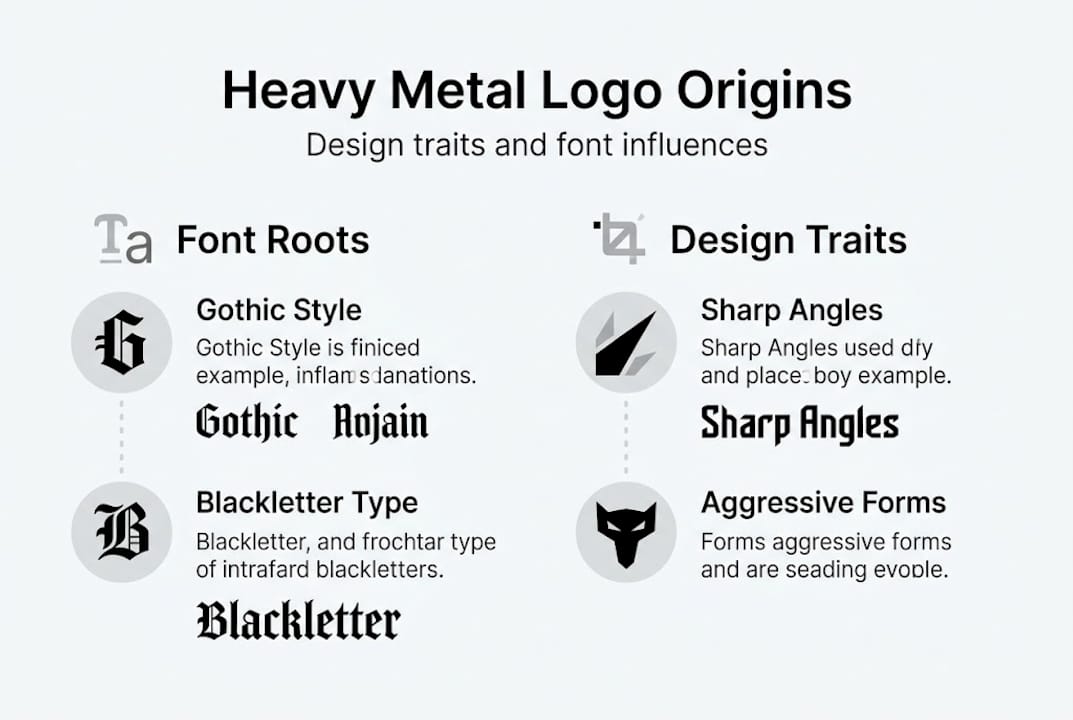
The core tension in any metal logo is legibility versus intensity. Go too clean and readable, and the logo loses menace. Go too chaotic, and it becomes visually inert. The best logos resolve this by using symmetry as an anchor while pushing individual letterforms to their expressive limit. Symmetry gives the eye somewhere to rest. The aggressive details do the emotional work.
Here is how design priorities shift across the major subgenres:
- Classic and doom metal: Bold blackletter, high legibility, gothic authority. Designed to look timeless.
- Thrash metal: Sharp, straight-edged, blocky. Built for speed and impact, like the music itself.
- Death metal: Grotesque letterforms, cluttered negative space, biological or anatomical detail. Deliberately uncomfortable.
- Black metal: Spiky, highly stylised, frequently unreadable. The illegibility is the point.
Beyond letterforms, many logos incorporate sigils (symbolic marks or mascots) that function as a second layer of identity. Iron Maiden’s Eddie is inseparable from the band’s visual brand. These elements become shorthand that collectors learn to read quickly.
Pro Tip: If you are trying to date a piece of memorabilia, study how rarity affects logo collectibles across different production eras. Early screen-print runs often show slight ink bleed or registration variation that later reprints eliminate entirely.
For collectors, understanding tour merch and logo design is essential because logos were often adapted or modified for specific tours, creating edition-specific variations that are highly sought after.
Logos as cultural icons: Memorabilia, patches, tees, and collector value
Once a logo’s visual code is understood, its real-world presence as identity and collectible takes centre stage.
Band logos migrate quickly from album sleeves to fabric. They appear on battle jackets, patches, enamel pins, and most importantly, vintage tees. Each format presents the logo differently, and each carries different collector significance. A patch sewn onto a battle jacket in 1985 tells a completely different story from a modern reissue, even if the logo itself looks identical.
The gothic and blackletter typefaces found across heavy metal memorabilia do specific cultural work. They evoke authority, mystique, and a connection to pre-modern traditions that amplifies the music’s themes. When you see that typeface on a vintage piece, you are looking at a deliberate signal from the band to its audience.
What makes early logo prints particularly valuable:
- Era-specific colour palettes: Screen printing technology limited colour choices in ways that later digital printing does not replicate
- Proportional variations: Logo scaling changed across different print runs, creating subtle but traceable differences
- Paper stock and tag labels: Often the fastest way to date a shirt, but the logo itself confirms it
- Limited distribution: Tour-only shirts from specific legs of a tour are irreproducible by definition
“The logo is never just decoration. It is the band’s handshake with its audience, compressed into a mark that fans can wear, trade, and eventually pass down.”
Studying heavy metal fashion and logo style reveals how closely visual identity tracks with musical evolution. When a band changed its sound, the logo often evolved too, and those transition-era pieces are frequently the most interesting to collect.
Why logo origins matter more than collectors realise
Here is the uncomfortable truth that most general collecting guides skip over: widespread bootlegging in the vintage shirt market means that aesthetic appreciation alone is not enough protection. Knowing that Metallica’s logo was hand-drawn with specific barb geometry, or that Black Sabbath’s early letterforms came from obscure dry transfer sources, gives you a factual reference point. Fakes rarely replicate these details accurately because the fakers themselves often do not know the origins.
Recognising subgenre traits makes memorabilia hunting sharper and more enjoyable. When you can look at a logo and immediately place it within thrash, death, or black metal traditions, you are operating with a level of fluency that protects your collection and sharpens your eye. The vintage shirt market rewards that knowledge directly in the pieces you find and the prices you avoid overpaying.
Beyond the practical, appreciating logo craft deepens your connection to a band’s actual era, intent, and artistic vision. These logos were not dashed off. They were deliberate statements, and understanding them makes every piece in your collection carry more genuine weight.
Explore authentic heavy metal logo memorabilia
All of this history means nothing without the real thing in your hands. At Vintage Metal, every shirt in our collection is authenticated to era and origin, so the logo you are looking at is the logo that went out on tour.
If you are building a collection around classic logo memorabilia, start with our vintage Metallica shirts to see hand-drawn logo design at its most iconic. For broader hunting, our rare vintage concert shirts cover the full spectrum of genre and era. Browse the full collection of vintage metal tees to find pieces where the logo itself tells the story.
Frequently asked questions
How can I tell if a heavy metal band shirt logo is authentic?
Compare font weight, letter spacing, and barb or stroke angles against documented examples from the same era. Design mechanics vary by subgenre and era, so period-accurate logo details are your clearest verification tool.
Why are some heavy metal logos so hard to read?
Illegibility in black metal is a deliberate design choice that mirrors the genre’s raw, underground sound, signalling authenticity and intensity rather than accessibility.
What early font styles influenced the first metal band logos?
Gothic and blackletter fonts originating in 12th-century medieval Europe were revived for their dark, dramatic feel, and Black Sabbath’s early lettering drew directly from historic phototype and dry transfer sources.
Are there key tips for starting a collection focused on classic metal logos?
Focus on early or limited-run logo editions, learn the design traits specific to each band and era, and use design origins and logo versions as your primary tool for verifying rarity and value.
Recommended
- Heavy metal fashion: iconic styles and vintage influence – Vintage Metal Store
- Vintage Heavy Metal Shirts: $3.2B Market & Design Evolution – Vintage Metal Store
- 1990s Heavy Metal Shirts: 150% Value Surge & Iconic Designs – Vintage Metal Store
- Band t-shirts in metal culture: identity, value and collecting – Vintage Metal Store


