



TL;DR:
- A single stitch on a vintage t-shirt indicates a construction method used before the mid-1990s and is a key dating cue for collectors. It is characterized by one visible sewing line at hems and necklines, suggesting older, heavier fabric and cultural significance, especially in tour shirts. However, it should be considered alongside tag, fabric, and print details, as modern reproductions can mimic single stitch.
A single stitch is exactly what it sounds like: one row of stitching along a sleeve hem, bottom hem, or neckline binding. Merriam-Webster defines it as a single sewing movement through cloth, and in apparel terms that translates to one visible stitch line at the garment’s edge. For collectors of vintage tees, that single line is one of the fastest dating cues available. BelloMag notes that single-stitch construction was the production standard before the mid-1990s, which means spotting it on a heavy metal tour shirt puts you squarely in pre-1995 territory before you’ve even checked the tag.
Vintage Metal Store lists single-stitch tees regularly, and the stitch check is always step one of authentication. Here’s everything you need to know to read a hem like a seasoned collector.
Table of Contents
- How single stitch is actually made on a t-shirt
- Single stitch vs double stitch: what each one tells you
- How to identify single stitch on a t-shirt
- Why single stitch is sought after by collectors
- Common mistakes when using single stitch to authenticate a tee
- How to care for and repair single-stitch garments
- How Vintage Metal Store authenticates single-stitch tees
- Key takeaways
- The stitch is a clue, not a verdict
- Authenticated single-stitch tees at Vintage Metal Store
- Useful sources and further reading
- FAQ
How single stitch is actually made on a t-shirt
The term “single stitch” refers to the sewing technique used to finish a garment’s raw edges. On a classic vintage tee, the fabric is folded once and sewn down with a single row of lockstitch or chainstitch, depending on the era and the factory. Lockstitch was common on American-made shirts; chainstitch appeared more often on certain offshore production runs. Either way, the result is one visible line of thread on the outside of the hem.
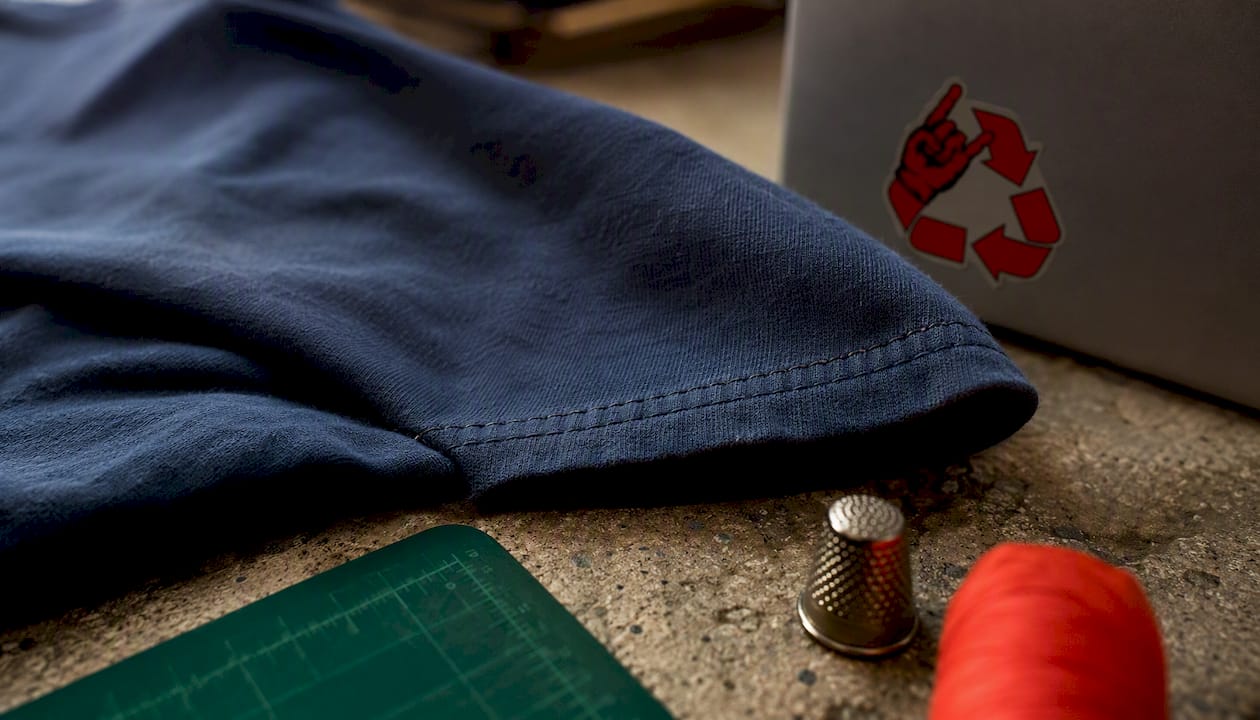
That single row shows up in a few specific places: the sleeve hems, the bottom hem, the neckline binding, and occasionally the shoulder seams. Run your finger along the inside of a sleeve cuff and you’ll feel a thin, flat fold with one stitch line. That’s the tell.
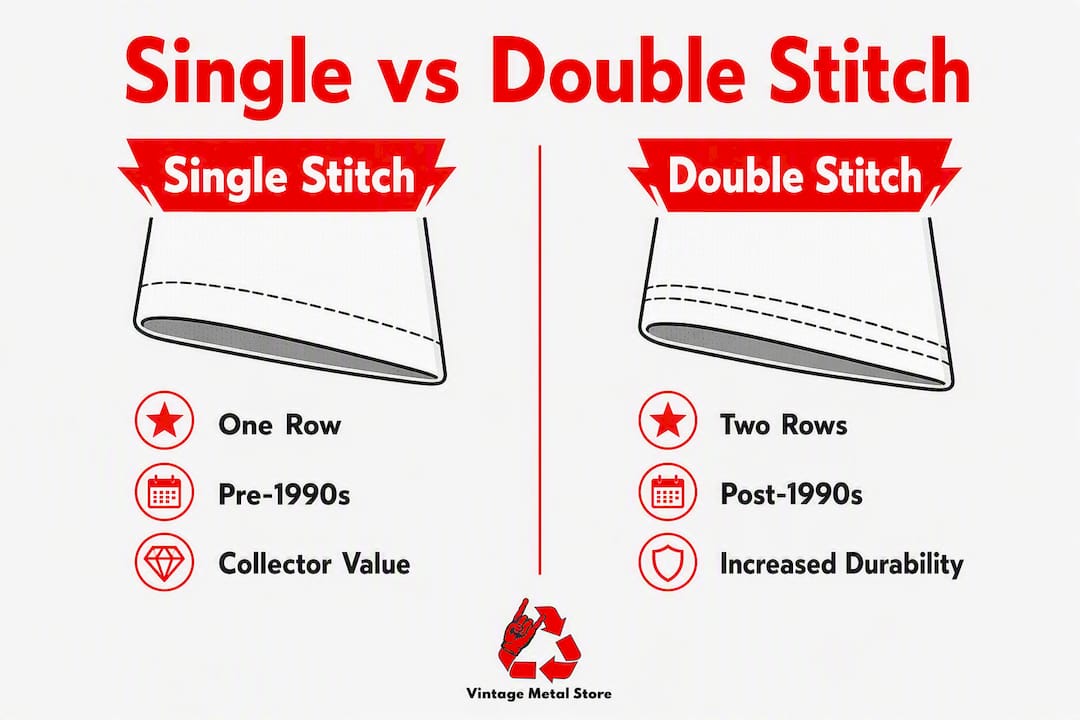
The shift away from single stitching happened as factories adopted coverstitch machines through the late 1980s and into the 1990s. Coverstitch lays two parallel rows of thread on the face of the fabric and a looped stitch on the reverse, creating a double-stitch finish that is faster to produce at scale and more resistant to the kind of stretch stress that plagues activewear. By the mid-1990s, double stitching had become the default for mass-market tees. Single stitching didn’t disappear entirely, but it became the exception rather than the rule. For tour-shirt dating, that transition point is one of the most reliable construction signals available.
Single stitch vs double stitch: what each one tells you
The practical difference between single and double stitching goes beyond aesthetics. Here’s how they compare as authentication and value signals:
| Feature | Single stitch | Double stitch |
|---|---|---|
| Visible stitch rows | One line at hem edge | Two parallel lines at hem edge |
| Era association | Pre-mid-1990s (most common) | Mid-1990s onward |
| Hem thickness | Thinner, flatter fold | Slightly thicker, more structured |
| Fabric feel at hem | Softer, less rigid | Firmer, more reinforced |
| Durability | Secure when lockstitched; can run if snagged | Generally more stretch-resistant |
| Collector signal | Strong vintage indicator (with supporting evidence) | Suggests post-1995 or reproduction |
The durability question is worth pausing on. Community discussions among vintage resellers point out that a properly locked single stitch doesn’t necessarily fail faster than a double stitch. If the thread snags and the stitch is locked, it stops. A chainstitch, by contrast, can run like a ladder in stockings once the chain is broken. So “single stitch equals fragile” is an oversimplification.
Where single stitch genuinely matters is as a dating cue, not a quality guarantee. Ragstock’s guide to single-stitch tees makes the same point: single stitching often correlates with older, heavier fabrics and is used as an initial indicator by resellers, but stitch type alone doesn’t confirm value.
How to identify single stitch on a t-shirt
Work through this inspection order every time you’re assessing a tee. It takes about two minutes once you’ve done it a few times.
- Sleeve hems first. Turn the sleeve cuff inside out and look at the fold. One stitch line means single stitch. Two parallel lines mean double stitch or coverstitch.
- Bottom hem. Same check. Fold the hem back and count the rows. A single-stitch bottom hem will feel noticeably thinner than a double-stitched one.
- Inside seam. Look at the side seams and shoulder seams for thread type and tension consistency. Mismatched thread or tension is a red flag for alteration.
- Neckline binding. The neck rib is usually attached with a different stitch, but check whether the binding itself is single- or double-stitched where it meets the body fabric.
- Tag and print details. Cross-reference what you’ve found with the care label font, the tag brand (Hanes, Fruit of the Loom, Screen Stars), and the print method. Tour-shirt dating methods pair stitch checks with label codes to narrow the manufacture window.
For photography, shoot the hem at a 45-degree angle with a macro lens or your phone’s portrait mode. Raking light from one side makes the stitch rows pop clearly. Buyers deserve to see both the inside and outside of the hem in the same frame.
Pro Tip: If a sleeve hem shows single stitch but the bottom hem shows double stitch, the shirt has almost certainly been shortened. A professional alteration or home repair will introduce a different stitch at the cut edge. Always inspect the entire garment, not just one hem.

Why single stitch is sought after by collectors
Single-stitch construction is a quick, reliable first filter for pre-mid-1990s manufacture. That era produced some of the most culturally significant heavy metal tour shirts ever made: the Metallica Black Album tour, Pantera’s Vulgar Display cycle, Slayer’s Decade of Aggression run. If a shirt from that period has survived with its original hems intact, the single stitch is physical evidence of that history.
Collectors also associate single-stitch tees with heavier cotton weights. Brands like Hanes Beefy-T and Screen Stars Best were standard blanks for tour merch in the late 1980s and early 1990s, and those blanks were cut from thicker, softer cotton than the lighter jersey used in post-1995 production. The stitch and the fabric weight often arrive together, which reinforces the perception of quality.
Rarity compounds the appeal. Decades of washing, wearing, and discarding have thinned the supply of genuine single-stitch tour shirts in wearable condition. A tee that has survived with its original hem, a legible print, and a readable tag is genuinely scarce. That scarcity drives prices, but it also creates the conditions for misrepresentation, which is why stitch analysis alone is never enough.
Common mistakes when using single stitch to authenticate a tee
Single stitch is a useful signal, not a verdict. These are the errors that catch buyers out:
- Altered hems. A shirt shortened by a tailor or at home will often show a different stitch at the new hem. The original single stitch may still be visible higher up the sleeve, but the cut edge will be finished with whatever machine was available.
- Modern reproductions. Some reproduction and tribute shirts deliberately mimic single-stitch construction to appear vintage. Check the tag font, the care label format, and the print method. Screen-printed graphics with halftone dots and slight ink cracking are consistent with vintage; sharp, flat DTG prints are not.
- Worn or stretched hems. A heavily washed double-stitch hem can distort enough that one of the two rows becomes hard to see. Don’t call single stitch from a blurry photo or a stretched hem without a hands-on inspection.
- Inconsistent thread type. Original single-stitch hems use thread that matches or closely complements the fabric colour. Bright white thread on a faded black tee, or thread that looks newer than the surrounding fabric, suggests a repair.
- Mismatched stitch tension. Factory stitching is even and consistent. Hand repairs or home-machine repairs often show variable tension, puckering, or slightly irregular spacing.
- Modern care labels. A care label with a QR code, a barcode, or a country-of-origin format that didn’t exist before 2000 is a hard stop, regardless of what the hem shows.
For a deeper look at spotting fakes, the original vs fake band t-shirts guide covers print and tag red flags in detail.
How to care for and repair single-stitch garments
Single-stitch hems are not inherently fragile, but they are old. Decades of washing have already stressed the thread, and the fold of the hem has likely softened to the point where one more aggressive machine wash could split it.
Washing: Cold water, gentle cycle, mild detergent. Turn the shirt inside out to protect the print and reduce friction on the hem. Skip the dryer entirely if you can. Heat shrinks cotton unevenly and puts lateral stress on the hem fold exactly where the thread is most vulnerable.
Storage: Flat or loosely rolled, not hung. Hanging a heavy cotton tee by the shoulders for months stretches the neckline and puts constant downward tension on the side seams. Acid-free tissue between folded shirts prevents colour transfer.
Repair: If a single-stitch hem starts to lift, the least invasive fix is hand-stitching with a matching thread weight and colour, using a simple running stitch that follows the original stitch line. This keeps the outward appearance unchanged. For a seller, any repair must be disclosed in the listing.
Pro Tip: To reinforce a fragile single-stitch hem without altering its appearance, apply a thin line of fabric stabiliser tape to the inside of the fold before hand-stitching. The tape holds the fold in place during the repair and reduces stress on the original thread without adding visible bulk.
High-value pieces, particularly shirts with strong provenance or rare prints, are better left unrepaired and sold or stored with the condition noted honestly. A disclosed flaw is always preferable to an undisclosed repair.
How Vintage Metal Store authenticates single-stitch tees
At Vintage Metal Store, the authentication process for every listed tee follows a consistent sequence. Stitch type is the opening check, but it’s never the closing one.
The checklist:
- Stitch inspection. Sleeve hem, bottom hem, inside seam. Photograph each with raking light.
- Tag analysis. Brand, font, country of origin, care symbol format. Cross-reference with known tag timelines. The authentication guide covers tag dating in detail.
- Fabric weight and feel. Heavier cotton with a soft hand is consistent with pre-1995 blanks. Thin, slippery jersey is not.
- Print ageing. Genuine vintage screen prints show ink cracking, slight fading, and halftone dot patterns. Flat, sharp graphics suggest a later print or a reproduction.
- Provenance. Where did the shirt come from? Ex-tour stock and deadstock items carry different provenance signals than a shirt pulled from a charity shop bin. The deadstock identification guide explains what to look for.
Consider a scenario like this: a shirt arrives with a clean single-stitch sleeve hem and a Screen Stars Best tag, but the bottom hem shows double stitching and the thread colour doesn’t match. That combination suggests the shirt is genuinely old (tag and sleeve hem check out) but has been shortened at some point. The listing notes the alteration, the price reflects it, and the buyer gets an honest picture. That’s the standard every listing at Vintage Metal Store is held to.
For readers who want to go deeper, the single-stitch shirts explainer on the Vintage Metal Store blog walks through additional photographic examples and edge cases.
Key takeaways
Single stitch is the most reliable first filter for vintage tees produced before the mid-1990s, but it must be paired with tag, fabric, and print evidence to carry real authentication weight.
| Point | Details |
|---|---|
| Single stitch definition | One row of stitching at sleeve and bottom hems; the production standard before the mid-1990s. |
| How to identify it | Inspect sleeve hem first, then bottom hem; one visible stitch line confirms single stitch. |
| Dating value | Single stitch strongly suggests pre-mid-1990s manufacture when supported by tag and fabric evidence. |
| Key pitfall | Altered hems and modern reproductions can mimic single stitch; always check tags, print, and thread consistency. |
| Vintage Metal Store | Lists authenticated single-stitch tees with close-up stitch photos, tag scans, and condition notes. |
The stitch is a clue, not a verdict
Here’s the thing that gets lost in a lot of vintage reseller content: single stitch became a marketing phrase before it became a collector’s tool. You’ll see it used as a shorthand for “this is old and therefore valuable,” and that’s a lazy read. A single-stitch tee from a forgotten 1993 regional band with a faded, illegible print and a stretched neckline is not automatically worth more than a well-preserved double-stitch shirt from a culturally significant 1997 tour. Context is everything.
What single stitch actually gives you is a starting point. It narrows the manufacture window, it tells you something about the factory’s equipment, and it prompts you to look harder at the other signals. The collectors who use it well treat it as one data point in a larger argument, not as a closing statement. The ones who get burned are the ones who stop at the hem.
The same logic applies to selling. Disclosing a single-stitch construction in a listing is a credibility signal, not a price justification. Pair it with a tag scan, a fabric description, and honest condition notes, and you’ve given the buyer everything they need to make a confident decision. That’s the standard worth holding.
Authenticated single-stitch tees at Vintage Metal Store
If you’ve read this far, you know what to look for. Now you need a place to find tees where the work has already been done.

Vintage Metal Store specialises in authenticated vintage and second-hand heavy metal shirts, including ex-tour stock and deadstock from some of the most iconic tours of the late 1980s and 1990s. Every listing includes close-up stitch photographs, tag scans, fabric condition notes, and provenance details where available. If you want additional photos of a specific hem or seam before you commit, reach out directly and we’ll send them through.
Browse the vintage heavy metal shirt collection to see what’s currently in stock, or go straight to the Vintage Metallica shirts collection for some of the most sought-after single-stitch tour tees from the Black Album era. Each listing is graded honestly, and alterations are always disclosed.
Useful sources and further reading
These are the references worth bookmarking if you want to go deeper on single-stitch identification and vintage tee authentication:
- Timeless Threads: The Single Stitch Tee Shirt, BelloMag — a well-researched feature on single-stitch history and collector context.
- Single Stitch, Merriam-Webster — the authoritative dictionary definition for the sewing term.
- Single Stitch, The Free Dictionary — cross-craft definitions useful for distinguishing apparel usage from crochet usage.
- Single Stitch Shirts Explained, Vintage Metal Store — on-site guide with photographic examples and edge cases.
- Authenticate Vintage Metal Shirts with Confidence, Vintage Metal Store — full authentication checklist pairing stitch checks with tag and print analysis.
- Vintage vs Reissue Shirts: The Collector’s Guide, Vintage Metal Store — helps readers distinguish genuine vintage from modern reissues.
A note on forum sources: Reddit threads and Instagram reels can surface useful community knowledge about stitch types and tag dating, but treat them as leads, not conclusions. Cross-check any forum claim with physical inspection of the actual garment.
FAQ
What is single stitch on a t-shirt?
Single stitch refers to one row of stitching used to finish a sleeve or bottom hem. It was the standard construction method for t-shirts produced before the mid-1990s and is used by collectors as a quick dating indicator.
Why is single stitch sought after by collectors?
Single-stitch construction typically indicates pre-mid-1990s manufacture, an era associated with heavier cotton blanks and culturally significant tour merch. Rarity and fabric quality combine to make genuine single-stitch tees desirable, though stitch type alone doesn’t determine value.
Is single stitch better quality than double stitch?
Not necessarily. A properly locked single stitch is secure and durable. The quality difference lies more in the associated fabric weight and era of manufacture than in the stitch itself. Double stitching is more stretch-resistant, which suits activewear, but for a vintage cotton tee the distinction is minor.
How do you know if a shirt is single stitch?
Turn the sleeve cuff inside out and look at the hem fold. One visible stitch line confirms single stitch; two parallel lines indicate double stitch or coverstitch. Repeat the check on the bottom hem and compare thread colour and tension for consistency.
Why are single-stitch tees sometimes expensive?
Genuine pre-mid-1990s single-stitch tees in wearable condition are genuinely scarce after decades of attrition. When a shirt combines single-stitch construction with a rare print, a readable tag, and strong provenance, the price reflects all three factors together, not the stitch alone.
Recommended
- Single stitch shirts explained: the collector’s guide – Vintage Metal Store
- Collector’s guide to authentic vintage band tees: 5 expert checks – Vintage Metal Store
- Original vs fake band t shirts: the collector’s guide – Vintage Metal Store
- Identifying bootleg metal tees: a collector’s guide – Vintage Metal Store


