



TL;DR:
- Genuine vintage patina reflects authentic wear from use, making it a key indicator of originality and value. It appears consistently across fabric, print, and tags, signifying true age and handling. Once removed through harsh cleaning or chemical treatment, patina cannot be restored, reducing a shirt’s long-term worth.
Vintage patina is the stable, earned surface change that records real use, handling, and age on a garment — not deliberate distressing, but the genuine biography of a shirt that was actually worn, washed, and lived in. On a heavy-metal band tee, that means softened cotton, even fade across heavy ink areas, fine crazing where the print meets a seam, and worn tags that tell you the shirt predates the reissue era. The Journal of Antiques defines patina as the stable, naturally developed surface colouration and texture formed by genuine use and environmental exposure — a primary visual indicator of authenticity. Passavant & Lee put it plainly: patina is evidence, not theatre. At Vintage Metal Store, that principle shapes how every ex-tour and deadstock tee is assessed.
Primary visible elements to look for on a vintage metal tee:
- Fabric softening: cotton that has lost its stiffness through repeated wear and washing
- Even fade patterns across the chest print and shoulder areas
- Ink crazing or fine cracking, especially where the print crosses a seam
- Tag fraying and faded label text consistent with the shirt’s era
- Collar roll and seam thinning at natural contact points
Table of Contents
- How does vintage patina actually appear on a heavy-metal tee?
- Why does patina matter for collectors and market value?
- How do you tell genuine patina from fake distressing?
- How do you preserve vintage patina without destroying it?
- When does wear add value and when does it destroy it?
- Buying checklist for Australian collectors
- Key takeaways
- Patina is the part most collectors get wrong
- FAQ
How does vintage patina actually appear on a heavy-metal tee?
The fabric tells the first part of the story. Genuine cotton softening happens across the whole shirt, not just one panel. The weave thins slightly but stays intact — you can hold it to light and see the structure is still sound. Holes, dry rot, or unravelling seams are a different story entirely.
Print and ink changes are the most photogenic signs. Uniform fade in the heaviest ink areas (think a bold band logo or a dense back graphic) is classic coherent wear. Fine crazing or micro-cracking appears where the plastisol print flexes repeatedly, particularly along seam lines and at the base of the graphic. Under-press fading — a slight ghosting where the heat press sat — is another period-specific marker you rarely see faked convincingly.
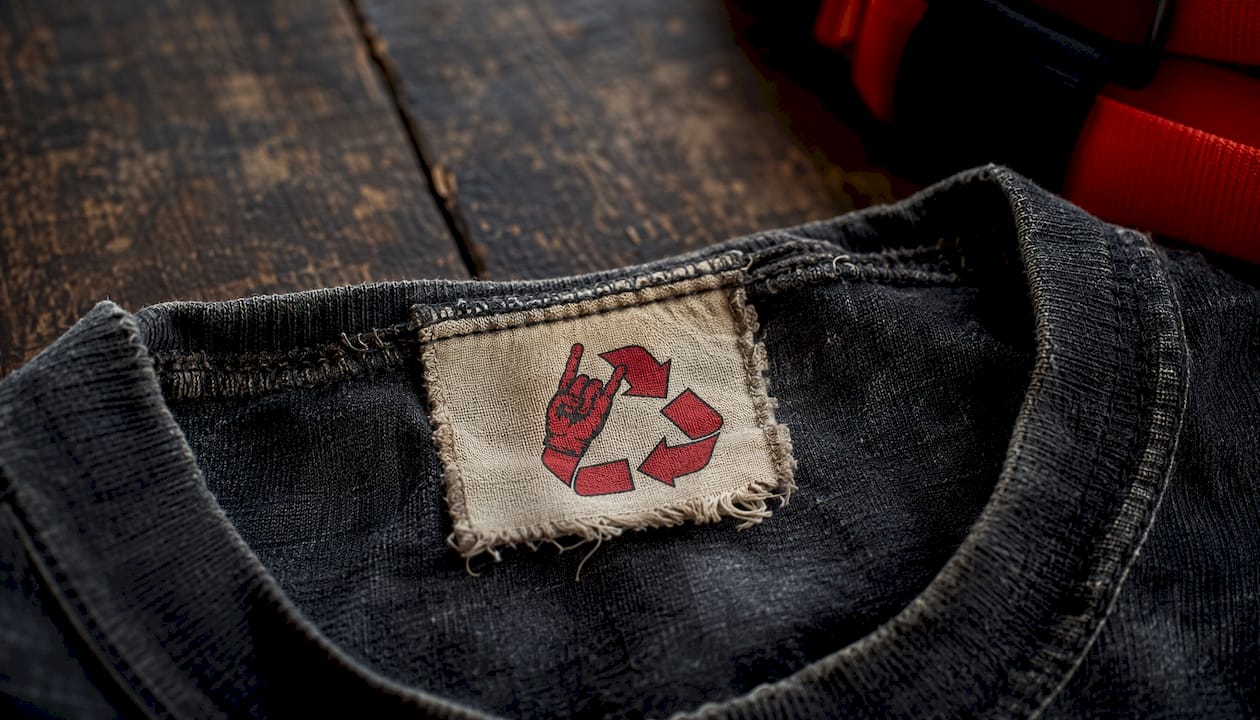
Tags and hardware are underrated authentication tools. A vintage single-stitch tag with faded print, frayed edges, and a colour that has shifted from white to cream is hard to replicate. Collar roll at the neckline and thinning along the shoulder seams reflect exactly where a shirt contacts a body over hundreds of wears. High-touch areas consistently show richer patina — collar, cuffs, and print edges — and that distribution is what separates a shirt that was worn from one that was stored.
When buying online, request closeups of the tag, collar, chest print, and side seams. A seller who can provide those photos confidently usually has nothing to hide.
Why does patina matter for collectors and market value?
Patina proves the shirt survived. Collectors treat it as a selling point, not a flaw — intact patina gives a piece a personal sense of history that no reissue can replicate. For ex-tour and deadstock tees, that history is the whole point.
Premium drivers in the vintage metal tee market include:
- Original, unstripped ink with visible age-consistent crazing
- Documented provenance (tour programme, receipt, original owner photos)
- Coherent wear across fabric, print, and tags that all tell the same story
- Absence of aggressive cleaning or restoration that would have reset the surface
The distinction between patina and neglect matters here. Stable, coherent wear that preserves structure and readable graphics is patina. Active damage — mould, dry rot, large stains that alter the graphic — reduces both functional integrity and collector value. Appraisers at Antiques Roadshow stress that any restoration or repatinating work must be recorded and disclosed; concealment reduces buyer confidence and market value.
How do you tell genuine patina from fake distressing?
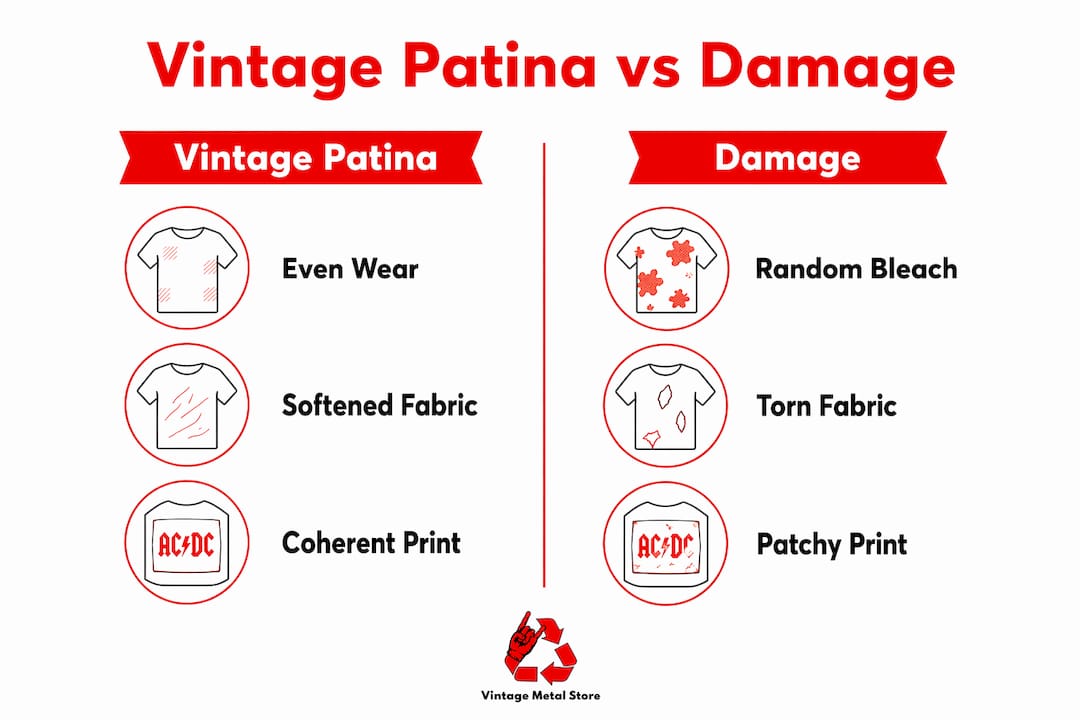
Artificial ageing performs age without the biography. The giveaway is always distribution. Real wear concentrates at contact points — collar, cuffs, print edges, underarm seams. Fake distressing tends to be isolated, symmetrical, or applied to visually prominent areas regardless of where a body actually touches a shirt.
Use this checklist when assessing a tee:
- Wear consistency: does fading appear across all high-touch zones, or only on the front graphic?
- Fabric and print alignment: does the ink fade match the fabric fade, or does one look newer than the other?
- Tag and seam wear: are the tag and collar worn in proportion to the rest of the shirt?
- Material ageing: do different materials (ribbing, print, base fabric) show compatible ageing?
Red flags for artificial distressing include isolated bleach marks, perfectly symmetrical wear patterns, printed tag imitations that mimic vintage labels, and mismatched ageing between the base fabric and the print. The original vs fake band t-shirt guide at Vintage Metal Store covers authentication markers in detail.
Pro Tip: Use a UV torch and angled raking light when inspecting in person. Recent chemical bleaching or surface abrasion shows up as uneven fluorescence or a disturbed surface texture that natural ageing does not produce.
How do you preserve vintage patina without destroying it?
The core conservation warning is simple: once patina is removed, it is permanently lost. Aggressive washing, abrasive cleaning, or chemical stripping cannot be undone. Original finish cannot be authentically recreated. That makes low-intervention care the only sensible approach.
Do:
- Store flat or loosely folded with acid-free tissue between layers
- Keep in a breathable box away from direct sunlight and humidity fluctuations
- Spot clean by hand with cold water and a tiny amount of pH-neutral soap
- Document condition with high-resolution photos before any treatment
Don’t:
- Machine wash on hot or tumble dry — heat accelerates ink breakdown and fibre degradation
- Use commercial bleach or strong solvents anywhere near the print
- Scrub with abrasive materials that remove fibre character
- Iron directly over a plastisol print
For active damage (mould, odour, wet staining), follow these steps in order:
- Remove the shirt from any enclosed space immediately to stop further spread.
- Air in a shaded, ventilated area — never in direct sun, which can bleach the fabric.
- Brush off dry mould with a soft natural-bristle brush before any moisture is applied.
- Spot treat with cold water only; if odour persists, a diluted white vinegar rinse on the affected area (not the print) is the least aggressive option.
- Document the condition before and after with photos, and note what treatment was applied.
The tour shirt preservation workflow at Vintage Metal Store walks through this in full. Australian collectors should also account for humidity — unsuitable storage climates can convert desirable patina into active deterioration, particularly over a Queensland summer.
When does wear add value and when does it destroy it?
| Trait | Desirable patina | Damaging wear |
|---|---|---|
| Fabric condition | Softened, thinned but structurally intact | Holes, dry rot, unravelling seams |
| Print condition | Uniform fade, fine crazing, readable graphic | Cracked-off sections, missing ink, illegible design |
| Collar and seams | Rolled, thinned, consistent with age | Torn, detached, or heavily repaired |
| Staining | Faint, aged discolouration consistent with use | Large, active, or chemically altered stains |
| Overall coherence | All elements age together consistently | Mismatched ageing between components |
Borderline cases come up regularly. A collar with a small repair from the original owner, for example, is often treated by appraisers as part of the shirt’s biography rather than a deduction — provided the repair is disclosed and period-consistent. A back graphic with a section of ink missing is harder to defend; the design’s legibility is part of what collectors are paying for.
Buying checklist for Australian collectors
Before committing to a purchase, work through this list:
- Photos: tag (front and back), collar, chest print, back graphic, both side seams, any repairs or staining
- Measurements: chest, length, and sleeve on a flat lay — vintage sizing runs small
- Provenance: original owner details, tour year, any supporting documentation
- Condition disclosure: has the shirt been washed, dry-cleaned, or treated in any way?
- Repairs: have seams, hems, or the print been restored? Ask specifically.
Questions worth asking every seller: How was it stored? Has it been cleaned since purchase? Are the seams and hem original? Prefer sellers who volunteer condition notes and offer extra photos over those relying on a single styled shot.
For Australian buyers importing from overseas, accurate customs valuation matters — declare the genuine purchase price. Pack with moisture-barrier bags inside the outer satchel to protect against transit humidity, especially during summer. The vintage shirt storage guide covers local climate considerations in detail.
A rare Metallica 1992 tour tee is a good reference point for what well-documented ex-tour patina looks like in a listing — clear photos, condition notes, and provenance all present.

Browse the full range of vintage Metallica shirts and ex-tour deadstock at Vintage Metal Store — every piece is individually assessed and listed with condition notes, or explore unique Peaky Blinders art prints & canvas for collectible merch with a distinct patina character.
Key takeaways
Genuine vintage patina is coherent, earned surface change across fabric, print, and tags simultaneously — and once removed, it cannot be restored.
| Point | Details |
|---|---|
| Patina is earned, not applied | Authentic patina distributes naturally at contact points; fake distressing concentrates on visible areas only. |
| Coherent wear is the key test | Fabric softening, ink fade, and tag wear should all tell the same age story on a genuine shirt. |
| Preservation is irreversible | Once patina is removed by aggressive cleaning or chemicals, original finish is permanently lost. |
| Document before any treatment | Photograph condition in full before any conservation, cleaning, or sale — appraisers expect full disclosure. |
| Australia-specific storage matters | Humidity and heat can convert patina into active deterioration; store with acid-free tissue in a climate-stable space. |
Patina is the part most collectors get wrong
Most collectors learn to spot a fake graphic quickly. Fewer pay attention to whether the ageing across the whole shirt is coherent. A tee with a beautifully faded front print but a crisp, bright tag and stiff collar fabric is telling you something — those elements should not be ageing at different rates unless someone intervened.
The other thing worth saying plainly: restoration is not always bad, but it must be disclosed. A shirt that has had a collar repair or a gentle hand wash is still a genuine vintage piece. A shirt that has been chemically stripped and re-distressed to look older is not. The difference matters enormously to long-term value, and Antiques Roadshow appraisers are unambiguous on this — concealment is unacceptable. Buy from sellers who tell you the full story, and list your own pieces the same way.
Vintage Metal Store’s preservation guide and grading resources exist precisely because this community deserves better than guesswork. Wear the legacy — but know what you’re holding first.
FAQ
What is vintage patina on a band t-shirt?
Vintage patina is the stable, naturally developed surface change on a garment from genuine use and age — including fabric softening, even ink fade, and tag wear. It is a primary authenticity indicator for collectors, as defined by the Journal of Antiques.
How do you identify genuine patina versus fake distressing?
Genuine patina distributes consistently across all high-touch zones (collar, cuffs, print edges); fake distressing tends to appear in isolated or symmetrical areas that do not match natural body contact points.
Does patina increase the value of a vintage metal tee?
Yes — intact patina proves age, authenticity, and survival, and collectors treat it as a premium rather than a flaw. Stripping patina through aggressive cleaning can significantly reduce a shirt’s market value.
Can removed patina be restored?
No. Once patina is removed by bleaching, abrasive cleaning, or chemical stripping, the original finish is permanently lost and cannot be authentically recreated.
What photos should I request before buying a vintage tee online?
Ask for closeups of the tag (front and back), collar, chest print, back graphic, both side seams, and any areas of repair or staining — these are the zones where genuine patina and condition issues are most visible.
Recommended
- Vintage t-shirt grading explained: collector’s guide – Vintage Metal Store
- Collector’s guide to vintage heavy metal t-shirts: spot, value, collec – Vintage Metal Store
- Original vs fake band t shirts: the collector’s guide – Vintage Metal Store
- Collectible metal tees: iconic examples and what makes them valuable – Vintage Metal Store


