



TL;DR:
- Fabric type indicates a shirt’s authenticity, durability, and era-specific quality.
- 100% heavyweight cotton shirts are the most valuable and authentic for collectors.
- Proper care and fabric verification preserve the shirt’s condition and market value.
Fabric types in 1990s band shirts: a collector’s guide
Most people assume that age alone makes a vintage band shirt valuable. If it’s old and has a skull on it, surely it’s worth something, right? Wrong. The fabric underneath that screen print is just as important as the artwork on top, and experienced collectors know this immediately when they pick up a shirt. Understanding what a shirt is made from tells you everything about its era, authenticity, durability, and what it might fetch at resale. This guide breaks down every major fabric type found in genuine 1990s heavy metal band shirts so you can shop, assess, and collect with real confidence.
Table of Contents
- Why fabric matters in vintage band shirts
- The main fabric types found in 1990s band shirts
- Comparing comfort, durability, and collector premium
- How to verify and care for vintage fabric
- Why true collectors obsess over fabric types
- Find and invest in the right vintage band shirts
- Frequently asked questions
Key Takeaways
| Point | Details |
|---|---|
| Fabric defines value | Material type is as important as the print for collectors seeking authentic vintage shirts. |
| Know the blends | The main fabrics are 100% cotton and 50/50 poly-cotton, each influencing comfort and price. |
| Spot and care for originals | Proper authentication and maintenance can protect both the shirt’s condition and collector’s investment. |
| Beware bootlegs | Generic blends and fakes are common—pay close attention to material, tags, and feel. |
Why fabric matters in vintage band shirts
Collecting vintage heavy metal shirts is not just about chasing band names or iconic artwork. The physical material of the shirt carries enormous cultural and financial weight. When you hold a genuine 1990s tour shirt, the fabric tells a story that no photograph or description ever could. It tells you whether the shirt survived the pit, whether it was worn or stored, and whether it was made to last or knocked together quickly for a cash grab.
The culture around band shirts grew directly from the live touring scene. Shirts sold at the merch table after sweaty arena and club shows needed to survive hard use. Official tour shirts prioritise durability for mosh pits, which is why legitimate manufacturers in the 1990s consistently chose heavyweight, high-quality cotton blends that could handle repeated washes and rough treatment. This was not accidental. It was a response to what the audience actually needed.
“A band shirt that falls apart after three washes was never a real tour shirt to begin with. The fabric is the first thing a serious collector checks.”
For collectors today, material integrity is one of the most reliable indicators of genuine provenance. A shirt that has maintained its weight, its structure, and its print clarity after thirty-plus years is almost certainly made from quality stock. One that has gone thin, pilled, or cracked is either heavily worn or made from inferior material to begin with.
It is also worth understanding that shirts from the same era can feel wildly different from each other. The reasons for this include:
- Manufacturer differences: Companies like Anvil, Fruit of the Loom, and Hanes each had slightly different fabric compositions and weight standards in the 1990s
- Print method: Plastisol ink on heavier cotton feels stiffer and more raised; water-based inks feel softer
- Regional production: Shirts pressed in North America often differ in feel from those produced in Central America during the same period
- Dead stock versus worn stock: Unworn dead stock shirts feel noticeably crisper and heavier than a shirt that’s been through fifty washes
Understanding tour shirt culture and economics helps explain why quality varied even within the same tour run. Shirts sold at headline arena shows often came from better-funded print runs than those at club support slots. Both may exist from the same year and the same band, but the quality gap between them can be significant.
The main fabric types found in 1990s band shirts
Once you understand why fabric matters, the next step is knowing exactly what you are looking at when you examine a shirt. The 1990s saw three main fabric categories dominate genuine tour merchandise, and each has a distinct character you can learn to identify quickly.
| Fabric type | Typical weight | Print feel | Collector value |
|---|---|---|---|
| 100% cotton | Heavy (180-220gsm) | Raised, durable | Highest |
| 50/50 poly-cotton | Medium (150-170gsm) | Slightly softer | Moderate |
| Tri-blend (rare) | Light-medium | Very soft, worn-in | Varies by piece |
100% cotton is the gold standard. Virtually all major 1990s heavy metal tour shirts from credible manufacturers used single-jersey or double-needle construction heavyweight cotton. It holds screen prints exceptionally well, resists shrinkage after the initial wash, and ages beautifully into a soft, worn texture that collectors associate with genuine use and era-appropriate feel.
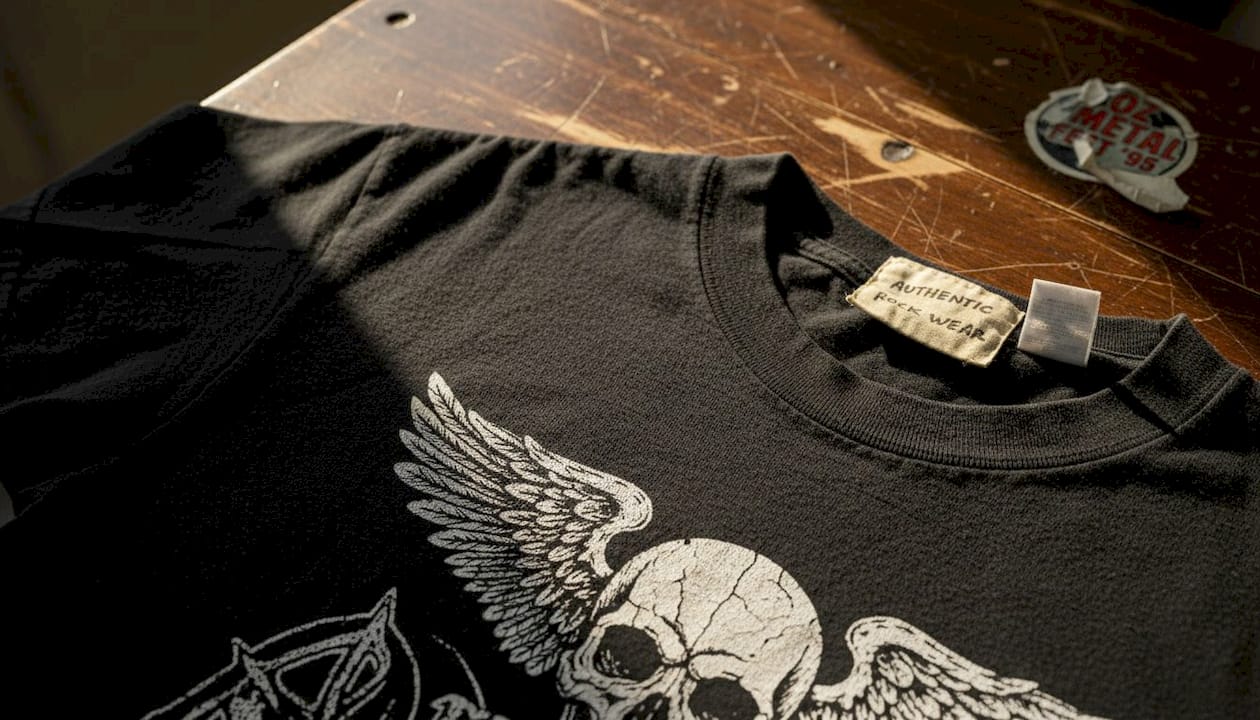
50/50 poly-cotton blends were more common on budget runs and some festival merchandise. The polyester content makes the fabric lighter and quicker-drying but also gives the print a slightly different, less tactile feel. Bootlegs or generic blanks typically used 50/50 blends, making the fabric composition one of the most reliable ways to separate a genuine tour shirt from a contemporary knockoff.
Tri-blends (cotton, polyester, and rayon) are rare in genuine 1990s metal merchandise but do exist in some smaller, independent pressings. They feel noticeably softer and more drapey than standard cotton. This softness can sometimes be mistaken for age-related wear, so handle carefully before assuming it indicates significant use.
Here is how to identify each fabric type without needing lab equipment:
- Check the tag: Genuine 1990s shirts carry tags that list fabric composition. Anvil, Fruit of the Loom, and similar brands printed this clearly. A tag stating 100% cotton on a Hanes Beefy-T blank is a very positive sign.
- Test the weight: Hold the shirt by the hem and feel how it hangs. Heavyweight cotton falls with authority. Poly blends feel lighter and more fluid.
- Pinch and stretch: 100% cotton has minimal lateral stretch and a firm, papery feel when pinched. Poly blends stretch more easily and spring back faster.
- Examine the print surface: Run your thumb across the print. Plastisol on heavy cotton feels raised and slightly rubbery. Modern reprints often sit flatter with a smoother finish.
Pro Tip: If you are unsure whether a shirt is genuine vintage, rub the fabric lightly between your fingers near the hem where there is no print. Authentic cotton from the 1990s has a slightly fibrous, lived-in texture that modern blank shirts simply cannot replicate, regardless of washing attempts to age them.
For a deeper breakdown of what to look for, the top fabrics for vintage shirts guide covers manufacturer-specific nuances in detail. If you want a broader authentication checklist, the genuine vintage band shirts checklist walks through every physical indicator worth examining.
Comparing comfort, durability, and collector premium
Knowing what a fabric is made of only takes you so far. What collectors and wearers really want to know is how each type performs across comfort, longevity, and resale value. The differences are more significant than most people expect.
| Fabric | Comfort rating | Wash durability | Avg. resale premium |
|---|---|---|---|
| 100% cotton (heavywt) | High after break-in | Excellent | 40-80% above 50/50 |
| 50/50 poly-cotton | High immediately | Good | Baseline |
| Tri-blend | Very high | Moderate | Varies widely |
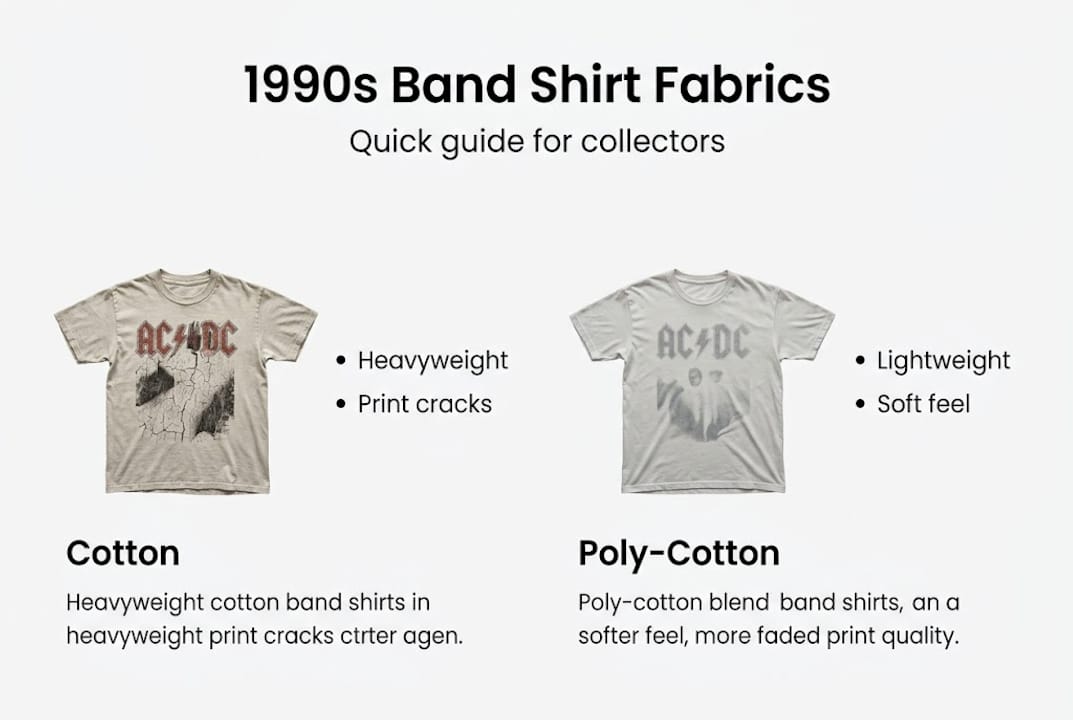
Durability through washing is where 100% heavyweight cotton genuinely outperforms every alternative. A well-made 180gsm or heavier cotton shirt from the early 1990s can absorb decades of washing with minimal structural degradation, provided it is treated correctly. The weave density means individual fibres are less exposed to abrasion, and the fabric actually softens without losing integrity over time.
Poly-cotton blends, while comfortable out of the box, tend to pill more aggressively after repeated washing. The polyester fibres do not degrade the same way cotton does; instead they cling together in small balls on the surface, which is a dead giveaway for collectors examining a shirt’s history and material quality.
Official tour shirts built for mosh pit use and repeated wear were almost exclusively heavyweight cotton for exactly this reason. The bands’ merchandising teams understood that a shirt that fell apart quickly reflected poorly on the act and on the tour.
From a collector premium perspective, the numbers are clear:
- Genuine 100% cotton shirts from major 1990s tours regularly command 40 to 80 percent above comparable 50/50 blend examples from the same era
- Dead stock (unworn with original tags intact) cotton shirts can reach two to three times the value of a worn equivalent in good condition
- Shirts on premium blanks like Hanes Beefy-T or Anvil Heavyweight consistently outperform generic or unbranded blanks at auction
The comfort versus authenticity debate is real, though. Some collectors who actually wear their shirts prefer the immediate softness of a 50/50 blend. There is nothing wrong with this approach if the shirt is for regular use rather than investment. However, if you are building a collection with resale or long-term value in mind, prioritising types of heavy metal T shirts by fabric composition is a strategy that consistently pays off.
Before buying any piece for a serious collection, running through a heavy metal shirts buying checklist that includes fabric verification will save you from expensive mistakes.
How to verify and care for vintage fabric
Authentication is one skill; preservation is another. Both are essential if you want to protect the value of what you collect. Here is a practical framework for both.
Authenticating the fabric:
- Read the manufacturer tag: Look for recognised 1990s blank brands. Anvil Knitwear, Hanes Beefy-T, Fruit of the Loom, and Delta Pro Weight were all commonly used for legitimate tour merchandise in this era.
- Check tag placement and stitching: Authentic 1990s shirts almost always have sewn-in tags, not heat transfers or printed labels, which became common in the mid-2000s.
- Examine double-needle stitching: Run your finger along the hem and sleeves. Genuine period shirts use double-needle construction that creates a distinctive parallel stitch ridge.
- Weigh it in your hand: This sounds simple but it works. A legitimate heavyweight cotton shirt from the 1990s feels substantial. Anything that feels thin or airy deserves scrutiny.
- Test the print crackle: Authentic plastisol prints from the 1990s develop fine crackle patterns with age. This is almost impossible to fake convincingly. New reprints on artificially aged shirts look too uniform under close inspection.
For shirts you intend to keep, the care routine is straightforward but non-negotiable:
- Wash inside out in cold water: Heat and agitation are the two biggest enemies of screen prints and fabric integrity
- Avoid machine drying where possible: Air drying away from direct sunlight prevents both shrinkage and UV fading of both the fabric and the print
- Store flat or rolled, never on a hanger: Long-term hanging stretches shoulder seams and distorts the neck opening
- Keep in breathable storage: Plastic bags trap moisture and accelerate fabric deterioration; use cotton garment bags or acid-free tissue wrapping
Pro Tip: Never iron directly over a plastisol print. If pressing is necessary, use a pressing cloth and low heat only on areas without print. Direct heat can permanently damage or flatten raised prints, which significantly reduces a shirt’s collector appeal.
When it comes to restoration, the rule is simple: less is more. Attempting to remove stains with harsh chemicals or bleaching agents almost always does more damage than the original stain. Bootleg or generic blank shirts are valued less partly because they have often been over-washed or treated, destroying both the fabric’s texture and the print’s integrity.
For a complete authentication walkthrough, the authentic band tee checks guide covers advanced verification methods. If you are specifically looking at unworn stock, the identifying dead stock shirts guide provides targeted advice for that specific category.
Why true collectors obsess over fabric types
There is a reason the fabric conversation keeps surfacing in serious collector circles, and it goes beyond resale values and authentication checklists. It is about what the shirt actually represents.
When you hold a genuine 1990s Bathory shirt on a heavyweight Anvil blank, you are holding something that existed in that world. Someone bought it at a show. The fabric absorbed the sweat and the noise of that night. The weight of it is the weight of that era. A cheap poly blend with a copied graphic is not the same object, no matter how similar it looks in a photograph.
The shortcuts that flood the modern market, reprints on thin blanks, digital prints on modern fabrics, artificially distressed fabric, cheapen the experience of collecting because they sever the physical connection to the source. Serious collectors understand this intuitively. They know that the advantages of second hand shirts go beyond price. Second hand means real history embedded in real material.
Fabric obsession is not snobbery. It is how metalhead culture protects its own heritage. If collectors stop caring about what shirts are made from, the market floods with convincing fakes and the authentic pieces become harder to find, verify, and preserve. Knowing your fabric types is an act of cultural stewardship.
Find and invest in the right vintage band shirts
Understanding fabric types gives you a real edge when building a collection that holds its value and tells a genuine story. The knowledge you have gained here should translate directly into smarter buying decisions.
At Vintage Metal, we source ex tour stock and dead stock directly, which means the shirts we carry have already passed the fabric and authenticity tests that matter. If you want to see what a genuine heavyweight cotton tour shirt from the 1990s feels like, the Rare Metallica 1992 tour tee is a benchmark example of the real thing. Browse the full vintage Metallica shirts range or explore the broader rare concert shirts collection to find pieces that match what you now know to look for.
Frequently asked questions
What’s the most valuable fabric for 1990s metal band shirts?
100% heavyweight cotton is the most prized by collectors, offering the best durability, authenticity, and print longevity. Official tour shirts prioritise durability which is why heavy cotton was the standard choice for legitimate merchandise runs.
Are 50/50 poly-cotton band shirts worth collecting?
Some 50/50 shirts have genuine collector value, particularly on rare tour runs, but generic blanks in 50/50 blends are typically considered lower tier and command less at resale compared to heavyweight cotton equivalents.
How can I spot a fake vintage band shirt based on fabric?
Fakes almost always use lighter, modern fabrics with a smoother hand feel, and the print sits flatter with less crackle or texture than authentic 1990s plastisol work on heavy cotton.
What’s the best way to wash vintage band shirts to preserve fabric?
Hand wash inside out in cold water and air dry away from direct sunlight to protect both the fabric structure and the screen print from heat and UV damage.
Recommended


