



A front and back print vintage metal tee carries artwork on both sides of the shirt, usually big front artwork paired with a tour list or venue print on the back. Collectors chase these because the back print doubles as provenance, not just decoration. Before you buy one, confirm three things from the seller: a clear tag photo, visible single-stitch hem detail, and a close-up of the print edge. Skip any listing that can’t show all three.
TL;DR:
- Back prints listing tour dates provide verified provenance that can be cross-checked against official tour histories to confirm authenticity.
- Authentic vintage shirts display single-stitch hems, a vintage woven tag, and cracked or sunk silk-screen ink texture, unlike modern reprints or transfers.
- Vintage sizes are smaller than modern shirts, so buyers should measure flat rather than rely on tags, often sizing up one or two sizes for a comfortable fit.
- High-quality listings include detailed photos of tags, hems, and print edges, along with flat measurements and condition notes to prevent overpaying or buying fakes.
Table of Contents
- Why front-and-back printed vintage metal tees matter to collectors
- How do you authenticate a vintage front-and-back band shirt?
- How do vintage sizes compare to modern fit?
- What affects the value of a front-and-back print shirt?
- Where should you buy front-and-back vintage tees safely?
- An editorial perspective on collecting for the long term
- Browse front-and-back vintage metal tees at Vintage Metal Store
- Sources
- FAQ
Why front-and-back printed vintage metal tees matter to collectors
A back print with a full tour list does something a plain front-only shirt can’t: it ties the garment to a specific run of dates, which gives you a way to check the shirt’s story against the historical record. That’s provenance you can verify, not just a seller’s word for it.
Print method matters just as much as placement. Silk-screened front prints from the 1980s through the early 90s tend to sit higher on the collector value ladder than the heat-transfer designs that became common from the mid-90s onward. Both can be genuine vintage, but they age differently and sell differently.
Collector taste has also shifted. For years, a small front logo with a big back print was considered a lesser combination. That’s changing.
- Tour-dated back prints are treated as provenance, almost like a paper trail stitched into cotton.
- Silk-screen originals from the 80s and early 90s generally outrank later heat-transfer pieces in resale value.
- Large front artwork combined with a full back tour list remains the gold standard for combined resale and display value.
- Bigger, bolder back-only designs are gaining ground with newer collectors, even without a matching front hit.
None of this is about nostalgia for its own sake. Front and back prints are simply harder to fake convincingly across both sides, which is exactly why serious collectors treat them as the more defensible buy.
How do you authenticate a vintage front-and-back band shirt?
Authentication is a physical process, not a guessing game. Work through it in order, because each step either confirms or kills the shirt’s story before you get to the next.
- Check the hem stitching. Single-stitch hems are typical of 80s and 90s originals, while double stitching often signals later production.
- Inspect the tag. Woven cloth tags from labels like Screen Stars, Brockum, or Hanes Beefy-T point to genuine vintage stock; a modern tear-away tag is a red flag on a shirt sold as original.
- Feel and photograph the print texture. Genuine silk-screen ink from that era usually looks cracked or slightly sunk into the fabric. A raised, rubbery surface points to a modern transfer or DTG print standing in for something older.
- Verify the back print against tour history. Back prints listing dates or venues can be cross-referenced against known tour itineraries, and mismatched dates or venues the band never played are the clearest red flag going.
- Request the full photo set. A trustworthy seller can supply a tag close-up, hem stitching detail, the print edge up close, and the full front and back laid flat.
Pro Tip: Ask for a photo of the print under raised, angled light rather than flash. Cracked, aged silk-screen ink shows its texture clearly under side lighting; a smooth modern transfer usually looks flat no matter the angle.
Heat transfers from the mid-90s can absolutely be genuine vintage, correct tag and stitching included. They’re just priced lower than silk-screened originals from the same window, so don’t let a seller charge silk-screen money for a transfer piece.

How do vintage sizes compare to modern fit?
Vintage tees run smaller than what you’ll find on the racks today, and that catches a lot of buyers out when they order their usual size. The fix is simple: measure, don’t guess.
Lay the shirt flat and take three numbers: chest width (armpit to armpit, doubled), body length (shoulder seam to hem), and sleeve length. Compare those figures against a modern tee you already own rather than trusting the size printed on the tag, since a vintage “large” can measure closer to a modern medium.
As a rule of thumb, size up one from your usual fit for a standard vintage feel, or two sizes up for an oversized look. Our sizing guide for metal band tees walks through the measuring process in more detail if you’re buying across multiple decades of stock.
Condition matters as much as size once the shirt arrives.
- Acceptable ageing: even, overall fade; a soft, slightly cracked print that still reads clearly; minor pilling on the body.
- Deal-breakers: holes or thin patches sitting directly under the artwork, heavy structural thinning across the shoulders or hem, and a missing or badly damaged tag.
A shirt with heavy print fade on the back but a crisp front (or vice versa) can still be a fair buy for display, even if it’s not the shirt you’d wear out to a gig every weekend.
What affects the value of a front-and-back print shirt?
Four factors drive price on these shirts more than anything else, and understanding them stops you overpaying or underselling.
- Placement: a large front hit paired with an original tour back print consistently commands more than a back-only design, even as tastes shift toward appreciating bigger back artwork on its own.
- Print method: screen-printed originals typically resell for more than heat-transfer pieces from the same era, purely because the process was more expensive and less common to fake convincingly.
- Rarity: limited-run designs, tour-specific back prints, and regional variants (a European leg tee versus a US leg tee, for instance) push prices up because supply is genuinely capped.
- Seller transparency: detailed provenance notes, honest photography, and accurate flat measurements tend to preserve or increase resale value down the track, because the next buyer inherits that same paper trail.
A shirt with a big front print and a documented back tour list will usually beat a back-only design of similar condition and rarity, though the gap between the two has narrowed as collectors warm to standalone back artwork.
Where should you buy front-and-back vintage tees safely?
Buying online means you’re trusting photos and descriptions over a physical inspection, so the checklist matters more than the marketplace you’re using.
- Demand the full photo set before paying: tag close-up, hem stitching, print edge, and the shirt laid flat front and back.
- Get exact flat measurements, not just a size letter, and ask directly about any repairs, holes, or fading not shown in photos.
- Confirm shipping details: insured, tracked postage with a declared value protects you if the parcel goes missing or arrives damaged.
- Check for a returns or authenticity statement in the listing itself, not buried in a general policy page you have to hunt for.
- Watch for red flags: stock photos instead of the actual item, no tag close-up available on request, vague sizing (“fits most”), a blanket “no returns” policy, or the same item relisted repeatedly at a sharply higher price.
Vintage Metal Store builds every listing around this exact standard: ex-tour and deadstock pieces get labelled as such, and the photo set includes the tag, hem, and print edge as a baseline, not an afterthought. That’s the difference between a listing you can trust at a glance and one that needs ten follow-up questions before you’ll commit.
An editorial perspective on collecting for the long term
Hype around a particular tour or reissue fades fast. Honest provenance doesn’t. That’s the priority worth holding onto as a collector: a shirt with a documented back print and a seller willing to show you the tag and stitching will outlast anything bought on trend alone.
Vintage Metal Store sources ex-tour and deadstock stock specifically because that’s where the strongest provenance lives, and every listing gets photographed at the tag, hem, and print edge before it goes live. Once you’ve bought, the job shifts to keeping the print intact. Our preservation guide for printed tees covers washing and drying steps worth following from day one.
— David
Browse front-and-back vintage metal tees at Vintage Metal Store
Vintage Metal Store specialises in exactly the shirts this guide walks you through: authentic ex-tour and deadstock front-and-back prints, documented tag to hem to print edge, no guesswork required on your end.
Current stock includes pieces like the Slayer Unisex T-Shirt XL Back Print, a strong example of the tour-list-on-the-back format collectors chase, and the Tool Unisex Long Sleeve T-Shirt Spiral Tour 2022, which shows how the same front-and-back approach carries through to more recent tour runs. If you want a fully documented example of a classic tour tee, the Rare Metallica 1992 Tour Tee shows exactly what a properly photographed listing looks like, right down to measurements and provenance notes.
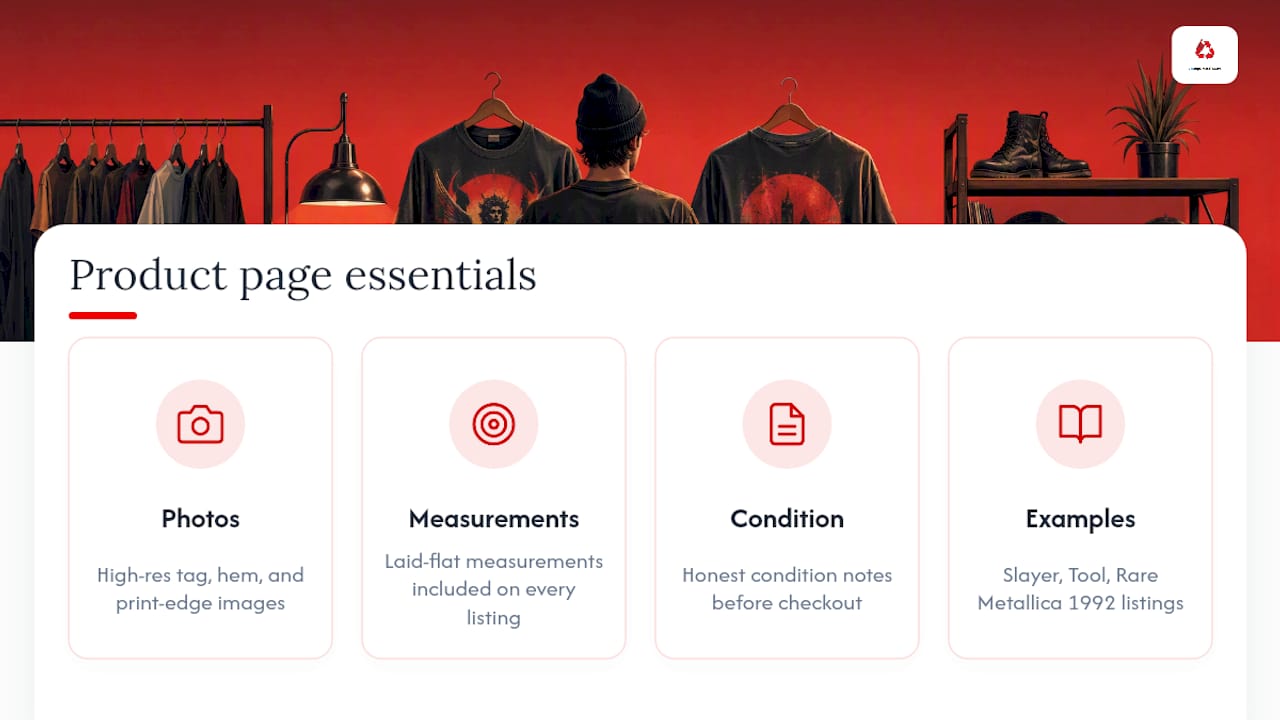
Every product page carries the same structure: high-resolution photos of the tag, hem stitching, and print edge, laid-flat measurements, and honest condition notes so you know what you’re buying before checkout. Head to the Vintage Metal Store collection to see current front-and-back listings, or check the rare vintage heavy metal concert shirts collection if you’re after tour-specific pieces.
Sources
For styling vintage pieces alongside modern wardrobes, see modern ways to style vintage. For long-term care, read our storage guide for vintage metal tees and preservation best practices.
- Vintage Band Tee or Reprint? Check the Hem | NOSTOS
- Vintage Band Tees: A No‑BS Buying Guide for 2026 — WEAR2AM Blog | WEAR2AM
- Is your dress really vintage? — Louisa Amelia Jane
FAQ
What does “front and back print” mean on a vintage metal tee?
It means the shirt has graphics printed on both the front and back panels, typically band artwork on the front and a tour date list or venue print on the back.
How can I tell if a back print is original and not added later?
Cross-reference the dates and venues listed against known tour itineraries for that band and year; mismatched details are the clearest sign something’s wrong.
Why do screen-printed shirts cost more than heat-transfer shirts from the same era?
Screen printing was more expensive to produce and is harder to convincingly reproduce, so genuine silk-screen originals generally command higher resale prices than transfer pieces from the same period.
What size should I buy if I’m used to modern T-shirt sizing?
Size up one full size for a standard fit, or two sizes for an oversized look, and always check the seller’s flat measurements rather than relying on the tag size.
Does Vintage Metal Store sell authenticated front-and-back tour tees?
Yes. Vintage Metal Store lists ex-tour and deadstock front-and-back printed tees with tag, hem, and print edge photos included on every product page.
Recommended


