



TL;DR:
- Licensed merchandise is produced under official agreements that grant a manufacturer the right to use a brand’s logos or artwork. Authentic licensed products have clear markers such as copyright notices, official tags, serial codes, and verified retail channels. They offer better quality, support creators financially, and hold higher resale value for collectors.
Licensed merchandise is any product created and sold with official permission from an intellectual property owner, such as a band, film studio, or sports league. That permission comes through a formal licensing agreement, where the IP owner (the licensor) grants a manufacturer or retailer (the licensee) the right to use logos, characters, or artwork on physical products. For collectors and fans, understanding licensed merchandise meaning is the difference between owning something genuine and owning something that looks the part but carries no real weight. Vintage Metal Store has built its entire catalogue around this principle: authenticity is everything.
What is licensed merch and how does the process work?
Licensed merchandise is produced under a formal contract between the IP owner and a manufacturer. The licensor retains control over how their brand appears on every product. The licensee pays for that right, typically through an upfront advance fee plus ongoing royalties based on net sales.
The licensing process follows a clear sequence:
- Agreement negotiation. The licensor and licensee define the product categories, territories, and duration of the licence. A band might licence its logo for T-shirts sold in Australia but not for phone cases sold in Europe.
- Design approval. The licensor reviews every design before production begins. Nothing goes to print without sign-off. This is the step that separates licensed goods from bootlegs.
- Manufacturing and distribution. The licensee produces the goods using approved designs and distributes them through agreed channels, which may include official stores, touring venues, or authorised retailers.
- Royalty reporting. The licensee reports sales figures and pays royalties to the licensor on a regular schedule. Licensing contracts enforce sales targets and mandate timely royalty payments, keeping both parties accountable.
- Quality audits. Licensors often conduct spot checks to confirm products meet their standards. A Marvel or Metallica logo on a shirt carries brand reputation, so quality control is non-negotiable.
Brand licensing also extends a trademark into new product categories without the IP owner needing to manufacture anything directly. That is why a single band can appear on shirts, posters, patches, and vinyl reissues, all produced by different licensees but all carrying the same official stamp.
Pro Tip: When buying vintage tour merch, ask the seller whether the shirt was ex-tour stock or dead stock. Both categories are typically official licensed goods produced for specific tours, which makes them far more collectible than generic reprints.
How to identify licensed merch versus unofficial products
Spotting the difference between official and unofficial merchandise is a skill every serious collector needs. The good news is that licensed products leave clear physical evidence of their legitimacy.
Look for these markers on any piece you are considering:
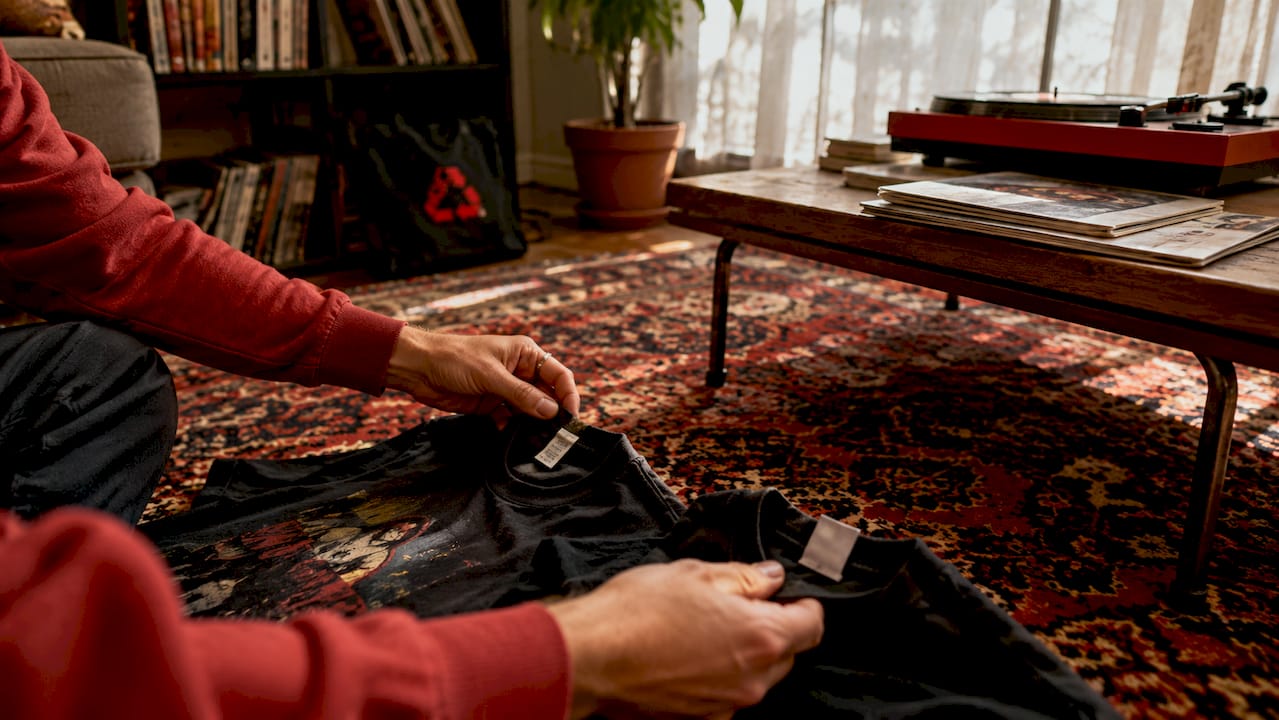
- Copyright and trademark notices. Genuine licensed merch carries a © or ™ symbol alongside the rights holder’s name, often printed on the tag or the back of the garment. No marking is a red flag.
- Official hang tags and woven labels. Licensed clothing uses woven or printed labels that name the licensor or the official merchandise programme. Bootlegs often use generic or blank labels.
- Serial numbers and product codes. Sports and gaming memorabilia frequently include unique serial numbers that can be cross-referenced with official league or publisher databases. The absence of a code on high-value memorabilia is a major warning sign.
- Verified retail channels. Official merchandise is sold through franchise websites, official stores, and authorised retailers. If a listing appears only on an unverified marketplace with no brand affiliation, treat it with caution.
- Wording on the listing or label. Avoid listings marked “inspired by,” “fan design,” or “style tribute.” These phrases are used deliberately to sidestep trademark rules. They signal that no licence exists and that no royalty reaches the original creator.
Bootleg sellers have grown more sophisticated. Some replicate tags and even add fake copyright notices. The most reliable check remains the official channel: visit the band’s or franchise’s website and confirm which retailers are authorised. For vintage band shirts, resources like the bootleg metal tee guide at Vintage Metal Store walk you through the specific details to examine on older garments.
Pro Tip: For vintage heavy metal shirts, check the print method. Older licensed tour shirts from the 1980s and 1990s used screen printing with a slightly raised ink texture. Flat, thin prints on aged fabric are a common sign of a later reproduction.
What are the benefits of licensed merchandise for collectors?
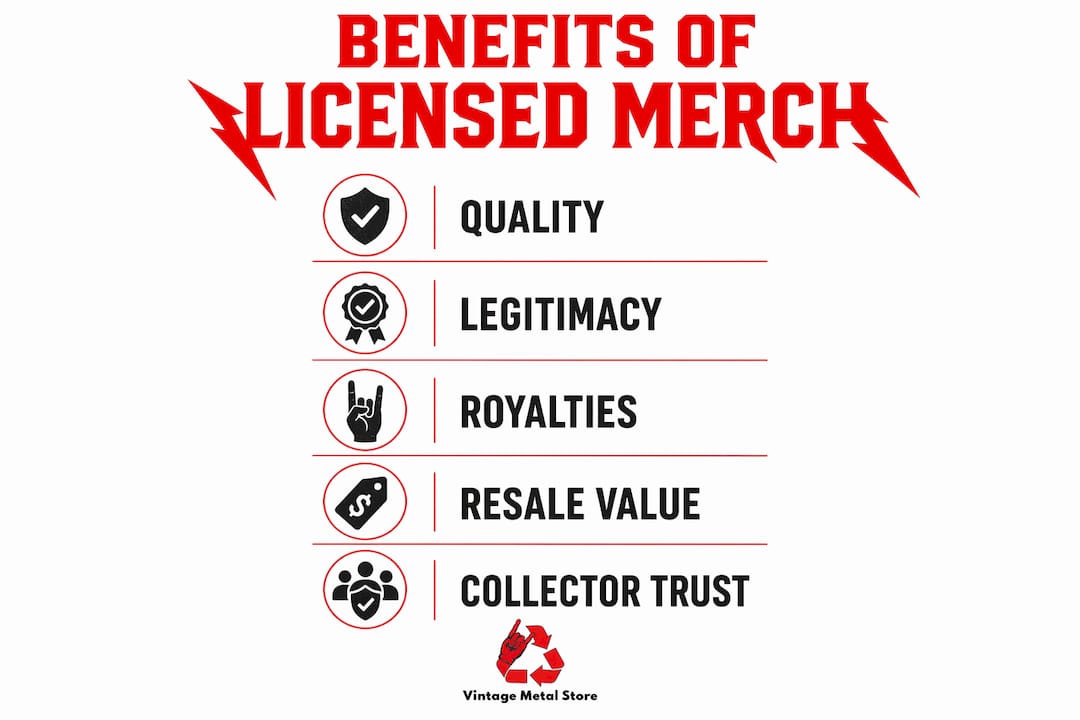
Licensed merchandise delivers three concrete advantages over unofficial alternatives: quality, legitimacy, and long-term value.
Quality control and production standards
Licensing functions as a quality-control mechanism, ensuring that every product bearing an IP meets consistent production standards. A licensor’s reputation is tied to every item that carries their name. That accountability pushes licensees to use better materials, more durable printing, and tighter quality checks than unlicensed manufacturers typically bother with. A genuine 1992 Metallica tour shirt, produced under official licence, was built to last. Many bootlegs from the same era have already faded or fallen apart.
Financial support for creators
Every licensed purchase sends royalties back to the IP owner. For bands, that means income that supports touring, recording, and the creative work fans love. Unlicensed merchandise does not financially support original creators. Buying a bootleg shirt might feel like a bargain, but it cuts the artist out of the transaction entirely. For collectors who genuinely care about the legacy of the music, that matters.
Resale and collector market value
Legitimacy drives resale value. Collectors and auction houses treat provenance as a primary factor when assessing memorabilia. A shirt with documented licensed origin, original tags, and verifiable production history commands a premium over an identical-looking piece with no paper trail. Collectors rely on official merch for legitimacy, knowing that licensing standards mean better production quality and longer-lasting value. The collector market rewards authenticity, and licensed goods carry that authenticity by definition.
The contrast with unofficial alternatives is stark. Unofficial goods may look similar at the point of purchase, but they carry no legal standing, no quality guarantee, and no collector credibility. Over time, that gap in value only widens.
What are some examples of licensed merchandise in popular culture?
Licensed merchandise spans every corner of popular culture. The product categories and franchises below show just how broad the licensing world is.
- Music. Band shirts, tour programmes, vinyl reissues, and patches produced for specific tours are classic examples of licensed music merch. A Metallica shirt sold at a 1992 US tour venue was produced under licence from the band’s management. That provenance is what makes it collectible decades later.
- Film and television. Marvel, Star Wars, and DC Comics licence their characters to manufacturers producing clothing, figurines, posters, and accessories. Each product goes through the licensor’s approval process before reaching shelves.
- Gaming. Franchises like Pokémon and Assassin’s Creed licence their artwork and characters for clothing, collectible figures, and accessories. Gaming licensors are particularly strict about design accuracy, given how closely fans scrutinise character details.
- Sports. The NBA and NFL licence their team logos and player likenesses to manufacturers producing jerseys, caps, and memorabilia. Authentic sports merch carries league holograms and serial codes as standard.
Licensing also expands brand reach into product categories the IP owner could never manage alone. A band cannot run a global clothing manufacturing operation. A licensing agreement with an established manufacturer solves that problem while keeping the band’s creative control intact. The result is a wider range of genuine products for fans and collectors to choose from.
For collectors focused on heavy metal, the most prized licensed examples are ex-tour stock and dead stock shirts. These were produced in limited quantities for specific tours and never restocked. Vintage Metal Store specialises in exactly this category, sourcing shirts that carry the full weight of their original licensed production.
Key takeaways
Licensed merchandise is the gold standard for collectors because it combines legal authenticity, quality production, and genuine financial support for the creators behind the work.
| Point | Details |
|---|---|
| Definition of licensed merch | Products made under formal IP agreements, with royalties paid to the rights holder. |
| How to spot genuine pieces | Look for copyright markings, official tags, serial codes, and authorised retail channels. |
| Quality advantage | Licensed goods meet consistent production standards that unofficial alternatives rarely match. |
| Collector value | Provenance and licensing history directly increase resale value in the memorabilia market. |
| Red flags to avoid | Listings marked “inspired by,” “fan design,” or “style tribute” signal no licence exists. |
Why licensing matters more than most collectors realise
Collectors often focus on condition and rarity, which makes sense. But licensing is the foundation that makes both of those factors meaningful. A shirt in perfect condition with no licensing history is just an old shirt. A shirt with documented licensed origin from a specific tour is a piece of music history.
I have seen collectors pay serious money for pieces that turned out to be well-made bootlegs. The condition was excellent, the print looked right, and the seller was convincing. But the absence of any licensing trail meant the piece had no standing in the serious collector market. That is a costly lesson to learn after the fact.
The other thing worth understanding is that licensing protects the IP itself. When fans buy licensed goods, they fund the legal and creative infrastructure that keeps a band’s legacy intact. Bootleg culture, by contrast, erodes that infrastructure. It is not just a quality issue. It is a question of whether the things you love continue to exist in a form worth caring about.
My advice to any collector is this: treat provenance as a non-negotiable. Use resources like the licensed band shirts guide to build your knowledge before you spend. And when you find a piece with a clear, verified licensing history, hold onto it. Those are the pieces that hold their value and their meaning.
— David
Authentic licensed metal merch at Vintage Metal Store
Vintage Metal Store curates a collection of genuine vintage heavy metal shirts sourced directly from ex-tour stock and dead stock. Every piece in the catalogue carries the weight of its original licensed production, from the print quality to the original tags.
If you are after something rare and verified, the Metallica 1992 tour tee is a standout example of what official licensed tour merch looks like at its best. For limited edition pieces with strong collector appeal, the Pentagram 2024 tour shirt is worth a look. Browse the full range at Vintage Metal Store and wear the legacy.
FAQ
What does licensed merch mean?
Licensed merch means products made with official permission from the intellectual property owner, with the manufacturer paying royalties for that right. Every design is approved by the licensor before production begins.
How do I identify licensed merch on a vintage shirt?
Look for copyright or trademark notices on the tag, woven labels naming the licensor, and screen-printed markings on the garment itself. A genuine vintage band shirt checklist can help you verify each detail systematically.
Why is licensed merchandise more valuable to collectors?
Licensed merchandise carries documented provenance, consistent production quality, and legal authenticity. These factors directly increase resale value in the memorabilia market, where provenance is a primary pricing factor.
How do I spot counterfeit merch?
Counterfeit merch often lacks copyright markings, uses generic or blank labels, and appears through unverified sellers. Listings using phrases like “inspired by” or “fan design” are a clear signal that no licence exists.
Does buying licensed merch support the original artists?
Yes. Licensing agreements require licensees to pay royalties to the IP owner on every sale. Buying licensed goods sends money directly back to the bands, studios, or athletes whose work you are celebrating.
Recommended


